Links go to search results. Availability varies by region.
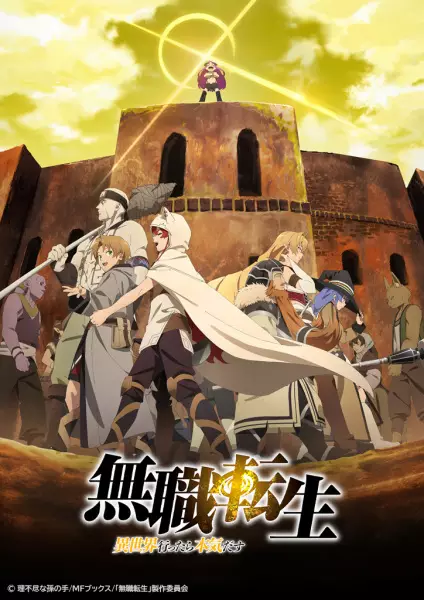
çĄčˇčť˘ç ď˝ç°ä¸çčĄăŁăăćŹć°ă ăď˝ çŹŹ2ăŻăźăŤ
12
TV
Finished Airing
Oct 4, 2021 to Dec 20, 2021
After the mysterious mana calamity, Rudeus Greyrat and his fierce student Eris Boreas Greyrat are teleported to the Demon Continent. There, they team up with their newfound companion Ruijerd Supardiaâthe former leader of the Superd's Warrior groupâto form "Dead End," a successful adventurer party. Making a name for themselves, the trio journeys across the continent to make their way back home to Fittoa. Following the advice he received from the faceless god Hitogami, Rudeus saves Kishirika Kishirisu, the Great Emperor of the Demon World, who rewards him by granting him a strange power. Now, as Rudeus masters the powerful ability that offers a number of new opportunities, it might prove to be more than what he bargained for when unexpected dangers threaten to hinder their travels. [Written by MAL Rewrite]
5.8/10
Average Review Score
35%
Recommend It
20
Reviews Worldwide
Isekai. Youâre probably familiar with this term. The sheer number of shows that come out each year from this genre has gotten to the point that many are just sick of it and would rather skip than watch the same formulaic anime. However, not every Isekai is created equally. There is one which has gathered somewhat of a cult around it - one that is seen as the grandfather of modern isekai, using pre-existing tropes but executing them properly. One that truly has the right to call itself an isekai. Welcome to Mushoku Tensei. This is the tale of a man known as Rudeus Greyrat and how heis forced to live in a new environment with completely unfamiliar customs, traditions and a never before seen power - magic. Contrary to most Isekai stories fans are familiar with, Rudeusâ flaws and regrets from his previous life carry over to his new body - flaws and regrets he often needs to reflect on. Throughout the series, the audience can see how he grows physically and also mentally. However, that does require patience. Changing is not a process that can happen right off the bat, instead requiring years of time and effort to accomplish. Itâs an aspect of the show which is constantly being driven home. The world around you and the people you meet will change as you grow. Nothing is static and will always move, forcing you to mature along with the world around you. It may be a painful experience. It might be sufferable. But truly living life to your fullest, not having any regrets and doing all you can so you can die without any is a task hard to accomplish. The characters in this show have some of the most realistic depictions of human beings that I have ever seen. In a typical Isekai series, the MC and their party are often tropey characters, ones whose personalities can be described in a few adjectives, very one dimensional and uninteresting entities. But when it comes to writing compelling characters that resemble us humans, it is important to factor in the fact that mankind does make mistakes and that nobody is perfect. We are all flawed individuals that often make mistakes, act irrationally and hurt others. Most of us have plenty of good sides but also bad ones that we try to mitigate or get rid of. We have complex personalities, and these aspects are what defines us as human beings. In Mushoku Tensei, the way in which audience is introduced to the characters is by showing them in the worst light possible, with their flaws on full display, to later make their growth visible as they change. Throughout the duration of the journey these characters have to face their vices and develop as people, slowly mitigating aspects of theirs that hurts those around them. The series teaches us that sometimes first impressions could even prevent us from seeing someone for who they really are - confusing it with who they appear to be. Willing to see past the flaws of someone and giving them a second chance is something that people should strive to achieve. Often times changing yourself requires a lot of effort and many just give up without ever trying to get back up. Looking at yourself in the mirror and acknowledging your mistakes is an important part in life. To see the flaws within ourselves and understanding what parts of us hurts those around us is the first step in becoming a better person. However, simply having the conviction to change is not enough and it may often require help of other people that will extend a hand and direct you on a different path. The animation and art is extremely well done, by some very talented animators that bring the series to life. Itâs fluid, itâs natural and it heavily immerses you to the world, captivating you almost instantly. There is a lot of depth put into it, showcased by various elements such as the grip on a sword, balance on the sand, fire changing color depending on the heat, the list goes on. These are aspects highlight just how detailed this show is and is part of what makes it so compelling and grounded. To add to the immersion, Mushoku Tensei has many openings, changing depending on the region the characters are current in. Each of these songs perfectly sets the mood. Overall, Mushoku Tensei is a story unlike any Iâve seen before despite, at its core, not doing anything groundbreaking. It has managed to execute the tropes flawlessly and has such wonderful character development and high production value that it stands out amongst many others from the same genre. Iâm sure itâs one thatâll be remembered for years to come. This is only the beginning of the long tale of Rudeus Greyrat and I'm convinced that many wish to see more of it. If there was a person next to you who struggles to change, who is suffering a lot, who is unable to read the room and may often hurt those around them - would you be willing to give them a second chance and help them on their journey? Or would you abandon them on the spot, turning a blind eye and ignoring them? Thatâs an answer that only you can find and I hope this show will open your eyes to it.
Click an episode to read its synopsis.
tl;dr I cared way too much when writing this review, and itâs really fucking long. However, you probably wonât find a more comprehensive and personalized breakdown of Mushoku Tensei anywhere on this website. The whole time I was working on it, I kept screaming to myself, âThis is fucking stupid! No oneâs ever gonna read this!â So hopefully you prove me wrong, and I didnât do this all for nothing. I finally figured out why I was wrong about this show, why itâs actually good, and why my prior complaints were foolish. My reviews where I come across like a snobbish attention whore are where Imost often find success, but whenever I actually care and put genuine attentiveness into my reviews, no one reads them, so since Iâm too jaded to think this time will be any different, Iâm not going to feel bad about going into meticulous subjective detail and writing something WAY overly verbose. I was actually going to write a review for part one back in March, but by the time I got to episode eight, I had no idea how I felt about the series, and I actually ended up dropping it. Saying, âI got to episode eight,â though, is kind of a stretch, since I had spent the last three of those episodes falling asleep, getting drunk, or fucking around on my phone or something because I was so bored, but if for no other reason than the appreciation I had for its astounding production quality, I decided to give it another shot. Instead of picking back up where I left off, I figured I had zoned out way too much when I originally tried to watch it, and should therefore restart from episode one and actually pay attention. I can usually tell just by looking at the studio, source material, and staff list whether or not an anime Iâm about to watch is worth my respect, which for me means no alcohol and no speed-watching, but this show was the first time my intuition ever missed the mark. The only person or entity involved with this project I had ever heard of was the composer, Yoshiaki Fujisawa, and while his music is incredible, that wasnât enough reason for me to take seriously something which looked like bland copy/pasted isekai trashâŚwhich I guess is my excuse for judging this book by its cover, but when I gave it a second chance, there were many moments which stuck out to me which didnât before. To explain why, let me first explain what I originally liked and originally disliked about the series. I absolutely loved the first four episodes of Mushoku Tensei, because they had gorgeous animation, gorgeous colors, gorgeous backgrounds, and gorgeous character designs, but because most of all, they were uncharacteristically well-written not only for an isekai, but for a light novel adaption in general. Good writing is hard to complement not only because 30% of the community understands what âgood writingâ even is, but because 99.9% of the remaining 70% donât care to learnâlet alone admit they need to. I could gush endlessly about the genius and hilarity of episode four, and donât be sure I wonât somewhere in this review, but for now I think the perfect example to make my point is this scene in episode eight where Eris plants herself on Rudeusâ bed like a landmine. Sheâs sat there in a night gown just stroking her hair awkwardly, and in his head all these red flags are going off. âWhat the fuck?! Why is she here? Is this a trap? Should I fuck her? What the fuck is going on?!â But when I first watched the scene, I donât think I was really taking all of this in. Iâm fluent in Japanese, so I can watch anime like a radio drama if I want to. So I was looking at my phone, and when I glanced up to look at the screen, I saw that first-person perspective shot of Rudeus breathing heavily, slowly looking down over Erisâ half-naked, hyper-sexualized, carefully shaded loli body and thought to myself, âOkay. Itâs a fanservice scene. I know whatâs going on.â And then went back to my phone. But on the rewatch, it quickly became one of my favorite scenes in the entire show, because the way it actually plays out is brilliant. When he comes in and tries to playfully shoo her away, teasing her with his perversion, she essentially says, âIâm here, soâŚyou know. Do what you want with me.â And this fucking guy goes full Tomihiko Morimi. Do you remember that running gag from The Tatami Galaxy where the main characterâs libido is represented by a literal voice in his head, a cowboy named JohnnyââJohnnyâ being a euphemism for penisâriding a bucking bronco? This scene honestly felt like that, because Rudeus, being a clumsy, horny, eager idiot with no sexual experience, fails to loosen her up or make her feel comfortable, so she kicks him off of her, goes âalright, you made it weird,â and just leaves unceremoniously. That scene is definitely loli fanservice, donât get me wrong, but itâs also a better and more honest piece of characterization than most anime even have the writing prowess to include. That scene demonstrates that despite being a cynical, forty year old NEET failure at life who always acts like heâs too jaded to take his surroundings seriously, Rudeus can actually become a boyish, innocent virgin whoâs completely at a loss when it comes to sexual tension, and it also shows us that despite always acting like a stuck-up, oujo-sama bitch whoâs better and tougher than everyone around her, Eris can actually become demure, vulnerable, and emotionally honest when sheâs around the guy she likes. That scene was so brilliant in how it used a situation everyone in the audience can understandâthat of clumsy, first-time sexâto instantly tear down all the charactersâ false pretenses and expose them as the lovable, dorky, clueless virgins that they are and humble them to themselves, each other, and the viewer. It was immeasurably endearing, and this impeccable characterization which gives the cast so much more depth than the archetypes which I first thought they would forever embody is the number one reason why this show is so well-written. This extends far beyond just the characters, but Mushoku Tensei almost feels like it was made for the sole purpose of including tropes, only to turn around and flesh them out so comprehensively, the viewer is forced to invest despite any initial judgements of its decision to include said tropes. When Eris first showed up in episode five, I physically rolled my eyes, sighed, and completely checked out. âOh, great. Here we go again. Another tsundere loli brat. How fucking unique is that?â But when rewatching the show and witnessing her subtle changes and growth over time, I had to take a step back and realize I was watching something which was fully prepared and able to subvert whatever expectations I mayâve had about how shallow its presentation suggested it would actually be. After all, my initial judgements regarding its generic presentation were the original source of my indifference. I hope Iâm not alone on this, but I absolutely hate isekai. I hate just about every overused anime trope you can name with a fiery passion, and the second I think a show is dipping its toes into such territory, it immediately loses my respect, and if I donât drop it, I just stop paying attention. Mushoku Tensei is an isekai, a really, really, REALLY generic isekai, and donât try to tell me itâs not fair to call it generic because itâs the progenitor of modern isekaiâas if I give a shit about the history of such a trashy genreâbecause while I can acknowledge the fact Mushoku Tensei is a trendsetter, and I can respect it for being a trendsetter, that doesnât make it any less trendy, and I am so fucking bored of all these trends. This is why I originally stopped caring after episode four. The presentation was always generic, but its characterization was also always stellar, and I know I just talked at great length about how I only managed to appreciate the well-written characters on my second viewing, but thatâs kind of missing the point of what I was trying to say. You very much feel this show entirely through the lens of what has become a jaded, forty year old man, and it undoubtedly makes other characters feel like archetypes, which they sometimes are, but with the exception of Sylphie whose scant screen-time leaves her feeling like a generic soft-loli archetype, this doesnât really become a problem until episode five. Thereâs moments after episode five where the in-depth writing really hits you in the face, like in episode eight when Philip offers to let Rudeus force himself onto Eris so he can enact a coup and win the succession battle between him and his brother, and you really get to see how dark his ambition truly is, but since I had already gone full bitch-mode by then, I only noticed the goodness of episodes one through four. Rudeus was not one of those handsome, young, one-dimensional, Japanese students who gets hit by a truck and finds himself in another world with a borderline sociopathic lack of attachment to his old life. He was a big, fat, unemployed, otaku NEET loser in his mid-thirties whoâs emotional baggage comes along to haunt him in his new life. The first full-length scene we see of his old life is him skipping out on a relativeâs funeral. Some of his family members burst into his room while heâs masturbating and are disgusted by what they see on his monitor. This is some of the most debasing, nightmarishly humiliating and degrading depictions of a protagonist Iâve ever seen portrayed in fiction, far from the generic, sanitized, uncontroversial cardboard backstories weâre usually treated to with young male anime protagonists. Then, when we actually come to the new world, weâre treated to Paul, Zenith, and Lilia. And this was clearly a very particular world the author wanted to portray. Zenith is a young woman with talent and promise who abandoned her life as an adventurer to become a mother and get happily fucked and felt-up by her perverted husband literally all day, Lilia is someone who internally admits to seducing said husband after growing unmanageably sexually frustrated hearing them fuck through the walls every night, and Paul, the main characterâs literal father, is just a fuck machine. Everyone talks about this. Like, heâs fucking everybody. He fucked the beast girl, he fucked the maid, he fucks his wife, and heâs even implied to have made passes at the mother of the neighborhood bully, and I hate to break it to you here on on this pure, holy website, MyAnimeList dot net, but thatâs realistic. Since most otaku are men who are scared of real women, characters usually donât fuck at all in animeâlet alone parents and theyâre doing it all the timeâso I loved the boldness of this presentation, but a big issue I nevertheless had the first time I watched part one was my complete distaste for Rudeus. I know this show is controversial for reasons tangentially related to him and his exploits, and I know our contemporary culture of unmitigated narcissism and self-righteous preaching encourages people to moralize about these kinds of things, but thatâs not what Iâm trying to do. I just genuinely didnât like him as a character, because I thought his portrayal was dishonest. Rudeus is reborn as the most privileged person imaginable. He has two loving parents with plenty of money and connections, heâs good looking, heâs exceptionally talented at magic, and heâs surrounded by cute girls whose only initial excuse to fall in love with him is the utter depravity and maliciousness of every other male character in the series. He also retains all his memories while somehow simultaneously being a hardworking guy who's really good at decision-making and social interactions, which, to me, felt completely out of character considering his previous life. He shouldâve been anti-social and lazy, right? The perversion stuff not being punished is just another extension of that, as he is conveniently reborn in a world where that's not seen as particularly offensive behavior. Again, Iâm too old to care about this kind of thing triggering college kids and their need for a likable protagonist to fit their moral echo chamber, but while this may be the reason Mushoku Tensei is maligned, itâs not the reason I felt the story was flawed. I simply thought it failed as a redemption story, because Rudeus has everything given to him on a silver platter while the series seems to simultaneously play defense for his less flattering actions. Itâs like the show has male characters who are perverted degenerates, but then shows their redeeming qualities as if it's an excuse saying, "See? Perverted degenerates aren't that bad. They can be really good people on the inside.â Which then makes the audience who are like him feel better about themselves. What I found to be even worse was how easily he got over his trauma. He shouldn't have so easily become fine with going outside, let alone dancing with a girl of high status in front of a crowd. The characterization in general was bold, but the development of Rudeus himself just felt lazy. The biggest misunderstanding I had about this show is one I got over the second I began my rewatch and actually paid any attention at all, and Iâll get to that in a second (spoiler: itâs the part about being a redemption story), but by overcoming the issues I had with what I first saw as rushed, lazy character development, I actually gained a whole new level of appreciation for the series. I think I had failed to realize just how fantastical of a situation Rudeus was actually in. This is a grown man in his mid-thirties having to live MULTIPLE YEARS looking through the eyes of a babyâs body as a cognitive adult, functionally immobile and illiterate, but perfectly lucid and intelligent. Think about the mental transformation you would undergo after spending MULTIPLE YEARS with all your wordily possessions ripped away from you, trapped in a body you have little to no control over. Forget about losing his Earthly attachments, given these circumstances, if we time skipped to him as a three year old and he had become a literal Buddhist Monk at one with the universe who had completely put to rest all his past anxieties, I wouldnât even bat an eye. Indeed, the fact he still had anxiety about going outside even after those MULTIPLE YEARS of introspection is itself a testament to how the series not only doesnât make light of the trauma in the way I thought it did, but actually overdramatizes it to a significant degree. Iâm honestly kind of embarrassed I even made that criticism in the first place, because Iâm always the first person to call people out for missing details the author chooses to trust with the audience. The Sybil System in Psycho-Pass is actually a benefit to society overall, but since the show hyper-focuses on criminals who slip through the cracks, weâre presented with a warped view of how effective it really is, and Urobuchi Gen trusts the viewer to appreciate the millions of people on the streets whose lives are being actively improved by the system; Rudeus undergoes a whole process of transformation, but since the show jumps through the formative years of his new life in a few minutes, weâre presented with a warped view of how existentially agonizing such an experience would actually be, but the author trusts us to realize heâs been spending MULTIPLE YEARS fumbling around in this unnatural out-of-body experience, pining for his old life, and putting to rest his old addictions, constantly making remarks like, âI may be reborn, but I still want to play with a computer.â As a depressed, suicidal loser whoâs suffered from years of bulimia, self-harm, and alcoholism, Iâm pretty familiar with what itâs like trying to drop addictions and break habits, and I think now is a good time to introduce a concept called âcold turkey.â This phrase is commonly used, but just in case youâve never heard it before, going âcold turkeyâ is when you abruptly stop using an addictive substance as opposed to trying to quit by gradually lessening the amount you take/drink/do. Going cold turkey when youâre severely addicted to things like alcohol can be dangerous due to life-threatening withdrawal symptoms unfortunately for some of us (boo hoo please feel bad for me I need help), but generally speaking, anyone who knows what theyâre talking about will tell you that going cold turkey is the best way to quit an addiction. It sucks at first, but if you can commit to it, youâll empower yourself, gain resolve, and break your habits in the quickest way you can. Rudeus was literally forced to cold turkey his entire fucking lifestyle. Notice that after the initial time skips, heâs never shown to have obsessive compulsive longing for his old video games, anime, light novels, or whatever, but the second he has to spend ten seconds outdoors, he clams up. If this is failing to appreciate the severity of mental trauma, I donât know what isnât. It pissed me off so much that his mental hurdles were seemingly jumped over so easily after I had considered him a character whose trauma and anxiety I could actually relate to, but now I see how interpreting this as rushed character development was stupid. And while itâs true I still have social anxieties I canât get rid ofâlike how I get paranoid about people walking closely behind me, or how I still canât eat in publicâso does Rudeus. Almost immediately after his big triumphant speech at the end of episode two about how heâs totally ready to go outside and be confident, he sees Sylphie getting bullied, and it sends shivers down his spine. He didnât suddenly get over his trauma in episode two, but he was suddenly forced by Roxy to take the first step and realize it could be done. Of all the things he had to cold turkey when he was reborn, the safety and comfort of the indoors was not one of them, and training with Roxy provided him with the initial push necessary for change, just as her company provided him with the companionship necessary to brave it. As someone with no close family, friends, or even vague acquaintances, this was seriously touching. So what about my issues with Mushoku Tensei being a misguided redemption story? Well, like I said, that oneâs easy. Mushoku Tensei is quite obviously NOT a redemption story. Itâs been made crystal clear to me that Iâm far from the only person to give this showâs presentation of gender roles a lopsided glance, but I live in the Bible Belt, and I therefore know a lot of submissive housewives who are happy as can be spending their days at home, being mothers, pursuing no careers, and cooking for their husbands when they get home from work. Most of these womenâpeople who I generally find to be much more at peace and fulfilled in their lives than most urban-dwelling, internet-connected individuals, myself includedâhave a strong distaste for the contemporary feminist movement because, to them, it seems to suggest not simply that traditionally male activities can also be undertaken by women, but that traditionally female activities shouldnât be undertaken by anyone, as doing so would run them the risk of being deemed inferior. But this isnât how they see it. From where theyâre standing, women have the right to do whatever they want in a free countryâsimple as thatâand if that means sticking to positions which were, in the past, promoted by a patriarchal organization of society, then that doesnât mean theyâre being taken advantage of, nor does it suggest, as is often implied these days, that theyâre too servile, supine, and ignorant to choose a more âliberatedâ path in life. Again, my perspective on this may be a little skewed after having grown up in Texas, but the fact a nation as conservative as Japan would produce media which doesnât share fanatical Western opposition to anything which even remotely suggests an older way of life may not be all that monstrously evil isnât really that big of a surprise to me. And as far as the perversion and degeneracy goes, allow me to digress for a moment. Like me, my uncle is an alcoholic, but unlike me, he let his alcoholism destroy his life and devolve him into a wife-beating bum. After his wife ran out on him, he was able to coax her back with the promise that he would stay sober and get an honest job, so they remarried and moved back in together. However, over twenty years later, he still has yet to ditch the bottle or hold down a job. He doesnât beat her anymore if you were wondering, but thatâs beside the point: he never changed his initial habits and the world never punished his degenerate lifestyle. He is complete, irredeemable scum. If your argument is you personally hate this show because its characters are disgusting people who arenât fun to watch, then cool. Thatâs your opinion, and I respect it. But if your argument is a character being contemptible somehow makes them poorly written or unrealistic, then Iâm afraid thatâs where youâve lost me. The problem, if anything, seems to be your thin skin and deep naivetĂŠ. Please also accept this friendly reminder that writing quality does not equal personal enjoyment. You can absolutely detest every single moral underpinning of Mushoku Tensei and still have the maturity to put yourself aside and acknowledge good writing. When I first saw episode four, I was like, âWHAT THE FUCK?! What a fucking asshole the dad is! How could they write in a bastard plot to this wholesome family show?!â But then I was like, wait a minute, this show IS fucked up and weird, and I kinda like it for that. Do I approve of Paulâs actions here? No, and Lilia seduced him. We get an inner monologue where sheâs like, âI literally made this happen because I was so horny hearing them fuck through the wall every night.â And the way that scene was presented, my first instinct was to be like, âwoah, thatâs kinda rapey, he just walks in on her,â except weâre literally hearing from her perspective, âI did this on purpose to seduce him.â Itâs constantly presenting me with daring pieces of characterization which proceed to make the characters compelling, memorable, and uniquely mature in the context of the show featuring types of people most anime donât. Like, when Rudeus goes to live with Erisâ family, they just love bunny girls. We see her grandpa just fucking some bunny girl one day because, well, sheâs a maid. Of course heâs gonna fuck her; heâs the Lord of Roa; he does what he wants; everyoneâs cool with it; this is whatâs known to be done. Some fiction are about morals, theyâre about learning a lesson and watching role model characters, and others are not. This is very much in the later category, and you have to have the intelligence to be able to differentiate between the two. I mean, should you ever try and pull the panties off a twelve year old girl? No. Does it reflect poorly on our protagonist that he did that? Yes. But Iâm an adult. Iâm not looking for moral guidance from a cartoon. And maybe I shouldnât be so blunt about this, because if a show can glean for me some valuable moral or life lesson, then great, but I can compartmentalize aspects of people and recognize the parts of them I don't like while also being interested in the story and world built upon where these flawed characters exist. I don't need the author to tell me something is bad. I can make that judgement myself, and it makes the experience that much more challenging and engaging, especially whenâletâs not forgetâthe point of the story ISNâT moral redemption. All Iâve done for the past decade is autopilot through life, devoting the majority of my brain capacity to fantasizing about the life I wish I was living. Ever since the whole âliterally meâ meme took off, Iâve always joked that Ringo from Mawaru Penguindrum is literally me, because despite our age difference, she and I are identical dumpster fires. You know when prototype planes crash, and the engineers collect their shattered pieces and reassemble the crash site in a controlled environment to examine the possible causes of failure? If you did that for the crash site that is my life, the debris would look exactly the same as Ringo at the start of that show, and unless you understand this mindset, I donât think youâll be able to fully appreciate Mushoku Tensei. This is a wish-fulfillment fantasy, NOT the redemption story which its critics insist itâs trying and failing to be. For those of you who need to use shitty translation tools to understand Japanese, the subtitle âIsekai Ittara Honki Dasuâ may yield different results, but if you want me to localize it for you, Iâd say the phrase is best translated as, âwhen I get isekaiâd, Iâll get serious,â and the way people choose to interpret this I find highly illuminating. When people characterize this show as a redemption story, they always point to this subtitle or the end of episode one where Rudeus almost says it verbatim as proof, but Iâm afraid people are misunderstanding the implications of âget serious about living.â He doesnât mean âlivingâ to say, âget a job, become a salaryman, be an adult, and make Abe proud,â he simply meansâto quote all the lovely hate comments on my profile pageâthat this time around heâs going to touch grass. Thatâs it. Heâs not saying heâs going to become a moral, upstanding member of society or whatever. Heâs saying heâs going to go outside, pursue goals, and fuck bitches. Donât ascribe to this show a noble purpose it doesnât have, only to then criticize it for its ignobility, as its priorities are made very, very explicit. In episode four, Rudeus narrates the history of sexual deviancy between Paul and Lilia, goes on this whole laundry list of reasons why Paul is a scumbag, but then openly states he nonetheless respects and admires Paul solely because heâs a strong, buff, chick magnet: the personification of the man he always wanted to be, faults and immoralities be damned. His arc isnât about becoming a good man. Itâs about becoming the man he always wanted to be, whichâyesâis not a particularly clean-cut gentleman. Now that Iâm finally done dissecting the characters and themes, I was going to jump right into gushing about what makes this series great, but I actually have a few complaints I want to get out of the way first. My complaints with the plot and presentation differ from my complaints with the characters and themes in that theyâre not nearly as large, but also in that they werenât inherently wrongheaded and therefore canât now be excused. My issues with the plot and presentation are simply that the latter sometimes gets in the way of the former. Again, Mushoku Tensei is a really generic isekai, and while its execution is honestly amazing (and weâll get to that here in a second), the foundation never really gets any more interesting. This would be fine, especially considering the stellar execution, but whatâs annoying is the series will often include elements that play into the meta comedy way too much. Thereâs a lot of fanservice and ecchi shit, and I get that, half the cast is unspeakably perverted as Iâve already detailed at great length, but thereâs also a lot of other pandering which, unlike the fanservice, doesnât really follow from the setting or characters or anything. Thereâs small things that donât really matter like a character in episodes sixteen and seventeen who wears a bikini for no discernible reason, but then thereâs really annoying shit that takes up huge swaths of screen time like episode twenty. The entire episode is based around a joke where the antagonist is foiled by his brother coming out of nowhere and saving Rudeus in exchange for his Roxy figurine, and while this couldâve been really funny since theyâd been building up Rudeusâ figurine trading monopoly since episode six, the way it was executed was just so overbearing and unfunny. Am I even describing this well? What Iâm trying to say is sometimes the pandering otaku shit ruins my immersion when it doesnât logically follow from Rudeus, a literal otaku from Japan, or something which makes sense in-universe. A good comparison would be how back in Roa, the Boreas family had an animal girl fetish. Thatâs an otaku thing in real life, but it works in-universe because beast people actually exist in-universe, and it makes perfect sense that some people would have such a sexual preference. It then works well as meta comedy since, again, furries actually exists in real life. However, in episode six when Eris does the nyan nyan shit out of nowhere before this fact is really established, itâs groanworthy. Do you see what I mean? Other than that, the only other issue I could possibly take with this series is some inconsistent animation in part two. The first three and last three episodes are consistent with the rest of the show, but the mid-section can be a little shaky, especially episodes fifteen through eighteen. But wait. âInconsistent quality? You mean the problem that plagues 90% of all anime airing these days? If the quality is droppingâŚthen whatâs it usually like?â Well, Iâm glad you asked, because the quality is usually out of this fucking world. The staff behind Mushoku Tensei loved it so much and were so committed to doing it justice, they established their own animation studio and production house in order to make it, and their hard work and effort absolutely shows. Mushoku Tensei is easily among the highest quality anime of 2021, with the only shows I can think of to definitively match or outdo it being Ousama Ranking, Sonny Boy, and of course Production IGâs Kaizoku Oujo and Kyoto Animationâs Miss Kobayashiâs Dragon Maid S, with Wonder Egg Priority and Vivy: Fluorite Eyeâs Song coming close. No matter how much someone like me may want to bitch and whine about it looking or feeling âgeneric,â anyone with even the slightest appreciation for the craft of animation simply has to concede the point that Mushoku Tensei looks captivatingly gorgeous. If I remember correctly, episode five was animated entirely by one person, and while this doesnât actually reflect poorly on the production in the way a layman may think (at least assuming it wasnât a decision made out of desperate necessity and the animator in question has the expertise and experience to pull it off), it requires a healthy schedule to do, and to say the absolute least, healthy schedules are hard to come by in the current industry landscape. The double split cour release schedule and the aforementioned inconsistencies throughout part two might suggest the schedule wasnât as healthy as maybe the staff wouldâve liked, but I honestly think itâs just a matter of ambition. Not only did they produce an incredible looking TV anime, but they animated separate PVs for each cour, both of which look absolutely breathtaking. I feel like the team has gotten more efficient in prioritizing their heavier work loads in the more important sequences, and the animation in the pilot episode was so jaw dropping, my jaw is still on the fucking floor twelve months later. Whatâs even better than the animation though, is the color palette, compositing, and background art. Despite its generic isekai foundation, this setting is SO rich, itâs unbelievable. When Rudeus was still living in the village at his parentsâ house, the backgrounds were great and all, but the setting wasnât distinctive enough for them to really pop out at me, but the second he left and went to Roa, The Demon Continent, Millishion, The Shirone Kingdomâall the environments just blew my fucking mind. The art direction in this show is honestly so good, Iâm tempted to compare it to Takeda Yuusukeâs work on Guardian of the Sacred Spirit, and the color design is equally outstanding and worthy of just as much fangirling. First of all, I love it when a show has the expertise to get dark, and I donât mean conceptually, I mean when a director knows how to literally make the screen dark without making the show look like a muddy, black mess where the audience is constantly squinting at the screen and canât tell what theyâre looking at. Thereâs many instances of this throughout the show, but the moment which stuck out the to me most was this fight scene in episode fourteen where a guy with tan skin, brown hair, brown facial hair, black boots, a brown vest, and a black trench coat fights on earthen dirt in the dead of night against a backdrop of dark brown trees and blackened leaves, and every sequence of animation looked perfectly smooth and cohesive. Trust me when I say I could talk for hours about how much I love this showâs deep colors and constantly changing, unique palettes for each different environmentâall of which pull from different architectural sources for the layouts and details in the background art, by the wayâbut now that I mentioned fighting, I simply have to move on to the action sequences. The action in this show is fucking sick. These days, anime action is all about shitty 3D backgrounds, CG characters, and epileptic ufotable digital effect spam, but Mushoku Tensei is a classic, hand-drawn beauty. Thereâs tons of training sequences and sparing matches sprinkled throughout the series, but instead of treating them as trivial, they often have ridiculously high-quality sakuga. Thereâs only like one real fight with actual narrative weight in the entire show, and it might just be the most nail-biting, heart-racing, intense action scene Iâve seen in years. Whatâs more, and what makes Mushoku Tensei come close to being a complete technical masterpiece, is how all of this meticulous and impressive animation production design contributes to enriching the in-universe world building. Iâm sure youâve already heard everyone talk about this in every form and fashion, but I simply must gush over how astronomically amazing the world building is. In episode nine, Ruijerd kills this giant turtle, and I thought to myself, âWow, thatâs a big fucking turtle. You could probably make a house out of that.â Next fucking scene is this village of giant turtle shell houses, and I nearly screamed at how genius that was. You can tell that whoever put these details inâwhether they be the original author, the director, or even the individual animation staffâactually put some thought into this setting as a medieval fantasy world. For example, when Rudeus is studying with Eris and Ghislaine, they're using reusable wax tablets. Any other cheap, thoughtless isekai anime would just have them waste paper for writing, and that would be glaringly unrealistic to anyone who knows their history. The same goes for the sex. What else are they supposed to do in their free time when they live in the country and own literally four books? Sex is free and fun, and in this world promiscuity is obviously much more acceptable for the young and those with power. I would take even the most problematic moments from Mushoku Tensei over some stupid, âOh, no! My clothes dissolved because of the slimy acid!â trope or whatever other generic anime fanservice weâve grown used to. Since I was watching this show seriously the second time around, I was wearing my good headphones, and barely eight minutes into the very first episode, I was already getting annoyed by how good the sound design was. Rudeus was reading Zenithâs magic book, and I kept thinking I was hearing shit in the background, like my neighbors being obnoxious or sirens blaring on the street, but in actuality, I was just hearing the countless animals around the Greyratâs farmhouse. This show is so much more immersive than your average anime, it became momentarily unimmersive, and thatâs an achievement. Thereâs a scene where Rudeus shoots a drill of heated rock at this character, and the sound it makes when that character deflects it and the shattered pieces hit the ground is a sound effect I donât think Iâve ever heard in an anime before. Anime sound design is a dying art form, because most viewers donât give half a shit, and since the studios know this, they usually chose to expend zero effort in this department. Most people just want to see flashy lights and lewd-able waifus. But whenever you watch something like this with actual love and care put into every facet, the competence and attention to detail on display can be such a refreshing reminder of what real anime can achieve. Thereâs so much more I can say about a series this rich, but this review is already preposterously long, and I guarantee fucking no one is going to read this far in, so Iâm just going to use this paragraph to collect some final thoughts, and then make my way to a conclusion. The first thing I never got around to mentioning was the incredible magic system. The magic system is so intricate and fascinating, but whatâs impressive is that it never devolves into a Hunter x Hunter snorefest where the protagonists have to literally sit down for entire episodes and have a teacher explain it on a fucking white board. I always complain about how Greed Island made no sense, but only because I fell asleep during Heavenâs Arena. In Mushoku Tensei, you learn things naturally, piece by piece alongside Rudeus (who also knows nothing) experimenting alone in his room. This natural, non-infodumpish manner of exposition serves as the foundation to understand the later advancements he makes, so at the end of the day everything feels cohesive and gradual. Then thereâs Hitogami. I saw a lot of people complaining and saying Hitogami was a deus ex machina, and while I see what theyâre saying, I also canât possibly be the first person to notice that this so-called Godâeven from the perspective of an anime-only such as myselfâis obviously not a God, at least not in a traditional omnipotent sense, and also obviously duplicitous, so calling him a plot device seems to me like a dull-minded thing to do. Then thereâs the romance, so Iâm going to have to say a few spoilers. I appreciate how the sex scene with Eris wasnât presented as romantic or erotic, and was instead genuinely contemplative, depressing, and awkward to fit the tone. I also find the overall approach to Rudeusâ harem to be odd, because given the showâs apparent commitment to developing each girl separately and given the fact weâve already seen functional polygamy in this world, I have a sneaking suspicion weâre going to get a legitimate harem ending, but either way, thatâs a long way off. Other than that, I guess the only thing left to do is reiterate how genuine of a personality this series has. In episode twenty one, when I saw the fireball change colors in accordance with Weinâs Displacement Law right after being reminded this show features two principal characters named Laplace and Ărsted, I was like, âthis author must be a physics nerd.â In episode eight, when I saw how Rudeus scared Eris off by rushing the foreplay, I was like, âthereâs no way this author is a virgin.â Iâm talking about the subtle touches, the details that reveal things about the creator and make their creation feel human. I really hope this show gets a second seasonâŚand a third, and a fourth, and a fifth, or however many it needs to adapt all the novels, and I hope they stop trying to force a two cour show so they can keep consistent quality. They should do a one cour season per year, adapt three volumes per season, and pace it out slowly into twelve or thirteen episode cours so they donât have to cut content. Given how gorgeous this show is and given how rich its setting feels, I wouldnât mind a slower pace at all. The sequences we get of characters just walking from place to place, looking over a field or a hilltop, or witnessing an establishing shot of a new settingâtheyâre all so seductive to me. This world just feels good to sit in and experience, because itâs so fleshed out in ways few are. If I had been serious about watching this show back in March, I couldâve given part one as high as an eight, and while the general inconsistencies throughout the mid-section of part two will likely earn it a six, Iâd still give the whole season an average score of seven. Since the animation is so good, thereâs tons of delightful, expressive sequences of character acting in this show, and while my favorite example of this has to be Eris pacing around, trying to console Rudeus on the bed in episode sixteen, thereâs a behind-the-scenes story I wanted to share about the scene in episode twelve where Rudeus meets Kishirika. The animation staff was so in love with Kishirika and so excited to work on that scene, they actually fought over who would draw it, and the description one of them gave on Twitter really made me smile. âIâve told some colleagues that I witnessed a real âWaifu Warâ at one episode I worked at, and it was indeed this one. The âWarâ being the animators fighting over the new cute girl of the series. It happened that almost all the animators in the episode (including me) wanted to animate the Kishirika sequence, because it was simply hilarious and the character is so cool. So we began flexing and bargaining with PA-san so we could get the sequence. Things like: PA-san, I promise I can make this sequence faster, so please give it to me! It seems we put PA-san into trouble, because he didn't know whom to give the sequence, and we were all putting pressure. I think it even delayed the production like a week XD. So that was it, âWaifu Warsâ are real for some episodes. We might be professionals, but the weebness is stronger.â Toshiyuki Sato won the fight and got the privilege to animate the scene, but Iâd say the real winners were us: the viewers. The sheer personality in each individual frame of that sequence had more love and character put into its creation than most entire anime do from top to bottom. Simply put, this show has soul, and in an industry that grows more cynical with every passing day, Mushoku Tensei radiates with the passion its creators so clearly have for it, which I guess is kinda funny, because if I never found the motivation to endure its tropes and find the surprising depth therein, I never wouldâve gotten to experience its expertise, its flair, or its beating heart. I like this series, and though Iâll probably never love it, I would've missed out if I simply wrote it off as generic, degenerate trash. There's more than just fool's gold here. Thank you for reading. Iâm serious. If you actually read this far, I love you. <3
Mushoku Tensei is one of the most divisive anime Iâve seen on MAL. Certain online communities have fallen apart and friendships between anime viewers have also ended because of this show. Iâm not even joking. Take a look at the MAL forum posts for MT. Itâs almost impossible to have a cordial discussion between a fan and a critic because of all the back-and-forth and toxicity. Itâs also why almost any criticism or praise has been met with immediate backlash. Thatâs why I will admit that this review will not be completely impartial. However, I still want to try and capture both sides of thedebate, because reviews are opinions meant to help potential viewers. So this review will not be just one, but TWO reviews. One shall only criticize MT as a wholly bad show and explain what people donât like about it and the other review shall only praise MT as a flawless masterpiece and explain what fans like about it. I have put full effort into both. Here is what I have to say. Why MT is one of the worst anime in modern media: Mushoku Tensei is conceptually appalling. It is one of the worst incel redemption stories ever created and has spawned so many more. It combines all of the worst parts of anime and media in general into an âenjoyableâ experience for a specific group of viewers. It uses male dominance and toxicly masculine beliefs to justify its system as ârealâ. No one would be complaining if that was not present in the show. MT is a male power fantasy about a 34 year old man who got hit by a truck and reincarnated in another world with all memory intact, a cliche premise at best. Rudeus is also an unlikeable MC, but not for a well-written reason. His primary flaw, making him the most dislikeable amongst most if not all critics is that he is proudly pedophilic, even in his second life, and has extreme issues with self-control; if he was a person in real life, he would be in jail because of all the sexual harassment heâs committed. A good way to redeem Rudeus would be both acknowledgement of his horrid actions, never repeating them again, and actively making up for what heâs done, but as of now, it only gets worse and worse. One of the contributing factors to Rudeusâs failure to change is the comedy, the subjectively worst part of MT. Let me just say my bar for comedy is fairly low. My favorite genre is comedy. If something is funny, I cannot hide a smile from my face. However, if Rudeus was a comedian, heâd be compared to Bill Cosby and Louis C.K.. Yes, thatâs the type of person he is, unapologetically so. Pedophilia and rape jokes were never funny and still are not. Comedians who think otherwise are delusional, attempting to normalize such sensitive issues as âcomedicâ. When a character-driven story is focused upon an incel and there is comedy, degenerate comedy is always sure to follow. Some of these stories are successful like Onanie Master Kurosawa, arguably Re:Zero, and even Jaku-Chara Tomozaki-kun. But why do these media succeed while Mushoku Tensei doesnât? Itâs because the incel comedy either evolves or outright disappears along with the incel characters they relate to. Mushoku Tenseiâs comedy has and always has remained the same in both cours. Whether it be peeping on young girls naked or treasuring their underwear, Rudeus keeps repeating his actions. It is evident that Rudeusâs fundamental flaws are not actually acknowledged, staying true to MTâs dark incel comedy rather than criticizing him for what he is. For instance, take the infamous figurine scene, a whole minute exhibit of a Roxy statue Rudeus had crafted. One of the characters narrates every last detail about the figurine from Roxyâs clothes coming off to the little features of her nude body, practically breaking the fourth wall. Rudeus feels no shame nor regret towards his nasty creation and actually provides even more information about it. This scene is considered a funny marketing gag to fans, but at the end of the day, fans are still going to buy it. The audience is never shown why this statue is morally bankrupt nor offensive. If there were any actual self-criticism of MTâs âwaifu marketingâ, rather than just self-awareness, all efforts have fallen flat. Mushoku Tensei is unabashed in its comedy, but it never actually reflects upon itself and shows the audience why itâs wrong. Instead, it capitalizes on âwaifu marketingâ and perpetuates it even further. Even if Rudeus stays a pervert, he can still grow in other ways right? If Rudeus actually demonstrated character development, it would be obvious. The evidence for character development is clear from a comparison of Rudeus at present and the past. What are his flaws at the beginning of the show? He is a NEET lolicon who has made many poor life decisions. Rudeus never addresses his mistakes with a direct apology nor actually tries to make up for his bad habits from the past, only occasionally âreflectsâ. Has he changed from any of these obvious flaws? Not really. Even though he stopped being a NEET, he is still a pervert with the same bad habits. He also doesnât actually apologize for his bad behavior towards friends and family. Instead, he selflessly saves a bunch of helpless people from whenever he hops towns and becomes a hero on multiple occasions, but he never addresses his fundamental problems as a human being. Thatâs why Rudeus is a failure of a redemption story. He uses his heroic acts of kindness saving generic villages as a bad excuse for actual character development. It would be nice if the writer actually acknowledged this. In fact, Rudeus is one of the most idealized heroes since Shield Hero. Heâs a Gary Stu thatâs never considered flawed by other characters except his adversaries. Even when he gets placed in prison, he will still help his captors when they are in trouble. He is a hero who doesnât bear grudges. Anything questionable or nonconsensual he does, whether it be peeping, or touching someone uncomfortably, is immediately forgiven by his harem and everyone else since they love him or will eventually bow down to him. No one in real life would be able to do this because the stuff Rudeus does can be scarring and even traumatizing. But since Rudeus is a Gary Stu, he will always be unconditionally forgiven. Rudeus is unconditionally loved and Rudeus unconditionally loves the young girls in his harem but in an extremely uncomfortable and morally disgusting way. In fact, heâs usually rewarded for his bad behavior thatâs portrayed as good or funny even. In the world of MT, Rudeus is normal. If he makes a âmistakeâ, he takes responsibility and is forgiven for that. And then he does the same thing again, and again, and againâŚitâs a cycle. He is inherently a hero in the frame of the story. When people look at Rudeus in fear or look down on him, the audience is always supposed to empathize with him. Heâs not actually flawed enough to not be considered perfect because of the way Eris, Ruijerd, or any ally will always love and support in all he does even if heâs in the wrong. Itâs not normal. Just because he doesnât see himself as a hero doesnât mean the audience is being told not to. Itâs all about the framing of the narrative. Even ignoring everything said before, Rudeus is handed all his power-ups whether it be reading a foreign language or incantation-less spellcasting while still in a diaper, a tremendous advantage along with his mind as a 34-year old, meaning he is overpowered. From a writing perspective, he is unrealistic even in the confines of his own fictional world, making him objectively flawless. He still gets handed super-powers in the second cour like his future sight eye, giving him an obvious advantage over everyone. This is not only boring to watch but it also means Rudeus will always end up on top, just like any other male power fantasy. Even when he loses a battle, there are never any substantial consequences. And we have the other problematic characters...Eris is a tsundere and also Rudeusâs cousin. Because of Rudeusâs tendencies, particularly in episode 11, in which Rudeus disgustingly grooms her, that means there is incest. Sheâs literally 14/15 but still fanservice for Rudeus and the audience. I hate to call a minor this, but she is one of the waifus of MT; just cause âadulthoodâ in MT is 15 doesnât mean she is actually an adult. Sheâs the perfect young girl to comfort our âmiserableâ protagonist and his struggles as a âflawed maleâ when heâs practically perfect. Her own arcs can be broken down into training and friendship. Training arcs have never been praised and still are not in MT; itâs a weak substitute for character development, especially if there is no thematic value to it. Even when Eris actually becomes strong enough to overpower Rudeus, Rudeus will immediately be given superpowers such as foresight to continue his male domination over her, so itâs meaningless. Even when Eris gets a full arc with the Doldia tribe, a group of beast-people that Rudeusâs party encounters, she remains the same person. People like Erisâs character for her progression from a cold personality to a warm one. She remains 2-dimensional the entire time. The only thing that makes someone feel emotion towards her is the cheesy piano music in the background during her âdevelopmentâ. It is literally impossible to find someone like her in the real world because she is a tsundere. Roxy is a loli. Her development is apparently from an âimmatureâ loli to a âmatureâ/kuudere loli so she got even worse from a writing standpoint. Her purpose is to get sexualized for merch and help Rudeus out. Her backstory is provided as development but it doesnât explain anything about how she became a kuudere. An inability to communicate in what is essentially the writerâs cringeworthy attempt at a segregated setting leads to Roxy running away from her village without explanation and somehow surviving in the middle of a desert. Tears fell down from Roxy during a painful reunion but none fell from the audience since there is never enough build up or reason to care for such a shallow character nor story of alienation. Even if her backstory was more impactful, the more lasting impression on the audience is the aforementioned âcomedicâ nude statue of her in a following episode. Rudyâs father, Paul, is one of the worst characters of MT. Not only is he complacent in forcing the idealism of toxic masculinity on Rudy, heâs very misogynistic in the process. When he is no longer the confident alpha male he once was, weâre supposed to empathize with him for his failure. The recurring media trope is that once a strong male loses something of importance, then weâre supposed to admire their development from that. But this development never addresses his problem as a character. He is a domineering alpha male that takes control of everything and doesnât see people, not even his loved ones as equal. Paul is so toxic. His development is the laziest possible way to develop a toxicly masculine male. Rather than using a resolution that involves Paul acknowledging and working towards his flaws, every horrible thing Paul has done will be forgiven since he is now a hero who rescued all the villagers from the tragic mana accident. Paul doesnât address whatâs wrong with him as a person, Paul uses a workaround as an easy way out and we as the audience are supposed to forget all the horrible things heâs done. The writer thinks that just having Paul suffer and just apologize is enough to make up for all of that. But thatâs not how mending family and relationships work. Apologizing is the BARE MINIMUM. Then, you have to put the work into changing as a person, actually treat other people with human dignity, and learn to put others before yourself. Paulâs core development is âforget[ting] everything [that] happenedâ rather than accepting his mistakes and growing as a person. Like father like son, he is a failed redemption story. Even the antagonists are one-dimensional. They all have barbaric motives at best. Theyâre comparable to old Disney villains. Once bad, always bad. Interior motives donât matter since we know they will either betray Rudy or are just overtly horrible people. A pathetic antagonist is not the same as a good antagonist. They should have as good of a motivation and character as the protagonist, instead of being as cliche as possible. One of the antagonists use threats of rape too. We donât need that. Rape threats are not good dialogue and it doesnât characterize them in a complex way. It only adds on to their simple personality of being sexist and horrible like everyone else in the show. Just because Rudeus knows the antagonists are creepy or pathetic doesnât make it better. Itâs the same as SAO antagonists. Their only purpose is to be defeated so the protagonist is rewarded and heroized. People always praise the audiovisuals but there are sometimes numerous still frames and off-model faces in scenes where there is no sakuga. Sometimes Rudeus and Eris will look blurry if they are in the background or if the angle is pointing at the side of their faces. There are even a few times that they are barely recognizable because the budget wasnât allocated consistently. The music is also annoying. It actively tries to pull your heartstrings and force you to feel certain emotions but it always fails. The overall OST is just boring and lacks any feeling to them since they are for the most part reused and just generic background music. It has no identity of its own. Even the world-building, MTâs âstrongest pointâ might as well not even exist. They just go from one generic village to the next after Rudeusâs party saves the day. If explaining how magical powers work is considered good world-building, then any sci-fi show or movie has inevitably failed because they donât explain magic. World-building doesnât make a story good. I cannot even name a single MT arc nor town because the location and setting doesnât really matter. Why did I watch MT? Because itâs become the new SAO, the new Re:Zero, the new best isekaiâŚexcept that itâs supposedly the FIRST best isekai. MT is popular for all of the wrong reasons. Mushoku Tensei at its core had potential as a legitimate redemption story, but it failed miserably and did not even attempt to fulfill its primary theme of character growth beyond a surface level because Rudeus at his core never changed. Itâs a relatable tale for people like Rudeus in his first life, except itâs actually an escapist tale of fake struggles and undeserved rewards for doing less than the bare minimum. If youâre not sure whether or not MT is for you, just give the first few episodes a shot. If youâre disgusted, drop it like a piece of shit in the toilet. If youâve managed to watch all of Mushoku Tensei and find yourself still not on the hype-train, know youâre not alone and that you should be rightfully appalled by this utter catastrophe of an otaku fantasy. ââââââââââââââââââââââââââââââââââââââââââ- Why MT is a dark masterpiece Mushoku Tensei is the best isekai in existence and will forever be remembered that way. It is a redemption fantasy about a 34-year old man hit by a truck, reincarnated in another world as a newborn known as Rudeus Greyrat. Premise sounds familiar? Itâs because MT was the first isekai with this premise and inspired every other one that we know of today. In his former life, Rudeus was bullied into becoming a HS dropout, becoming a shut-in, refusing to even attend his parentsâ funeral many years later. However, his reincarnation is a second chance at living life to the fullest and where his story really begins. Unlike most isekai, Mushoku Tensei is unapologetically a cynical view of how the real world functions and will use morally ambiguous, but believable themes to express its intentions. It has a realistic main character that can be related to because he is flawed and honest about it. His internal conflicts are a part of how flawed real people are and how they must learn to become better and have self-control. Rudeusâ constant battle against his lust and his past self is derived from his subtly hinted shame. If he truly was horrible, he would be Makoto from School Days. He simply is not. He struggles with self-restraint. Yes, he is a pedophile, but Rudy always gets called out for it and apologizes. Just because I am a fan does NOT mean I support everything Rudy does. In fact, I think itâs funny when he gets punished for his pervy-ness. Rudeus has anxieties and fears that he confronts all the time. He has very low self-esteem and tries to improve but struggles. Even when he started out with an advantage and is given help by Hitogami, he is still plagued by his past traumas and failure to protect others. He is an extremely in-depth character for that reason. Even if Rudeus has mostly developed away from being a shut-in, the appeal is that he still has much more to grow. The fact is, Rudeus is selfish and makes mistakes. He isnât able to save everyone all the time. There are occasions where he almost let Ruijerd and Eris almost die, and actual people get killed due to a simple mistake. Rudeus has blood on his hands and still feels that way every time he fails at protecting friends and family. However, when presented with a choice between letting a stranger live or die, Rudeus will actually think about it. A perfect hero would not even think. Rudeus is not like that. He just has basic morals. Heâs not heartless but he values his own life. Rudeus is the perfect example of how people can realistically change, little by little, regardless of how slowly that is. By Rudeusâs side we have Eris, a strong female lead. She works hard and is like a rival to Rudeus, strengthening their relationship as well as herself, whether it be her physical training to become a warrior and an adult, or her tender, subtle care for Rudeus and vice versa. Her individuality as a tomboy subverts gender roles and is well portrayed. Eris is a perfect example of a character that shows instead of tells. The way she expresses herself through her actions makes her a human person. Itâs hard not to like her as a person. The way she shows genuine emotion and weakness through uncharacteristic tears is so heartwarming, because of how much she values her relations with others. She's just so innocent and pure. Despite suppressing these emotions, she tries her hardest just to be equal to Rudeus, particularly in ep11, making her another admirable character. She brings life to Mushoku Tensei with her exciting personality and has inspired other girls like herself in other isekais, but none will be as good as the original. Roxy is another well-written, in-depth character. Even when sheâs not on screen, Roxyâs personality shines. For example, her very inferiority complex is revealed through details put into a figurine of Roxy, crafted by Rudeus himself, also showing self-awareness of whatâs wrong with the anime industry. Thatâs a product that someone could consider buying because of the thought that went into its creation and on the screen. Funnily enough, itâs nuanced art. On a more serious note, Roxyâs backstory is probably the one that hit the hardest. Her childhood is one in which many can relate to, not being able to fit in with everyone else. Using barely any dialogue at all, the writer shows how alone Roxy was, being unable to make a single friend or even talk to a single person, due to a disability. Amongst her village, she is deaf. She canât understand others and others cannot understand Roxy. Itâs a simple metaphor for being unable to talk with others in real life, but it is even more emotionally resonant because of how believable it is. It explains why Roxy rushes to become an adult and desires to hide her weakness so she canât be pitied any longer. She seeks to be more than she is, which is something we should praise. Despite her size, she ends up being one of the bigger people of the series, by returning to her village and reconnecting with those she had abandoned, making for one of the most heartfelt moments of the series. Another one of the underrated characters is Paul. In the first cour, we see how imperfect he was as a father but how he still addressed his mistakes and tried to raise Rudy right. However, this cour, Rudyâs father becomes a shell of his former self. Heâs someone who tries to right his wrongs after losing everything, which leads to one of the most climactic moments of the series, the reunion between Paul and Rudeus after the mana explosion. Due to how physically and seemingly mentally healthy Rudeus appeared, Paul shuns Rudeus for having a carefree life, guilt-tripping Rudeus for not suffering enough and putting his efforts into saving others from the village, despite the fact that Rudeus had indeed undergone such experiences. However, Paulâs conflict with Rudeus is one of genuine meaning as it came from Paulâs own failure to protect his family and village. The value of life is significantly emphasized and development is shown through Rudeusâs own empathy toward Paul and reflection as a person. Through communication between father and son, both Paul and Rudeus are able to accept not just each otherâs mistakes as human beings, but also their own. For some reason, Paulâs development is heavily underrated in his arc despite the fact Paul had to endure nightmares for months about family members dying and Rudeus losing body parts. By acknowledging his own mistakes as well as Rudeusâs own struggles in the Demon Continent, the audience was able to witness one of the most clean resolutions to a family squabble in anime! Paulâs own redemption arc really showcases how the writer does not leave even supporting characters untouched. Rujierd is my personal favorite character in Mushoku Tensei. Just like Scar from FMA, he has one of the most conflicted moral compasses and some of the best characterization in the series. In the beginning, we learn heâs from the Superd tribe, a clan shunned for their former rampage in the Demon Continent, and is portrayed as an antagonist. However, Ruijerd is simply someone who wants to clear his clanâs name of wrongdoing and improve relations with other races. His initial inability to see individuals beyond just âgoodâ and âbadâ was horrifying as he brutally murdered anyone who he deemed as âbadâ, particularly those who harmed children. Ruijerdâs development beyond such a shallow form of judgment is quite refreshing compared to the typical do-good hero one would see in other isekai, as Ruijerd learns how to compromise his own values with others in order to protect those who are important to him, Rudy and Eris. He is the supporting character that is needed to train and protect Rudyâs party as they try to find their way home, until theyâve grown into fine adults. The antagonists of MT add to the dark atmosphere of the show as a whole. Theyâre also comedically written to the point where itâs obvious they are meant to be laughed at. The way Rudeus sees them as people who can be taken seriously or as a threat makes sense because thatâs what a real person would do in real life. Characters like Pax quite literally act like a child and thatâs how they should be viewed. They have very believable motivations. Just because some of their dialogue lines are offensive, doesnât mean the whole show should be treated like this as a whole. Context matters. They serve to showcase how messed up the world of MT is, itâs not rainbows and sunshine. Theyâre not there to heroize Rudeus either. In the Doldia Village arc, Rudeus actually debates whether or not to just flee to safety rather than fighting the antagonist. When Rudeus struggles against Pax, he uses the perverted Roxy figurine to set himself free. Rudeus isnât perfect, even in combat scenes which is why heâs written well. The antagonists only serve to showcase Rudeusâ complexity and creativity as a person. The art and animation are just as brilliant as the story itself. It has some of the best sakuga since Demon Slayer. Compound that with the sound and you have the best possible audiovisual experience to accompany the best possible characters. Even though there is no opening song, the expansiveness of the world-building can be seen throughout the journey of Rudeus and his party. From bristling yellow fields to snowy lands to the intricate treehouses in the Doldia Village, Studio Bind illustrates their passion through animation. Thereâs a reason Studio Bind has not animated any other shows/movies, and itâs because they knew Mushoku Tensei was one of the best, so they pulled out all the stops, rightly so. Heck, they even invented their own fictional language, just like Lord of the Rings and Futurama! And donât forget how the magic system, power system, and power-ups are explained down to the most minute detail, almost as well as Hunter x Hunter. On a technical level, Mushoku Tensei is a masterpiece. I think even critics will begrudgingly have to agree with that. In conclusion, Mushoku Tensei is a must-watch for fans of subversive isekai. Itâs a gift of 2021 with the best possible quality. Itâs hard to imagine this wonât age well considering how itâs still well-received by fans even 7 years since the light novel was first published. To those out there unsure what to feel about the series, donât let anyone decide your opinion. Your opinion is rightly your own. Even if I donât view MT as flawed, I can acknowledge those who do and I hope they do the same for me as well. It is a controversial series, but itâs one full of love and passion, which is why it is a masterpiece.
Alright, I wanna get right into it. Mushoku Tensei is a series known for being the grandfather of the insanely popular Isekai genre of shows, and it has a lot to its name, but these 23 episodes that they open with are not good. Straight up. I want to give credit where it is due, though, so let me talk about the technical aspects. This show is done by Studio Bind, and itâs actually their first time ever doing an anime series. Let me tell you thisâbe excited for what else this studio has to bring to you, because from what Mushoku Tensei shows you, itwill at the very least be visually stunning. Each scene in this show is so beautifully done, and each visual quirk added to each design or moment is so important to what makes it so amazing to watch. The magic in this show comes not only from the spells cast, but from each water droplet, each window of crown glass, each fight scene, each facial expression, and everything about the world it brings to life. The sound in this show is front-to-back bliss as well. The voices cast for each character are perfect, with each talent being able to show off a wide range of emotions, while still keeping in character. The songs in the show manage to team with the visuals greatly as well. This show has no real OP, but instead, an opening sequence of events. Each episode starts off with scenes that showcase the vibrant, and lively world that our characters live in, and their adventuresâall backed by these grand, and breathtaking folk ballads to accompany the equally grand and breathtaking scenes of animation. Once you set aside the plot, this show is nothing but a technical marvel. Now, letâs get into the plot. Oh geez. This show follows Rudeus Greyrat, and his story from death, rebirth, and the life that comes after. Before Rudeus dies, heâs an absolute no-life and a shut-in; he even misses his own parentsâ funeral to jack off in his room. However, he still dies protecting someone from their own death, and for some reason, he opens his eyes to a brand new world. In this life, Rudeus learns how to interact with others once again, fight with magic, and much more. Above all, though, heâs still a degenerate. He is a pervert and a lecher through and through. Though there are a lot of very slice of life moments in this show, itâs not one that lasts forever. There is a lot of tension and action laced between each episode. While there are a lot of episodes that just felt weird to me or were just there to set things up in the futureâthe one with Pax stands out to me the mostâitâs not all bad, at least. There are a few moments in the show that actually get me invested. Above all, the moments where Paul and Rudeus interact in the second cour are the most important to me. It shows actual moments of growth and reflection for two flawed characters, and thatâs something I desperately want from this show. It gets you to understand Rudeus and Paul from both sides, and in the end, it makes their reconciliation all the more impactful. One of Rudeusâ strong points to me, though, was his show of trauma. It was so interesting to see how his PTSD still carried on into the new world. He is an emotionally and mentally stunted person who never got the chance to live a good life because of that trauma. Itâs a point where I can actually slightly understand Rudeus. Though, still, the show itself puts a lot of this baggage aside for âchildren sexy owo.â I would like it more if in an entire season of the show, you would put more moments of reflection for the person we are basically always following. That would be cool. I'll try to keep an open mind to the rest of the story as it plays out, but my biggest problem is that while I get that it's trying to set up character growth in the future, a lot of Rudeus' perversion is played off pretty light-heartedly or it just comes out as a joke. I also get that Mushoku Tensei as a story is supposed to be a biography of Rudeus Greyrat and his growth, but a lot of the time they really want you to side with Rudeus. If we think about it from a storyteller's perspective, Rudeus is set up to do a lot of good things. He is a very selfless and heroic person a lot of the time, but his degeneracy brings him down a lot from me seeing it like that. I understand that his actions aren't unrealistic if we consider the fact that if a guy like him were to be sent to a fantasy world like Mushoku Tensei's, it wouldn't be too far off. What I don't like is really just how everyone else seems to react to it, especially how a lot of the female cast is treated. Rudeus gets off scot-free a lot of the times, with his sexual harrassment leading to nothing but a slap on the wrist, andâin my opinion, the strangest partâno lasting effects on really any of the relationships he makes. I find it weird how people like Eris feel a bit weird right now. I think Eris is a bit too lenient with Rudeus, especially that scene where Rudeus said that he might touch her next time she's asleep or something. I get that their relationship is deep and close, but that feels like a bit too much to let slide. This applies to a lot of the other female characters as well. If they don't want you to necessarily side with Rudeus, I think they still want you to be able to understand him. Fiction is no stranger to morally grey or generally-non-heroic characters, but again, my biggest point is that the show just fails to show the actual severity of Rudeus' nature. If their point is to show off Rudeus' degeneracy as a bad thing for character development, I think more of it should be more serious and less fanservice jokes. Sure itâs shown heavily, but is it shown properly? It may be heavily shown, but the tone isn't there for me, man. What drives me so crazy about this show is how it never seems to learn its lesson. Mushoku Tensei: Jobless Reincarnation Cour 2, Episode 11. Jesus, what a disappointment. This episode is emblematic of what a lot of this show feels like to meâtons of good moments, but itâs able to make it all fall down just that quick. Let me give you a run-down of what happens in this episode: This episode starts off amazingly, with actual moments that go on to affect what will happen in the future. Party member and mentor figure, Ruijerd acknowledges the trials and tribulations that Rudeus and Eris have gone through, and the ones that they will have to go through in the future, before saying goodbye to them. This is so emotionally engaging, and I actually believed that I cared about Mushoku Tensei. Afterwards, Eris is put into a tough place emotionally because she's just passed in the eyes of someone she admires, but has to part ways with them; and then she reunites with people she cares about, but immediately has to make a decision with stakes this high. I get really invested now. Later that night, she's so emotionally desperate, and goes over to Rudeus because that's the only place where she thinks she can solve all her problems. She asks him to sleep with her, but Rudeus for the first time has the thought that he should control himself because he would be taking advantage of someone he cares about if he doesn't. Oh my God, an actual moment of reflection and growth for this guy. I am absolutely blown away by how much growth Rudeus has gone through by the fact that he stops himself from taking advantage of an emotionally distraught girl, even if to him, he sees her as attractive. But then, Eris says something about kittens, and then there's this really long scene of flashbacks interlaced with shots of Eris and Rudeus that heavily imply something sexualâall with elegant violin music playing over it. And then Eris leaves him in the morning. And then I stop caring once again. How does one ruin a good and emotionally engaging experience with important chances for character growth like this. Let me calm down again before we close off this review. I mean, yeah this show is a slow burn and there will be tons and tons more to come in the future, but to show as little growth as Rudeus does in these 23 episodes is just disappointing. Even if youâre supposed to find him icky, presentation and execution proves that showrunners still secretly want us to look at the sexy lolis or whatever. Off topic now, but they had a scene with Rudeus and another guy where they leered over this figure of Roxy and it was really long and really weird. But also they made a figure in real life of that exact same figure. Above all, making money is what matters, right; so to sex up a lot of the visuals at the cost of maybe actually showing how creepy Rudeus is would in the end net them more people watching the show. With all the hype this series receives, itâs gotta get better, right? But right now, considering it really is just one season so far and how long an anime takes to deliver, a lot of that isn't shown unless you are in the anime community. Someone else might not be so well-informed on what comes in the future and they won't get to see it come to fruition since they would be repulsed by the beginning. The only reason I still hold out hope for this show is because people keep telling me it gets better, and I want to believe that. That's why I think it's important for the show to present the message better. I so badly want to understand this show and the hype around it, but it makes it so hard for me. Itâs not enough that itâs a biography of Rudeusâ life, because I donât give a crap. A story is first and foremost a work made by an author. To write a biographical tale that showcases a deeply flawed person, you still have to write an engaging story. So to have a main character that does these kind of messed up things in the show have no real consequences related to these actions or any kind of seriousness regarding their behaviorâI donât care if Iâm not supposed to sympathize with them or theyâre supposed to be flawed, I will just end up hating them and hating the show. Thereâs a lot about these cours to love, but so much more not to. I am feeling a Decent to Strong 4 on Mushoku Tensei: Jobless Reincarnation.
Mushoku Tensei: Isekai Ittara Honki Dasu came out in the early part of 2021 and was among one of the most popular anime of the year. Shocker, right? Now imagine the show getting a part 2 and achieve a similar amount of success, at least popularity wise. Popularity doesn't equate to quality and this anime isn't without controversy. In fact, this anime is notriously known for having one of the biggest perverts in recent isekai memory. Forget guys like Issei from High School DxD or Mineta from My Hero Academia. Rudeus Greyrat is the type of pervert who puts on a poker-like gentleman face withno bounds. Behind that little smirk is a guy with the mentality of a 30+ year old. Ever since he's reincarnated in this new world, Rudeus has been living his life as an adventurer. Discarding his previous life, let's just say that Rudeus isn't exactly a great role model unless you're on his good side. Of course, part 2 of Mushoku Tensei assumes you are familiar with the story already. And although it has one more episode than part 1, the anime tried to exmplify its isekai elements at every chance it gets. The structure of part 2 features an adventure following the journey of both Rudeus' party and Roxy as she looks for him. Their adventures takes them to places such as Doldia Village, Millis, among others. If you're familiar with the main cast already, be aware that overall, the characters don't change much in terms of development. Only perhaps Eris gets the most noticable change in terms of attitude. She transforms from a bratty girl to a more daring adventurer who geninuely falls for Rudeus. And yes, before you ask, there's a particular episode that takes their relationship to the next level. I'll just let you imagine that in your head. I'll be honest. Mushoku Tensei Part 2 is hard to enjoy when you have a protagonist like Rudeus running the show. He represents a character with personality flaws. It appears the anime tries to make us understand his character better through his actions. Remember, no one is really perfect especially in this show but Rudeus pretty much represents a guy who tries desperately to change from his former ways. Deep down from his gentleman-like persona, Rudeus is a relentless pervert who is afraid of himself. In this anime, he is also afraid of hurting people he loves. In part 2, he isn't with his family anymore and goes on an adventure of exploration. With the people he encounters, Rudeus learns the cruelty of his world, perhaps no different from the one he was in before. Now, I'm not sure what kind of lesson this anime wanted to teach to us. Is it to show how someone like Rudeus can make a difference to their world or for himself? The message isn't clear, at least for Part 2. Because from his adventue, Rudeus is still a character with flaws. Those flaws take a toll on his personality and honestly, he's a very unlikable character. In contrast, there's Roxy, a mage who trained Rudeus in the past and has a much more mature personality. There's one particular episode that shows how much she cares about her family and even in part 2, she still seems like down to earth about who she is. Somewhere down the middle is Eris, the short tempered girl who literally beat up Rudeus during their first encounter. She has obviously personality flaws with her aggressiveness and child-like behavior. However, a big change occurs in this season when she seems to have developed feelings of love towards Rudeus. Can it be called a charming romance? No. Let's just say that the aftermath of their fling wasn't exactly pleasant. Nonetheless, I do find Eris only slightly more bearable than Rudeus when comparing the two. If you can stand a tsundere who can never seem to stand still, then you'll be fine. Unfortuantely, the anime doesn't take its character roster far with the remaining cast. Guys like Paul only get sproadic appearances while others introduced such as Pax will absolutely rub viewers in the wrong way. Silphy, one of the main characters from Part 1, hardly even makes an appearance. Despite these drawbacks, I do give some praise to the anime making Ruijerd relevant and likable. He is loyal with a kind heart yet also displays great deals with courage. Unlike Eris or Rudeus, he displays great self control. Why can't more characters be like him? Oh right, I almost forgot. This anime is more about a guy with the mentality of a 30+ year old. There's not many reasons to watch this season unless you want to get invested into this franchise. From Part 2, we got a glorified adventure following parties, most prominently Rudeus. It felt like playing an RPG game at times but with a detestable protagonist. The novels follows a much deeper story as the anime only scratches the surface. But for now, just know that Mushoku Tensei and controversy always belong in the same sentence.