Links go to search results. Availability varies by region.
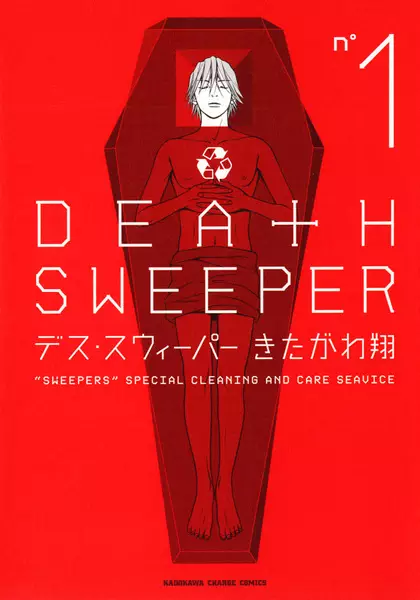
デス・スウィーパー
43
5
Finished
Mar 2007 to Jan 2009
5.0/10
Average Review Score
0%
Recommend It
2
Reviews Worldwide
When i finished the last chapter, the only thought that came to my head was "Oh boy, what a waste". But I'm getting ahead of myself. What is "Death Sweeper" really about? Well, it happens that Japan has so many cases of suicide and people who die alone in their houses that there are several private companies whose main job is to clean the location where the person died. It's a nasty job, and unfortanatelly, a necessary one. Interesting, right? Well, the only reason I felt disappointed is because the mangaka had a really good chance to exploit some deep rooted social problems in modern japan:the high suicide rate, depression, hikikomoris (shut-ins), NEETs, the cruel reallity of being a ordinary salary worker with no perspectives for the future, etc. Well, on a materialisc analysis, we all know these problems come from capitalism, more specifically late capitalism, a system made to brutally shove the working class on a industrial meat grinder. As a regular salaryman/woman, you have to work on 10-12 hour shift but receive a little more than minimum wage. Things start pilling up: Food, rent, bills... some times, any kind of entertainment is out of question, either because you have no money or no time. All of this so 99% of the profit derived from your work go directly to the owners of the company, the ones that really control the means of production. It's hard not to see how a system like this can induce so many people to develop all kinds of mental illnesses (depression, anxiety, burnout, etc). Mark Fisher's "Capitalism Realism" tackles this problem in much more depth, for anyone interest on reading about these topics. But does the manga talk about this, though? Well, it does present all these problems, but never presents them as an "economic system problem", but rather an individual one. BUT HEY! that's ok, it's quite unfair on my part to expect this 43 chapter manga to be an deep essay about the harms of modern capitalism in Japan. Instead, after reading the first chapters, I undertood the author went for a more philosophical aproach on the topic, specially how different people deals diferently with the deaths of their loved ones or the grasp on their own mortality. That was what I was expecting, anyway. Suicide is a pretty sensitive topic in japanese society. The ones who take their own lives see themselves as "worthless, shamefull, pathetic" people because they don't have jobs, money, a romantic relationship... Again, it's hard not to see this as a result of the neo-liberal ideology present on such a salvage, near cyberpunk-esk capitalism - "the ones that don't produce or have anything to contribute to society should just die". The author had the oportunity to show how this types of thougths are dangerous and inhumane, how suiciders are victims more than anything. And again, I'm wasn't asking him to approach this from a political/economical perspective. He could've easily done so using some philosophy, show us stories that made us really empatize with the victims, while Okazaki, the MC, progresses on the job of cleaning death scenes and learning to respect and value life as a whole. Hell, if not that, at least bring to the public knowledge the mere existence of these companies that pays their bills cleaning liquefied flesh and decomposing blood in apartments and houses. That said, the mangaka did some of these things in the first half of the story. When Okazaki was almost killed, he realizes how much he tried to protect his own life and start to value it a bit more. During the cleaning scenes, we see how each member of the sweepers deal with their work routine, and how the families of the deceased mourn diferently after the passing of their loved ones. But from the second half to the end, the story shifted to heavy conspiracy theories, cheap plot twists, pseudo-religious concepts and eco-fascism. Like, c'mom, really?? That's why I said in the beggining this manga is a wasted potential. As for the characters, they had some charisma but lacked any substantial development. Another problem for me is the female ones. I can’t shake this feeling of hatred the mangaka has towards women in general. Why? Well, one is a disturbed spirit medium, another is crazy cat-murderer psychopath, another is a compulsive liar who almost convinced the MC into a double suicide and another is a hot manipulative femme fatalle who talks people into suicide just so she can mummify them. How can I not feel this way? And last but not least: the art. it’s pretty standard. The anatomy is good, but the expressions are a little off sometimes. For the rest, it’s ok. Closing this (probably unnecessarely) long review: I would recommend it to anyone who’s interest in this topics, but the brutal shift in the story, lack of character development and apparent misogyny may disappoint you in the same way it did for me.
This manga is about the job of cleaning up scenes of death, and discusses the meaning of life and death. Through interactions between the deceased's family and friends with the death sweepers, we understand the meaning of death. No matter is it is a peaceful death at the ends of one's life, murder, suicide, death from illnesses, when death comes, who would be able to predict it, or prevent it? That is why we have to try our best to live on. (Source: MU)
Like the name of this short series suggests, the manga deals with a crew of cleaners who specialize mostly in taking care of places where people have died. Most of the usually decomposed remains they clean are either of suicides or of elderly people who've died alone. This allows for some very poignant observations about the state of neoliberal society where people are abused by corporations, everyone has to fight with everyone else for the little space and resource allotted to the masses. There are also numerous references to the bust of the bubble economy at the end of the 80s and the decades-long sufferingit forced onto people. The majority of the suicides or their neighbors/landlords/etc, for example, are directly hit by it, mostly in the form of extreme loans, or are indirectly suffering because of it, through the way labor and education changed. As expected, the atmosphere in most of the chapters is defined by despair, depression, and alienation. Structurally, the manga is split into two parts. The first one consists of short stories. Each one lasts for two to four chapters and deals with a different case taken by the company. The stories develop pretty fast and their focus is less on the act of cleaning or the story how the person dies, but on the conversations between the cleaners and their insights into life and death. This is by far the much better part of the manga. The second part continues to be somewhat episodic but a few overarching plots about a cult and the end of the world start appearing. None of them are given enough time to develop naturally, they are just crammed into the story, develop incredibly fast, and just kind of finish. As such, they leave a lot of questions but not in the way a thoughtfully constructed narrative would. The same can be said about the characters. They are very enigmatic but in the worst way possible. We not only learn almost nothing about them, but also don't witness any growth in them. They are just there, tokens to kind of make the manga supposedly interesting and strange.