Links go to search results. Availability varies by region.
イノサン
99
9
Finished
Jan 31, 2013 to Apr 16, 2015
7.2/10
Average Review Score
60%
Recommend It
20
Reviews Worldwide
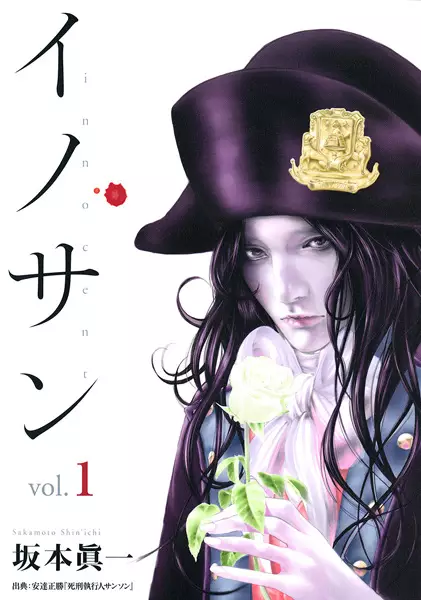
"Grandiose et romanesque, ampoulée et pittoresque" Shinichi Sakamoto is one author of a kind . Pretty discreet, he have been "revealed" with his previous manga "Kokou no hito", that made a lot of fans. Me too, when I heard about his new project, "Innocent", I was very exited and eager to read it, and that is because Shinichi Sakamoto have a style and way of doing things of his own. I entered this manga expecting impressive art, lyrism and some exuberant metaphorical and symbolistic drawings along with a story shouldered by a lot of studies from the author for the domain and historical period he was immersinghimself into. The result ? I got exactly what I expected. Maybe not exactly thought, since unlike the synopsis might make it seems, the present manga doesn't cover the event of the french revolution but "before" it happen. For that, we will surely have to wait for the sequel ("Innocent Rouge"), that, as I am writing this, is still publishing. One other related point: the manga as it is now doesn't offer any satisfying ending on it's own, and that is because it appear clear that the sequel I talked about (and haven't started reading yet) is connected to it directly and will take its follow were this manga ended. So if you enter reading "Innocent" now, you might as well consider that it is still "ongoing" or is just the first part of the "Innocent saga", to not have a bitter taste at the end of volume 9. Those important things cast aside, now is time to look into the various aspect of this manga for themselves. The manga being quite interesting and peculiar, there would be a LOT to say, so I hope you won't mind that I will have my own approach to it and won't talk about everything I could have. The story of Innocent is set in France, before the turning point that will be the French Revolution. To take a look at this event that is as passionating as it is difficult to handle, our author have chose to show us a very special family, the Sanson family, cursed generation after generation by the title of royal executioners. Which is to say, the duty of ending the lives of criminals in the front of a crowd avid of blood and gruesome "spectacle", in the name of justice. Inside this lovely family, our "main" protagonist : Charles-Henri Sanson, and taking more importance late, Marie-Joseph Sanson. It is important to note that all important characters of this manga have really existed, and will be provided a little notice when they first appeart, showing their names, function and destiny. Which get me to the personal "theory" that I will use to talk and construct my view of the manga for this review : Innocent follow the structure of a theater piece and can be view as one. Innocent is an "opera manga", a theater piece in a manga dress. Let's take a look at two exemples: - Charles-Henri is alone in the landscape. Out of nowhere, a beautiful young man he never knew before apear by his side and it's love at first sight. *Poof*, just like that. - Charles-Henri is alone in his house, lamenting on his knees, in a secret room. A beautiful lady pop up just in front of him, naked. He think it's a divine apparition, but it's not. Two page later, *Poof*, they have sex. You think it's ridiculous and pretty absurd ? It is. But Shinichi Sakamoto don't care about that, and it make sense in it's own way: all the characters in this manga are comedian entering the scene when they are sumoned by the author. Each chapters are acts and scenes with specific characters comming from the backstage to recite their line. At some peculiar points in this manga, Charles-Henri will even, in the middle of a talk, start to... sing. That's right, out of all realism, this manga can turn into a musical. It's strange, and you'll be quite surprise and might chuckle, but again: it's an opera you are reading. As a theater piece, Innocent have a huge list of second characters, all more colorful than the others. This might be one of the point of the manga where I am the most circumspect: some famous characters apearence (like Casanova or Mozart to only name two) seems to have little to no relevence to the plot, and most likely they are just here for the pleasure of the author to draw those mytical human figures. Characters pop up from nowhere and can disapear as fast, but that is because they gravitate around our two executioner Charles-Henri and Marie-Joseph, and also Marie Antoinette, that are like magnets passing through historical events. Attracting and then repulsing second characters in front of the reader's eyes. I said Marie Antoinette, yes. She start to take importance in the last half of the manga, and can be view as the third character of the story. Have you seen "Marie Antoinette", the movie by Sofia Coppola ? If you're like me and you had seen it before reading this manga, you'll find pretty amusing some of the event depicted in later parts of this manga, since it's strictly the same as what you'll see in the movie, but with a completely different mood and view of the characters. If you haven't, I recommend watching it after reading this manga, it should put some other lights on the events and had a very amusing touch to your experience of the two works. Seeing two different artistic view of the same things but with a totaly opposed style is quite an interesting thing. Now might be the time to talk about the art. More than anything else in this manga, and most important of all, is the art in this manga. if you had to chose only one aspect about this manga, it would clearly be this. In one word: Amazing. Not a single superlative is enought to describe the art that Shinichi Sakamoto is able to pull out of his sleeves. I didn't said it before, but when it comes to this manga, every quality can be view as downside and every ridiculousness view as genius. Most of the time it's even both. The biggest point of the author style consist about using very often what I would call graphical metaphore. Explaining it would be difficult for me, but if I had to say something, it is that the author is never afraid of doing too much and being the most lyrical he can. Over the top, absurd and psychedelic, it's all that. Other than those absolutely beautiful panels, the drawing of the characters is a feast to the eyes. Curled hairs, piercing eyes, the characters are erected as deity of beauty and refinement. Marie-Joseph, as a bloody and terrifying beautiful angel of death, is the most impressive of them all. The author abandon the anatomy of muscular bodies like he drew in "Kokou no Hito" to work this time on the most feminin slenderness he can draw. By the way, if the idea of two man kissing, two woman kissing ,a man and a young girl in bed, or any depiction of sexual intercourse bother you, you might encounter problems reading this manga. If you like yuri manga though, it should be all right: just think that the characters are all beautiful girls with long hair. It should be easy. Also, Marie Antoinette's eyebrows in this manga are out of this world (I should definitly be sorry for those two jokes...) This is a "libertin" manga. If Shinichi Sakamoto had been born in France in the past, he would have been a paintor. His skill would have been praised and honored at first.. and then probably cast away because his over the top symbolistic and metaphorical paintings with unbound freedom of visions would have worried the "beaux art" academician and critics. See the marvelous hommage he do in volume 8 about the wonderful painting of Gustav Klimt named "The Kiss". The author we have here take his influence and inspirations out of everything and use it to draw is own sensibility and convey what he want to make the reader feel. Again, one author of a kind. Let's make a digression to talk about something very significant that surely might stay as completely unnoticed otherwise. Even if you're reading this review after having already read this manga, I'm pretty sure there is a good chance you'll be very surprise by what I'm going to say here: There is no onomatopoeia in this manga. That's right. You would have guess that a manga with plenty of sliced neck and choped off heads would have a good amount of *slash* , *splotch* or other things like that. Well, you'll find none. And there is a good reason to it, it's because Shinichi Sakamoto don't believe in those, he even explained himself about it in a preface of one of his volumes of Kokou no Hito (talking about those introductions, this is another speciality and distinctive aspect of the author. Those little sentence are always strange and filled with his own very serious thoughts and utmost believings. It's something that would be a shame to miss when reading this manga, since it have those too). His stance might be summed up as this: manga don't need graphical depiction of the sounds, wich at best is only something redundant, and at worst a superfluous element that distract the reader from the narration and what is happening in front of his eyes. Shinichi Sakamoto believe that if he work hard enought with his drawing, he can reach directly the readers soul and subconscious and make the sound "directly appear in his head", without graphicaly depicting it. One author of a kind, as I said. Comming back to the characters. As you may have understanded, the author don't aim to make you feel for them or root for them. Their actions and way of acting are those of a comedian that have a role to fit. Shinichi Sakamoto is not interested in crafting a continuous story, he willingly make some jump in time of several years, or go back in time to introduce a character the reader had no idea he existed in the life of the protagonist before. He his interested in the "moments", nothing other than depicting precisely and with the most lyrical and "romanesque" charge what he want to show to the readers eyes. While reading, you have to accept being throw here and there by the author and just look and read, like an eye looking at events from the side, detached but curious. This is a peculiar way of doing things, and it might have it's problem. Don't try to hold to much importance in the character evolution and personality of Charle-Henri Sanson for exemple. It's not really what interest the author (or then, his way of doing things is so fragmented that it is difficult to see it that way). Violence and love, terrors and cries, torture and lust, meanness and vanity, everything is done in an emphatic and exagerated way. The story of Innocent make some detour, it wander and try to depict the rotten and absurd monarchy France was at the time, and how women were treated as nothing but men's disposable proprieties. This will lead me to the last point I'd like to talk about in this lenghty review: Marie-Joseph Sanson. Androgynous, deadly gream reaper and spirit of total freedom, she is the very essence of this fastuous and magnificent opera of a manga. While all the other characters are handled in the limit of their true existing historical figures, Marie-Joseph Sanson dynamite all likeness and realistic take of the time period to be an utmost modern figure, with no care about gender role or watsohever. It is by her that the author have found the element of trouble to shake all the French society that is show in his story. A rebelious girl, as an avatar of angry uprising that will surely be the embodiment of revolution in the futur, in this theater of mankind that is Innocent. A revolution that will be tainted in rouge. Thank you for reading this review to the end.
In the 18th century, seeking "freedom and equality," the event that became the starting point of modern French society, the French Revolution, began. There was one more protagonist that lived within the darkness, Charles-Henri Sanson. He was the fourth generation family head of the Sanson family, and the executioner of Paris. This is the story of him nobly facing his harsh fate...
Firstly, this manga's biggest strength is the art. Its simply gorgeous, everything from the depiction of France, the character design, the flow, the individual panels in themselves are all extremely beautiful. But that's where the good things come to an end. The story is a mess, rather the mangaka did not know where to proceed. It started off as a character drama based on MC and the trials and retributions he had to face to be the man the future would remember him as. The presentations regarding MC's qualms about killing criminals was quite philosophical akin to Vagabond. This had me instantly excited as Vagabondwas one my favourite manga. The sadistic father and the scheming grandmother were all excellent additions and were like spices to a delicious story which was cooking. But one by one the side characters were stripped of the roles to bring focus to the growth of the main characters. These characters who acted as hurdles were removed not because of growth of MC but rather mere circumstances. When the grandma was removed from the plot the story shifted its focus to the only other member of the family the MC Kun's sister. The story now was not a character drama related to MC kun's internal struggles but a wannabe feministic story regarding women's role in old France. The focus was now on how a girl grew up to become an executioner despite all odds. During this time the MC kun had sex and became a totally changed man. A scared and unsure MC kun became Hugh Hefner after having sex once. The girl he fucked later became Royal Mistress. At this point, the story introduced other characters like King Louis XI, his wife Marie Antoinette and other royal families who later on became central figures of the French Revolution. By this time MC kun merely existed to do random stuff. The story for a brief time (less than 5 chapters) tried to be a story about the struggle for the title of the King of France. A move which excited me a lot since I thought it would now be filled with smart schemes and treacheries. Yet, the only thing this arc provided was a jealous cousin spreading rumours that the king did not fuck the queen. Then this manga proceeded to highlight the events which led to the French Revolution. Alas, it provided mere snapshots. It did not dwell into details like the economic policies or the class inequality but just showed some random events and then set it aside for an arc about how the new Queen was jealous of Royal Mistress and how the MC kun dressed as a girl solved this. ( He actually didn't do anything and merely crossdressed for his amusement). It ended with the appearance of a random foreigner and his death. This character who was introduced for the first time, even mentioned for the first time suddenly became the most important man in MC kun sister's life and I reckon the revenge for the foreigner's death would be the story of the next path. Like I said the story wavers from one point to another without concluding the previous one. The conlcusions provided to previous conflicts are neither satisfying nor smart. The character aspirations are just changed according to whims of mangaka and to progress the story random time skips are used. These time skips conveniently change the relationship between characters and highlight progress or deviations in their thought process and character without dwelling deep into the reason for such a drastic change. This was extremely frustrating as the mangaka merely stated time as the sole factor for the character growth. Overall, Innocence is merely a bad gift which was wrapped with shiny wrapping paper.
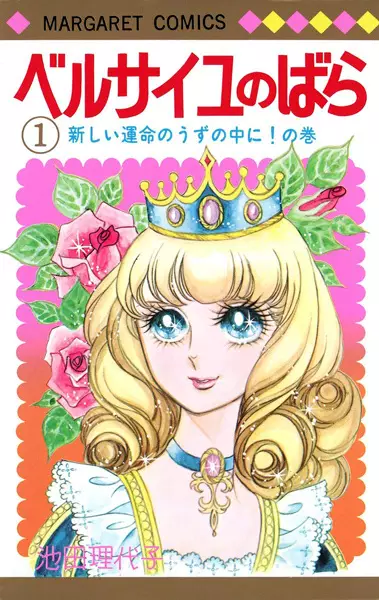
Think of a moment when you really need to get yourself off, but at the same time just can’t get into it. You feel the need, but your inspiration isn’t there. Then Versailles no Bara comes up in your mind, no matter the reason – and you start to work desperately on what raises those chemicals. Let’s make all the characters into sophisticated smashing androgynes – think you – who want to have sex with each other in weird situations and combinations (and with each other’s families, and in front of one’s family). Then you toss in executions and torture, psychological issues and taboo, excitingnudity and pretty costumes. You make everything tantalizingly dark, postcard pretty and visually metaphorical (sexually, of course). And somehow you’re also a well-read* intelligent person, interested in the historical period of pre-revolutionary and revolutionary France, so you add spicy facts, like the last days of French monarchy and the executioner dynasty of Sansons, the architecture of Paris and the debauchery of Versailles, Christian values and Christian delusions. You close your eyes tighter – and it all comes together in a feverish self-indulgent lucid dream to shamelessly explore and wallow on your sheets in. That’s basically what Innocent (and then Innocent Rouge**) is, similarly addictive and also an opera at some points (I’ll explain later). I’ll skip the fluff and go directly to the main question – why isn’t this more popular? The art is out of this world and fast travelling to another galaxy: It’s. Just. That. Good. The level of detail is tiny lip folds and individual eyelashes. The level of beauty is scary angelic, with people better then either sex suffering in blood and roses, laces and dirt, extensive visual metaphors and meticulously reproduced everyday environments. A hyperrealistic dream with panels ready for expensive printing, Innocent is so worth reading for the art. And if you’re a fan of gothic aesthetics maybe you should drop whatever you’re doing and go read it immediately – so much exquisite pleasure awaits you. There’s no fault in Innocent’s drawings. So maybe writing? The very fabric of the manga also shows no structural weaknesses. The early chapters are pure awe, sex and tears. By the way this is not torture porn as I had feared – Sansons are public executioners, they don’t extort confessions (they torture at home sometimes), nor is this proper porn – copulations tend to have context and are censored. The eroticism is varied – sometimes cynical and dirty, but more often XVIII century sensitive or romantic: executioners are said to curse by touch, so braver people use our heroes’ bodies as ritualistic objects of severance. A lot of ambition and earnestness is poured into the story by the author – big people, big history, big ideas come together in the edge and pathos that are, for once, warranted and work. There’re attempts at a serious message: Innocent talks about future, fate and change, about the weight of blood and seeking freedom. Though as far as the plot as the chain of events goes it does drag and become sillier later on – with cheap sensationalism and some characters seemingly having no direction, like the secondary protagonist Marie, whose role seems to just be very cool and ignore the established rules of their universe. Yet even some of the later chapters produce moments that make your heart sink or flutter. Maybe the dark topics? Innocent shows very graphic, very barbaric violence. The lives of people are shitty. And while the main characters grows and changes before your eyes and we know his ideals, it’s hard to empathize with him – so alien his occupation and mentality are to us. In order to read and enjoy this manga you should be onboard with scenes like a lady sending a perfumed handkerchief to a tired executioner to remind him of their night together after which he is invigorated and happy that he can send more people to God. The ideas about women are icky and become progressively more so in the course of the story (believe me it’s a very strong sort of cringe, also I should give a rape warning, including rape of minors). But being dark and sort of monotonous has not hurt series like, say, Tokyo Ghoul and Berserk. So my best bet is on the complexity of writing. Innocent demands a certain level of cultural knowledge and reading experience. It meshes verbal and non-verbal storytelling, references music, art, books and, especially, Biblical mythos. I got through it without feeling that it’s rocket science (but then I probably have missed a ton of things), but you definitely should be fast on literary uptake And then Innocent is very free with its narrative mode. In the postmodern manner it turns Versailles into a comedic opera or even social media parody, and the closer to the revolution they get, the more the events remind of an absurdist stage play. It’s better to understand from the start that Innocent isn’t strictly realistic, while otherwise more or less consistent and historical. Also I must add that music is present along the whole course of this manga and works of art contemporary with revolutions tends to be theatrical, so maybe it’s the nature of the event. But no matter the explanation, these interruptions are indeed immersion-breaking and hard to swallow – are these what causes Innocent to elude many dedicated seinen readers? ...I am kidding, of course, you need to get far into the manga first, and they’re not that big of a sin compared to the virtues of this work. What I am hinting on is – there’s no good reason for the Innocent series not to be on more reading lists and yours in particular too. Everyone who has stomach for its topics should attempt to read it. Innocent is rich, intoxicating, complex and unique. Even if it asks for some effort (mostly suspension of modesty) – it is all around worth trying for yourself. Just think about the fun – executioner families conversing about hangings during a family dinner or a handsome executioner making love to a lady while ashamedly visualizing dead bodies! Even if not all fetishes click with you, something is bound to reach your soul or other parts. Something is bound to touch you, and here the pile of good things is so big, that more likely than not you’ll get there, if only by repeated friction. * Sakamoto Shinichi references the books he has used, it’s mainly “Executioner Sanson” by Adachi Masakatsu. But all in all Innocent is not 100% historically accurate, just fyi, you history nerd. ** Innocent Rouge is the direct continuation of Innocent in another magazine.
Innocent is such an interesting piece in the world of manga. If you research it online you will see the same question pop up, over and over and over again - "why is this manga not talked about more? it's so gooood!". And well, guess what, I'M GONNA PONDER THAT QUESTION TOO! Because dammit, this manga truly blew me away in spectacular fashion. To me personally, Innocent needs to be up there on a pedestal with the greats of seinen manga like Vagabond, Kingdom or Vinland Saga. Maybe even Berserk. It has both the art and the writing to stand alongside them. I believe you'redoing yourself a disservice by not reading it, so allow me to explain why this aggressively French manga is so tre bien. Firstly, let's talk about the most obvious - the artwork. I swear, Sakamoto Shinichi is the reincarnation of some legendary Renaissance painter because his art is truly otherworldly. First of all, his line work has a kind of gentleness that I have never seen in anything ever. It's so soft and tender that it's as if everything is made out of silk, like he used a feather instead of a pen. This leans greatly into the setting on many levels. The characters, regardless if men or women, have a type of Griffith-esque ethereal beauty to them with at least a hint of androgynous appeal. The faces are both exceptionally expressive but also flawlessly crafted, the perfect proportions and exquisite textures making them look like they were sculpted out of marble. Their eyes are these portals that draw you into expansive worlds of emotion. Don't even get me started on the lips - oh my goodness, these are the fullest, most detailed and most beautiful lips ever put onto a page. Beyond just the characters the clothing and backgrounds lean into this style too. The clothes look so gentle and soft, the line art making you almost feel all the silk, velvet, linen, feathers, gold incrustations, embroideries, etc. The fashion game is top notch here (it is France after all). Also, the backgrounds benefit from this just as much - the Baroque and Rococo frescoes of the wonderful Parisian architecture are all-engulfing, glorious and triumphant, but also crushing and claustrophobic when the story demands it. The trees, flowers and blades of grass can be seen billowing gently in the wind, like nature dancing with itself in contrast to human tragedy. And don't even get me started on the lighting, as this manga uses light itself in both the most realistic and the most artistically engaging way ever. Listen, I could go on and on and on about how well drawn Innocent is but it truly needs to be experienced. I think Sakamoto-sensei needs to be considered among the real greats of the manga world for being able to craft something like this. However, fantastic art alone does not guarantee an interesting read, for it's the story that is always most important. But, guess what - the writing is almost as sophisticated as the art! There is something unique about how this story flows that is very hard to put into words and it also plays into my personal theory that Sakamoto-sensei got isekai'd into our world from the Renaissance. The dialogue here is very sharp and manages to flow naturally and be exceptionally elevated and poetic at the same time. The deep use of allegories, the rich and dense subtext, the Shakespearean cadence of the speech all leads to this work that feels incredibly theatric in the best way possible. Another review on this site said that Innocent is like an opera in manga form and that is quite accurate in my opinion. The fact it also has the closest a comic can have to musical numbers helps too. Innocent is a rich and enthralling experience that touches on so many deeply human things - love, hate, family, honour, pride, greed, wealth, power, status, justice, compassion, humility, parenthood, dreams and so much more. I don't want to go into detail here, because to do so would ruin the point, which is for you to experience these yourself and ponder these questions against your own beliefs. Innocent will present these ideas before you but will not present a definitive answer, for it's obvious that such an answer doesn't exist. These are some of the most intrinsic and complex conundrums of humanity and we've been pondering them since forever. Integrating philosophical quandries into a story can be hit or miss, as there is a huge danger of becoming either preachy and pandering or dry and boring. Neither is the case for Innocent though! Here, these ideas are presented flawlessly in an incredibly gripping historical tale that will envelop you in the rich and nuanced world of 18th century France. The world breathes and feels lived in and real in an incredibly immersive way. And all of this will be carried confidently by the large arsenal of morally grey characters, each with their own agendas, goals, dreams, literal and figurative scars, good and bad aspects. Each character is a masterful patchwork of personality traits that form these real and believable people that truly spring to life on the pages. They are probably not good people, but they are definitely real and while you may not agree with their actions, you will understand them. For this is the glorious complexity of the human soul. The last thing I want to mention is an aspect that is, for me at least, unique to Sakamoto's work and that is the use of visual metaphors and allegories. What I mean is that often, instead of literally depicting a certain scene, he will present it in symbolic fashion. A non-spoiler example would be a person getting decapitated being represented by a chef slicing vegetables, characters touching each other erotically being represented with tarantulas crawling on their bodies or sexual release being represented as raindrops falling on blooming roses. This and so much more is a perfect example of what you get when you have a person who is equal parts a brilliant artist and a brilliant writer. The story and artwork come together in this perfect symbiotic symphony to represent something in a beautifully artistic way. These, combined with the incredibly vibrant and expressive posing and the strong inspiration from classical paintings give Innocent this true artisanal feel to its visuals that belong more in a gallery than on a page! These go far above and beyond the expectation of manga pages and truly transport you into a different world. In conclusion, Innocent was one of the most breathtaking works I've ever read and I was personally deeply moved by it on many levels. To me, this is the pinnacle of what a seinen manga needs to be - a deep and introspective story that is both beautiful and brutal at the same time, touching on mature themes from all walks of life, populated by vibrant characters that bring to light the best and worst that humanity has to offer, all presented through breathtaking art. Innocent should be put on a pedestal up there with the greats. Hell, it even has the luxury that some of the best that seinen has to offer couldn't afford - it actually ended. It even got a sequel that also saw its conclusion! And to think that, in the grand scheme of things, Innocent is just the establishing half with all the big resolutions kept for the second part. And despite that, it's still so good! My only concern now is that almost any other manga I go to next will look like scribbles with teenage fanfic on top in comparison. Anyway, I've gushed on long enough. Do yourself a favour and read this artistic masterpiece! I hate the Fr*nch and I still loved every page of this, that should tell you enough. Adieu!
Japanese authors may sometimes have a weird perspective on European history, be it Middle Ages, Queen Victoria's ruling, or introduction to French Revolution. Ironically, the downfall of this manga is caused by its indulgence and excess--the very things it portrays as leading to the downfall of the French aristocracy. You see, especially in the latter half, it indulges in symbolic and metaphorical pictures, as well as snapshots of potential futures or poetic representations of events. (I noticed at least twice when they had characters presumably singing their internal thoughts). All that means that each chapter has very little actual content. The character of Mary from a free-fallingsociopath becomes some sort of analysis on gender roles, LGBT history in 18th century france, polyamory, racial discrimination all in the span of 10-20 chapters. It's so on the nose it's almost funny. Charles had a slow transition into the character of his father that went slipping down at the speed of light as soon as the author decided to focus on Mary, all she has to do is drop random quirks about how he changed as he whines about family obligations. He tortures his own son. His opposition to torture set the basis of his character from the beginning, it defined his values and worldview to the point where he was ready to topple the seemingly endless power of his grandmother. It led to his liberal sympathies. it was the central reason he didn't want to kill people violently, which was what would have led him to seek out the guilottine. The reader is never given any reason as to why he changed, he just did. There's two comments about the world being rough and how raising kids made Charles more conscious of his family. Which could certainly be explored as a reason for him to enjoin with the system. But here it's a magical incantation that transforms him from a grey, morally tormented character one page into a saturday cartoon villain the next. Replete with last minute d'oh moments as his dastardly plan to have his sister married is befuzzled scooby-doo style. Everybody gets simplified, flanderized, almost a caricature. At the start it was beautiful, and read almost like a novel. The father, grandmother, uncle were all "villains" but were given ample space to prove that they had a 3-dimensional personality and were acting out of selfless motives but constrained within a hierarchical system that forced them to participate in violence, which hurt them as much as the victim. When father Sanson tortured Charles. He acted out of a belief that the firstborn must inherit the family business, and therefore has to be strong in character to take a life. Something that can only be achieved by getting one accustomed to violence. Said torture also had a secondary purpose of forcing compliance with the unreasonable demands of his family, such as the inheritance itself. He knew it was painful for the son, but justified it by claiming that his son was his flesh and blood and an extension of him. Despite voluntarily participating in child torture, he is a victim as well. What could be done to fix this? Removing constricting family institutions, authoritarian systems, class-based understandings of occupation, societal acceptance of child violence, patriarchal norms. For there to be no Jean, the whole political, economic and cultural landscape has to be changed from the grounds up. When a bunch of white french aristocrats attack a half-black french noble for being mixed, then burn down his orphanage with the children still inside, provoke him to a fight, kill him and publically leave their family emblem in his body. They did it because they were assholes of comedic proportions. Even with all the discrimination present in pre-revolutionary france, burning down an entire orphanage wasn't something people laughed off. What could be done to fix this? "Literally, like, stop being evil. " That's all the message there is. No compulsion from a higher system, no psychological explanation for their actions. The reason they burned kids alive was because they wanted to burn kids alive. The way to stop them from burning kids alive is for them to stop burning kids alive. The art is admittedly well-drawn. Though, to be honest, it might be too ornate. The lips are overly lush and shiny. The backgrounds are grainy and at times there's too much going on, making it hard to focus on the relevant details. Also, sometimes characters' eyes look badly placed on their faces--like they're just tacked on. But even if the art was perfect, that wouldn't justify adding needless pictures. If this manga had trimmed all its padding and perhaps been only about half as long, it would've had the potential to be a masterpiece. The last half of the manga introduces Marie Antoinette into the storyline and begins setting the stage for the events which lead into the French Revolution. But that's all that it's doing: setting the stage. The entire last half doesn't really feel like it has much purpose other than acting like a prequel for the next manga.