Links go to search results. Availability varies by region.
ă€ăłăă”ăłć°ćčŽććè»
25
3
Finished
Nov 5, 2007 to Nov 5, 2011
8.0/10
Average Review Score
100%
Recommend It
2
Reviews Worldwide
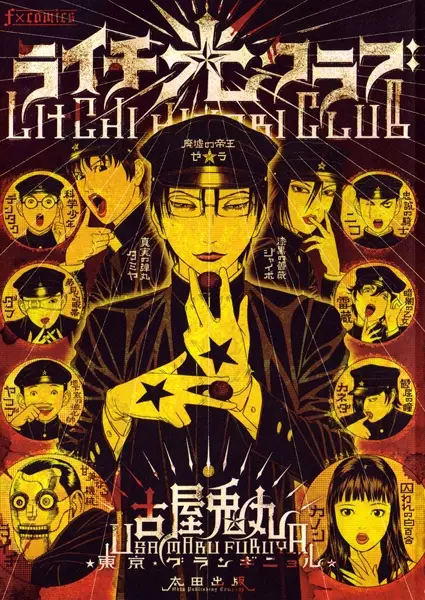
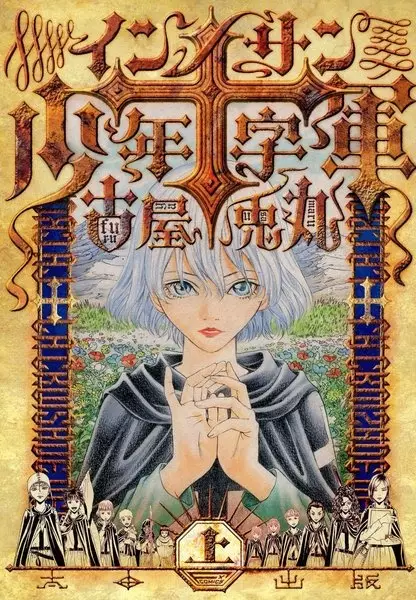
One of the few and not so popular works based on real events throughout human history. This is the story of how a 12 year old shepherd accepts Godâs message to reach Jerusalem and thus, reclaim it as many hoped back in 1212. This childrenâs crusade starts with only a handful of kids who most of them did not realize the gravity of their situation. While this is not historically accurate, as the creator himself says in the last chapter, it tries to convey properly the workings of those days and the difficulties people, even more so our young main characters, had to endure. The startingâfellowshipâ of Etienne, the shepherd, includes a variety of characters who exist to showcase different points of view, how they clash with one another and how that fellowship is a microcosm of the actual society then. There is the strong, adventurous one ready to slay some infidels; the intelligent one that prefers science over religions; the aristocratic brat; the wimp; the leper; the twins (twins were considered in a very bad light in general); the pure, naĂŻve one that wants everyoneâs happiness, etc. Each and every one of them represents a different part of society and together with their personal problems and traveling difficulties, everything spirals out of control. Because of that, there are various themes that are not so irrelevant to our present such as social and religious equality being considered bad, homosexual relationships, corrupted justice, betrayals over power, etc. The pacing is pretty decent, even though it is a fairly short manga and it manages to capture the main problems of their journey and how idealistic it had been at the start. Faith, ideals, reality, intentions, logic, desire, fanaticism, power collide with each other while the characters mature through their obstacles. But as the actual crusade in 1212, this is not a happy story and it does not have a happy ending, but it is the journey that matters and how can still innocent children protect themselves from the adultsâ arrogance and injustice and it perfectly shows how simple thoughts can destroy everything around them. However, the ending is satisfactory for a dark tale like this. The characters, even though they do not have a stable development, there are evident changes on how they perceive things and how far are they willing to go to get what they want as the story progresses. As children during that time were considered as incomplete adults, there was barely any special treatment towards them and they had to grow up fast to be able to discern the truth and stand up for themselves. Not only that, but their personalities flourish even more when some of their past and their intentions are better explained and connect the dots to the story, though unfortunately that does not make them meet a better ending. Not all of them have that luck, but all of them are relatable to a point and even the unlikeable ones are understandable given their position and it is a fairly realistic approach. The art is very detailed, catching the vibe of atmosphere at hand and each character is easily distinguishable. It is definitely memorable as it is not that common, it has a knack for dramatic or âvisionaryâ scenes and it does not deteriorate throughout the work and although it is not 100% realistic, it has a good grasp on reality. Expressions are delivered well and it catches the eye as the story gets darker and the art complements those changes. While some of the characters designs can be called cute, it does not take away from the story as the art adjusted accordingly with the background and the occasion. To be honest, this can be a hard read at times, because situations and social behaviors we now consider unacceptable, at the time they were considered perfectly normal and it is just sad to see kids facing the harsh reality without being prepared at all. Nonetheless, it is a work worth someoneâs time and it can make them interested to know more about this event (at least, I was).
A group of thirteen boys join the children's crusades of 1212. Violence ensues.
The Crusade of the Innocents is an extremely delicate subject to address, all the more so for an Orthodox Christian like myself, given what the narrative conveysâparticularly on a theological and historical level, which, let us be honest, is deeply problematic. Nevertheless, I will attempt to express my thoughts with sincerity and restraint. Art: 8.5 / 10 Artistically speaking, Usamaru Furuyaâs style is immediately recognizable. While remaining grounded in a certain realism, there is something profoundly unsettling in the gaze of his characters. Their large eyes sometimes seem devoid of humanity, creating an uncanny valley effect that is both fascinating and disturbing. The artwork is magnificent and visuallydense, often filled with intricate details. Some scenes, occasionally raw or violent, may nevertheless unsettle certain readers, whether through depictions of death or other deliberately harrowing moments. Story: 7 / 10 Development: 8 / 10 Characters: 10 / 10 It is very clearly on a narrative level that this manga proves divisive. The line is thin between those who will see in it a powerful and tragic story, and those who will judge it excessively disturbingâa reaction I fully understand. Having already encountered Usamaru Furuyaâs narrative style, it is true that the blending of explicit sexual immorality with sacred and deeply religious Christian elements can be deeply off-putting. Without delving into plot details in order to avoid spoilers, I nonetheless perceived many parallels between Ătienneâs journey and that of Our Lord Jesus Christ, and I believe these connections are entirely intentional. In order to clarify my point, it is necessary to briefly recall the broad outline of the story. We follow a deeply tragic narrative centered on a young child designated as the âSon of Godââa title which, in Christian tradition, applies solely to Christ Himself. This child is entrusted with a mission: to deliver Jerusalem, accompanied by his âtwelve apostlesâ and the Childrenâs Crusade. Yet this journey, which begins under seemingly favorable circumstances, leads only to an ever-growing succession of tragedies. These children suffer the full force of the ignominy and perversity of the adult world: between those who seek to exploit them for personal glory and those who wish to satisfy their most sordid impulsesâHugo being the most chilling example. Ătienneâs twelve âapostlesâ are the first victims of this violence, forced into catastrophic choices simply to survive, torn apart by jealousy, hatred, pride, and fear. The story also addresses intra-religious conflicts that, in different forms, still exist today, notably through the Vaudois and the Cathars. And all of this leads, inevitably, to a sacrifice. Yet despite the many theological inconsistenciesâthere can be no second Son of Godâand historical inaccuraciesâthe Vaudois and the Cathars never fought one another, the latter in fact criticizing the Catholic ChurchâI cannot help but read this manga as a kind of pseudo-allegory of Christâs ministry, viewed through a purely human lens. Where Christ is both fully man and fully God, Ătienne and the other children are merely human beings: fallible, sinful, fragile. The story thus highlights the impossibility for man alone to bear a burden that exceeds his condition. The childrenâand Ătienne in particularâcarry upon their shoulders an immense weight that only Christ can bear without faltering. Certain events within the manga, notably unexplained miracles, further reinforce this symbolic reading. Yet where this fictional story leads only to disaster and unjust tragedy, the life of Christâand above all His crucifixion followed by His resurrectionâled to our liberation. Through the sacrifice of the Absolute Innocent, He who committed no sin, Christ bore upon the Cross the sins of humanity, so that âwhoever believes in Him shall not perish but have eternal lifeâ (John 3:15). Conclusion Some will undoubtedly think that this reading is excessive, or even that I am overreachingâand I can understand that. But if this story moves you, if it troubles you through its injustice and crueltyâand I sincerely recommend it, for it is truly unique and emotionally powerfulâthen I invite you to learn more about Christ, who died for us so that we might truly live. Amen.