Links go to search results. Availability varies by region.
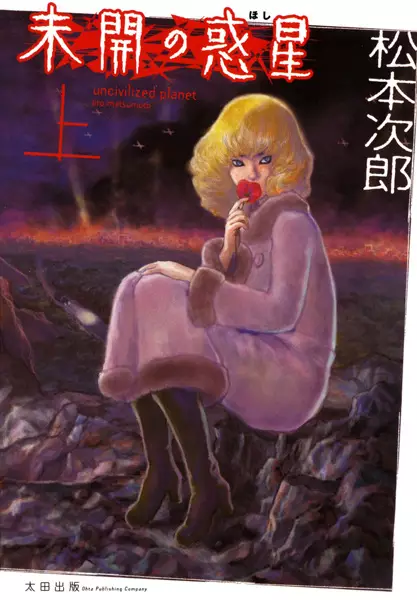
未開の惑星〈ほし〉
11
2
Finished
Dec 20, 2003
7.2/10
Average Review Score
83%
Recommend It
6
Reviews Worldwide
Mikai Hoshi (meaning Uncivilized Planet) is not a sci fi manga, although it does take place in a futuristic world. It seems to take place in the ghetto of this world; the characters have less technology and modern conveniences than you or I, and the sci fi aspect of the plot mostly serves to give the characters false hope. It is an essentially human story, devoid of gimmicks, raw, and powerful. Mikai Hoshi, like most Matsumoto Jiro manga, is much more than it appears to be at first glance and is far greater than it would appear to be on a surface level. It actuallytends to be underrated even among fans of Matsumoto Jiro's manga, for supposedly being more conventional and simple; the truth is that it is absolutely unique, even among his extraordinarily strange manga, and it is utterly fascinating. The art is sketchy and unrestrained, in this mangaka's characteristic style, and could even look slightly amateurish to the untrained eye, but it is astoundingly atmospheric and closer examination will show that it is in fact chaotic, but it is an expertly calculated and purposeful chaos. The plot seems simple and short, but there is far more to it than it would initially seem. For instance, on my first read through I made the fatal mistake of assuming the sex was meant to be erotic (it is absolutely not) and that it was inserted into the plot for the sole purpose of fanservice, but I soon realized that sexual desire, objectification, and corruption is one of the core motifs of this manga, and is important in how it parallels modern society. Mikai Hoshi is a heart-wrenching and tragic tale, but in a very unconventional way that is entirely atypical in classical storytelling. Most of the characters lash out uncontrollably as a result of their suffering, making them intentionally difficult to empathize with. The cast seems doomed from the very beginning, and it's clear to us that there will be no complete happiness or truly happy ending, making this manga more of an affirmation of nihilism than an argument for it. The readers witness a snapshot of several characters' lives, eerily similar to our own, yet exaggeratedly horrible. There is no epic plot, there is no fall from grace, and there is no nobility. There is no grand war, but there is an oppressive, yet cowardly, military force. There is nothing pure, nothing sacred, and all becomes corrupted soon enough. There is no happy present, just an unreachable past plus a seemingly unreachable future. There is nothing but a cesspool, on rock-bottom, populated by dreamers, exploiters, and the exploited; all of them getting by however they can, and the distinction between these three categories being often indiscernible, never clear cut, and constantly overlapping as the plot progresses. Despite this constant and unshakable misery, this sorrowful tale is brought to a compelling and unpredictable conclusion, and it somehow manages to remain an emotional roller-coaster throughout. The characterization is arguably the strongest aspect, although there are only three central characters. This is one of the best and most intriguing love triangles I have ever read, if their relationship can be considered simple enough to be classified like that at all. The two women in the main character's life go through much development as we learn more about them, as they commit acts of desperation, and as the plot progresses. In the beginning of this manga it seems as if one of the girls is "good" and the other is "bad," but this is quickly changed as the audience's perceptions and ideas of what these words mean are challenged. They both show displays of compassion and malevolence realistically and understandably. You will most likely end up feeling equal parts fascination, sympathy, and animosity towards the pair of them. The main character is a sympathetically meek and artistic space-case (pun unintended) who just wants to live his life, but is never really allowed to. He spends his time and money on people who never appreciate him and who treat him, literally, like dirt. People use him and treat him like an object, rather than an artist or a person. Everyone around him pushes him around and generally makes him miserable, forcing him to take refuge in his daydreams about a small cast of surreal space-adventurers. These bits of fictional comic relief, that took place in his head, contrasted and paralleled with the main plot in a masterful way that actually enhanced the bitterness of the atmosphere rather than clumsily injecting sweetness or humor into such a bleak plot. The main character slowly comes down from this fantasy world, and they eventually connect, as he suffers more and more, and he slowly becomes one of the more self-aware characters in the manga, although that may not be saying much considering the consistently delusional nature exhibited by most of the cast. Character development is universal and every character serves a purpose. Mikai Hoshi is saturated with symbolism and demands much attention (perhaps a couple readings as well) for full appreciation, even during the disturbing, depressing, and difficult to look at scenes that this manga is so full of. It has just about everything that I look for in a manga, and it is easily Matsumoto Jiro's strongest non-one-shot work. It takes most of the best ideas that are explored in his one shots and expands on them, thematically and atmospherically; it does this in a somber way and, as mentioned earlier, all humor only serves to make the plot darker. It contains more profound and intelligent, if simpler, societal commentary than all 82 chapters of Freesia, while never losing focus, and it feels a lot less aimless than Netsutai no Citron. Mikai Hoshi is a multifaceted, cynical, and supremely nihilistic story that just about anybody who isn't overly sensitive to sexual themes or tragic plots will most likely appreciate in some way or another.
From the author of Freesia comes a story of three childhood friends - Nicolo, Cookie and Naomi - who grew up in a sleepy backwater town on an uncivilized planet. They struggle to get by while holding on to their dreams of leaving town and finding a better life... but can their friendship endure the tests of time? Can it withstand invading armies, broken dreams, conflicting ambitions, divided loyalties, jealousy and even betrayal? (Source: Omanga)
This is a pretty interesting tale by Jiro Matsumoto, containing all of his trademark style and ambition yet lacking a little in the art, story and humour department compared to his other works. Yet the story is what makes the manga most interesting, even though it is a composite of conventional narrative beats, it's still a strange animal of its own and remains unique compared to other manga. Contrary to appearances this is not a sci-fi tale, but it is interestingly set during a vague war that Matusomoto continually returns to in nearly all of his manga, even throwing in a cameo appearance of twoof his best characters from his previous published manga. The backdrop in Uncivilized Planet looks a mix of middle-eastern and east European. Architecture and clothing styles look mildly Arabian at times and random extras populating the story look like gypsies, but fear not as there is no hackneyed allusion to modern day warfare in those regions, instead the war aspects remain universal in nature. The sci-fi aspect shows itself through continuous fantasies dreamt up by the main character to mirror his current mental state in the real world. It plays out like a humorous manga version of old American TV sci-fi, like Lost In Space. It gives the manga an extra spark that makes it stand out from the crowd, and it needs it because the entire manga at heart is a pretty simple and conventional tale of wanting to get the hell out of a backwater town. Uncivilized Planet lives up to its name. It's a dark depressing existence full of desperation and misery. The populace focused on in this tale live under occupation and resort to violence and sex to get through each day. It is under these circumstances we are dropped into the lives of Colo, Naomi, and Cookie. Three childhood friends who are actually a triangle with very sharp edges, as the two females detest each other and the witless indecisive meek artist Colo remains between them bearing the brunt like an amazing car test dummy. Although all three characters may not earn your sympathy or respect during the two volumes, what's interesting is how Naomi and Cookie in some ways begin the tale on opposite sides of a personality scale and throughout the story slide into the middle then onto the other side again. Their arcs ensure that even if you don't like their characters, you'll be fascinated by their development and find yourself feeling mixed emotions as to what you're meant to be feeling for them. At the end of the day, they're human beings under pressure of war and seeing them squirm and struggle against something greater than them is compelling, however depressing it is. Or perverted. Matsumoto's tales always have time to think up new ways to insert things into women, and this is no different. His previous manga handle sex much better than this through imaginative ways to move the story or affect the reader, but this time it feels more conventional (as conventional as Matsumoto can get considering the crazy sex here) and as a result it feels a bit tired and overdone. At least he remains able to create these scenes without it feeling too exploitative, in that he doesn't revel in the abuse of women but has these scenes as a ridiculously heightened way to convey utter despair, unflinching desire, and survival instinct. Uncivilized Planet is a decent coming-of-age tale that despite some shortcomings still emerges victorious in the end thanks to Matsumoto's ability to wrestle a satisfyingly emotional resolution out of all the sex and violence. The victory is so good you should hopefully feel a pang in your chest in the final chapters as each character's arc nears its end, proving that even when reigning in to convention, Matsumoto brings the goods when it comes to character, story and art.
To me, Jiro is one of the most important author in Japanese comic. Unfortunately, to the Japanese, Jiro is faux avant-garde, hence his sales number and empty trophy spots. You should read this is you really like Japanese comic and think it is a wonderful medium, worthy of being considered art. Who am I kidding, you are not here because you want to know if it's worthy buying and reading. You are here because you are either like me, a fan of Jiro works, or you have read it and wonder what people think of it. Personally, I think it is the most memorable of hiswork. Not because it's particularly striking, but because it's the simplest of the bunch. Let's quickly get through the art. Jiro's art seems extremely, lazy, raw, unrefined and even messy sometime. I think most people wouldn't have a problem with it. I quickly learn that Jiro wasn't trained in painting, he's in sculpture, which is surprising because his drawings seem like it would fit better on water colour, as shown by his cover illustration. If we talk about art evolution, there were barely any between this and later titles, but it is very striking and easy to follow. While Jiro later works are frame much better, this is by no mean condemning his earlier works such as this. It is beautiful on its own. I wont dissect the story and the symbolism, because it is up to you to interpret after all. I would, however, rant about my feelings reading this. After all, to me, a work of art either makes me feel emotions or makes my senses go numb. This definitely made me feel. The characters went through their arc, reacting in 2 ways to their current circumstance. They either endure and accept, or fight against circumstance by sacrificing their soul. The main character ended up keeping his soul through his delusions and inability to cope with current circumstances adequately. His friends didn't end well either, selling their soul. The setting for soul selling is both interesting and unsettling. It took place in a distinctly Eastern European setting, during what seems to be a Germans occupation. The characters are stuck there, both because of their circumstances and because of the occupation. The occupiers, however, are both the monster and the way out for the characters, but the monster requires a meal before it let you pass. I am a little shaken, consider how the author portrayed the occupied force. They were both cruel and sympathetic. While they shoot, rape, pillage and oppress, they also maintain order and have their own life before the war. Meanwhile, during and after the occupation, the people were portrayed as both traitorous, selling out to the occupier, and cruel, shooting them and hang the traitors, rape and pillage their owns. While the setting is Eastern Europe, I can't help but feel it parallels the occupation of China and Korea by Japan. I won't dwell on the war too much, because that's not really the point. The point is obvious really, the world is cruel, and we can only adapt to it, not fight it, hence the title. While Jiro can hardly be called a feminist, I do believe he is, at heart. He never shy away from women's suffrage, putting them on the fore front of his works, even if the works are packed sexual images that women will find repulsive. Not to mention his female characters are strong willed and always want to dictate their own fate, even if it is ill-advised. You can see he did not reprimand his friends for using their body, but merely from distancing herself from her friends and the other for cruelty. There's also a disconnect between his own happiness and his ability to create art. The main character was praised after he started to lose hope and coping with his imagination. Only when he had embraced the sorrow, the meaninglessness of life and existence, did he advance as an artist and had the courage and strength to step forward. I don't think Mikai no Hoshi is profound and not even Jiro's best work. In fact, I think as an anti-war piece of work, it's kind of weak. But, I think the passion that he put into this short story came through very clearly. For me, this is the best introduction to Jiro by far. It has all of his central theme without indulge in symbolism, fantasy and dream sequence. Every time after finishing it, I sat in silence for a while. It's not beautiful, but it makes a powerful impression that made me decide to sit down and write a review for it 14 years after I read it for the first time.
To be honest, I didn't know what to expect of this one at first sight, but considering its recommendations and synopsis, I could figure out it was one of those "niche" mangas. Written by Jiro Matsumoto, it tells the story of three childhood friends, called Nicolo, Cookie and Naomi. They live in an "uncivilized planet", where its natives are constantly at war, and guess what? They are just like humans! There you can see that this is just a metaphor for how humans are evil, and all those kind of stuff you read and watched in thousands of different medias. Nothing new here. The storystarts with Cookie dancing to strangers for some money, with Nicolo as a musical support (also as a slave, since she abuses him). But turns out that she does more than that to survive, which is selling her body in those kinds of ways you already know. Naomi, the third character, sells bread to make a living. However, when a opportunity of earning more was given by the army in power, she grabbed it with both hands. But turns out that the "work" was doing the same thing Cookie does. Not only that, but the general in charge of the military is a cringey pervert who likes harming the thousands of women there. The plot then shows their tragic story, and how the views they had in their childhood are not reality, once they became adults. There you can notice that this manga loves to show perverted h-scenes that add no purpose to the story, just for the sake of shocking and to make it seems like it has any deeper meaning. It is pretentious, pointless and annoying, and proves to be a waste of time, especially with its poor message wrapped in weak symbolism. You see, if this manga was honest with itself, and didn't try to be bigger than it actually is, then it would be something special. Another issue is its characters, which I mentioned previously. None of them ever stands out, and their novelty and few interesting traits wear off pretty fast. Add it to the fact that there is no such thing as a solid message, which makes the whole universe look loose and uninteresting as well. The closing of the story was the only moment that grabbed me. I really liked the climax, Naomi's conclusion came somewhat unexpected and fair. And right after it, Nicolo decides to leave town, but Cookie tries to stop him. They have a tough fight, he almost strangles her, and after coming to terms, they make a promise to meet again. Promise that Nicolo himself knew would never be fulfilled. After a couple of years, Cookie get married and becomes a mother, and Nicolo leaves city to find his way out there. The art is fine, it made the story atmosphere more depressing. It fulfills its job and works well in especific situations of the story. Sometimes the dark and gritty ideas make the plot immersive. But this doesn't mean much when the whole material isn't that appealing. In general, Mikai No Hoshi has a simple message, that could work if only the manga was honest with itself.
In my 'Fire Punch' Review, I said that 'Fire Punch' was the most underrated Manga on MAL. I've found at least two that exceed that one so far, and 'Uncivilized Planet' is one of them. So far I've only read two of Jiro Matsumoto's Manga, this and [i]Freesia[/i]. It seems many prefer the latter (and other Matsumoto works) for how unconventional it is compared to this one. I find this strange, however. While it is true that 'Freesia' has very unique characters and an interesting premise, 'Uncivilized Planet' has a far more unique setting and presentation. The World our characters occupy is futuristic and sci-fi inname only, mainly serving as a backdrop to the poverty the people live in. The manga is structured in such a way that the story is accompanied by an in-universe fictional tale from the mind of the protagonist Colo that often grants a glimpse into his mind. It reminded me of the pirate comic from 'Watchmen', but I think it may honestly be better executed here, especially in how it ties into the protagonist's psyche. The general character writing here is far better than I expected for such a short manga. There's a legitimate feeling of growth from Colo, and the two female main characters are developed well, both in terms of their character arcs and how our perspective changes on them. The fact that I mentioned one male main characters and two females may be setting off alarm bells in your head, but this is actually a good example of that trope. The two characters, Cookie and Naomi, are so fundamentally different in their relationship with Colo and their contrast is genuinely interesting. Even minor characters are well executed and feel integral to the story. The art is interesting. It's extremely sketchy, which I do think fits the run-down world, but sometimes it feels a bit inconsistent. Regardless, Matsumoto honestly has a mastery over use of light and shadow, even in its most minor uses. All of the characters look distinct enough, but their designs are down to earth, which fits this story well. Honestly a classic. Super underrated. As long as you aren't averse to overtly sexual themes and visuals, it's a great read. I'll give it a 8/10, but I could honestly see myself raising it to a 9.
