Links go to search results. Availability varies by region.
Find a Specific Chapter
139 chapters total
Kaze to Ki no Uta
風と木の詩
8.19(2K votes)
Ranked #564Popularity #2134
chapters
139
volumes
17
Status
Finished
Published
Feb 29, 1976 to Jun 1984
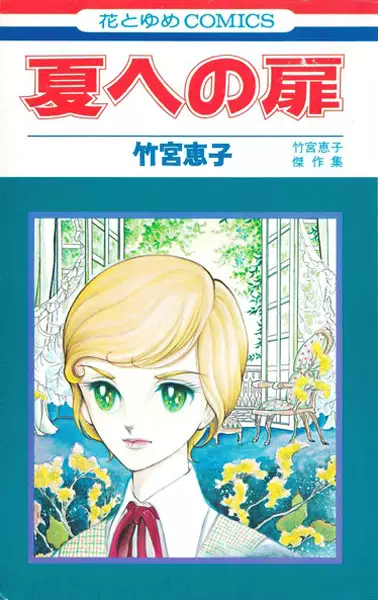
Authors:Takemiya, Keiko
Award Winning
Worth Reading? — Global Verdict
8.0/10
Average Review Score
80%
Recommend It
5
Reviews Worldwide
International Reviews
JadeOlivia
Recommended
9
Kaze to Ki no Uta is a mature manga, not because of the sexual themes, but because of how emotional the characters and the feelings they posses. This manga is beautiful, the complexity of the characters, the drawings, and the overall theme...is breathtaking. I realize that many people aren't into BoyLove (BL), but I highly recommend this manga. It demonstrates the emotional struggles of young men, suppressing their desires, as well as the battles that 14 year old Gilbert possess of a new found sexuality. This contains all the bad stuff and wraps it in a neat little bow. It doesn't glorify rape, murder, homosexuality,.....just presents it. It stands out awkwardly on how realistic the manga goes in depth, all the while remaining an interesting story. It contains many, many things that will turn peoples' noses up, but if you look past it, you will see something that horrifies yet, intrigues you.
This story follows a 14 year old Serge and his adventures at a Catholic school. He rooms with a boy, Gilbert, who sells his body in return for favors (such as homework, higher grades, money,). "Everything happens for a reason" is one quote that represents every character. Serge has to deal with his new found homosexuality, and the lewed nature of Gilbert. The art style is different, and may not appeal to everyone (this was one of the first yaoi of all time).
It contains many, many adult themes, and highly recommend it. There is no direct sex in it, but it shows the psychotic nature of us human beings. Why do I recommend it? Because it's realistic, something many people miss about manga in general. It is a short read, but it will leave a long lasting impression, wether it be good or bad is up to you.
Serge Battour is the son of a French viscount and a Romani prostitute, and despite his kind nature and academic talent, is shunned by his family and his peers due to the color of his skin. He begins to attend Lacombrade Academy, his father's alma mater, in the hopes that there he will find a place to belong.
Gilbert Cocteau is, like Serge, the orphaned son of a wealthy family, and is infamous at Lacombrade for his beautiful and delicate appearance, lack of dedication to schoolwork, and habit of prostituting himself to other students. He has no intention to connect with any of his classmates, instead devoting himself to his uncle Auguste.
Due to a shortage of living space, Serge and Gilbert become roommates even though Gilbert's antisocial nature has in the past made it impossible for him to room with anybody. Serge, being sociable and idealistic, is determined to be friends with Gilbert; Gilbert is only interested in either being able to manipulate Serge or push him away entirely. To the surprise of both of the boys, however, the two eventually form a deep, albeit generally dismal, bond that leads to a romantic connection.
(Source: MAL)
11,778 Members
Jul 14, 2014
Curlybrace101
Mixed Feelings
5
Kaze to Ki no Uta is a lot of things. It's the first real BL manga to hit the market. It's an award-winning pillar of manga history. It's a defiant take on the standards and rules for shoujo manga at the time, pushing the restrictive boundaries of manga for girls. It's... Well, it's a product of its time. Kaze to Ki no Uta is a primary example of how early BL had a lot of rape in it. Like, a lot. Granted, it doesn't contain the rape-to-romance aspect of the trope commonly found in BL, but it's still emblematic of how the genre tended to pan outin its early days. KTKNU has so much rape in it. Just, so much.
Of course, depiction of rape isn't necessarily a bad thing. In fact, it can even be a good thing. Rape is something that happens and we should not be afraid to talk about it. Nothing should be taboo to write about, and especially not something as pervasive in our society as sexual violence.
But this stipulation begs a very important question in regards to its inclusion in this manga: why?
Well, first let's answer a different question: why BL?
Shoujo manga was in an interesting place in the 1970s. Most of the men who wrote shoujo had moved on to shounen, and this made way for female authors, bringing with them certain ideas that reflected feminism and progressivism of the time. A group of authors known as the Year 24 Group (most famous for Riyoko Ikeda and The Rose of Versailles) revitalized interest in shoujo by defying its previous standards, forgoing innocent fairytale romances for darker, more mature topics such as sex and violence. This turned the public perception of shoujo from “frivolous tales of shallow things for little girls” to “real storytelling.”
Takemiya, the author of KTKNU, wanted to write a sexually explicit story female readers would enjoy. However, depictions of male-female sex were banned at this time. Depicting male-male sex was a loophole born of people so ignorant they didn't even bother to think of homosexuality. However, there's an even greater reason for choosing male homosexuality over heterosexuality. Per Takemiya's own words: "if there is a sex scene between a boy and a girl, [readers] don't like it because it seems too real. It leads to topics like getting pregnant or getting married, and that's too real. But if it's two boys, they can avoid that and concentrate on the love aspect."
And therein lies the answer to both questions.
KTKNU was written to be a sexually explicit story female readers would enjoy because when there are no women in the picture, they can get lost in the fantasy of sex as it plays into love without having to feel too uncomfortable because it mirrors their own experiences. (For the record, I don't think "a sexually explicit story female readers would enjoy" necessarily means readers are meant to find the story erotic, nor do I think the rape scenes in specific are meant to be sexually gratifying, but your mileage may vary).
Although, that’s interesting to say, because while there is loving sex depicted in the story, you have to get through pages and pages of depictions of sexual abuse first. So this quote from the author somewhat comes off as irrelevant and deflecting. That being said, I think that’s an uncharitable read, and the intention of depicting sexual abuse between males is similar concept to the intention of depicting consensual sex between males. Just like a BL relationship helps female readers read about sex without it feeling too real, it helps them read about sexual abuse for them same reason—and both sex and sexual abuse are things that they tend to go through and will need to process/understand in some way, and often through fiction.
And here's the thing. While I can understand the desire to get lost in a fantasy like that, I also don't think it makes for particularly good literature. It feels a bit tasteless to me, to treat a male character like a woman so one can project women's problems onto him rather than face the music that is the reality of women's suffering. Yes, it can be very cathartic. As a woman, I acknowledge that this is true. Being able to see women's suffering, particularly in regards to the oppressive power of sex as violence, represented in a way that doesn't make me too uncomfortable *does* feel cathartic. But at the same time, it also feels tacky. It's treating a male character as a woman and ignoring the reality that it is not men who suffer this way, but women.
Now, I don't want anyone putting words in my mouth. Sexual abuse does happen to men, every day, and it's terrible. But the sexual abuse faced by men and women is, in broad strokes, different. It is women who are constantly under threat of sexual violence en masse, being treated as objects expected to put out solely due to the fact they were arbitrarily assigned the “lesser” gender, because sex is easily made into a weapon—rape is about power much more than it is about sex—and who is it that men typically exert power over?
Men do face sexual violence, even or especially as a show of power, but not as a societal tool of gendered submission, and certainly not to the extent women do as something facilitated by societal norms. Sexual abuse faced by men is largely individual rather than institutional. However, a lot of BL, but KTKNU in particular, take the rape in that "societal tool of gendered submission" direction which is just plainly unrealistic. One man using sex to exert power over another? That’s real. I could even buy several men doing it considering much of the story is set at an all boys school and situational sexual behavior is real, not to mention those places tend to attract unsavory instructors. But almost every man in the story doing it? Come on now.
And I *know* why this is done. I just wrote several paragraphs explaining the catharsis of it all that makes it appeal to women, the target demographic. But this doesn’t change the fact that I don't find it to be particularly good storytelling. With how serious of a topic sexual violence is, I think stories should treat it with the utmost care and respect, and the way it's portrayed in KTKNU does not feel like it is lending it the respect it needs.
Because it isn't just that a woman's suffering is being projected onto a man. It's also that the story is really just...constant rape, all of the time, with good things never happening. Perhaps that is because the female suffering it is imitating does sometimes reach these lows, but it gets to a point where I have to just put the book down and say "does anything good ever happen in this world?" and, moreover, "if nothing good is ever going to happen, why should I care?"
Don't misunderstand me. I am not against stories that are full of constant suffering because sometimes real people's lives reach those lows. Tragedy is one of the oldest genres for a reason. Suffering is an unavoidable part of real life and thus a crucial part of fictional stories. However, unlike in real life, everything that happens in a fictional story happens for a reason. In real life, bad things sometimes happen for no reason, but in fictional stories, nothing is random. If fictional characters suffer, it’s because the author made a conscious decision to make them. So why? Why do they suffer? If you want to tell a good story, your characters need to suffer for a reason. They need to suffer to tell the audience something important. But the suffering in this manga doesn’t say anything. The characters in KTKNU suffer just for the sake of suffering.
So I ask again, why should I care? What is there to care about if there is only pain, darkness, and tragedy just for love of the game?
However, that doesn't mean there's nothing to be appreciated about the story.
For what it’s worth, the depiction of sexual abuse was a lot more grounded than I was expecting. The sexual abuse faced by Gilbert Cocteau may have been hard for me to buy in terms of number of perpetrators, however the processes and trauma left behind were quite reflective of real life. In particular, I found the grooming he faced by the main perpetrator, his uncle, to be a very realistic depiction of the grooming process and how it affects a child’s mindset.
I was also generally pleased by the depiction of Serge, the lead. He’s a character who is very easy to care about, and Takemiya made the decision to make him a person of color, which was something that wasn't necessary for the story but also gives it a lot more depth and empathy. I’m used to Japanese authors including depictions of brown characters that are insensitive at worst and racist at best, but in this manga from the 70s, the lead is a romani boy living in historical France, and not only is he is a good man who is easy to love, but the racism he faces is an important part of the story. One moment I really liked was when he states, at the beginning of the story, that he empathizes with Gilbert because he knows what it’s like to be considered “dirty” for something innate and actually harmless.
And, controversially, I did like Gilbert and Serge’s relationship. It’s not uncommon for readers to dislike Gilbert and dislike the relationship, because, well…to put it simply, Gilbert is kind of a massive bitch. More precisely, he’s an imperfect victim. He tends to lash out in ways that are extremely uncooperative at best and cruel at worst as a direct result of the way the grooming and abuse has warped his mindset. This causes a lot of rather unjust problems in his relationship with Serge, and many times in which he treats Serge poorly. However, I did appreciate that Serge was able to see past the bad behavior and love who he really was underneath. I liked that Serge loved who was actually there and stayed with him despite the problems. No one is obligated to do that, but sometimes someone is suited to do that and wants to, and I think that’s really beautiful.
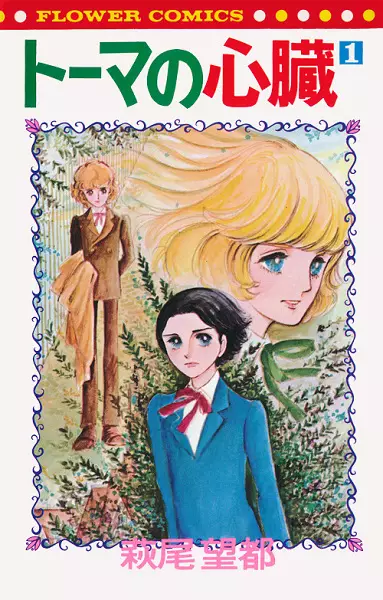
And for these reasons I’m just really disappointed. I wanted to like this story. It essentially invented the BL genre, being an expanded version of In the Sunroom—the first BL manga ever published—which we wouldn’t have even gotten to begin with if Takemiya hadn’t tricked her publisher into printing it. It’s one of the biggest reasons shoujo manga is what it is, and it’s served as an inspiration for revolutionary manga such as Berserk or Revolutionary Girl Utena. And, most crucially, I think there’s a lot about the story that is grounded and compassionate. But it’s seventeen entire volumes of just suffering, and I had to read all of them.
7 found helpfulJan 5, 2026
Nid_Vicious
Recommended
9
[contains minor spoilers] Before I get into my thoughts on this manga, I would like to address the concerns people have about the nature of some of the themes here. I very much agree with Oscar Wilde when he said that there are no moral or immoral books - they are either well written or they aren’t. That being said, I have no problems with the things I encounter in fiction at all. Especially in this Manga, which is loaded with things that I wouldn’t tolerate for a second should I happen to encounter them in real life. That being said: I fell in love with thisManga, so my review will be heavily biased. When somethings stirs something in you, it’s hard to stay completely objective, although I will try my best to do so. You may want to keep that in mind should you decide to continue reading this review.
This Manga almost seems like it was written for me - meaning, it has a lot of elements I always look for or dream about, so seeing something so ‚dreamlike‘ in the real world, I got excited.
Set in one of my favorite historical periods (fin de siècle) in France, I expected a regular love story between two teenagers. It’s an all-boys school, so what else would happen, right? Well, to a degree, it is what happens, but the road to that is hard and long with no end in sight, and even when you think that they have finally reached their destination, this element of the story isn’t even half of what this story is about. Let me elaborate by talking about our two main characters for a bit.
Gilbert - he is the ultimate manifestation of addiction and fear. He has no sense of self since he was raised to be nothing more than a pet, causing him to lose himself in what he considers freedom - music, alcohol, dreams and of course, ‚love‘. He can’t be alone for a reasonable amount of time, and when he doesn’t get what he feels he needs, he will do anything to get it, anything - even if it inflicts pain on those the claims to love. The way he has been treated and continues to be treated by basically anybody other than Serge seems to only reinforce his idea that this is just the way things are. He can’t change. He doesn’t want to change, he wouldn’t mind staying like this forever, since reality is too much for him to handle anyways. The eternal boy.
Serge has always been a serious boy who is used to putting effort into everything he does. He soon realizes that being with Gilbert is to abandon everything - his dreams, his friends, his future. He suffers, but can’t leave Gilbert. Only when he realizes that he can’t catch this bird that is Gilbert, he sees himself forced to give up. Serge wants to save Gilbert and live a normal life with him, but Gilbert is not somebody who is willing to give up on his ways. Gilbert would be fine living like he did with Auguste (I’ll be damned if that man wasn’t modeled after Franz Liszt) except less cruel. Serge tries to provide Gilbert with a certain lifestyle, but to do that, he has to work and constantly suffer at the hands of his surroundings. Life with Gilbert makes him miserable, but he tolerates it for this impossible love. Each time there is a glimmer of hope, something goes wrong and it all has to do with Gilbert. Now, at the time, homosexuality was not considered a crime under the Code Napoléon, but that doesn’t mean that society did not frown upon such things nevertheless. He knows in his heart that there is no future for them, not only because they are both male, but because of Gilbert’s nature. Serge knows from his own father that you sometimes have to throw away everything you hold dear to be with the one you love, but unlike his father, Serge’s partner isn’t willing to do, well, anything. Gilbert doesn’t seem to care if he lives or dies, and Serge alone can’t take the burden which is both of their lives.
The story can get really over the top sometimes and a lot of the time, the character’s actions are completely unreasonable. In that regard, the story is a bit flawed and takes away from the realism for me, but in the end, I honestly didn’t mind that much because I got so emotionally involved in it. The main point, to me, is shattered hopes and dreams, and it can’t be helped that they do. It’s ultimately about the death of youth. It’s a classic tragedy.
Needless to say, I personally love the art. It's melancholic and beautiful.
This Manga just got me. It's an emotional thing, so I'm not sure how else to talk about it at the moment.
Thank you for your time.
18 found helpfulApr 2, 2020
lebannen_
Recommended
9
I thought i was well past the point of getting emotional to the point of crying, over a manga/anime, and feeling a sense of profound emptiness after finishing a series after decades of being a weeb, but then i discovered THIS. This series is an epic romantic tragedy, not entirely in chronological order. As usual, the hallmark of a good series to me is one that makes you feel a very broad spectrum of strong lasting emotions, and i did. Envy, rage, hate, hopelessness, sadness, regret, frustration, stress and a few moments of bittersweet bliss. Set in the late 1800s at a posh boys school outside of asmall town in france, Serge battour finds himself living in the same room as gilbert, who sells his body for various reasons, and he finds himself getting emotionally attached to him, and also the story of both of their entire lives and how they were shaped as people.
Indeed, this series is full of every taboo you could possibly think of, to enjoy this series you need to have a MORBID sense of curiousity and an open mind (able to entertain ideas without necessarily accepting them). It is also very emotionally intricate/mature, so i can imagine a lot of younger people might not fully be able to "get it", i know i probably wouldn't have when i was 18-20 years old. So this series i imagine is for a more mature audience, in the sense of emotional and mental development.
The art is breathtakingly beautiful, which is why it took me as much as a week total to read it despite it only being 17 volumes, i like to read slow and really savour all the details.
I'm not usually someone to hate characters. In my entire 10+ years of being a weeb, i have never come across a character that i truly hated with a burning passion, no, not even characters such as the collectively despised Griffith from Berserk. He is a character that i can sympathize with because i can understand his emotions, although i don't condone his actions. At the top of my head as u write this review, i cannot think of a single manga/anime character that i truly hate. But it happened in this series, i absolutely hate Auguste, the cold blooded calculative sociopath, but i also hated Bonnard almost as much, although he seemed to treat Gilbert somewhat better than Auguste, he still raped him when he was still a child, and trying to pursue him despite knowing full well what kinds of hell he'd been through. What was even more aggravating and revolting to me is how he started taking the moral fucking high ground towards the end of gilberts background story. And this says a lot about the character work in this series in general, all of the characters are written so perfectly, including the side characters such as Pascale (one of my favorite side characters from this series).
Overall i don't think i could praise this series enough. Forget Clannad, forget kanon 2006, this is THE romance tragedy series that your heart desires.
11 found helpfulMar 6, 2022
llorando
Recommended
8
What initially brought me to read KazeKi, besides my general interest in the Year 24 group, was Chiho Saito's, member of the Be-Papas, remark about Revolutionary Girl Utena being "based" on this series. They're indeed alike on the surface: a beautiful and mysterious student that is treated like a heartless doll meets a white knight that sets out to save them but soon finds out that things aren't always what they seem. The main setting is also an isolated boarding school with similar architecture, like Oniisama e... and Heart of Thomas, there's a green house shaped like a cage where Gilbert and Anthy do theirthing, and this mysterious student's closer relative is the one running the school. But that's about as similar as they get, just the skeleton (this isn't a RGU review anyway, so...)
Gilbert is a gorgeous self destructive angel whom'll put a demoniac facade to get what he wants. His existence is ethereal-like and he'll often be, in a poetic tone, painted as a white dove; the inspiration for his character seems to be Björn Andrésen, the boy from Death in Venice, and the idea behind both characters is the same: rather than human beings they're a stand in for beauty itself. He sleeps around because he can't stand being alone, and is very casually raped from time to time – which he expects to be the only way people will always treat him anyway. The way he understands the world is generally different from normal people. Then we have Serge, a goody-two-shoes with a strong determination, a harsh past and a golden heart. They both meet and somehow form a unstable connection on the first volumes, but then we're thrown on what must have been the biggest flashback I've ever seen (or maybe it's Berserk's, but it's been long since I've read that one)
There're two flashbacks that serves to explain both of our MC's past and how they're supposedly similar to each other. Gilbert's past is covered with an unconfortably high number scenes of abuse and pedophilia: he's constantly assalted by... basically every male character that set their eyes on him, and has a very, uhm, "distinct" relationship with his guardian, August. Gilbert, being "beauty", is capable of awakening desire on seemingly anyone he chooses (or not) – with the exception of Serge, the only one who manages to partially control his urges around him. Serge's flashback starts with his father, before he himself was born, and is a very linear, predictable high born boy meets low born girl story, and then evolves to the evil step mother tale, which I don't find worth dwelling on and seems to me to be the worst section of the whole story.
Problem arises as our two main characters walk towards their fateful bounding, and pretty much all of it involve some form of physical or sexual abuse, to the point of exhaustion. Not only Gilbert but also other characters – there's a lot of rape being thrown around and being hinted as the reason why some characters act the way they do, which sometimes is of pretty bad taste. It's not that there's something inherently wrong with portraying abuse, but there's only so much one can take before it becomes redundant, merely a shock factor. Speaking of abuse and repetition, there's a particularly exhausting plot device on the last third of the manga that involves Gilbert silently suffering on the worst way imaginable while Serge is obliviously being his happy go lucky self, only to later find out everything and greatly suffer from remorse. We're supposed to suffer like Serge, I think, but after so much has been done it's pretty hard to play along with it. There’s also one particular character who rapes Gilbert early in the series and is then portrayed in a very benign light later on. Not that I’d ever want a one dimensional evil monster, but even if I let the moral dilemma aside and try not to be anachronic with my approach, i'm still left wondering what exactly Takemiya was trying to get on with this particular plot line.
SPOILERS:
Towards the end of the manga there's a instance of self sacrifice that our boy Serge indulges on thanks to his father's life story, but much like the naive boy who jumps on a river to save a drowning girl and ironically dies, from Utena, Serge quickly discover that life isn't a fairy tale, even on this shoujo manga, that despite his good intentions he can't save someone who doesn't believe they need to be saved in the first place, and that sometimes love just isn't enough – and so he fails his quest. But unlike Utena’s brilliant ending, KazeKi plays like a more predictable tragedy and ends where you think it will: Gilbert as a character never displays agency beyond one impactful event earlier in the series (where he chooses to be with Serge instead of August), he continues being hopelessly thrown around by everyone and tragically dies after pedophile number #57 in the last minute turns him into a drug addict (which felt silly, to say the least). Gilbert, who could only live for love, then becomes a symbol for Serge’s missing other half, whom’ll live a straight life, probably in both senses of the word, carrying his adolescent love in his heart.
August, the series third center character and “main antagonist”, if you will, is weirdly never confronted in this ending. He just dissapears after the 15th volume and it’s up to you to imagine how he reacted to his child’s death.
END OF SPOILERS
When it’s all said and done, and despite all the criticism, KazeKi isn’t a bad manga, it’s in fact a very good one, and is rightfully considered as such a classic. Simply put, the whole thing is gorgeous: the art itself and the paneling combined to create some stunning imagery. It's seriously outstanding. I found myself hitting the print screen button almost every chapter. Like most older shoujo manga, character’s emotions are usually presented in a very melodramatic way, they are prone to overeact and there’s a lot of blanky eyes, flowery imagery and all sort of embelishments running around the page. It’s dense and a bit overloaded, but also extremely beautiful (and Takemiya is particularly above the rest when it comes to her craft). The moments where Serge and Gilbert get together are breathtaking and staring at these pictures never failed to deliever a wild range of sensations. KazeKi is erotic not only because the story is filled with a huge amount of sex, but because the art exudes such quality almost to an intoxicating degree. It's impossible to ignore Takemiya's talent even when taking notion of the aforementioned contrivied elements that fills the narrative; she knows how to do manga and this one is way above of most of what would come after it under the same genre.
I’d recommend this to anyone that is seeking aesthetic excellence and isn’t bothered by most shoujo troupes. If you’re here looking for ancient BL history, I’d say that this one is a more fulfulling male x male story than it’s cousing, The Heart of Thomas, which is tamer about homossexuality, instead being more focused on telling a (exceptionally beautiful) tale about grief.
Just, for the love of god, do not read this if you’re triggered by rape.