Links go to search results. Availability varies by region.
おやすみプンプン
147
13
Finished
Mar 15, 2007 to Nov 2, 2013
6.2/10
Average Review Score
25%
Recommend It
20
Reviews Worldwide
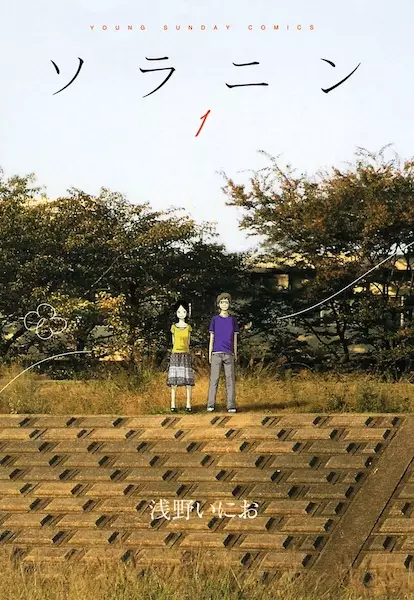
Oyasumi Punpun is the best example I have ever found of something which you should not judge by its literal cover. Looking at the picture on MAL, I initially thought the story was about some young girl and a weird penguin/bird thing and only really added it to my list because it’s ranked #15 on this site. It was not until after I read another manga by the author, Asano Inio, called Nijigahara Holograph, and looked more into what this manga was actually about, that I finally decided to read it. And I could not have been more wrong in my initial assumption. But enoughabout that intro which was just to help dispel any similar thoughts people looking at this manga might have, I’ll get into the real review now. So many manga (and actually many things in about every single story-telling medium that humans have ever had) often try to create likeable characters, a plot that while it may have many sad parts manages to rebound and become upbeat at some points, and/or very unrealistic characters or settings. Oyasumi Punpun is basically the opposite of all of that. Despite having comedy in the beginning (which is 99% black humor anyway), Oyasumi Punpun is possibly one of the most depressing and realistic things I have ever come across. It is the “coming of age” story of a boy named Punyama (later Onodera) Punpun, and follows him all the way from elementary school until around his early 20’s. What makes this manga so special is the heavy psychological aspects surrounding Punpun and everyone else throughout the story. One of the main psychological aspects of the story has to do with Punpun’s character design. He, as well as his family, start off looking like some kind of 2 dimensional birds with long legs. His design changes a lot later on to reflect how he is feeling on the inside, but the important thing to remember is that he looks just like a normal human being to everyone else in the manga and that he does not actually look like a “bird-thing” to them. The story of Oyasumi Punpun begins with Punpun in elementary school. The girl he had a crush on has just transferred out of his school, but shortly afterward a new girl named Tanaka Aiko transfers into his school. It’s love at first sight for Punpun. He starts to slowly grow closer to Aiko while at the same time hanging out with friends and just being a normal boy who is entering puberty. Among his group of friends (I’ll just name the ones who are important at some point later on because I don’t really remember the others) there are Shuntarou Harumi, a nice boy who wears glasses; Seki Masumi, a delinquent boy with family problems; Shimizu Koh, a strange boy who can see the “god of poop” and who has been friends with Seki since childhood. The group of about 6 boys in total is just your average group of male friends who enjoy finding porn magazines, doing tests of courage, and spending their time just trying to enjoy themselves. I won’t talk any more about the story because going any farther in any way would spoil things. There’s just so many things that Asano Inio goes into amazing detail about in this dark and depressing story that explaining any more would ruin some part of it. The story covers a lot of time as I already mentioned and Punpun’s elementary school life is only a small, yet very crucial part of the entire plot. As for the art, it’s simply amazing. The idea of making Punpun look different to the reader than to everyone else is a great way to show his true emotions in a way that showing him as he really looks could not. As for the other character designs, they are all very well drawn especially Punpun’s family who also resemble 2D birds with long legs. The people who look like normal humans are usually drawn normally, but they can look ugly at times or beautiful at times when the author wants to make them look similar to how they are feeling. Especially with Shimizu (who is usually seen with a runny nose) he can actually look very intelligent at times despite normally seeming to be the exact opposite. Also, this manga is very mature and occasionally contains nudity, but it is never used as fanservice and is only used to increase the darkness of situations and to expand on the imperfections of the characters. The backgrounds are even better than the character designs. The varying settings that take place in different locations throughout the manga never slack in a single frame and stay consistently good throughout the story. The art right from the beginning is great which is something I can’t say about all long manga that are published over many years. One feature of the art which Asano Inio often uses is that he will keep the same background for several panels but the images in the foreground (people, objects, etc.) will change. While I normally don’t like repetitive panels (or shots in anime), Inio uses this to increase the psychological aspects as well as the importance of these scenes. He makes the reader focus on what is happening and draws you in in a way where you suddenly realize five chapters later that you are not actually in Punpun’s world but are sitting in the real world. And this repeats many times (at least it did for me) over the course of the manga. The art is so realistic and perfectly depressing that it just fits this manga so excellently in every aspect and I really can’t find anything bad to say about it. Now, the characters are possibly the most “interesting” part of the manga. As I mentioned in the very beginning, these characters are not meant to all be likable. In fact, none of them are my favorite characters despite this being one of my favorite manga. But that’s not really the point, since they are meant to be realistic. I would never consider myself or any of the people in my life one of my favorite characters if they were in an anime or manga. Real life people are much simpler than anime characters that each have bold hairstyles, unique weapons, perfect figures, etc. Real humans are not perfect, do not always have a happy ending in life, and are usually just some unnoticeable background character that you pass by once or twice during your life but leave no impact on you at all. Punpun is your average Japanese person aside from the slightly inflated psychological issues at times (but still never something that real humans have not experienced). As a child, Punpun’s uncle taught him that if he said a certain phrase, God would appear to him and help him in his time of need. Inio depicts God like a bad imaginary friend who looks like a black guy with an afro and usually gives Punpun poor advice that is kind of like a “worst case scenario to do” rather than actual help. Punpun’s journey to becoming an adult is a difficult one filled with family issues, romantic problems, sex, alcohol, depression, different jobs, etc. Oyasumi Punpun is not a happy story at all, and Punpun never even goes one chapter without being sad, questioning himself, or making a bad decision at some point (aside from the chapters that he is not in). He has many flaws and as he grows up, he starts to notice more and more of them. Punpun is the kind of person (as is often stated) who is always looking back into the past and has a hard time looking towards the future. With his kind of depressing life, looking at his past is not the most enjoyable thing to do. He has many regrets and things he wishes he could do differently if given the chance. As the story progresses, he falls farther and farther away from how he used to be as a cheerful child who dreamed of becoming a scientist in space. Many characters talk about how he is too kind and often hurts people because of his kindness and how easily he apologizes for things. Punpun is one of the only parts where I think the manga has a couple problems. While overall I actually like Punpun a lot, sometimes he just makes decisions that are a little too stupid even for him. In the later chapters, I feel like Punpun becomes mean and a little annoying at times, though this is mainly due to an overload of stress and is honestly not really anything too surprising given his difficult circumstances. It’s not enough to hurt the manga overall, but I thought I should mention it. Inio acknowledges that Punpun has changed a lot as well by drawing him in an extremely different way than he was ever depicted before. Punpun's main source of drama comes from remembering his middle school crush Aiko. Punpun seems to always be going back and thinking about Aiko, and much of the parts that I dislike a little about him involve her. Seki and Shimizu follow kind of a side story for most of the manga. After middle school, they never really see Punpun at all, yet they are still very important characters in the story. They have been friends since preschool and Seki has always had to take care of Shimizu. Shimizu is just a strange boy who can see the “god of poop” in a way that is kind of similar to how Punpun can see God (minus the horrible advice that Punpun gets). As they grow up, they try to stick together but many problems threaten to tear their friendship apart. Seki has always been a delinquent and keeps getting into more and more trouble. Shimizu has always been gullible and somewhat childish but he tries to become more independent. I really enjoy their story and I think they're two of the better characters in this manga. Their relationship is just like a bond between two really good childhood friends and is very believable. Throughout the manga, Punpun goes through different drama and relationships, problems and anxieties, and different designs. The characters he meets (especially the girls he is close to) change each time. The story often focuses on characters other than Punpun in order to piece together the entire story. I won’t talk about all them as it would take too long, but if you want to see all of the characters who are very important at some point, just go to the character list. This is now one of my favorite manga and only the second that I have given a 10/10 rating to. It’s a masterpiece that shows how real life works and how all of the problems in real life are not easily solvable like they are in many stories. It may be one of the most depressing manga out there, but if you can handle that kind of story as well as many mature themes and some nudity, then I highly recommend Oyasumi Punpun. It’s not something you should go into lightly, but if you enjoy these kind of life-changing stories, then this is something you should not miss.
Punpun Onodera is a normal 11-year-old boy living in Japan. Hopelessly idealistic and romantic, Punpun begins to see his life take a subtle—though nonetheless startling—turn to the adult when he meets the new girl in his class, Aiko Tanaka. It is then that the quiet boy learns just how fickle maintaining a relationship can be, and the surmounting difficulties of transitioning from a naive boyhood to a convoluted adulthood. When his father assaults his mother one night, Punpun realizes another thing: those whom he looked up to were not as impressive as he once thought. As his problems increase, Punpun's once shy demeanor turns into voluntary reclusiveness. Rather than curing him of his problems and conflicting emotions, this merely intensifies them, sending him down the dark path of maturity in this grim coming-of-age saga. [Written by MAL Rewrite]
A wise man once told me - "son, you better study hard or I'm going to beat the fuck out of you right here right now". And he did. When I was in middle school a cute girl I really liked went out with the most athletic rugby player who then smugly told me that she moans like a siren in bed. Pshh, asshole. In my college years I consistently woke up to the sounds of my room mate screaming "harder harder!". Sigh. Finally, in my twenties I realised that all those people were gone from my life and despite all they've unwittingly done tomy psyche I started to feel rather lonely. That's 'Oyasumi Punpun' in a tangential nutshell. But enough of my sentimental autobiography, let's cut to the chase. The story follows Onodera Punpun and focuses on the struggles his mind experiences to comprehend exactly how humanity operates as he grows up from being a kid. I like the fact that this manga portrays life in its crudest form. We all remember the shit we've done as we grew up and we all have a few skeletons in our closet. Well think of 'Oyasumi Punpun' as a massive skeleton party. Drinks all around! The cast is full of... people. Alcoholics, violent maniacs, horny sluts, smug loners, idiots, nutcases. And they all interact with each other. Why, you could mistake this work for being the 'local news' section of your town's newspaper. Friendships are formed and broken, relationships consummated and older bearded men run around the streets with their cocks out. And all you do as reader, is watch that world through the eyes of someone who doesn't understand it but is desperately trying to. The artwork here is absolutely magnificent. I marvelled at Asano's (mangaka) skill at being able to adapt his style to fit the mood every single time. And while on that topic, the style coupled with the story will mostly make you feel depressed and surely reminisce of your younger years. So yes, the artwork is top notch. Every character also feels alive and vibrant, not only because of detail but because the artwork so conspicuously presents their emotions. You probably won't enjoy this manga; that doesn't mean it's bad. Who the fuck likes waking up in the morning? But apparently it's good for you. Same here. 'Oyasumi Punpun' is an unbiased whole picture of life. We have but a single mind so our views are naturally biased and rational in nature to keep us sane and optimistic. Asano gives you the mind and experiences of every character in this manga, so everything appears without bias... factual... cold... depressing. And then we begin to see that sometimes life can be a lot more cruel than we thought. One hell of ride this has been. Went so far down the memory lane I forgot where my home was. But don't we all have those moments sometimes? 10 points. A masterpiece.
I didn't enjoy Oyasumi Punpun. Now, I understand that I wasn't supposed to enjoy it. But I didn't enjoy that, either. [INTRODUCTION] Oyasumi Punpun (Goodnight Punpun in English) is a slice-of-life seinen manga written and drawn by Asano Inio. It follows the story of the titular Punpun as he grows up in modern-day Japan, focusing on his struggles with depression and his quest for a fulfilling romance. It's also about how he loses his faith in God as he is plunged into the real world, which may or may not be an allegory for the author's stance on escapist manga. If that all sounds good to you,fine; I would encourage you to give this title a try if it sounds like your kind of thing. But Oyasumi Punpun isn't a manga for everyone. Here's why it wasn't for me. STORY [3/10] There's a beginning, a middle, and an end, but not much structure beyond that. The story is clearly divided into three "acts," each spanning a different part of Punpun's life, and each with its own climax. However, there is little foreshadowing or buildup to said climaxes; nothing to help the reader guess where the plot is going at any given moment. There is little sense of progression, and the story seems to meander through various disconnected arcs. Each arc is fairly formulaic: Punpun is unhappy, something unusual happens to him, and his visual design changes slightly. This would all be fine if it weren't for the fact that each arc is very much the same as the ones those that preceded it. As a result, the story often seems boring, monotonous, and unfocused. This monotony seemingly exists to reflect Punpun's depressive outlook on life. While this was clearly the author's intent, it doesn't make the story interesting or entertaining to read. In fact, Inio stated in an interview that one of this reasons for writing Punpun was because he had always considered escapist manga to be "bullshit." The story itself is peppered with references to escapism, usually in the form of a God or similar belief, always portrayed as being an immature and unjustified excuse for one’s actions. Instead of wryly hinting at his messages, Inio instead decides to beat the reader over the head with them. This would be fine, but eventually the messages begin to overshadow the story, hurting its coherence and believably. Entire chapters will be dedicated to internal monologues reflecting the themes of this manga, rather than actual story progression. These chapters are only balanced out by faux-artsy segments which specifically try not to advance the plot, but these are far too common to be called "interludes." The best of these feel somewhat unique or innovative, but still boring, while the worst are tedious and totally unnecessary, only relevant thanks to their re-enforcement of the manga's already obvious themes. Inio is not exactly known for subtlety in his writing, and Oyasumi Punpun continues the tradition of shoving his beliefs into the reader's face even when he doesn't need to. In fact, with the exception of that regarding a certain religious organization, all symbolism and exposition in Oyasumi Punpun is delivered rather clumsily. This brings me to the cult. The Pegasus cult, a group of individuals concerned with saving society from its inevitable collapse and spreading "good vibrations" to the people of the world, is one of the most commonly criticized aspects of this work, often due to its questionable relevance to the plot. And, while it is true that the side plot regarding the cult is especially rushed and unsatisfying in its conclusion, the cult itself is without a doubt the most interesting part of the story. Pegasus cultists spend most of their time calling each other silly code names and yelling into megaphones from the tops of buildings and vehicles, and are, for the most part, portrayed as lunatics. Their single-minded, overly optimistic outlook on life, combined with the constant promise that "things will change," reflects Inio's cynical view on escapism and how it does nothing to fix modern society's problems, which is a remarkably clever way for Inio to convey his message without relying on the endless stream of angst that comes from Punpun's mouth whenever he walks onto the page. ARTWORK [7/10] Before I get back into complaining about what this manga did poorly, let's talk about the artwork. It's admittedly fantastic - every character that the reader is supposed to hate looks intensely punchable and obnoxious (there's even a guy who looks exactly like a dick!). The whole thing feels like it was shot from a small camera thanks to the use of perspective and fish-eye effects, which further the story's candid style and oppressive tone. Inio is good at drawing plot twists, too. Just about any remotely surprising thing that happens in this manga will get an extra-large "reveal" panel, usually a zoomed-out version of the close-ups which preceded it. Unfortunately, there's a problem here as well. With the exception of these "reveal" panels, there's not much variety or meaning in Inio's layouts. His choice to draw the manga as though it is being viewed through a camera's lens causes action shots to feel lifeless and dead, thanks to the camera's "snapshot" nature. Once again, was it intentional? Yes. Did I enjoy it? Nope. Some drawings ignore the focus of the scene altogether. Conversations especially are full of disorienting layouts, while the aftermath of these conversations is usually a page or two of a character walking or sitting in solitude (if another character is trying to talk to them, there will be an annoying amount of close-ups), interspersed with plain black panels and white text, followed by a zoomed-out "reveal" panel. And even the reveals lose their charm in time, becoming a common occurrence and therefore not feeling special or surprising when they turn up. The tone of the drawings, much like the tone of the series, is painfully static. There is no variety; nothing to keep a reader interested or wanting to read on once the over-use of certain panels and page layouts becomes apparent. Great art is meaningless if an artist is going to confine themselves to a single, overly specific style of drawing for the entirety of their work. CHARACTERS [3/10] All of the characters in Oyasumi Punpun can be boiled down to a single sentence, usually which mentions that they are depressed, sexually frustrated, annoying, immoral assholes, or some combination of the four. Punpun in particular is easy to define: He does whatever you don't want him to be doing at any given time in the story. He's less a character and more so a laundry list of things that people aren't supposed to be doing in their life. He's also supposed to be a self-insert - but who wants to project themselves onto a character whose every action they disagree with, and whose mouth does nothing but spew meaningless, faux-philosophical gibberish in a futile attempt at self-justification? On the topic of characters who are thinly veiled stand-ins for real people, Sachi would have been a perfectly permissible author insert... if she hadn't spent a large portion of her time on-page rambling about why hyper-realistic manga has value and why it's silly to criticize it. This aspect of her character is at its worst when an entire chapter is dedicated to Sachi explaining her own manga series to her publisher (91, in case you're interested). The chapter feels less like a characterization of Sachi and more like Inio venting about criticisms he considers to be unjustified, which causes a major break in immersion for the reader. Moments like these - times when Inio lets his own messages get in the way of the story he wants to tell - can be found throughout Oyasumi Punpun, and their jarring nature can cause the major dramatic scenes which they are followed by to lose their emotional impact. Even the characters the reader is supposed to sympathize with are difficult to get attached to. Some have backstories so tragic that they are unbelievable, while others are so seemingly perfect that their inevitable downfall is painfully predictable, causing the reader to be wary about growing to like them. Furthermore, to say that the manga's realism provides justification for its characters' unlikability is absurd, as characters are perfectly capable of being simultaneously realistic and sympathetic. To say that this manga would lose its uniqueness if its characters were likable is, however, correct - and it admits what is perhaps the work's greatest flaw. ENJOYMENT [1/10] -- FINAL SCORE [3.5/10] As an artist, Inio has the right to tell whatever kind of story he wants to tell. However, as a consumer, I have the right to agree or disagree with the opinions and messages that he presents in his work. I previously alluded to Inio's statement that escapist manga is "bullshit," and I would like to take this section of the review to express my disagreement with this stance. Escapism is an important part of modern society; in many cases it is the only thing that keeps life worth living for people. As Oyasumi Punpun is, at its core, a story about depression, Inio should be aware of this fact. And, although it is better to face one's problems and change the negative aspects of one's life than to simply ignore them, there is still value in escapism. It could be what prevents someone from getting depressed or, better still, be exactly the thing that pulls them out of their depressed state. Frankly, to imply that the world is a meaninglessly dark and crushing place that is doomed thanks to humanity’s own over-reliance on the valueless practice of escapism reflects an immature, self-important, and almost contradictory outlook on life - one with which I wholeheartedly disagree. To put it bluntly, Oyasumi Punpun is a manga that successfully achieves exactly what it sets out to do, but whose inherent flaws arise from its very success. The problem is that I fundamentally disagree with the misguided reasoning behind Punpun's message. When one sets out to read manga, one is likely looking for some form of entertainment; if not, one is looking to learn more about themselves or the world around one's self. You don't learn anything that you didn't already know by reading Oyasumi Punpun, and it most definitely isn't an entertaining story to experience. Why, then? Why should you be reading something that achieves its own goals, but, by achieving them, loses most of its value as a literary work? If you're not a critic or an aspiring artist yourself, why would you want to read something that is intentionally unpleasant to read? My answer to that: I'm not sure. ---------------------------------------------------------------------------------- TL;DR: [+] Hyper-realistic, if you're into that stuff [+] Unique art [+] Achieves its goals with ease [-] Painfully boring to read [-] Reflects immature views on life and society [-] Liking it makes you a NORMIE! >:D [/s for that last one] Recommended alternatives: 20th Century Boys (manga), 3-gatsu no Lion (anime/manga), Persepolis (graphic novel). Agree? Disagree? Have a tomato to throw? Come and take it up with me on my profile! I'd love to talk with you, no matter who you are or what you have to say.
One of the worst things I've ever read/seen. Celebration of ugliness, depravity and degeneracy. Feels like a work of an edgy thirteen year old, the work is so full of pathetic resentment towards the world. Suicide, death, rape, murder, pornography - this manga has it all. Family, friendship, love, education, society - all is corrupted in this manga and subverted in the name of sick perversion of the author. Truly demonic work. I simply do not understand how anything who is half intelligent could enjoy something like this. Actually, this is not even about intelligence, rather about beauty versus ugliness. From the art to the charactersand the story, everything in Oyasumi Punpun is depraved. Tristan Tzara or Michelangelo, the choice. You either glorify the world, the creation or celebrate ugliness and evil. Oyasumi punpun does the latter. This work is not some kind of deep exploration of depression and consequences of decisions - this manga is yet another example of the kind of degeneracy that our contemporary sick world produces. This review is rather short and mostly me ranting, but I can't bear to actually spend time on making a proper explanation of why this manga is so horrible. If you love beauty, believe in this world and its people (and their Creator) then do not waste your time on this soulless trash.
This is the most pretentious piece of fiction I've ever read. Story: 1/10 What story!? There is none. We simply follow the main character with 1st world problems, not being happy with himself, with people around him, with the world, and constantly making dumb decisions that annoy the reader. Characters: 2/10 The main character is 0/10, he is drawn as how a two and a half year old would draw a penguin with their left hand, so we can't properly see Punpun's emotions on his face, and on top of that he barely ever talks, which is clearly an attempt to make the readers insert themselves into the gianthole that the main character represents. All the other characters are between 1/10 & 3/10, and are just stereotypes, but on horse steroids. The only character who I found to be sort of okay was Seki, cause he seemed to be the only character that felt human. Art: 2/10 The author did all that was possible to make the manga easy to draw. Drawing the main character & his entire family as a penguin doodle, but also copy-pasting the same panels again and again and again. When characters show emotions, it's almost always over the top unrealistic, as if the author wants to shove their emotions into our retina. The worst part of this manga isn't the art, nor the characters, and not even the lack of a proper story, but the author's constant attempt to self-insert his own nihilistic philosophical opinions into EVERY SINGLE CHARACTER. This becomes obvious very early on, as the characters would suddenly start to spout out some philosophical soup full of rotten vegetables, while the other character that's listening to this doesn't have any argument back. And there was definitely a few times when the philosophical horse vomit that's been forcefully spilled onto our nostrils, was something that I agreed upon, but it doesn't change the fact that one of the most annoying things in fiction is when the author forces their own view of life onto their readers. The only reason I didn't rate this 1/10 is because no matter how bad of a fiction I read, part of me believes that somewhere our there lingers an even worse piece of fiction, and that compared to that, even Oyasumi PunPun would taste like a high quality German beer compared to a bison piss.