Links go to search results. Availability varies by region.
ăă©ăšăčăŻæ è·ŻăźæăŠ
17
3
Finished
Oct 22, 2020 to May 20, 2022
8.9/10
Average Review Score
71%
Recommend It
7
Reviews Worldwide
About a year ago, I wrote a preliminary review gushing about the English release of Hiraeth: The End of the Journeyâs first volume. It resonated with my own views on life and death in a way that seemed rare (since then, I watched A24âs Everything Everywhere All at Once, which scratched a similar yet different itch). This past February, the final English volumeâvolume threeâof Hiraeth released, and despite ending much sooner than I wanted it to, I appreciated the whole run all the same, and maintained my 9/10 rating. You surely noticed that Iâve got a âMixed Feelingsâ tag on this review. Well, I read throughHiraeth a second time, paying closer attention to the story. I donât take back my preliminary review, as thatâs how I really felt, and I still think that Hiraeth has some very powerful moments that hit just as hard. However, structurally speaking, Hiraeth doesnât quite hold up on subsequent readings. I wonât spoil the story apart from speaking in the most general terms, except when I talk specifically about an exchange that happens at the end of volume one divorced from all other context. If you donât want to risk it, I suggest checking out Hiraeth for yourself if youâre interested. Before I go further, Iâll give a synopsis. Hiraeth is a character drama that takes place cross-country across Japan. Our party of characters go west from Shinagawa City, Tokyo to Shimane Prefecture, which for context takes 1 hour, 25 minutes by plane (in the story, the characters drive and make stops along the way). Shinagawa City is home to 14-year-old Mika, the closest thing to our main POV character. Mika recently lost Mitsuha, who you can freely interpret as her best friend or her girlfriend. Due to grief, Mika has decided that life is no longer worth living. Her initial suicide attempt is foiled by Hibino, a man cursed with immortality. Though he has lived many vocations and known many loves, Hibino is now searching for a way to end his life as well. Accompanying Hibino is a youthful looking god who later goes by Hani. As theyâve lost basically all of their believers to the sands of time, Hani is near the end of their lifespan. Hani is the first one to plan this journeyâthey must visit shrines and say goodbye to fellow gods they know, and then arrive in Shimane, where the entrance to Yomi, the land of the dead, resides, so that they may formally end their life. Hibino sees Haniâs pilgrimage as an opportunity to reverse his immortality. And Mika, upon learning of Yomi, is excited at the possibility of meeting Mitsuha again, giving her suicide mission a slightly new bearing. And so Mika, Hibino, and Hani travel to Yomi, learning about the histories of different towns (mostly thanks to Hibino having lived those histories himself), getting to know specific people and their life perspectives and struggles, and overcoming their own interpersonal frictions with each other. Letâs start with the positives. First, I want to emphasize that Hiraeth is more about death than it is about suicide. Granted, our main character Mika is suicidal; the main question for her, narratively speaking, is if she should reunite with Mitsuha in death, or not. But, Hiraeth is larger than Mikaâs story. We have Hibino, who had to deal with outliving anyone he meetsâlearning how to process death as it happens only to those around him, never to himself. We have Hani, who is able to literally see the âroads toward deathâ of every person they meet, and is genuinely yet clinically fascinated by how humans behave on those âroads toward deathâ they unknowingly walk. We have Chihiro, a student who researches folkloric representations of death partly out of sincere academic drive, but also as a method of coping with something very personal to her. We have Michino, an old woman who suffered loss like Mika has, but who learned to keep living and make compromises when she must. All these encounters influence Mikaâs own relationship to death, and by extension her suicidality. Even if suicide is her guiding endpoint throughout, the journey she goes on concerns death in general. It gets heavy, and I donât blame you if you donât want to engage with such charged subject matter. However, Hiraeth always makes sure to counterbalance the darkness with some legitimately helpful optimism, and in the end, Hiraeth treats death and suicide with real thought and compassion. In volume 1, Mika is told, essentially, that her desire to die for her friend is understandable and even normal. That feels radical, especially compared to how verbalizing your depression around where I live would result in getting chastised for even daring to âthink something horrible like thatâ, and getting complained at for ânot sucking it up like everyone else.â Of course, Hiraeth isnât advocating for suicide by any stretch (well, one scene in the final volume plays a bit odd when taken out of context), but it does argue that empathy and understanding are fundamental in connecting with and helping others who are struggling. That sounds super obvious, but actually, the most powerful moments in Hiraeth are just these beautiful gestures between people. Moments that, on the one hand, do capitalize on previous development. But on the other hand, they just utterly and completely capture the power of kindness and of vulnerability via these interactions between Hibino and Mika specifically, all the more powerful when death lingers, and lingers persistently, just outside their comprehension. I admit I am weak to that stuff. Every person on planet Earth has their button that can be pressed, and Hiraeth just knows how to press my buttons when it needs to. And the ending of Hiraeth is powerful because I personally felt those feelings before. Iâve been at lifeâs precipice, needing to decide if I want to live or not. I know what itâs like. The fact that mangaka Yuhki Kamatani writes to that experienceâother elements of the writing notwithstandingâcannot be discounted. Of course, not everyone will relate as much as I do, but there are people out there who will relate as much, if not more. That is a genuine power of fiction, and Hiraeth at its best shines with this power. Now, however, is a good time to talk about the negatives. Again, using storytelling to convey powerful and relatable life experiences is good, even if it doesnât resonate with everyone. Speak your truth rather than appeal to the lowest common denominator. But, I wonder, if Hiraeth should have tried *harder* to be more broadly appealing. Iâm not saying that Hiraeth should have filled its story to the brim with tired tropes and canned story beats. Iâm speaking more fundamentally: Hiraeth relies on relatability too much to carry its story (a double-edged sword), and thereâs a lack of organizational narrative techniques that could have picked up some of the slackâwhether that be a logical backbone of dramatic cause-and-effect (maybe you know it as South Parkâs âtherefore, butâ approach), or a built-in layer of thematic meaning that would further organize and add meaning to the story. Those aforementioned âbig momentsâ I mentioned before do pull the story together in meaningful ways, but much the rest of the time, Hiraeth just meanders. It takes these characters who do have a lot of dimension to them, lets things play out in dramatic and messy ways, and asks you to do the work of making sense of whatâs happening. And sometimes, basic dramatic cause-and-effect is missing. For example, Hibino has these moments early on where heâs a bit of a jerk, but then he comes back around and plays the ânice adultâ without any explanation, where my only reaction is, âYeah I guess adults are like that sometimes?â Sure, this is fleshing out Hibinoâs character in a way, but itâs hard to get invested when scenes have no clear purpose. And Mikaâs character arcâthe centerpiece of Hiraethâsometimes has these âlearning momentsâ that barely affect her at all. Theyâre there more to add texture to the journey than anything. None of this is helped by mangaka Kamataniâs bad habit of making scenes as visually dramatic and shocking as possible, sometimes imbuing scenes with unwarranted importance. These complaints didnât really apply when I first read Hiraeth, since I didnât know what would end up mattering or not. In fact, rolling with the chaos was part of the initial appeal, since it made the story feel unpredictable and real. And the fact that this is a character drama that relies substantially on organic conflict might be enough respite from a lot of other stories in manga and anime that feel so artificial, to the point where anything that *isnât* made entirely out of tropes will feel like the best thing ever. But, itâs on a second readthrough that the novelty wears off, the story cannot rely on unpredictability anymore, and the dysfunctions and inefficiencies of the narrative structure become noticeable. The worst of it is localized in chapter two of Hiraeth, which I consider functionally useless. I had no idea what purpose all the needless drama was serving, and I was actually worried that I wouldnât like Hiraeth enough to even finish it again. Admittedly, it never gets quite as bad as chapter two ever again, but thereâs sprinklings of structural sloppiness throughoutâmoments of confusion that added up enough to keep Hiraeth from being truly great. An experiential narrativeâone that relies on the power of relatability and bolstered by rich detailsâhas only one layer of meaning, regardless of how much meaning is packed into that layer. Stories that truly survive the passage of time have multiple layers with which readers can engage. There is some thematic writing in Hiraeth, of course, but it is not agile enough to keep with the subtle intricacies of Mikaâs journey. I did neglect to mention the Japanese-religious subtext in Hiraeth which makes for an additional layer, but I couldnât ascertain if those elements amounted to something greater than its parts (maybe check Hiraeth out if you are into ShintĆ and/or Japanese Buddhism). And again, dramatic cause-and-effect would have lent an almost physics-like inevitability to the narrative, bolstering its staying power with function alone. Itâs because of these structural weaknesses, along with the subjectivity of Hiraethâs main message, that I cannot easily recommend Hiraeth to everyone. As a side complaint, I did not like what they did with Hani, the god character. For most of Hiraeth, Hani was not a very prominent character compared to Mika or Hibino, but that did fit in with their detached, observational personality. I figure so long as they lightly interacted with the narrative as they have been doing, it would be ok. However, near the end, something is revealed about Hani, which suddenly adds new aspects to their character, and also ties the overall narrative into a bow so neat itâs disgusting. When I talked about Hiraeth avoiding tired tropes, this is the one big exception. It feels tacked on. Iâm not sure if this was an editorial mandate or if this was Kamataniâs idea. It does technically slot in with the rest of the story, but the rest of the story wasnât asking for something like this either. I understand why there may have been an urge to give Hani more narrative prominence and emotional impact, since they are a âmain characterâ, after all. I admit that going a subtler route with Haniâs character would have been far more challenging to write, but I think it could have been done. Well, at least it doesnât actually figure that much into the overall story. As a final point, I want to compare Hiraeth with Kamataniâs previous work, Our Dreams at Dusk (which Iâll call Dusk from now on), and talk about why I think Dusk is ultimately the more successful work. Iâd skip to the final paragraph if you havenât read Dusk (not out of spoilers, but because it won't matter to you). For one, Duskâs narrative structure was much tighter, focusing on main character Tasukuâs journey of accepting his sexuality and learning how to help others like him. His experiences stack in an intuitive way, such that every step of his journey feels meaningful. Meanwhile, as Iâve already mentioned, Mikaâs journey is more muddled. The overall arc is satisfying, sure, but the individual pieces donât fit together as nicely. Hiraethâs significant focus on Hibino is very welcome and interesting, and I think this time away from Mika does actually add something to the manga. But still, I must wonder if the narrative could have come together more (an extra volume would have been nice). Secondly, while we are firmly in Tasukuâs head from the first moment of Dusk, Mikaâs interiority in the early chapters is unknown not only to us readers but to Mika herself. This is because she hasnât fully accepted her friend/gf Mitsuhaâs death, and doesnât seem to be processing the world around her as real. It takes us a while to really see how Mika ticks, and this can be really hit-or-miss. On my second readthrough, I was not charmed by how Mika seemed to be âsuicidal in a quirky way.â She came off like an early-era Adventure Time character. It actually takes some time to get used to Hibino and Hani as well, whereas I feel in Dusk there are at least some immediately palatable characters. It just makes for an odd on-ramp experience for Hiraeth. Lastly, Dusk is about LGBTQ people dealing with present circumstances and learning how to move forward with their lives, while Hiraeth is about people weighing the value of their entire lives (a big task for an immortal like Hibino) as they prepare to either live or die. Both are rich subject matters, but, and this is my opinion, I think the latter is much more complicated and thus harder to completely express. Of course, itâs not like Dusk captured everything about the LGBTQ experience, but it didnât have to either. Meanwhile, Hiraeth tackles life and death, perhaps the biggest and most expansive topics of all time? I think Hiraeth did a good job with discussing death, but thereâs just more opportunity for it to miss something or to not fulfill expectations. Admittedly, I have never identified under the queer umbrella, so I could be underselling Duskâs capacity to mess up in the same regard. But I think itâs clear that Hiraethâs ambitions would be particularly difficult to fulfill perfectly. (I just want to mention Kamataniâs art in Hiraeth. Their art in general is very accomplished, and always pleasing to look at. However, I feel Kamataniâs art in Hiraeth is more mature than their work on Dusk. While Dusk was flashy, non-diegetic, and sometimes needlessly detailed (though it at least engaged the eye), Hiraeth was more restrained, and kept its maximalist collages within the context of Haniâs visions, where the fantastical actually makes sense being there. There is one standout sequence depicting âdeath as nothingnessâ, using abstract art and minimalism, which is the opposite style of Dusk. It was just cool to see Kamatani do something different.) In conclusion, if you try Hiraeth and find the ride enjoyable, youâll probably like the whole thing. And I still see myself going back to chapters five and sixteen in the future. However, for me at least, the second reading experience felt compromised. I do wonder if years from now, when Iâve worked through my baggage a bit more, I might come back to Hiraeth and suddenly have Mikaâs story click for meâall the little cul-de-sacs in her journey gaining an intimate power that I couldnât feel before. Itâs possible. I just have to keep growing and see what happens. Hopefully by then, stories like Hiraeth will make more sense, not less.
What lies beyond death? Mika Kashima, an energetic teenage girl, will soon discover the answer for herself. Struggling to overcome the loss of her best friend, Mika ceases to find meaning in her life and decides to die by suicide in an effort to chase after her friend in death. However, her fate takes an unexpected turn when an immortal human, accompanied by a god, prevents her from dying. After learning about the existence of the afterlife from the god, Mika determines a new goal: to join the two eccentric individuals on a journey to the world of the deadâin hopes of seeing her best friend once more. [Written by MAL Rewrite]
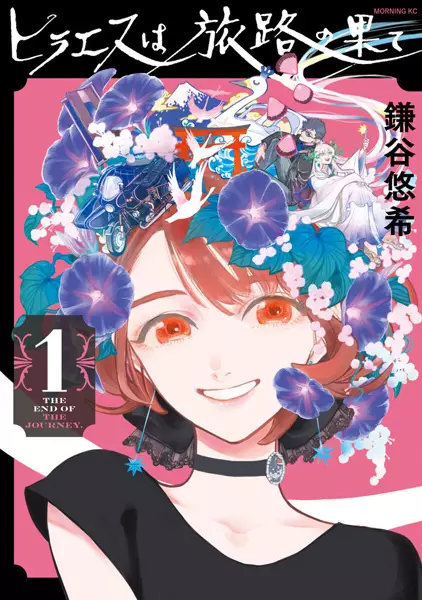
I found this manga out of no where and im really glad i did. This is a short story about death, its meaning and themes. It really gets you to think what it means to die and psychology behind it. The story is only around 17 chapters but it manages to capture a lot of deep feelings. This manga made me rethink what it means to pass away and the philosophy behind it. I loved the main characters and their interactions. You grow to understand each characters and their ideals. The author really did a great job portaying the themes of passing away. I will forsure remember this manga for a long time. Thanks to the author for this wonderful story
This manga is very beautiful and delicate, it has an incredible narrative and the art is breathtaking. The story is about death, and will deal with almost everything around this genre, grief, fear, the journey to it, memories. And with 17 chapters the plot will close all the proposed points. I was even surprised by some explanations that I did not imagine I would be present. The plot at the end is good, and it surprised me positively; the characters are charismatic and easy to connect with, my particular favorite being Hibino. This is a story I would definitely recommend.
A friend of mine recommended me another manga drawn by this mangaka, and as I looked it up, the author's name sounded familiar. Turns out, I had already read "Shimanami Tasogare" which caught my eye because of the topics handled. Starting "Hireath wa Tabiji no Hate", I expected the same breathtaking art alongside page compositions that made me go "oh" out loud sometimes. Kamatani has a very keen eye for creating pages full of the most beautiful art and so far the writing in both of the manga I read left an impact on me. Making me think about things. The characters in this rather shortmanga are quite likeable, even though you don't spend a lot of time with them overall. For me, the writing was believable, especially for a young teenage girl confronted with death. Her travel companions kept growing on me with each chapter. I can recommend this manga to people looking for amazing art, because it's worth reading for that alone. But all the more for people like me, who struggle with the topic of death; who'd want to read a perspective on different handling of grief, searching for or not believing in he devine and what mortality means to individuals.
As someone with not-so-good attention span, I like this a lot. The whole manga is short, consisting of 17 chapters. And the length of every chapter is only 30-40 pages long. So for someone who wanted to read but âprefer tiktok more than any booksâ, this is for you â or maybe your friend. Even though this involves with a strong & abstract topic, they could explain to the readers from different perspectives. Some sees them as something to be afraid of, some sees them as a burden for them/their relations, and some sees them simply as a stepping stone in life â as one will facedeath eventually. I also like how they draw the charactersâ emotions. Itâs giving a vibe. Idk how to describe them but it gave me something different from many mangas/manhwa/manhua. And the character building is SO good. Mika was so naive for suiciding because of her âfriendâ, but then progresses to be the caring one, especially for her friends, Hibino & Hani. Hibino also has character building. At first, he always think that death is something that he should never think of. Anyone whoâs scared to death are bullshit to him. He never thought of death, after all. At the end, his perspective was changed. All secrets were pointed at Hani. Theyâre the one inviting Hibino & Mika for a ride to Yomi. We knew that Hani is a god, but we didnât knew the true intentions, past, whatsoever. And Hani was so suspiciously good. And later on, we knew how gods view humans, death, and so on. At the end of the day, itâs an amazing read for me. Idk bout yall who prefers straight relationships.. vice versa. If homosexual relationships (may have) isnât a problem to you, this is incredible.