Links go to search results. Availability varies by region.
Find a Specific Chapter
104 chapters total
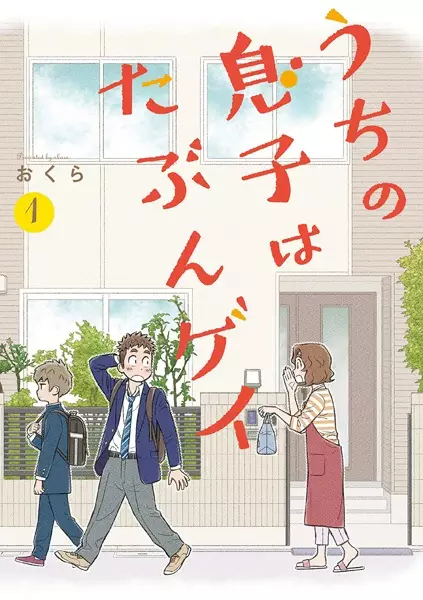
I Think Our Son Is Gay
うちの息子はたぶんゲイ
7.78(4K votes)
Ranked #1687Popularity #1762
chapters
104
volumes
5
Status
Finished
Published
Aug 22, 2019 to Feb 21, 2023
Authors:Okura
Slice of Life
Worth Reading? — Global Verdict
7.5/10
Average Review Score
75%
Recommend It
4
Reviews Worldwide
International Reviews
faeryghost
Recommended
10
This is one of the most painfully relatable and emotionally resonant manga I’ve ever read. “I Think Our Son Is Gay” has an adorable artstyle, a wonderfully lighthearted sense of humour, and bite-sized chapters that never overstay their welcome. But underneath the veneer of simplicity, there lies a deep understanding of the queer experience and a great deal of empathy for those on the periphery of it. I was truly surprised by the number of times this story brought me to tears, not because it’s in any way sad, but because it’s so filled with compassion and optimism. Its portrayal of being a closeted teen is hilariouslyaccurate, and it playfully depicts different awkward and tense scenarios without fully downplaying their severity. It’s a really impressive balancing act that keeps the chapters easy to engage with while still managing to pack them with substance.
Interestingly, the protagonist is not the gay character, it’s his mother! The story is told from her perspective, and her observations about her son tend to be both funny and heartwarming. The narrative also explores the mother’s interactions with the rest of her family and friends, and it was fascinating to see how her awareness of her son’s latent queerness impacted these relationships.
Sometimes, it feels like this manga is presenting an ideal world where everyone is considerate and understanding, but I don’t think that’s a negative. There are already a lot of stories about the harsh realities of coming out, so it’s nice to indulge in this kind of fantasy every once in a while. The author is showing the world as it could be, rather than the world as it is, and I think this results in a work that’s brimming with hope and absolutely worth reading.
Tomoko Aoyama has a sneaking suspicion that her son Hiroki is gay. He often talks excitedly about boys and men before he realizes it and bashfully tries to explain himself. From fawning over handsome baseball players on TV to talking highly about his best friend, Daigo Shiraishi, Hiroki inevitably becomes flustered by these casual slips of the tongue—much to his mother's amusement. Though she has no way of knowing for certain, Tomoko can only wait and quietly support her anxious son until the day he is ready to say something.
[Written by MAL Rewrite]
14,127 Members
Mar 29, 2024
HidamariSeashore
Recommended
8
From my understanding, good parents just want their kids to be happy. I may not be a parent myself as of the time of writing this review, but I do see this in my mother, who supported me and my younger brothers in whatever we wanted to accomplish as we grew up. Although she could be a little probing about it, she has also been at least somewhat supportive of our love lives, whoever we happened to like at that time. I do wonder sometimes about one thing, though; neither my brothers nor I have ever been attracted to anyone who's the same sex asus, but if any of us were, would our mother love us the same, in the same way the protagonist in the manga I'm reviewing today loves her own son? No matter what the answer to that question may be, she definitely raised me to be the kind of person happily willing to read a manga about a boy who might be gay.
Ladies, gents, and nons, here is my review of Okura's "I Think Our Son Is Gay", known in Japanese as "Uchi no Musuko wa Tabun Gay" (literally "Our Son is Probably Gay").
I Think Our Son Is Gay is mainly told from the perspective of Tomoko Aoyama, a married mother of two. Her younger son, Yuuri, is a bit of a cool kid who isn't interested in romance, and her older son, Hiroki, wears his heart on his sleeve and is very bad at hiding things. Case in point, one night, he lets it slip that he'd like a boyfriend who could cook, only to frantically backtrack and say he wants a girlfriend instead. This, along with several hints from before and after this particular moment, leads Tomoko to believe that Hiroki might be gay, but she would prefer to wait until he's ready to come out to talk to him about it. In the meanwhile, Tomoko watches over Hiroki as he goes through high school, and in the process, her worldview expands a little more each day.
At the time of this manga's creation, Japan still wasn't too open about same-sex relationships - with same-sex marriages still not being legal in Japan - and that is reflected here. While there are no LGBTQ+ characters being shown physically harassed, there are heterosexual characters who make not-always-accurate assumptions about the community; while people making such assumptions actually happening in real life makes this manga realistic, and while it's made clear that they're not necessarily true, those kinds of moments might not be a fun read for some. With that being said, though, while there isn't a whole lot of LGBTQ+ representation outside of homosexuality (and a little bit of asexuality), the representation that is there is solid. No gay character is shown to be overly campy or stereotypical, and although being gay is an important part of their identity, that's not all there is to them.
To start off talking about this manga's characters, I'd like to talk about the most obvious example of what I just mentioned, Hiroki. Although he's not the manga's viewpoint character, we do get to know about as much about him as we probably would if he was. Although he joins a school club later in the story for the sake of spending time with his crush, he gives club activities his all nonetheless. He also displays feelings of inadequacy and low self-confidence at times, which is painfully relatable. Above all, he's a good kid who cares a lot about his family and friends. He is canonically gay, but instead of a caricature, he's a fully-fleshed character whose mangaka wrote him well.
One could also say that Hiroki's mama raised him well in-universe, and with how good of a person Tomoko is, that'd be easy to believe. She just wants to support her boys and let them live happy lives, and while she does have her own feelings of inadequacy about her parenting abilities at one point, anyone could see how good of a job she's doing with both Hiroki and Yuuri. Speaking of Yuuri, while he isn't the type to show his emotions often, he goes through his own struggles, and chapters focusing on him tend to be interesting. Plus, it's revealed that he also knows of his older brother's sexual orientation, and the little ways he shows support for him are quite sweet. Rounding out the Aoyama family is Akiyoshi, Tomoko's husband and Hiroki and Yuuri's father. While he's not a bad father by any means, he is a little behind on his sons' lives due to his job taking him away from home for lengthy periods of time, and early on in the manga, he expresses some close-minded views toward the LGBTQ+ community, unintentionally hurting Hiroki with his comments. Fortunately, especially with Tomoko's help, he is able to gain a more open mind by the end and also build a good relationship with his son, which is nice.
The members of Aoyama family aren't the only characters in the manga, however. We also get to know about some of the people in each of their lives, such as Daigo (Hiroki's crush), Asumi (Hiroki's childhood friend who has a crush on him), and some of Tomoko's mom friends. One particular character who stands out to me is Touno, Tomoko's co-worker at a bento shop who happens to be gay and living with his partner. Through Touno, Tomoko is able to learn about the experiences of a gay guy who's not her son, which further expands her worldview. I may have lamented the lack of LGBTQ+ representation outside of homosexuality, but it's still nice to have him and a few background characters mentioned throughout the manga around so that it doesn't seem like Hiroki's not the only gay person in its universe!
I spent too much time talking about the characters, so let's move onto the artwork. There isn't really much I can really say about it, though. It's cute, it's simple, and it's a good fit for a slice-of-life story like this one. The character designs are also solid, without a single outlandish design in sight. Yeah, I think that sums up how I feel about the artwork.
Do you know what I think? I Think Our Son Is Gay is a pretty good manga. Those who are in the LGBTQ+ community may enjoy its solid representation (and even relate to Hiroki's awkwardness), and those who aren't may come out of it with a more open mind; either way, it's worth the read. Hopefully, if/when I get married and have kids of my own, I'll be able to follow Tomoko's example, no matter what sexual orientation or gender identity they turn out to have.
9 found helpfulMar 11, 2024
BaileyMP4
Recommended
7
To be honest was a little hesitant but ultimately found it quite compelling and funny, if you just want something that you can just chill out and read and just have a laugh this is good for that you don't have to take it so seriously. It's not was im into but i will still give it a 7 due to it making me laugh and i was compelled by it. Give it a try i think you will like it no matter the genre your into. The character dynamics and the art was really good aswell i did surprisingly to me enjoy this read.
0 found helpfulFeb 26, 2024
AkaiOne-san
Mixed Feelings
5
I’m writing this review from the perspective of a psychologist who wanted to use this manga professionally, but… I struggled to get through it and have mixed feelings about it. On the one hand, it is needed: we have a father prejudiced against gay people, a gay main character, his younger brother, and a mother who knows but supports him “from the shadows.” It’s good that the boy’s mother has thoughtful reflections. The problem with this manga, however, is that it’s far too long — one third of it would have been enough. On top of that, the main characters are irritating. The boy’s mother takesabsolutely NO action to support him; they barely talk to each other. It’s basically a diary of her observations, but there’s no actual support shown and no honest conversation. Meanwhile, the main character, Hiroki, spends the entire manga getting embarrassed whenever any queer topic comes up and denying how masculine he is, etc.
My issue is that this is unhealthy, and nobody reacts to it. In the entire manga, there is only one healthy parental response to the son’s words, and it doesn’t appear until the second-to-last chapter! Individual chapters could work well as a starting point for further discussion with a teenager or with the parent of a gay teenager, but beyond that, I don’t see it as suitable reading for, for example, a parent of a queer person. In my opinion, this is not a supportive manga.
Still — hidden support and acceptance are better than criticism and intolerance, but… why don’t these characters talk to each other?