Links go to search results. Availability varies by region.
ĺ ă¨ă¨ăăŤâŚ ď˝čŞéçĺ ăćąăăŚď˝
92
15
Finished
Sep 28, 2000 to Apr 3, 2009
9.2/10
Average Review Score
100%
Recommend It
6
Reviews Worldwide
As an anime-only watcherâwho has recently started following manga latelyâI have been capable of utilizing my time searching for something to read. However, whenever we stumble upon a manga that approaches a controversial topic, our interest is piqued. I decided to check if there were other indistinguishable series. There are no results. That would mean autism as a theme, in general, is uncovered by manga of any demographic. This occurrence causes me to beg the question, âWhy isnât there more series that tackle autism?â Awareness is significantâit implements change to influence ourselves and others around us. Autism has been beginning to be more prevalent since the aughts, but now, we arefurnished with present-day information. Which offers more comfort as families face current challenges. Set in the 80s, everywhere to witness, parents of children are flooded with judgmentâall of which is appalling. Schools have trouble providing appropriate services to a diverse and increasingly numerous student population diagnosed with ASD. This is where I present you to undoubtedly one of the better-underrated manga, With the Light: Raising an Autistic Child â a glamorous character-driven series that explores the spectrum with organic interactions. With the Light by force is a rare breed in the manga industry. It solemnly involves a controversial topic and centers not just on the person with autism, but rather depicts the personal difficulties of parenting along with them. With the Light provides an imaginative exploration of how the Japanese perceive and take care of those who are on the autistic spectrum. In America, they have acquired a shrewder insight into ASD and provided aid to them, despite the issues that need to be addressed. The situation in Japan is dire, especially since the Japanese draw from a further traditional background, comprising a collective society and being conservative regarding delicate topics. Japanâs treatment of those with autism is appalling compared to North America, primarily since the general awareness of mental health is low from firm traditional values. To elaborate, start by recognizing the relative performance of such measures in diverse cultures. While the issue seems universal, there are subtle differences in their expressions and personal traits. We possess little knowledge involving families of children with autism from cultural perspectives. It allows the audience to identify the elements influencing parenting stress among parents of autistic children in Japan. That is what rightly makes With the Light remarkable compared to other series. Love can be different for each personâthe way everyone perceives affection depends on how they desire it to be. However, that is only in the process of attaining love if you truly yearn for it. Denial, anger, depression, and acceptance. With the Light follows the story of Sachiko, a diligent mother who gave birth to her son, Hikaru. She expresses a deep ambition to tend to her beloved child and fantasizes about an ideal family to fulfill her expectations, as there was research regarding raising a baby. However, those expectations did not come to light. Learning what autism is, Sachiko begins to be in disbelief about Hikaruâs disability. Denial. She got detached from most of her dearest ones, such as her fiancĂŠ, Misato. A workaholic husband who doesnât retain a firm grasp of fatherhood. The blame and their vexation proceeds to Hikaru. Anger. Venting in her cognitive dissonanceâthe sheer complication any mother could have with their childânot expressing their affection. Depression. Fortunately, as Sachiko was sobbing, it seemed Hikaru could finally reciprocate her love and enlighten her with inflorescences. It encapsulated her ambitions, now willing to accept the responsibility to teach herself valuable skills so that someday she may experience the life of an excellent mother. Acceptance. A few readers will encounter problems with how the emotional buildup paces too fast with the evocative narrative in the beginning. Considering the subject matter, this series walks on a path by focusing on a family that happens to give birth to an autistic son. The notable aspect of the writing in With the Light comes from its concept of ASD and how it is integrated into the narrative. Timing and concentration are taken into consideration to allow these small yet significant and alluring moments to sustain an appropriate buildup to genuinely possess a resonating effect. The reason I mentioned this issue is because there are stories that handle drama as a way to toy with the audienceâs emotions. While there are hints of melodrama, it still establishes significant scenes that showcase the development of Hikaru and his family. A crucial issue would furthermore, be that the ending does not include a "proper" conclusion, which makes it vague for the audience to grasp. What do I mean by "proper" conclusion? Unfortunately, the mangaka passed away before she could complete the series. As time continues, their relationship grows potent; these characters are deeply flawed but made realistic because of that. They were self-centered and condescending. Yet also stressed, broken, and simply yearning for an âordinaryâ family. Initially, you may find a dislike for Sachiko and Misato since they were absent-minded with themselves. Ultimately, you will witness them blossom as parents. The side and supporting characters are enthusiastic, maintaining their morale high despite the hardships they face. To illustrate, they also devote time to explore issues within ASD that affect friends and acquaintances known to Hikaru and his family. Which includes abuse, child discipline, etc. When looking at the supporting cast, it is not merely Hikaruâs family finding themselves in handling these issues. The characters display a broad variety of emotions such as anger, fear, embarrassment, and indifference. All of which are conveyed well to the reader. Everything is directly passed on to the audience candidly and naturally. However, the issue is we merely receive a narrow portion of their lives, which was ordinarily never intended for such a miniature audience. This is vital if we consider the importance of education in its narrative. With the Light already mentions that autism is different for everybody however, they need to emphasize it a bit more. School is imagined as an integral part of the community's culture and one's development. It enhances a pivotal environment in Hikaruâs growth as an adolescent boy. A fostering place of learning, it is there where our mind flourishes intellectuallyâthen later perceives introspection. The artwork is your retro-shoujo manga, but the drawing still captures the charactersâ expressive gestures and movements. Nothing feels underused, but at the same time, nothing happens to be too brash. The visuals match the wholesome vibe, but simultaneously, it is nostalgic. Furthermore, there will not be any extraordinary characteristic details that seize your earnest attention, which is unfortunate considering the personal setting. It is crucial to pay attention to minor details when you try to evince signs of autism to the intended audience. If you are dissecting this series as an academic resource or gaining a comprehensive grasp of autism, restrict your expectations from being excessively high. Despite the lavish praise I gave, With the Light does not perfectly provide a deep exploration of ASD or portray all of its issues along with it. We will not see different therapy methods, such as Hikaru's thought process, trauma, or coping mechanisms. Proper terminology can be outdated. The audience will gain a more thorough understanding. If you want to inform yourself even further, I suggest researching to obtain extensive knowledge and talking to them about their lives for anecdotes. Why? Attentively, experts in the manga encourage our characters to refer to an autistic child in the same way you would to a foreigner, using simple words and bold gestures. For instance, when foreign characters were introduced, they spoke in broken Japanese, similar to autistic people. All things considered, you should appreciate this manga as a profound story. It is one of the most underrated manga I wholeheartedly adore for everything the series attempts to bring. From the tact it brought to the topic for the audience, to the relatability for people living with ASD. In conclusion, if you are autistic, chances are you will resonate with this series. The same applies to those who happen to recognize someone on the spectrum as well. 75/100 Rest in Peace, Keiko Tobe. (1957-2010) Thank you kindly for reading my first review.
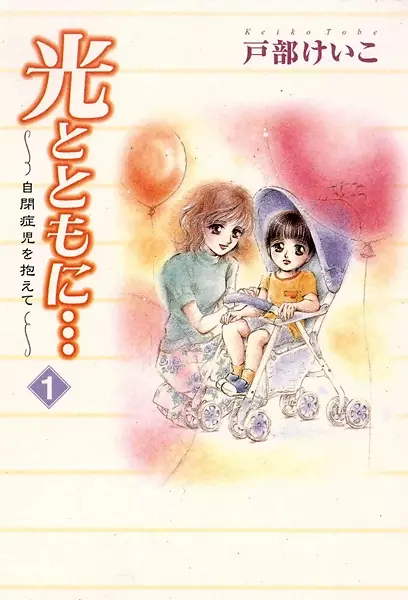
Born during the sunriseâan auspicious beginningâthe Azumas' newborn son is named Hikaru, which means "light." But during one play date, his mother notices that her son is slightly different from the other children. In this alternately heartwarming and bittersweet tale, a young mother tries to cope with both the overwhelming discovery of her child's autism and the trials of raising him while keeping her family together. This is a story that resonates not only for those whose families have been affected by autism, but also for all past, present, and future parents. (Source: Yen Press) Included one-shots: Volume 15: Thank You Sensei!, Haru no Manazashi
This is my first time rating a manga so I apologize if there are any mistakes. I give this manga...a perfect, pure, concentrated 100/100! Yep! You read that rating right! I feel this is the single greatest and best manga of all time!...yet it's so underrated and underappreciated! But the appreciators who DO love it are truly devoted to this beautiful and majestic manga! I honestly feel that this is one of the most ground-breaking and wonderful and incomparable manga ever created! This is my number one all time favorite manga. And I can give A TON of reasons for it being sooooo wonderful! The premise of thismanga is actually very surprising and unusual, and not many other manga have done this before! The manga's about a young mother who discovers her beloved son, Hikaru, has autism, a developmental disorder of the brain that affects communication and social interaction. The Azuma family go through both hardship and joy as they go on a journey to help their son live to be a "cheerful, working adult" when he gets older. I'm autistic myself, so I relate to this manga on an extremely personal level. In fact, I didn't even know this manga even existed until 2008, when I accidentally came across a Wikipedia article about it! I was so surprised and overjoyed that I literally begged my dad to order the first two volumes (volumes 3 and up weren't out back then) off of Amazon! And boy, am I glad I did! This manga has won a very very VERY special place in my heart. Even the awesomeness that is Shounen Onmyouji (my number one favorite anime of all time) couldn't compare to this manga's beauty and divinity! And boy do I have a TON of praises for this beautiful, sublime, and wonderful manga! Let me start with the story first. Autism is a very controversial yet well known subject nowadays, yet this manga wasn't published until the late 90s, and autism wasn't all that well known in Japan just yet. Heck, NO manga before that time has ever even DARED to tackle the issue that is autism! But in this manga, it's done absolutely wonderfully! The plot is adorably consistent, the portrayal of autistic children (and adults) are absolutely spot-on, and the development is fantastic! Of course, the manga, while having an optmistic and warm and kind-hearted message behind it, refuses to shy away from discrimination and social prejudice toward the autistic. Thankfully, there's no insane melodrama or unnecessary angst or complicated matters or anything of the like. In fact, if you ever have an autistic relative or are autistic yourself, you can actually relate to these problems and issues! And the characters! My goodness, the characters are absolutely and positively wonderful! Sachiko, the mother in this series, is a wonderful and strong character who is able to carry the weight of this manga perfectly. She's a wonderful depiction of a mother trying to raise an autistic child. Of course in the beginning she's in denial and feels alone and abandoned regarding her son, and on one occasion she even takes her anger out on Hikaru, but she grows and develops and learns and accepts whatever she's been given. Her husband, Masato, is also great too! At first he may seem like the stereotype of a cold and uncaring parent, but that's simply not true. In the beginning, he's simply too young and inexperienced to be the star husband and employee that his family, and society, want him to be. And like Sachiko, he grows and learns and accepts what he's given and doesn't look back. I love that in a character! Hikaru...awwww, what can I say about him!? He's soooo adorable and a wonderful portrayal of an autistic child, though I will confess that I haven't met any children like him in my country (America). But I can easily see a character like him in real life! And the minor characters. The family and friends are also wonderfully depicted and developed. Even the very minor characters who only appear for one chapter or more are given a little impact and personality! There's always something about them all that leaves an impression. How can you go wrong with that!? The artwork...of course it looks rather old school shoujo manga-esque with round, sparkly eyes and all that. Thankfully, the artwork never loses it's edge. In fact, even with its simplicity, it really makes everything feel real and soft and warm-feeling, like you're actually seeing the characters and actually playing the events of the manga in your head! No page feels overly extravagant or overly bland. The artwork is nice and well-balanced. Plus, it really captures the emotions the characters feel and the events going on in each chapter fantastically! Wonderful! Sublime! Nothing is wasted and nothing is overly used. In general...I can only label this manga as sublime and wonderful. One of the best ever. An amazing and beautiful and authentic portrayal of a family raising an autistic child! And I NEVER say these words for anything unless I'm really pulled in by it! Of course, the manga doesn't ENTIRELY focus on JUST the family and their autistic child. In fact, the manga also tries to develop the characters around them and give them some depth and development and impact on the story from other families with autistic children to the children Hikaru befriended (albeit impassively) and even the relatively minor characters! Even so, this is a wonderful manga that truly deserves more attention in this world. One thing I was terribly upset about was when the author of this manga, Tobe Keiko, died abruptly in January of 2010. You couldn't believe how upset I was. I even thought it was a joke until I started losing it. I cried so much I even woke my parents up at 6:00 in the morning, I was THAT heartbroken! And the manga isn't even finished yet! Well, I guess it is now considering Yen Press is releasing the posthumous final volume of this manga later this year. Waaaahhh!! Why did she have to die!? She still has so much to give to the world! But what she did give will be greatly cherished and remembered. We will always remember Keiko Tobe and the great things she achieved in life, this manga being her highest and best achievement. If there's one thing I want out of this manga, it's this: A FREAKING ANIME ADAPTATION!!! That's right! This manga would be a GREAT anime if handled by the right staff and production company! We need more realistic anime like this nowadays! We're tired of being bombared by big-boobed, underwear flashing, overblown moe and incest and ecchi moe garbage!!! So many awesome manga like this are left in the dark while stupider titles get adapted! Well, all's not lost. There's apparently a 13-episode live-action TV drama of it. I only saw the first episode, but I plan on watching the rest of it this year. All in all, this is a sublime and divine manga! The best ever! GO READ IT NOW!!!
This is a fantastic slice-of-life manga following two parents as they raise an autistic child. As the couple learn more about autism and about their child, they grow as parents and learn how to nurture their son and develop an environment he can thrive in. Story: 9/10 The premise is a simple one, and itâs right in the title: this manga is about raising an autistic child. We follow Sachiko and Masato as they learn how to become better parents to their son, Hikaru. They struggle to reconcile their fantasies of parenthood with the realities. They realize that their primary goal as parents shouldnât necessarilybe to raise a doctor or lawyer, but instead to raise a happy and healthy young man. They discover that, with patience and love, Hikaru is capable of many great thingsâbut they also come to understand that, even if he isnât able to do everything that society seems important, he is still their wonderful son. The manga doesnât sugarcoat the difficulties that the parents, and Hikaru, go through. Hikaru is often overstimulated and has meltdownsâearly on, the parents, unaware of his feelings, cause them or make them worse. He struggles to communicate, and this frustrates both him and his parents. When Hikaru is young, his parents often express regret that he was born or have the urge to disengage with him. Itâs difficult to read something like this, but the parents do grow and change, becoming much more compassionate and caring people, who are dedicated to giving their son the opportunities he needs to thrive. The first chapters, especially, can be challenging to get through, but as the parents learn more and become more involved with Hikaru, we get to watch as they guide Hikaruâs growth into a young man. As life goes onâKanon, the couplesâ daughter, is born, schools change, and new families are introducedâwe watch along with his parents as Hikaru grows up. Itâs such a shame that the author died before finishing the series, because I genuinely wanted to see what would happen to the characters next. Art: 10/10 The art is lovely. Itâs consistently well-drawn and look beautiful. Hikaru (and, later, Kanon) slowly grow up before the readerâs eyes, and itâs fantastic to see. Character: 9/10 I genuinely dislikedâat times, even hatedâSachiko and Masato, but over time, I came to like them as characters. At the start of the series, Sachiko is an overwhelmed young mother with little patience for and almost no understanding of Hikaru and his needs. Masato is cold and avoids his family in whatever ways he can, and seems to have no interest in his son, nor the desire to develop one. Pretty early on in the series, though, they start to develop into more patient and caring people, and continue to improve as parents throughout. Even though he is nonverbal, Hikaruâs personality and interests are apparent, and though Kanon is young, her personality develops through the series as well. The characters grow in a very believable, realistic way. It is a pleasure to see their progress unfold. Enjoyment: 10/10 This manga can be hard to read at times, particularly at the start. The parents behave in ways that are sometimes appalling, but they grow over time into supportive and nurturing parents. Watching each character mature is incredibly enjoyable. The pacing is excellent. We get to see each stage of Hikaruâs life as he ages, and the author never lingers on one age for too long. I do want to mention that, as an educational tool, itâs not perfectâbut I also donât think this was the authorâs intention. The manga doesnât perfectly explore the complexities of the autism spectrum or portray all points on that spectrum, nor does it go into the ethics of different therapies or coping skills, or their effectiveness. It shows its age when certain terms are used. It can be educational in some ways, but it certainly canât replace educational texts or the knowledge you gain from talking to actual autistic people about their lives. But, this manga isnât supposed to be the end-all, be-all guide to autism. Itâs a story of Hikaru and his parents, and itâs a very good one. Overall: 9/10 This is a great slice-of-life manga that I would recommend to any fan of the genre. Itâs a mature, well-done series with excellent character development and writing. While it can get dark, it is ultimately hopeful. If it had been completed, it would most likely have been a masterpiece.
As many readers of my reviews may note, I typically donât tackle manga titles since anime is more my main priority of covering. But upon learning the premise of With the Light: Raising an Autistic Child almost three years ago, it caught my interest for both personal reasons and seeing how mangaka Keiko Tobe would approach exploring autism as to my knowledge, the disability has not had a serious exploration within any Japanese anime or manga series. The manga focuses on the challenges faced by the Azuma family as they try raising their autistic son, Hikaru, as With the Light explores his life from birthup to junior high school. To go into the personal reasons that With the Light caught my interest, I shall confess that I am on the autistic spectrum in the same vain that the mangaâs lead, Hikaru, is. Growing up had its highs and lows for me with autism. I had a delay in being capable of talking compared to other toddlers growing up and even through school, had to take speech therapy classes due to my struggles with properly pronouncing and expressing words. I was placed in other special education programs such as occupational therapy and a Resource Room to have adequate support in handling school life with my disability. I also struggled often with understanding proper social behavior and interactions with others as I got into enough misunderstandings growing up that led me to being bullied and teased by other kids my age. The struggles I had in school on many occasions caused enough stress for my parents. In spite of these issues, I still benefited from having a strong desire to learn, engage myself in whatever interests I took up, and being the first within my family to graduate from college. Reading through With the Light and relating it to my experiences growing up, the manga does very well at believably exploring the challenges an autistic child can deal with. The desire for repetitive routines and differences in processing information are typical traits for those on the autistic spectrum, and the social challenges that come with it also get explored when Hikaruâs behavior causes enough stresses for his family and friends due to the misunderstandings and inconveniences it can cause. The toll this can take on Hikaruâs family and friends does get focused on as well with Hikaruâs family gradually learning how to work around their sonâs disability and dealing with the ignorance that others have with understanding it. Outside of its believable exploration of autism, With the Light also features an interesting exploration of how the Japanese perceive and take care of those on the autistic spectrum. While many Americans have gradually come to better understand and provide support to autistics in spite of lingering issues that still need addressing, the situation for autistics in Japan is much worst. Many schools are underequipped to handle caring for students having a mental disability and many teachers lack training in teaching styles that can work around the cognitive issues faced by said students. Also, the Japanese translation of the word meaning âself-closure syndromeâ creates a stereotype to many in assuming that the blame for the personâs actions is either their own or the parents instead of genetic inheritance being a factor. This is actually truth in real life as Japan faces struggles with valuing individual worth due to its âgroup over individualâ cultural mentality and the countryâs mental health services are underfunded and understaffed, with many staff members lacking adequate training to provide sufficient services to varying mental disorders. Outside of exploring the everyday lives experienced by Hikaru and his family, the series also devotes time to exploring issues that affect friends and acquaintances known to Hikaru and his family. Issues such as family abuse, neglect, and institutional corruption are touched upon with exploring supporting characters and Hikaruâs family often find themselves caught up in handling or learning of these conflicts. One thing I should note with With the Light though is the series can get quite heavy with emphasizing its exploration of autism at points throughout its run. Melodrama is often milked to dramatize the emotions felt by its characters in handling their everyday situations, especially in cases where Hikaruâs mother, Sachiko, is trying to understand her son and be responsive to his needs. While there were points where I found this dramatization to be overdone, it still helped enhanced the mangaâs major scenes that highlighted developments with Hikaruâs family and other characters learning to better understand the challenges faced by Hikaru and others dealing with various disabilities. Another issue with the series is that it does lack a proper ending as it ends inconclusively during Hikaruâs middle school years, though this canât exactly be faulted on quality since Keiko Tobe was struggling with a serious illness that eventually took her life in 2010 and left the series in a permanent hiatus. Overall, With the Light met up to my expectations rather well in its believable exploration of the challenges faced by Hikaruâs family in raising him despite his disability and the issues that Japan as a whole has with accommodating individuals with disabilities. It can be overdramatized at points with emphasizing its themes. But this is perhaps one of the few titles you can find in Japanese media that offers a serious and believable look at the challenges of raising an autistic child.
I don't consider this just a manga. No piece of fiction has caused me to think about life as much as this story. Life's hard as it is. A collective series of choices that inevitably lead to one's death. Friends, family, children, a husband, a mother, the grandma, the grandpa. It's all a random set of circumstances in which we do what we can to be happy, but there's always a wrench thrown at most people. Some don't have the economic standing necessary to sustain a normal life, others have parental problems. Everybody's got their thing, something they've got to deal with in their ownway. This story is about a family with a son, one born with autism, but it isn't just about the tribulations of that. Life isn't just about one thing, everything stems from the fact that we're alive, and we've got a responsibility. While we mainly focus on the POV of a mother trying to raise her child, the story involves everybody around each person involved, and their struggles around the titular boy Hikaru. The characters are all rich in stories, in lessons about understanding, patience, love, the lack of love, situations in which we're thankful our main character wasn't born in. Nobody in here's perfect, not even the mother, or the father, or the son. It's a portrait of somebodies life, and it sometimes feels like voyeurism. A masterpiece in portraying a group of people, distant from me, or others. Maybe they remind you of people you know, but you'll feel a connection with their struggle. The art is rather simple for the kind of story it is. It lacks in detail, but it makes up with the amount of personality on display. It's probably more of a âgets the job doneâ rather than being an explosion of art. What stands out is the writing. Not many stories can keep me engaged while showing me normal life. You're always tense while reading, waiting for the good times to last, knowing hurdles are always there. I kept wondering where could it go? What more is there to explore? Only to get a curveball, a piece of dialogue. One of the most impactful moments were definitely when everything was calm, and reflective. âWill I live more than my old man?â, âI just want him to take care of himself before I'm goneâ. It makes you feel the reality of being a parent, about how we look at our parents, and their aging selves. We age, everything changes, medicine changes, learning disabilities come to be understood, resources appear, and you yourself become part of the help. It's the most âlifeâ manga out there. An unfinished masterpiece that's not about a fantastical suffering, or a tale that scales time and space. We get a family, and they don't have it easy. It keeps you engaged, hoping for the best until the ending. It didn't, but of course it wouldn't. Life moves forward, one year at a time. If I had ANY problems. Themes appear on the nose at the beginning, or characters spell out why something happened. Almost negligible compared to the rest. 9.6/10. You won't regret giving this a chance. Took me a while to finish, but it was worth it.