Links go to search results. Availability varies by region.
äşşé–“ĺ¤±ć Ľ
24
3
Finished
May 2, 2017 to Apr 20, 2018
6.6/10
Average Review Score
58%
Recommend It
12
Reviews Worldwide
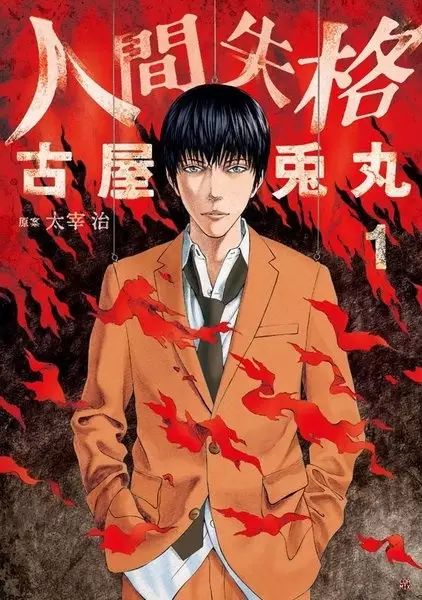
Junji Ito isn't a great writer. He's excellent at monster design, and drawing strange, gross creatures and gore, but his characters are often flat, boring, and interchangeable. They're just a means to an end, a literary device, a blank slate for the reader to relate to. Their only purpose is to get spooked by the strange, gross creatures Ito is obviously far more interested in. No Longer Human is an excellent, character driven novel about one man's decent into decadence. Its horror (if you can even call it that) is internalized. A man slowly self-destructs due to addiction, mental illness, and his own nihilism. It's awork of great subtlety and beauty. Junji Ito's No Longer Human tells a very similar tale, but with many changes that drain the story of both its meaning and nuance. It is externalized horror, because that is all Junji Ito can do. The chapters are episodic, and usually end in a blood bath. I'd estimate that 9 out of 10 indistinct, interchangeable women we meet in this book die horribly within 2 chapters of their introduction. Our drug addled, alcoholic, socially awkward main character is so handsome that he drives every woman (and even some men) he meets to suicide. Yup, it's Tomie all over again. Why? Why is Ito jumping on the Pride and Prejudice and Zombies band wagon years after that was a thing? Why take a novel about a very personal breakdown and turn it into a manga about...I don't even know. Scary suicide corpses? In short, Ito sucks at character work, and No Longer Human is a character study. He tries his damnedest to mold it into something scary, but instead we're left with Ito's least imaginative art, and a shallow husk of a story. It's like those old, "spooky" covers Marilyn Manson used to do, classic songs turned into something you might listen to on Halloween for a laugh.
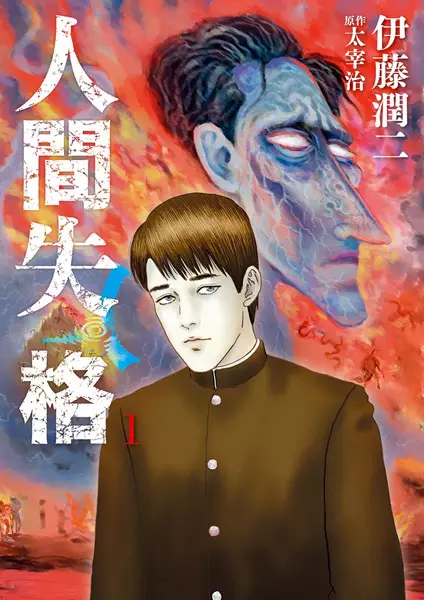
"Mine has been a life of much shame." "I can't even guess myself what it must be to live the life of a human being." Plagued by a maddening anxiety, the terrible disconnect between his own concept of happiness and the joy of the rest of the world, Yozo Oba plays the clown in his dissolute life, holding up a mask for those around him as he spirals ever downward, locked arm-in-arm with death. Osamu Dazai's immortal—and supposedly autobiographical—work of Japanese literature, is perfectly adapted here into a manga by Junji Ito. The imagery wrenches open the text of the novel one line at a time to sublimate Yozo's mental landscape into something even more delicate and grotesque. This is the ultimate in art by Ito, proof that nothing can surpass the terror of the human psyche. (Source: VIZ Media)
No Longer Human by Junji Ito is classic Japanese novel reimagined by a classic horror artist. The keyword here is "reimagined". While this version follows the original closely, it is still remade to fit the style of Junji and expands the story with more content. This is indeed the one complaint readers might have with this work, but it isn't necessarily a bad thing. This wasn't meant to be a 100% adaptation of the origina and change doesn't always have to be bad. Ultimately, the novel and this manga are two different books that should be judged separately. The original story is one of existentionalhorror and psychological dread. This new take on the story adds another layer - the visual, grotesque horror that is only hinted in the original. This is where Junji's craftmanship truly comes in play, as the depictions of "ghosts" and the humanity throught the eyes of the protagonits are truly chilling. This is Junji's first major work that doesn't use the supernatural as a source of the predicament and this change was a great succes. Otherwordly illustrations of inhumane horrors that come from weirdly familiar human source are, after all, from source closer to a reader and can hit closer to home. Of course, the horrors aren't the only way the illustrations help with conveying the story. What I really liked is how the character design reflects the character itself and their background. This can be most easily observed with Tsuneko and it's amazing how just a small difference can portray the depression, tiredness and worn-out lifestyle through her face. Back to the story portion of the manga. The core of what makes the original story great is still present, so I would like to focus on what is different and new in this work. Some say that the additional bits that Junji added are too violent and don't fit the naration. I disagree - violence is a part of human nature and the one portayed in this manga is well within the real possibilities. I could go even further and point out that using a reality of violence commited by humans in a way that makes the reader feel like it doesn't belong in the world brings the reader closer to how Yozo felt about humanity. I also found the little twist at the end that nods to the circumstances of the publication of the original novel a great idea. Now, I have mentioned that the novel and the manga should be judged separately, but one can't escape the thought of comparing those two. So I would certainly suggest that you should read both this and the novel. It's up to you if you want to start with the adaptation of the original, though I'd say that reading the novel first and the manga shortly after while your memory is still fresh would be the best to enjoy both of those works to the fullest. You should also check out the manga by Furuya Usamaru which is yet another interesting take on this story. And finally, some notes about the official English release. I really liked how Viz used the English release of the novel as a reference point, so the feel is so similar and frequently the exact same phrases appear, helping the transition from novel to a comic. The English cover is also very aesthetic and overall feels good, so if you can, you should definitely get the omnibus release.
Junji Ito has done it again. When Ito is not working on his own material, he seems to pick up my favourite literary works and adapts them into the manga medium. Following Frankenstein he has now also tackled Osamu Dazai's No Longer Human. An odd choice, actually. No Longer Human might be schocking, depressing and even terrifying to some, but it has never been intended as a work of horror. It's worth noting, that this is also not the first time a manga artist has tackled this source material within the medium, as Usamaru Furuya had already drawn his version of the story between the yearsof 2011 & 2012. The end result was a 3 volume series with a "Death Note"-like bishounen artstyle, that contemporarized the story setting and left parts of the novel out, but still delievered an albeit short, but nevertheless faithful adaptation of Dazai's work. There were some other attempts as well, but I am not too familiar with those. Ito's version is less utilitarian. Here, I would like to point out, that it's been years, since I last read the original novel whole and while I occasionally revisited parts of it, my memory might not be perfectly factual. One thing I noticed is that Ito doesn't skip a thing. Heck, he even pads the stuff out with a bit of his own madness. This character dies, that other one murders somebody, some kid is uneccessarily scary looking... while we are at it, why don't we commit some arson? Cool, I guess. People won't forget Ito is a horror author that way. There's just one problem: No Longer Human is not a horror manga. Sprinkling this horror-esque panels around the manga, just because Ito is good at it, felt like it worked against the story to me and more like these jumpscares in modern horror movies, that don't do anything, but make you jump up and get annoyed 2 seconds later. I guess sometimes it does work, when the scene calls for it, but othertimes it just falls flat. Have I jumped into the criticism too quickly? I guess, I could establish the plot a bit as well. No Longer Human is speculated to be an autobiographical psychological tragedy written by Osamu Dazai. It follows Yozo Oba and his tragic process of growing up. Feeling alienated in a world, he can't quite comprehend himself, he hides away his shame and anxiety and resorts to clowning, which eventually grows into a fullblown personality disorder and inability to connect with his outter world and functions as a springboard into the downward spiral of his life. The novel is not without a reason a canonized work of Japanese literature. It grabs the reader's attention with it's poetic opennes to the main character's inner turmoil, that I assume most people can atleast in part relate to. That's however not all, as (and I assume Dazai wasn't aware of this) it also shows a vivid portrait of a developing narcissistic personality disorder, as well as thematizes several social issues as suicide stygma, general societal as well as class-based expectations, substance abuse, as well as poverty and ambition. Honestly, there are a bunch of college essays still to be written on this book. But back to Ito... I already mentioned, that Ito has done more than the necessary to re-tell the story for manga readers. Ito's story is mostly the same thematically, but padded out with some otherwise unnecessary scary twists and turns, that don't change the direction of the story too much. There is a bit of a meta-approach, that shows in the last part of the story, as Ito is about to give the story a more sympathetic ending... (I'll end this here, as it delves into spoiler territory. I'll just say this much: I almost liked how Ito padded out the last part of a story, only to go sikes afterwards and give us another unecessary horror scene in the end in order to not mess with the real history of the novel). Visually, the novel looks great. There was a clear difference in skill and production value when comparing It0's art to Furuya's after reading both stories. It's excellent, even if I would refrain from overdoing the scary parts that often myself. Ultimately, I wouldn't call it a bad manga, but the unnecesarry scary padding Ito added seems to make more sense, when you consider Ito's legacy as a horror mangaka. Come to it like I did - being primarily a fan of the original novel (in this case atleast I give priority to Dazai over Ito) - and you just might cut yourself on the unnecessary edge Ito honed around it's corners (sheesh, it's odd to call Ito unnecessarily edgy). It's a faithful retelling of the original and you can tell the story means a lot to Ito on a personal level, but I still prefer the source material over it.
Ningen Shikkaku is the autobiography of Osamu Dazai, told through the character Oba Yozo. Throughout the work, the protagonist narrates his process of dehumanization, gradually distancing himself from society. The book is narrated in the first person, creating a bond between the reader and Yozo. I believe the discomfort experienced while reading Ningen Shikkaku stems from how the reader might identify with the protagonist's experiences, particularly with the absence of what makes him human. As the story progresses, the protagonist's moral degeneration intensifies, leading him to further withdraw from society. While the book Ningen Shikkaku offers the reader a “character analysis,” allowing for an intimate relationshipwith the protagonist, Junji Ito’s manga adaptation discards all the character development—which I believe to be the most interesting part of the book—to focus on constructing “horror” through the idea of the grotesque. Ito creates a new narrative for Ningen Shikkaku, yet he doesn’t dare to stray far from the original content, adapting the work in a way he believes makes it more shocking. The biggest shock I experienced while reading the manga was seeing Ningen Shikkaku adapted in such a crude way, fulfilling a completely different function than the book and thus distancing the protagonist from the reader. Junji Ito's attempt to make the work more shocking ends up turning the events into exaggerated and caricatured moments, losing the subtlety and ironic tone present in the original content. Consequently, the manga becomes very superficial, failing to delve into Yozo’s mind and what disqualifies him as a human, nor does it use these shocking moments effectively, as they become so exaggerated and silly. I believe this is one of Junji Ito’s most clumsy mangas, unfortunately not as comical as Gyo or Uzumaki. I would like to compare the grotesque in Suehiro Maruo’s manga Ultra Gash Inferno with the grotesque in Junji Ito’s Ningen Shikkaku. Ultra Gash Inferno is filled with sex—repugnant sex, sex that involves human disfigurement, something violent and repulsive, yet still full of aesthetics, beauty amidst the purest ugliness. Meanwhile, the sex in Ningen Shikkaku tries to be vile for its own sake. The ugliness is moral; the grotesque is in the act of sex itself. The book contains few sex scenes, and in those moments, the protagonist feels apathetic about the situation; he doesn’t feel guilty or like a sinner. In the manga, the protagonist is literally haunted by ghosts from his past, most of whom are women who passed through his life, with whom he slept at some point, leading to great misfortune that further impoverishes Yozo. Junji Ito adapts the sex scenes using the same moral criticized throughout the book: sex is wrong. This is where the horror of the manga concentrates—shocking with sex scenes and ugly characters. Junji Ito is considered a disruptive author, but in Ningen Shikkaku, the ugliness and grotesque reflect society’s moralistic view of what is happening in the plot. The ghosts of Yozo’s past, heavily present in the manga, distort the protagonist’s personality, making his experiences seem trivial, and turning the work into something overly expositional, not allowing for a real sensibility to the events. These moments end up serving only as a stage to judge the protagonist, condemning him for being so far removed from what is considered “right” in Ito’s eyes. The focus of the manga is on showing how miserable Yozo is because of his sins, not because of his disconnection from society, his shame, and his fear of other people. This causes a significant loss of the existentialist content and psychological analysis of the protagonist present in the original work, giving way to the moralism employed by Ito in his adaptation. Ito doesn’t innovate much in terms of plot or aesthetic choice, maintaining a conservative view of the work, unable to shock without being exaggerated or caricatured. In his interview with VIZ, “A Talk with Junji Ito,” Ito comments that there is a limit to the content of his stories: not to cross the boundaries of common sense. Adapting a work that isn’t tied to current morals like Ningen Shikkaku using this “common sense” only serves to reinforce Ito’s viewpoint on the work, which should make him the last author to adapt this story (Furuya should be the second-to-last). In conclusion, the positive aspects of Junji Ito’s Ningen Shikkaku manga are due to the merits of the original work, with the manga being a distorted and superficial adaptation, exaggerated to the point of bad taste. If you’re interested in the content of the manga, read the book instead.
tl;dr: An adaptation of an incredible story that despite the well-regarded art style doesn’t really work all that well. Read Furuya Usamaru’s adaptation instead. This manga is an adaptation of a novel by Dazai Osamu by Ito Junji. I have not read the novel, but there have been other manga adaptations and even a partial anime adaptation, of which I’ve read the manga adaptation by Furuya Usamaru, so I’ll basically be doing this review from the context of essentially comparing this adaptation to Furuya’s adaptation. This manga involves a man named Oba who despite being set up for success simply isn’t able to find his place inthe world and ends up going from tragedy to tragedy. It’s an immensely depressing story that’s even a bit scary in how it explores the human psyche to show how things can so easily go terribly wrong. But at the same time, it’s not horror, it’s a psychological drama. And that’s the core of why I think this adaptation isn’t very good. This story relies heavily on seeing the world through the eyes of the protagonist, particularly in how he sees others and how his viewpoint affects how he interacts with them. Oba is a complex character that sees the world in a very twisted way and that changes over time, but he isn’t insane. His thought process makes sense but from a broader view it’s clearly screwed up in such a way that will hurt him. Conveying Oba’s viewpoint in such a way that the reader can understand it but can also see the flaws in it is the essence of this story. This adaptation simply isn’t able to do that very well. The way Oba is basically portrayed in this is as a suffering artist type, which is a vast oversimplification. It also doesn’t feel like it fleshes out the people around Oba much at all and thus it’s really hard to see the effect they have on him. Thus, the majority of the manga just feels like it revels in his flaws and mistakes, without really putting proper effort into conveying where they came from. All it really feels like is the story of a character who is suffering, which kind of misses the point I feel. The manga just in general felt pretty rushed with Oba just going through a steady stream of terrible events without enough build up to them. This adaptation is about as long as Furuya’s but it captures quite a few more events and differs quite a bit, especially in terms of how each end, so that’s part of why it feels rushed. But the other issue is the art. Ito Junji is well regarded for his art and though I’m not much of a fan I can acknowledge that it is quality work. However, it really doesn’t fit in here. Ito uses extreme imagery to try to show Oba’s viewpoint far too often. Oba is seeing ghosts of past mistakes, metaphorical hallucinations, and terrible nightmares far too often. These very rarely add anything to the narrative or make it easier for the reader to understand Oba. Thus, they’re basically just a distraction from what does matter and furthermore affect the tone and atmosphere such that what does matter doesn’t come through as well. I have a suspicion that this adaptation is closer to the novel, wherein Furuya’s adaptation changes things moreso in order to be a modern adaptation, and in concept I think I do like the additional content in this adaptation as well as the ending to this adaptation more so than Furuya’s, but I think the implementation is so bad that it basically just makes me wish that Furuya’s adaptation was longer and managed to capture everything this adaptation did.