Links go to search results. Availability varies by region.
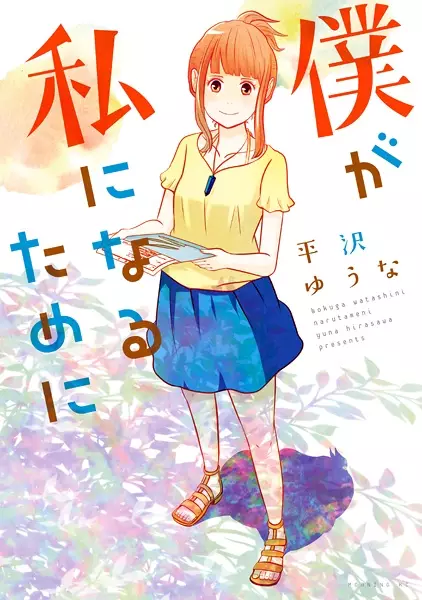
僕が私になるために
8
1
Finished
Mar 10, 2016 to Apr 21, 2016
After graduating university, Yuuna spent several years going through the motions and working an office job. Until one day, while in pursuit of an essential missing piece of her life, she receives a diagnosis of gender dysphoria, which opens up new doors for her. As she takes on medical treatments and tries out new makeup and outfits, she sees just how lonely and difficult the process of transitioning can be. But in 2015, when Yuuna travels to Thailand for her gender-affirming surgery, the support of her siblings, new strangers, and documenting her experience through manga helps her begin to heal in more ways than one. Told in an honest and, at times, humorous tone, this memoir is a blend of manga and detailed prose that does not shy away from sensitive topics, such as suicidal ideation, transphobia, and the simultaneously harrowing, yet joyous, experience of gender-affirming surgery. (Source: Kodansha USA)
7.8/10
Average Review Score
100%
Recommend It
4
Reviews Worldwide
It's hard to rate/critique someone's personal story, but here goes.「Boku ga Watashi ni」details part of mangaka Hirasawa Yuuna's male-to-female (MtF) transition process. It's a highly educational read - about three-quarters of the manga is devoted to her sex reassignment surgery (SRS) in Thailand, and there's a lot of in-depth information on the medical and legal procedures involved, including corresponding terminology, the whole nine yards. Occasional comic relief comes from her tongue-in-cheek explanations using food ingredients as substitutes for anatomical parts (sausage for chinpo, etc) and interactions with quirky Thai staff. Parts of the narrative made me wince in vicarious pain (phantom limb...er...appendage + dilation, anyone???). Andwhile she reveals some level of anxiety and unease as expected, being a stranger in a strange land undergoing a life-changing operation, I get the sense that on the whole Hirasawa is deliberately downplaying the emotional/psychological aspects of her journey. And as a cis-gendered reader, that is perhaps what interests me most in trans-gender stories - the stuff that you don't find in pamphlets and medical literature - the heart and soul of the storyteller. Then again, it's easy to be an armchair critic and say: "I wish the story had more this and that," without giving thought to the broader implications of what that might entail. Hirasawa states in her epilogue that her intent is first and foremost to educate - not to enforce equality or demand societal acceptance, but to simply share her experiences and let the reader draw their own conclusions. And with a sensitive topic as such, I can see some necessity in her taking this approach, and I applaud her ability to take a step back and keep a buffer distance from certain expectations and/or biases. Towards the end Hirasawa raises some important questions which she invites the reader to reflect upon: What is gender? What is "normal"? What constitutes "normality" or "otherness" in our world today? While the story may not have directly addressed these topics, its overarching theme presents much food for thought in this regard: one individual's struggles, both physical and psychological, in order to achieve a state of "normality" that most of us take for granted. And, for what it's worth, I will never look at a sausage the same way again.
My Journey to Her – Spoiler Free – Recommended TLDR Story – 8/10 – 8 x 0.275 = 2,2 Art – 7/10 – 7 x 0.2 = 1,4 Characters – 5/10 – 5 x 0.225 = 1,125 Enjoyment – 8/10 – 8 x 0.3 = 2,4 Total: 7,125 -> 7 Story – 8/10My Journey to Her is an autobiographical manga made by Yuuna Hirasawa, a trans woman. This is her account of her transition, both the hormonal and the surgical, from being a male assigned at birth to her true gender: female – thus MtF (Male to Female). This manga is highly pedagogic in its purpose, both for the LGBTQ+ community and the general public, as it explains the processes and the pains of the transition, and the overall experience of being a trans woman in Japan. There are also sections called “info notes”, where multiple questions relating to the transition and the trans experience are discussed. We create a high degree of empathy with her, as the struggles of being a trans woman are very well depicted in this manga. Moreover, it depicts the legal constraints of the transition in Japan – where it is generally harder than in most sections of the Western world – as the logistical effort of having surgery abroad (Thailand). The manga goes on to explain the process with utmost care and detail, noting the advantages and disadvantages of each GAS (Gender-affirming surgery) option. The story really doesn't have an end, as it isn’t a fictional account but an autobiographical one. It is, nevertheless, quite an entertaining read. Art – 7/10 The art is minimalistic in its approach – closely reminding the reader of My Lesbian Experience with Loneliness, another LGBTQ+ autobiographical manga –, where the scenarios and landscapes are frequently omitted, rather focusing on the character. As there aren’t many characters, the character design is highly functional, fulfilling the purpose of distinguishing the main character from the rest of the figurines. The cadence of the panels is well-convinced, and it is easy to follow up the story. Characters – 5/10 There aren’t really characters in My Journey to Her – with the exception of the main character, Yuuna Hirasawa (the author herself), that we clearly empathise –, as it is mostly focused on the transition process rather than the rest. It is for this reason that it is filled with figurines, such as the nurses, that are pivotal but anonymous as individuals who interact with the protagonist but don’t play any other role. Enjoyment – 8/10 Personally, I will cherish this manga when it comes to difficult transition decisions. And that is, without a doubt, a great strength of this manga: its pedagogical value. Moreover, it is an informative and entertaining read for an autobiography. For these reasons – and mostly because it is a tool for anyone seeking trans resources – it deserves a recommendation.
As you may noticed this is a personal story about part of the transition process that author has been through so my 9 on Story is mostly for how the whole thing is presented to us. Sometimes playful, sometimes frightening and all around informative, this manga reads almost like a Trans For Dummies and I say it with the best of intentions - it's a great work to show to that trans-ally you all either have or are in a circle of friends or co-workers. It is FILLED with information regarding the Sex Reassigment Surgery and many of its post-op issues - even legal ones - allpresented in a nice and comedic tone using food. Yeah. It is kinda hilarious. The art is just... there. It gets the job done - sets the mood and makes the plays it needs to make. If you're meant to be see happiness or sadness or despair you'll see jsut that. Most of the enjoyment one may have with this series comes from a place of delight by being informed about something that you either REALLY want to you for you or for someone else or you just like to read about things that you may not consider directly related to you. Go take a look. It's great.
Best known for her manga Terrarium, Yuna Hirasawa has written a moving autobiographical essay in which she traces her gender transition with honesty and sensitivity. It's a perfect read for pride month! I really like the title of the manga, ‘My journey to her’, which is very simple and represents the whole process of making this transition and finally being aligned with oneself. The manga is also very educational, without ever being heavy-handed. You learn an enormous amount about the stages of the transition, the types of vaginoplasty that are possible... details that are rarely covered elsewhere, but explained here with clarity and respect. I didn't knowthat there were two types of vaginoplasty and that you could choose the depth of your vagina for sex reassignment surgery! The culture clash between Japan and Thailand is interesting even if it's not the main focus of the book. I wasn't expecting the Thai hospital staff on rollerblades, I would have panicked too. I didn't know that Bangkok wasn't the official name of the city! It's so long! We can't fail to recognise the strength of trans people. This story is a reminder of just how courageous trans people's journeys have been. Their resilience in the face of social and medical norms (and pain) commands admiration. This manga is a must-read because it enlightens, moves and educates, all at the same time.