Links go to search results. Availability varies by region.
め~てるの気持ち
28
3
Finished
Aug 31, 2006 to Jun 7, 2007
6.4/10
Average Review Score
57%
Recommend It
7
Reviews Worldwide
a dazzling constellation of every bad manga trope. this was utterly diabolical. why do the japanese find it so hard to actually tackle the issue of hikikomori in a manga? a couple series (nhk, onani master) have touched on reclusive characters, but the majority of hiki coverage in manga is like this. insulting to the intelligence of the reader, ridden with cliche, just awful awful awful. god.
Until yesterday, the title 'Me-Teru No Kimochi' meant nothing to me. And, going on the small amount of ratings it has, many others are still in the dark. After reading all 28 chapters in one sitting, never once feeling bored, my goal is to bring this unknown gem some much needed love. If you've read 'Welcome to the NHK' then you'll have a decent idea how the story goes: a reclusive guy gets helped out of his shell by a beautiful lady, eventually finding himself able to live a more normal life. The big difference between the two is that, where as it's fairly believable fora slightly nutty young(er) girl to want to use a loser for her own interests (NHK), it's pretty... out there for a HUGE breasted, super model type 22-year-old woman to first marry a bald old man (because he looked like her father) and, later, go on to mother/wife his 30-year-old son; a son who has locked himself in his room for 15 years. Where are these selfless 'would die happy after having sex with' women in real life!? However, if you can get over the basic premise, you're in for something of a treat. Slowly but surely, Haruka - the aforementioned big-breasted lady – attempts to get her reclusive 'son-in-law' out of his room by first trading a notebook that they can communicate with in order to work around his shyness and, later, helping him talk, go out and... well, do 18+ things I'll cover at the end. Early on in particular, there's always comedy preventing the mood from being depressing (just like in NHK), with the reclusive lead plotting how to win the heart of his new 'mother' and, among other things, naming a dog after her in order to practice calling her name affectionately. (Note: The dog and him get pretty close - there's mouth-on-mouth action! If you love your dog more than you should, this is the manga for you!) Ignoring Haruka's devotion to bald old men and losers, the biggest issue series has is, not surprisingly (for a NHK fan, that is), its ending. It's open-ended and rushed, and it didn't even end very well in terms of the relationship shared by the main two. It wasn't the worst ending known to man, but there are examples of far better executed endings out there. The mangaka working on 'Gantz' at the same time may have played a part in how the story ended. Honestly, I'd recommend this to anyone not cynical to the point they'd judge it based on its first chapter and/or basic premise. It's a heartfelt comedy/drama, sure to be involving for anyone who can relate to the lead and enjoyable for those looking for something different from the usual romantic comedy offerings. The art is very appealing, which allows readers to fully understand just why the reclusive lead gets tongue-tied around his new 'mother', and the manga is short enough to read in one sitting. What do you have to lose? Give it a go! Extra: The manga isn't ecchi until towards the end, when a few chapters are dedicated to a sex scene. There aren't any nipples or private parts on show, but there's plenty of kissing and touching, and it's made perfectly clear what's going on. If you're against the idea of cunnilingus in your manga, then this might not be the one for you. But let me repeat myself in order to make this crystal clear: the scene is near the end and there are only a few chapters covering it. The sex scene in question does serve a purpose, meaning it'd be wrong to class the manga as pornographic because of it.
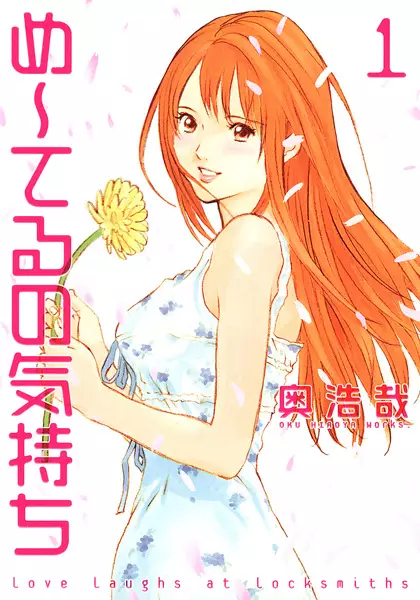
Koizumi, Shintarou is 30 years old, a virgin, and has isolated himself in his room for 15 years. He has become a burden on his father, Koizumi Yasujirou. One day, Shintarou makes a proposition that if Yasujirou gets a girlfriend, Shintarou will come out of his room. It turns out that Yasujirou has already made a girlfriend, a young beautiful woman, Yoshinaga Haruka, who is with Yasujirou for her own personal reasons. Yasujirou and Haruka decide to get married, but Yasujirou dies on their honeymoon. Now Haruka decides to take care of Shintarou, and so this weird "mother and son" are now living together.
It is my first time writing review,i never thought i would bother doing this bit this manga made me. I read a lot of manga's and i they made me feel all sort of differet emotions but this one crushed me. It started great,i had really lot of expectation but the end screw me up. I read that a lot of people said the ending is fair,it was for the best but it hurts like hell. Anyway read it let me know what ypu think i really wants someone to badmouth this manga. PEACE
GREAT ENDING. MAGNIFICENT ENDING. THIS MANGA STARTED AS A COMPLETE GARBAGE INTO A GOLDEN TREASURE. I LOVE COMEBACK STORIES LIKE THIS. THE FEELING OF DESPERATION LEADING INTO DELUSSIONS, AND THAT DELUSSIONS FUELING HIMSELF TO LEAP FOR A BETTER FUTURE. BEAUTIFUL STORY. With the right mindset this manga are very enjoyable IF you read it untill the end straight up from the start to finish. The story of this manga are very well constructed and the ending are just GREAT. The story were not about the "CHARACTERS" so don't think too much about it into the characters in this show. This story is about the "STORY" on how peoplecan CHANGE and that's the beauty of this short manga with 28 Chapters.
*Esta review también está en español* This story is not for everyone. It starts badly, it develops worse and the end is heartbreaking. But its last moments are what make this manga a hidden gem. The concept of hikkikomori already had a very good perspective with Welcome to NHK, where the sense of humor and comedy was the strong point of the work. But now, we are faced with a darker situation, which surrounds the tragedy from start to finish. The text below has plot details. Me~teru no Kimochi is not a work that revolves around the Hikkikomori. It's a play about Haruka, the mother. From the beginning, themanga tells us about how she seeks having a role of protection, of being the person who cares for others. And she bases her romantic relationships on fulfilling that need to care. She so she did with Shintarou's father, who is a sad old man, whom she can heal. They get married, he dies and she can't fully cure him. And therefore, she cannot fulfill her own purpose either. So she goes to the source of her husband's illness, his son. Her mission is not complete until she manages to get Shintarou out of the room, out of the house, out of the sedentary lifestyle. In the process, she finds out that this is also healing Shintarou, so she once again takes on the role of caretaker and falls in love with him. The ending is brutal, but necessary. Haruka understands that her stay at Shintarou's house is not going to achieve anything. She says goodbye to him without saying it, just having sex. She will watch over him from a distance, she tells him. And she does. There are panels on the last chapter where we see Shintarou failing in his jobs and she watches him from afar. And in the end, the reunion is not a "they lived happily ever after", it is a final goodbye. Haruka turns in tears to finally turn her back on him. "I took care of you, I loved you and I healed you." She understands her ultimate sacrifice, to heal the man she loves, is to get away from Shintarou. And he understands it too, and finally thanks her, "Thank you mother". The work is not perfect, it is far from it. But the intention of the mangaka is perfectly embodied in his work. The fanservice, the erotic scenes or the lewd moments play against it, but in a certain way it is necessary for the construction of the message. I would have liked to see more of Shintarou's adventure and pain after Haruka's disappearance. --- Esta historia no es para cualquiera. Empieza mal, se desarrolla peor y el final es desgarrador. Pero sus últimos momentos son lo que hacen de este manga una joya oculta. El concepto del hikkikomori ya tuvo una muy buena perspectiva con Welcome to NHK, donde el sentido del humor y la comedia fue el fuerte de la obra. Pero ahora, nos enfrentamos a una situación más oscura, que rodea la tragedia de inicio a final. A continuación, el texto tiene detalles del argumento. Me~teru no Kimochi no es una obra que gire en torno al Hikkikomori protagonista. Es una obra sobre Haruka, la madre. Desde el principio, nos cuenta sobre cómo ella busca tener un rol de protección, de ser la persona que cuida a otros. Y basa sus relaciones románticas en cumplir con esa necesidad de cuidar. Así lo hizo con el padre de Shintarou, que es un hombre viejo y triste, a quien ella puede curar. Se casan, él muere pero ella no logra curarlo del todo. Y por lo tanto, tampoco puede cumplir con su propio proposito. Así que acude a la fuente de la enfermedad de su marido, su hijo. Su misión no está completa hasta que logre sacar a Shintarou de la habitación, de la casa, del sedentarismo. En el proceso, descubre que eso también es curar a Shintarou, por lo que vuelve a tomar el rol de cuidadora y se enamora de él. El final es brutal, pero necesario. Haruka entiende que su estadia en casa de Shintarou no va a lograr nada. Se despide de él sin decirlo, solo teniendo sexo. Lo cuidará desde la distancia, le dice. Y lo hace. Hay paneles del último capítulo donde vemos a Shintarou fracasando en sus empleos y ella lo observa de lejos. Y al final, el reencuentro no es un "vivieron felices por siempre", es un despido final. Haruka voltea en lágrimas para finalmente darle la espalda. "Te cuidé, te amé y te curé." Pero Haruka entiende que el sacrificio final, para curar a los hombres que ama, es alejarse de Shintarou. Y él también lo entiende, y finalmente le agradece. "Gracias madre". La obra no es perfecta, está lejos de serlo. Pero la intención del mangaka está perfectamente plasmada en su trabajo. El fanservice, las escenas eroticas o los momentos lascivos le juegan en contra, pero de cierta forma es necesario para la construcción del mensaje. Me hubiera gustado ver más de la aventura y dolor de Shintarou después de la desaparición de Haruka.