Links go to search results. Availability varies by region.
DRAGON QUEST -ダイの大冒険-
349
37
Finished
Oct 10, 1989 to Nov 26, 1996
7.0/10
Average Review Score
50%
Recommend It
2
Reviews Worldwide
Before I start, I would like to say that I have never played any of the Dragon Quest games, therefore I won’t make any parallels between them and the manga that I’m reviewing. Born from the partnership between Koji Inada (art) and Riku Sanjo (story), Dragon Quest – Dai no Daibouken can be initially seen as just propaganda to increase the games sale. And indeed that was probably the idea when they first started developing it, seeing how it was supposed to be a 2-chapter story, which led to another 3-chapter arc, and consequent serialization. This increasing popularity only comes to show that even a money-makerseries can be of quality. The basic plot is pretty standard in both anime and RPG: a small boy with mysterious powers goes on a journey where he makes friends, grows stronger and defeats evil. It might sound cliché (and it is), but fortunately the author managed to give the old formula a new feel, keeping it exciting until the end. In order to achieve such feat, he used (actually overused) plot twists. In fact, that is the main problem with the story: in order to keep emotion at a maximum, Sanjo constantly had the heroes in desperate and seemingly inescapable situations, only to be saved by a plot device that, even though usually creative and interesting, would occasionally disappoint the reader or get the plot one step back. Even with Sanjo’s ability to keep the plot fresh and entertaining, the quality of a story rests heavily in its characters, and that is an aspect in which Dai no Daibouken excels. With a charismatic cast of protagonists, a wide range of supporting characters and great chemistry between all of them, it’s impossible not to find at least one to relate to. However, in spite of the tri-dimensionality shown by part of the cast, most of them are somewhat Manichean, justifying their evil/good actions with a “just because”, however this can be relieved when you take in account the audience the authors needed to reach. As happens with most artists, during the serialization, it’s highly noticeable the evolution in Inada’s drawings. This improvement is more apparent in two aspects: the characters designs and expressions, which start sillier and more comedic, but later develops, becoming more shounen-like; and the overall cleanness of drawings, that seem blurry and dirty at first. As a whole, the art can be considered average, even going by the usual shounen standards. Overall, it’s safe to say that Dragon Quest – Dai no Daibouken succeeds in presenting an entertaining story, which should be the main goal of all mangas. However, it leaves a little to be desired in crucial aspects, such as character development and plot presentation, making the experience of reading it worthwhile, but not mandatory for fans of the medium. PS - If you look at my list, you’ll see that I gave this series a 9, while here it’s an 8. The reason is: I tend to give an extra point to series that contain that something else (in this case it was Pop, one of my favorite characters), but as this is a review, I tried to be more impartial and subtracted that point.
Before his adventure begins, Dai lives in peace as the lone human among monsters on Dermline Island. While he dreams of becoming a hero, a group of fakes shows up to kidnap the Golden Metal Slime! Then, when Princess Leona arrives in need of a hero, Dai is ready to answer her call...but he needs more training! Will a tutor come along to help him? (Source: VIZ Media)
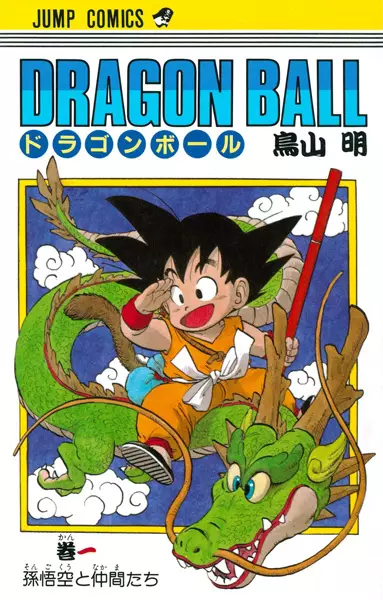
Dai's story is that of a pretty basic shonen. Being dragon quest in anime form, it shares some similarities with the dragon ball in art style and Dai's initial character. --Naive boy with mysterious powers is visited by a girl who sends him on an adventure-- The territory is pretty familiar but the lively cast and dragon quest style keep this manga a fun enough romp. Story: 4/10 Like i said, pretty standard stuff here. Dai and his party have to defeat the demon lord's army. They typically fight one commander at a time while honing their abilities. There are neat swerves in these fights and thestory does a decent job at making everything seem like an impossible threat that our heroes need to overcome. The characters mainly keep the plot from dulling. It's also a little lopsided, the final arc is very long (over 100 chapters or like 1/3rd of the series) but the other 2/3rds consisting of the fights against the commanders goes relatively fast. Your mileage with an arc will vary depending on how much you like the villain. //light spoilers// A lot of my issues come in that this series really doesn't want to kill it's characters. Even when death flags are constantly being thrown. My biggest issue though is with the ending. A lot of plot threads are just left hanging. An "event" happens in the last chapter that feels really out of nowhere and makes me wish that there was another epilogue chapter. (I'm particularly mad about ships being tossed to the side.) // Art: 6/10 Nothing terrible here. In the beginning you can see a shift as they more solidly identify the style of this manga, but it's typically not bad just different. The character designs are fun and soft. It helps that everyone can fall into an rpg role because the designs do a good job telling you what a character is like. The art during action is generally easy to read but it lacks the fluidity of the similar dragon ball. The 2020 anime ups the art in spades so search up some of those fight scenes if you're interested. Character: 8/10 The best part of the manga EZ. The characters have very distinctive personalities and designs to reflect this. Dai is your kiddie main character, Pop is your funny, and resourceful coward, etc etc. Again they are a little trite for shonen but their personalities shine through their relationships with each. Even later in the series, characters will have this charming sense of camaraderie. It's a lot of "this character acts differently around this character and this character respects this one but is related to this one" it's nice and it emphasizes how close and likable these characters are. The character growth is also noteworthy. Characters pretty much start as how you'd expect but throughout the story we're given little instances of growth and complexity. Dai has these great little moments where he starts to question himself and what a hero is. Dai has doubts and moments where people fear him. And it really helps the believability of his character. Even villains, specifically Hadlar are interesting to me because of how they develop. But I'd be remiss not to talk about Pop in this section regarding growth. Pop literally becomes my favorite character because of how much he changes. And the story goes lengths to give Pop his moments in the sun. It really feels like he's the protagonist at times and honestly the story is better for it. Pop is great. Overall: 6/10 At 349 chapters, 19 pages each, it's not the shortest series but it's doable. I had a good time with this series. It isn't going to change your life, but if you like shonen similar to dragonball, it's a fun romp. p.s. I recommend the 2020 anime over the manga. The colorful palette and slick fight animation elevate this story up a tier. But at the time of writing the anime isn't close to finishing soo ya know.