Links go to search results. Availability varies by region.
Find a Specific Chapter
9 chapters total
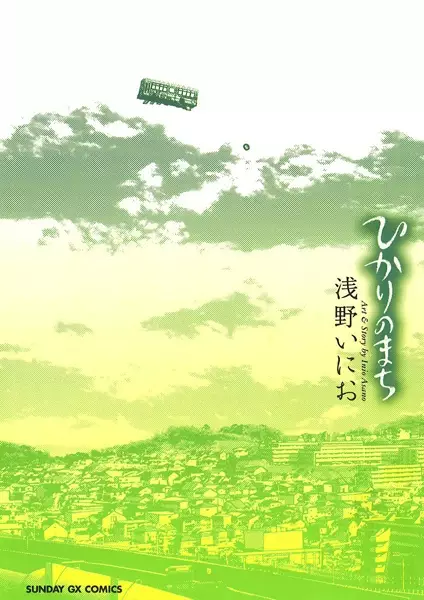
Hikari no Machi
ひかりのまち
7.43(9K votes)
Ranked #4050Popularity #1065
chapters
9
volumes
1
Status
Finished
Published
Apr 19, 2004 to Jan 19, 2005
Authors:Asano, Inio
DramaSlice of Life
Worth Reading? — Global Verdict
7.2/10
Average Review Score
83%
Recommend It
6
Reviews Worldwide
International Reviews
loey
Recommended
8
Hikari no Machi/City of Light (2004–2005) is Asano Inio's third release and my second reading by this author (first one: Solanin, his next work). This manga certainly deserves a score stats of 8.0, 8.5 or as scored in my personal mangalist, 9.0. Why? Have you ever played Jenga? It's simple: during the game, players take turns to remove a block from a tower and balance it on top, creating a taller and increasingly unstable structure as the game progresses. Well, I can easily say City of Light is a Jenga Tower. One of the characters, Inspector Mizutani, even mentions that the buildings remind him ofthis toy. But not only physically, City of Light is a Jenga game happening right in from of your eyes. Jenga is derived from a Swahili word meaning "to build" and that's what you see the characters doing. They're building their lifes, doing what they can to survive in this world, removing the blocks and building a new structure to try reaching something above themselves... But if you keep removing the blocks from the bottom, this unstable new structure will eventually fall.
City of Light consists in 9 chapters, bringing many different stories. Some are regular slice of life, like a mangaka and his wife, two girls talking about random yet deep subjects and on. Others have more intense and heavy subjects, such as suicide, kidnap or murder and these are the most interesting ones, Tasuku and Hoichi's chapters. Still, all of the 9 chapters are necessary to create the City of Light environment in your head and all of them are connected to each other somehow. It's incredible how slowly you get into this city, knowing about the stories based on the character's opinion, you will easily hate this character in the first 1-4 chapters and then, love the same one on the last 5-9. There is no manichaeism describing the characters, "he is the evil one and she is the good one", all of them have done good things and bad things, all of them are humans, there's no villian, they're just victims of life, quoting Kurt Cobain: "Nobody dies a virgin... Life f*cks us all".
Carrying a realistic storytelling as well a realistic art style, City of Light tells us about the dark side of the humans, how far they can go to achieve something or how far they go just because they're bored. Shows how connected people are, how weak or strong bonds can be and how one's attitude changes the entire scenario.
You should give a try to City of Light if you are looking for a manga with a melancholic atmosphere and deep subjects. City of Light brings this bittersweet feeling, life is happening. "People staying, people going". The same Sun lights us all while we remove blocks from our own Jenga towers, balancing in insecure choices and building a unknown and unstable future.
Community Discussion
Synopsis
The city of light is a town above a hill, called that because it's surrounded by the sun, but it hides an obscure side. There, lives Tasuku, a young kid who works as a 'messenger' for a mysterious group who organizes suicides on the phone. At the same time other youngsters like him are trying to survive the everyday's life: Satoshi changes one occasional job after another, Momoko is the daughter of a prostitute who abandoned her. Finally there's Hoichi who is always involved in dirty business, among which is the suicidal group, but at least he has a dream: earning enough money to buy the whole place and turning it back into the country village he was born in.
21,190 Members
81 found helpfulJul 10, 2012
Pande91
Recommended
9
It's a manga that has to be read and enjoyed slowly. There's something to ponder in every page, from the expressions on the characters' faces, to sentences that are in no way devoid of sense or used as a simple placeholder. Bearing in mind all the questions that this manga raises in regards to the morality of some situations (e.g. assisted suicide, murder in the name of revenge), the answers would be strictly personal and it'd feel wrong for me to describe any of the characters as "bad" or "good". There's no "right" or "wrong" way to interpret or regard this manga, and you will mostlikely find yourself holding different opinions on the characters, than the ones you started out with.
And that, in my opinion, is a great technique sadly underutilized in manga: reminding the reader that people aren't defined just by a single personality trait or (more importantly) through a single point of view. Every character presents themselves as the "hero" of their story and is later shown through the eyes of other characters with varying moral compasses of their own. It is at these points that the saying "we judge ourselves by our intentions and others by their actions" comes to mind.
Sometimes, the art looks messy - or rather unlike the clean, perfect characters you normally see in mainstream manga. Although slightly exaggerated, the characters in this look more on the normal side, albeit not as visually appealing as regular manga. All in all, the story is definitely the more important aspect, and I can let some art quirks slide in favor of it.
Story: 9 | Art: 8 | Characters: 10 | Enjoyment: 10 | Overall: 9
14 found helpfulApr 1, 2017
Mara2463
Mixed Feelings
5
City of Light – Spoiler Free – Mixed Feelings TLDR Overall: 5/10 Disclaimer: due to the nature of this work – a collection of short stories –, my normal parameters of Story, Art, Characters and Enjoyment with a weighted average won’t be applied. Instead, a global overview will be offered. The City of Light is yet another take by Inio Asano on short stories, although this time things were better than in other attempts – Ozanari-kun, What a Wonderful World or Before Dawn and the End of the World. Inio Asano once more tries to make a couple of slices of life wrapped in a manga. This time, we followan apartment block in the so-called City of Light, as we follow the (rather strange) lives of those who live there.
One of the positive aspects of this manga is that the different stories weren't disconnected from each other, both geographically and thematically – there are stories that are continuations of previous ones, which gives the short stories more flavour and better development. Moreover, there are interesting stories in this manga, most notably the moral implications of the person who helped others kill themselves.
However, not all stories are worthy of praise, as most are just randomly average slices of life. However, since they take place near each other, they more or less create a human geography and a biography of the City of Light. This is Inio Asano's main achievement in this work, as well as the fact that the stories are relatable, realistic (but not all of them) and present thoughtful dilemmas.
The art style, as per usual, is impeccable, as Inio Asano clearly knows how to draw beautiful mangas. The character design is rich, and the scenarios and landscapes are gorgeous.
It is quite a feat that in such short stories Inio Asano was still able to make some interesting characters, or at least more interesting/compelling than a given character are the dilemmas they face (although this only happens in one of two stories).
Enjoyment wasn't that high in a collection of short stories, as, once again, it isn't where it shines the brightest; however, of all the attempts he made – Ozanari-kun, What a Wonderful World or Before Dawn and the End of the World – this is his best to date. Yet, one cannot fully endorse this work, although a few stories nearly justify a recommendation. For these reasons, it is still more deserving of a mixed feelings stamp.
2 found helpfulNov 27, 2024
NapoTheGuy
Recommended
6
La siguiente reseña está en Español e Inglés (traducida con el apoyo de DeepL) La versión leída es la traducción al español por Kay perteneciente a "Clockwise Fansub" “La Ciudad de la Luz” es el título y a la vez el nombre del entorno donde se desarrolla los sucesos de está corta antología, sobre una urbanización encima de una colina, con altos edificios de apartamentos y algunas casas en los alrededores; diferentes personajes tendrán sus historias y unas cuántas se interconectan. Un compendio más cercano a su primera antología, utilizando algunas lecciones del segundo. Notable en la presentación de personajes más moralmente grises sin ser caricaturescos, quien fueravillano en un momento, capítulos después es profundizado, y no es por algún intento de redención o justificación sino porque es demostración de una idea inherente en la obra, cada quien es producto del ambiente donde se desarrolla, y es que, el escenario es un personaje en sí mismo.
La urbanización encierra constantemente a los personajes durante los diferentes capítulos, difiere del “entorno conocido”, es más acertado decir que corresponde a una “atmósfera reconocible”. Sea cual sea la historia, los personajes están rodeados de altas edificaciones que deberían aguardar a cientos de personas, sin embargo, las calles se sienten vacías, la palpable soledad de concreto en la ausencia de una comunidad, y por el contrario, donde ocurren los momentos de mayor humanidad es en las casas del alrededor, con espacios más abiertos para un sol que puede cubrir el escenario sin que algo se interponga.
La caracterización de cada escenario y el contraste entre ambos es motivación para un par de las narraciones, en otras es reflejo para las introspecciones sobre la aparente “vida” de los personajes. En cuánto a las diferentes historias, si bien cada cuál tiene su punto de interés, tal como dije en la reseña de su primer trabajo, aún carece de consistencia, notable en que conforme se alarga un suceso más inconexo es.
A lo largo de cada narrativa es constante el característico pesimismo de Asano, sin embargo, tiene significado porque está vez no deja aparte ni para último momento a la “luz en la oscuridad”, es decir, corresponder a cómo aún en situaciones tan inescapables y desafortunadas, puede iluminar la esperanza de un cambio. En este punto de la revisión de su obra y sabiendo lo próximo, calificar de característico su pesimismo debería estar a la par de su optimismo.
Lo que siempre mejora trabajo tras trabajo es su habilidad de dibujante. En el compendio está subrayada la idea de luces y sombras, el dibujo corresponde al planteamiento temático, un marcado juego de iluminación notable en las diferencias entre el opresivo entorno citadino a comparación de los suburbios o cuándo el cielo está despejado en medio de los edificios, la habilidad de Asano en crear impactantes paneles con la acción de alguien para que parezcan tener significado en ese momento para los personajes, o por supuesto, el detalle en presentación y alcance de la ciudad.
En general, la antología es un paso adelante en su visión de autor, una historia algo interconectada en la que ningún personaje se siente gratuito en un escenario que tiene significado por sí mismo, pero varios de los sucesos y su intencionalidad siguen sin consolidarse, dando una obra que aún está a camino de conseguir la consistencia que ha buscado durante ese último par de años.
English
"The City of Light" is the title and at the same time the name of the setting where the events of this short anthology take place, about a housing development on top of a hill, with tall apartment buildings and some houses in the surroundings; different characters will have their stories and a few of them are interconnected. A compendium closer to his first anthology, using some lessons from the second.
Remarkable in the presentation of characters more morally gray without being caricatures, who was a villain at one point, chapters later is deepened, and it is not for some attempt at redemption or justification but because it is a demonstration of an inherent idea in the work, everyone is a product of the environment where it develops, and is that, the scenario is a character in itself.
The urbanization constantly encloses the characters during the different chapters, it differs from the "known environment", it is more accurate to say that it corresponds to a "recognizable atmosphere". Whatever the story, the characters are surrounded by tall buildings that should await hundreds of people, however, the streets feel empty, the palpable loneliness of concrete in the absence of a community, and on the contrary, where the moments of greater humanity occur is in the surrounding houses, with more open spaces for a sun that can cover the stage without something getting in the way.
The characterization of each setting and the contrast between the two is motivation for a couple of the narratives, in others it is reflection for the introspections on the apparent "life" of the characters. As for the different stories, while each one has its point of interest, as I said in the review of his first work, it still lacks consistency, noticeable in that the longer an event drags on, the more disjointed it becomes.
Throughout each narrative Asano's characteristic pessimism is constant, however, it has meaning because this time he does not leave aside even for the last moment the "light in the darkness", that is, corresponding to how even in such inescapable and unfortunate situations, he can illuminate the hope of a change. At this point in the review of his work and knowing what is forthcoming, qualifying his pessimism as characteristic should be on a par with his optimism.
What always improves work after work is his skill as a draftsman. In the compendium the idea of lights and shadows is underlined, the drawing corresponds to the thematic approach, a marked game of lighting notable in the differences between the oppressive city environment compared to the suburbs or when the sky is clear in the middle of the buildings, Asano's ability to create striking panels with someone's action so that they seem to have meaning at that moment for the characters, or of course, the detail in presentation and scope of the city.
Overall, the anthology is a step forward in his authorial vision, a somewhat interconnected story in which no character feels gratuitous in a scenario that has meaning on its own, but several of the events and their intentionality remain unconsolidated, yielding a work that is still on its way to achieving the consistency he has sought over those last couple of years.
1 found helpfulApr 5, 2024
rotlaust
Recommended
7
Hikari no Machi is a set of four small intertwined stories where, as is traditional in Inio Asano, murky and existentialist themes are explored in a slice of life code favored by his very careful and almost hyper-realistic drawing of the scenarios. This is one of his first works, but his mark is already there. The characters are a bunch of young people lost in life, people with suicidal, depressive or criminal tendencies, each one with a different vision of life and how to face their problems and concerns. Their psychological depth is very well captured despite the short space in which we get to knowthem. As they are intertwined, sometimes almost tangentially, in each other's stories, we see other sides of their personalities, other sides of the story they have told us from their perspective. The approach that Asano takes to a story is interesting, because in the end we judge others by their actions and ourselves by our intentions. Asano tries to break this by showing us a multi-faceted prism, a three-dimensional story.
The manga's setting plays very much in favor of its themes. The setting is one of these newly built but lifeless residential neighborhoods, commuter towns whose streets are empty even on a Sunday afternoon, a day that families spend at the nearest shopping mall. The empty scenarios, absences emphasized by the great amount of light that illuminates the neighborhood and leaves nothing to the imagination, exposes the anxieties and anguish of its inhabitants, naked before the absolute clarity of the day. It is possible that in such a fragmented and hollow community nothing really makes sense, because the loneliness felt is even deeper than that of a hermit who isolates himself by choice. No matter how bright your home is, you will always be cold without the warmth of the community you desperately seek without even realizing it.