Links go to search results. Availability varies by region.
Find a Specific Chapter
85 chapters total
Astro Boy
鉄腕アトム
7.54(3K votes)
Ranked #3124Popularity #2207
chapters
85
volumes
21
Status
Finished
Published
Apr 1951 to Feb 1969
Authors:Tezuka, Osamu
AdventureSci-Fi
Worth Reading? — Global Verdict
6.6/10
Average Review Score
57%
Recommend It
7
Reviews Worldwide
International Reviews
TitanInsane
Mixed FeelingsFunny
5
Astro Boy is a historically important manga/anime, if only because its success helped in no small part to establish the Japanese animation industry and helped familiarize Western audiences with Japanese media (although it would still be a few decades until it got really popular). While this is by no means an outright terrible series, its not that good either. Keep in mind that most of the series was drawn with small boys in mind as its intended audience and it shows very clearly. Not to mention that it was released almost 70 years ago, meaning that various parts of the manga have not aged very well. Theart is pretty good but the stories are very simple. While they do often address serious issues like intolerance and violence, the stories they feature in are very simple with predictable resolutions and very little depth. Most of the stories are episodic, which means that the quality of the manga changes with every chapter (although some of them are actually good) and continuity isn't something that's regarded seriously. The characters are flat and boring, if not completely unlikable. The supporting characters have little to no development from their initial introduction and the villains are mostly just there to serve as punching bags.
Astro Boy himself is fine but there's nothing really remarkable about him.
Unfortunately, its historical significance is the only reason I would recommend anyone to read this.
In the distant year 2003, Japan is a technological utopia, and robots are everywhere. One such robot, Tobio, was built by the brilliant Dr. Tenma to replace his dead son. But when it soon becomes apparent that Tobio is an imperfect copy of his departed child, Dr. Tenma throws him out. He is rescued from the scrap heap by the benevolent Professor Ochanomizu, a crusader for robot civil rights. Now the little robot, renamed Astro Boy, is given a mission to defend Japan and the world from all manner of sinister threats. Using his seven super-abilities and 100,000 horsepower worth of strength to battle evil, Astro hopes to set an example to the world of the good which all robots are capable of.
11,316 Members
Fantalicious
Recommended
8
Manga history! This should really be read by everyone. The manga doesn't really have an overarching story, but rather just a collection of stand-alone chapters. However, these chapters can be really long, like half a volume long. I would recommend reading all of them but it can be a bit of a drag sometimes since not all stories are especially interesting. One of the real essentials is one of the few real arcs, "Once Upon a Time" spanning volume 6-8. The arc is also a good example of the darker side of the manga. The stories are often about the nature of humanity, violence andwar. There's usually a lesson to be learned at the end.
The art style is childish, but it really is excellent. Tezuka has a really cinematic style and is great with shadows. The characters are also great but unfortunately most of the main characters just don't get enough development or relevant screen time. My favourite characters were Astro Boy himself, and his creator Dr. Tenma. Dr. Tenma is not a good guy but he's not fully evil either, he's a very morally grey character. Dr. Tenma doesn't appear that often, but whenever he does, it's a highlight. The one-off characters are also really great, and all have their own back story, motivation och development.
Unfortunately the manga overall is very up and down. I think for younger children it doesn't really matter, but for an adult some chapters don't really leave an impact.
27 found helpfulNov 1, 2016
IMortaI
Recommended
7
Astro boy Review. Strengths: Historical significance: Astro Boy is considered one of the most important works in the history of manga and anime. It was one of the first popular Japanese comic books to feature a robot protagonist and is credited with popularizing the genre of science fiction in Japan. Creative storytelling: Osamu Tezuka was known for his innovative storytelling techniques, and Astro Boy is no exception. The series explores themes of humanity, identity, and social justice through its characters and storylines. Enduring popularity: Even decades after its original publication, Astro Boy remains a beloved and influential series in Japan and around the world. Its characters and concepts havebeen adapted into countless TV shows, movies, and other media.
Weaknesses:
Dated art style: While Astro Boy's artwork was groundbreaking when it was first published, some readers may find it outdated compared to modern manga and anime styles.
Pacing issues: The series can be slow-paced at times, with long stretches of dialogue and exposition.
Repetitive storylines: Because the series was originally published as a weekly comic strip, some of the storylines can feel formulaic or repetitive.
Overall, Astro Boy is a classic manga series that has had a significant impact on the medium of Japanese comics and animation. While it may not be perfect, its creative storytelling and enduring popularity make it a must-read for fans of science fiction and manga.
5 found helpfulFeb 25, 2023
xokker7
Recommended
9
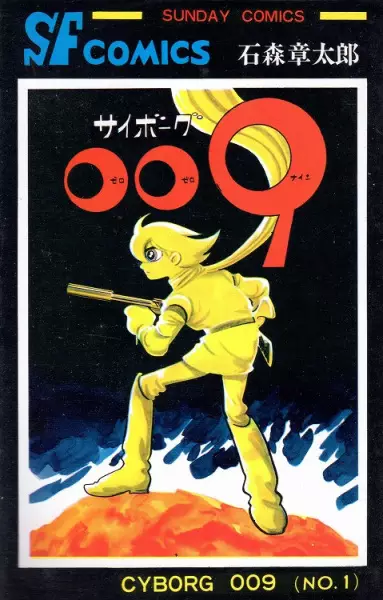
Even though Tetsuwan Atom/Astro Boy is a cultural icon, I feel like the story is not talked about enough. People might say "it appeals to kids" "its for kids" which is true mostly for the anime, but the manga tackles some very tough material. Let me set the picture for you, in the 1950's an artist whom his mother's family had a long history with the military. Naturally you would want to speak about war issues if you are in the middle of World War II so years later you make Tetsuwan Atom, it garners massive attention and easily becomes your most popular work. It'spopular because of kid's audiences and is kinda forgotten for its dark story. Would you really like that? Honestly Atom is one of the best manga I've ever read which is a good example of old doesn't mean bad. Early early manga usually connect to World War II like Cyborg 009, Most Go Nagai works, etc which makes a interesting connection between WWII and the rise of anime. Give it a shot, the art will grow on you and if your not into it, probably try Pluto by Urasawa (Monster author) which is a lot more adult appealing then Tetsuwan Atom.
9 found helpfulJul 20, 2021
CaptainKenshiro
Mixed Feelings
5
In my mind, Astro Boy is to manga and anime what Mario is to videogames or The Citizen Kane is to movies, you kinda have to go through them if you are fan of their mediums, because of the impact they had in them. And since watching any of its anime is a no-no for me, I decided to go and read the manga, which is after all the original version. It’s not an easy thing to do though, as you won’t find two sites with the same information about it, there’s a different number of chapters and volumes everywhere you look at. So this reviewis based on the Dark Horse Comics version, which compiles everything in 98 chapters and supposedly misses other two chapters (which you can still find online and are very short).
Since it’s an official English release, it means that the most names were localized, which wasn’t that big of a deal, I was reading the manga from left to right, which was weird, but most important of all, the order of the chapters is not chronological, but instead some weird selection supposedly arranged by Tezuka himself. Let me tell you that this way the narrative is one big mess, concepts and moments are repeated, references to events are made without the original happening yet at times, characters are introduced for the first time way after you have already seen them for a lot of chapters, and so on.
But honestly even if the manga was in order, it would still be just episodic stories of varying yet overall not so great quality amongst them, as it is usually the case with episodic or anthological series.
This is fairly obvious and well known but what can’t be denied is how creative and influential the scenarios are, you can find a later concept or character in almost every chapter. On the earliest volumes alone, things reminded me of Megaman, One Piece, Magic Kaito, Speed Racer, Mazinger Z and so on.
Still, I consider worth mentioning that even the simplest concepts can sometimes elevate to global, interplanetary or space wars in scope and scale, but the resolutions always leave a lot to be desired and the tone is never that serious, Tezuka even breaks the fourth wall at times and sometimes even features himself in the manga, it is a manga for very young readers after all.
Which is a shame because if the stories were more serious and different, we would have a pretty good collection of sci-fi ideas in here. Some that I want to bother to mention are Greatest Robot on Earth (but only because it inspired Pluto), Ghost Manufacturing Machine, which satirizes nazism, Hitler and the Valkyrie operation, the Once Upon a Time continuity, where Astro goes back in time, with varying results in quality, Subterranean Tank, that is mostly missing Astro.
Finally, the Blue Knight, where a robot rebels against humans because of the way they treat them, and the human response was to basically put the robots through a holocaust, so they end up creating a robot nation, and the villain of the story even manages to convince Astro himself. Probably the best chapter in the whole manga, worthy of getting its own Pluto-like spin off, but its ending and continuation leave a lot to be desired.
After the magazine where the manga was published closed down, it moved to another one, and the stories became shorter and even more childish, resulting in the last volumes of the manga being considerably worse and with barely any time to explore its ideas and concepts.
Other issues in quality are the exposition, which is quite bad, as characters tend to mention and overexplain even the most obvious things, and even in not the most appropriate ways, such as villains exposing their plans or backstories in the middle of nowhere.
And the characters are closer to simple caricatures, and they’re not that consistent either, as they should know and trust Astro the whole time, but sometimes the conflict escalates because they do not pay attention to him or act sillier than normal just because.
As for the visual quality, there is a lot of needless exposition as I said, and the actual drawings and panelling show varying quality, partly because Tezuka improved throughout the years, partly because many different assistants worked on the manga, and later on went on to become important authors themselves, and well, partly because the Dark Horse order is a mess.
As a whole, you can find a lot of innovation and a starting point for plenty of anime, manga and even Japanese videogames in here, creativity regarding sci-fi scenarios, an often big scale in conflict, and a noticeable improvement in visual quality throughout the manga, but the narrative, exposition, execution, characterization and what passes as a conclusion, if there’s even any to begin with, leave a lot to be desired, thus coming off as a title more important to read for historical reasons than anything else, but otherwise not really worth going through.