Links go to search results. Availability varies by region.
荒野の天使ども
16
3
Finished
Mar 24, 1983 to Jun 24, 1984
7.7/10
Average Review Score
67%
Recommend It
3
Reviews Worldwide
It is very rare to come across a mature yet amusing manga and Miriam is exactly that. Miriam has a well crafted and brialliant storyline. You do not have the heroine falling in love in the first page. Instead this heroine is incredible strong, intelligent and gutsy; a rare combination in shoju manga. The relationship shared between Douglas and Miriam is what makes the entire manga a worthwhile read. The two are at constant logger-heads with each other and arecompletely oblivious to their growing attraction for each other. On a whole the manga is extremely entertaining and leaves you smiling to yourself after reading it.I highly recommend it.
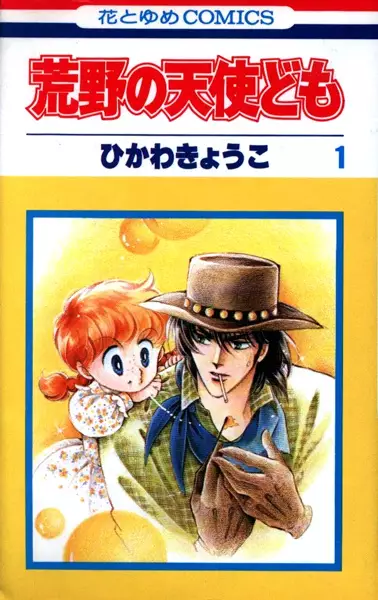
This is a cowboy shoujo manga set in the Wild West. Miriam is an orphan. Her father was a drunken gambler; she only had a dress and they moved from place to place, until one day her father died and Grace took her in. The series follows Miriam's life, growing up, and falling in love with her life-long friend, the skillful sharpshooter Douglas.
I’ve had it saved for a while, but I finally got around to reading Kyouko Hikawa’s 1983 manga Miriam. Hikawa has an unusually large number of series available in English for a mangaka who wrote shoujo in the 80s and 90s (including From Far Away, which was published in the USA by Viz), but just like the other series of hers that I’ve read, Miriam is rather average. This is the only shoujo manga series I can think of with a wild west setting, so if nothing else that makes for an interesting change of pace. Unfortunately, there’s not much to write home about when itcomes to the plot: it’s an uninspired tale of bad guys doing bad things and the good guys fighting against them. I’m admittedly biassed against series that have a lot of action/fight scenes and Miriam is one such manga, but Hikawa does very little to add any sort of excitement, suspense, or even uniqueness to the storyline, so it’s overall very disappointing. There’s also an element of romance, which does help to give the story a softer, more emotional side; it’s not horribly unique either, but it’s a nice break from horseback riding and guns. I did, however, really enjoy Miriam as a heroine. While she, too, has a lot of typical traits — spunky, independent, overly enthusiastic — she’s a lot of fun to follow due to being honestly charming and fun. This isn’t a manga to read for deep characterization, but it’s perfect for readers who just like to smile along with a fun and funny lead character. The supporting cast is similarly not very complex, but in general, there’s enough consistent and enjoyable characterization to make it strong enough. All in all, it’s an enjoyable but not particularly noteworthy manga that I’d recommend for shoujo fans who also have an interest in action-packed wild west stories, and perhaps oldschool manga readers who are desperate for more translated series to read. (Fans of late 80s/early 90s shoujo in particular will surely be pleased by the very much period art and paneling style.)
The first installment in the Miriam trilogy, this is the story of a little girl who will do whatever it takes to protect the ranch where she lives and its owner. She forcibly recruits three young drifters to help fend off the corrupt businessman trying to put the moves on her guardian and the ranch’s owner, a young woman named Grace. All kinds of hijinks ensue. It is in some ways a typical Western, but it bursts with life and energy. Miriam is an absolute go-getter. She’s learned to take on a lot of responsibility at an early age, from having to look after her fatherwho was addicted to both alcohol and gambling. The three drifters, Douglas, Card, and Joel, are well-defined and fun; the villains are suitably terrible. Grace i think is where the writing drops off; she’s pretty bland, with no real distinguishing characteristics. The art is very 80s shojo. It’s not bad by any means, the visuals are great, but when you’ve read a lot of shojo from the 80s and 90s this style of art tends to all look the same. It doesn’t make itself visually distinct from its contemporaries. Whether that is a plus or minus depends on how you feel about the style. I personally like it. The target audience for a manga like this is probably small, but i fall squarely into it. It was immensely enjoyable both as a shojo and as a Western; i’m excited to read the two sequels. If, like me, you’re into shojo manga that contains action and adventure, this is well worth the read.
