Links go to search results. Availability varies by region.
お茶にごす。
109
11
Finished
Apr 4, 2007 to Jul 29, 2009
8.0/10
Average Review Score
100%
Recommend It
4
Reviews Worldwide
tl;dr: A manga that’s mostly simple comedy but that has some surprisingly strong character development focused on a single character and relationship development revolving around a single relationship, though with an incredibly messy ending regarding the latter. This manga is a series of relatively small comedic episodes with a common set of reoccurring characters. These episodes start off as single chapter, but as it goes on they extend to be a bit longer, around 5-8, which feels like the perfect size for them in terms of pacing. Throughout these episodes, the focus is generally on Masaya getting involved with something or other, and his interesting perspective on how he should act in saidsituation in such a way that he is a kind person. What works really well though, is that though he starts off as someone that very clearly isn’t a kind person but rather just someone pretending to be kind and not really understanding what that means at all, which often serves as the core for the humor, by the end while he still isn’t very orthodox in his kindness, it very much does feel like his character has grown and that he truly is becoming a kind person, which is pretty heartwarming to see. This, along with the fact that he can power through most everything with strength alone, also produces a good amount of solid comedy and awesome moments. Other than that there isn’t much character development, however there is also exceptionally good relationship development between Masaya and Anaseki. Anaseki doesn’t really grow as a character over the course of the manga, but she slowly does very clearly come to understand Masaya more. She also shows how much of a good girl she is, which matches surprisingly incredibly well with Masaya. Hence, I became incredibly invested in their relationship. This also ended up being the focus of the end of the manga, which is good, but the incredibly messy way it handled it was pretty bad. It felt like the author was trying to drag things on for too long and started something that the reader base didn't care much for so they quickly turned it around and ended things. This ending was way too abrupt and didn’t go far enough, but it was solid enough in what it was trying to do so I can’t say it was a completely bad ending. It was somewhat disappointing though. The art was okayish.
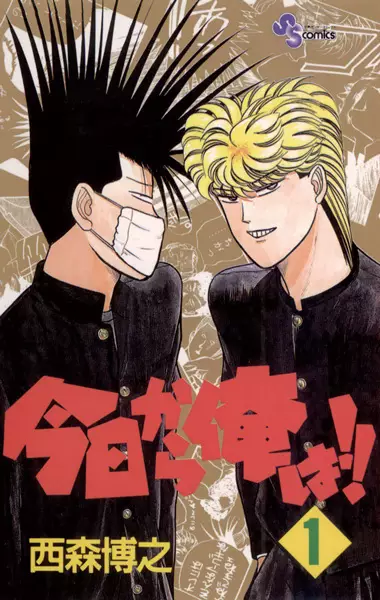
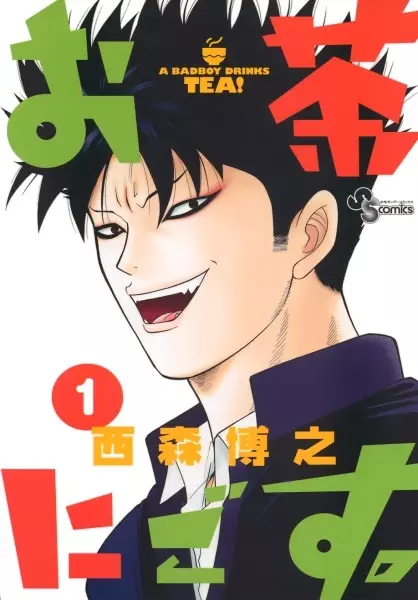
The story follows the high school delinquent Masaya Funabashi, better known as "Devil Ma-kun" who is trying to reform his image by joining the Japanese tea ceremony club.
It's good, but feels off. Story: 8 Probably the best part of the series. If you go in expecting to read a story about finding yourself and understanding what it means to be a particular person, then you won't be disappointed. In that regard, the story does well. What it doesn't do too well, in my opinion, is its romantic aspect. It feels really forced and unnatural to the flow of the story, almost as if following some kind of strange formula. Art: 5 The biggest killer of the series. Either you like it or it bothers you the whole time. The manga is old, so it's understandable, but it'snot the age that's problematic. The character design is also a bit odd, but it fits into the awkwardness of the MC, so it's acceptable (although it might turn you away). Rather, it's the apparently lack of emotions shown by the characters. The one "emotion" it seems to show well is when trying to shed a character in a menacing light, but that's about it. The blushing detail when a character is angry, sad, embarrassed, etc., none of that comes through. You end up feeling very estranged from the characters, even though they detail their thoughts to you. Character: 7 Pretty distinct and memorable. They also develop well through the series, and the audience can feel that dynamism. My biggest complaint has to do with the mismatch between the character's apparent personality and their actions. It's not that they're constantly doing things out of character, but more when a critical moment arises, they sometimes act in unexpected ways. It's not exactly bad, but definitely does put a weird spin on the characters throughout the series. Enjoyment: 7 I did enjoy it and at the same time, didn't. There were funny moments, but the jokes often failed to come across (maybe due to the specific translation or art). There were also heartwarming moments, but it felt lacking. In the end, I'd rather not re-read the series, but it was an interesting ride. Overall: 7
What happens when you put a fearsome delinquent who actually wants to become a model citizen and a saintly club president together in the Tea Ceremony Club? Apparently you get Nishimori at his best and most lucid. Ocha Nigosu's basic setup provides the structure he needs to stay focused, intelligible, and, most importantly, relatable, as he explores the universal question of what it means to be a good person. The magic ingredient that makes this story work is the delinquent MC's genuine effort to avoid senseless violence because of how much he respects the president and aspires to be like her. By not glorifying violence, actionscenes require careful justification, and are contextualized into either progress or relapse. Consequently, we get a balanced mix of storytelling, like a quality tea, that allows for delicate flavors like light drama and slice-of-life to emerge. Instead of only alternating between gag comedy and beating up thugs to move the plot like in his other works, Nishimori demonstrates he can actually write and be subtle when he has to. Scenarios as mundane as characters going home together, telling childhood stories, or helping a bug stuck on its back, end up being the best chapters in Ocha Nigosu because of how effectively they establish chemistry. While the narrative qualities are strong, the manga is difficult to read. The scan quality is low, and the panels are filled with jokes and puns that make little sense in English. Some of it is awkward translation, but the rest of it, judging by his other works, is Nishimori's weird sense of humor. Considerable effort is spent on developing the cast, giving them convincing weight and their own journeys. It's also, strange as it may sound, one of the few manga that does a good job with organic male friendships. All character growth by the end of the manga, feels earned and well paced at 100 chapters. What's more, the conclusion to the kindness question does not simply retread previous chapters but offers an elegant twist that wraps up multiple characters at once. This is a rare case of a known quantity mangaka managing to really punch above his weight, and it deserves some acknowledgement.
Oh boy, I really love reading this manga and it is somewhat related to Angel Densetsu. Due to the fact, the two MCs are both scary for their looks but deep down they love helping people. Ma-kun chose the LOHAS lifestyle so he joins the tea ceremony club with his best friend. Ma-kun is being targeted by bullies and no worries Ma-kun can beat them to a pulp. This mc likes the president of the tea ceremony club but he's having a hard time to express his feelings. I love the part when they spent at the temple so they can have the test ofcourage and blue was thought to be a ghost haha can't stop laughing... However, when volume 11 of the manga appears that I was kinda disappointed at the ending. Like did Ma-kun has a girlfriend? What about the others? Did his dad looked like him and did they forgave each other? It was abruptly rushed by the author ಠಗಠ but at least I have my imagination to finish the ending. I swear, it'll make you laugh.