Back
Where to Read
Links go to search results. Availability varies by region.
Find a Specific Chapter
35 chapters total
Blazer Drive
ブレイザードライブ
7.04(5K votes)
Ranked #9015Popularity #2272chapters
35
volumes
9
Status
Finished
Published
Apr 4, 2008 to Dec 29, 2010
Authors:Kishimoto, Seishi
Action
Worth Reading? — Global Verdict
5.5/10
Average Review Score
50%
Recommend It
2
Reviews Worldwide
International Reviews
RedPark
Not Recommended
4
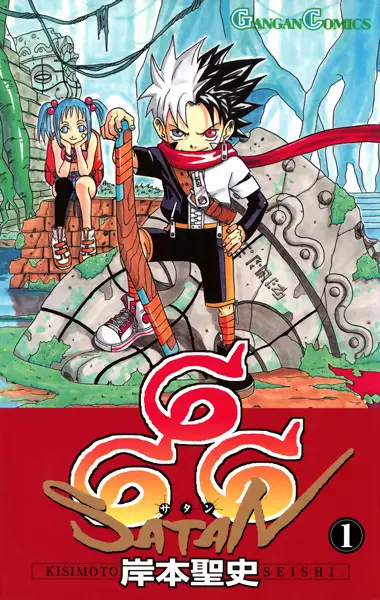
It’s always nice too see how artists grow and improve through their multiple series. Be it with better writing, characters, storylines or different turns in genre, that feeling of progression is a delight that goes beyond just the work at hand. However, the opposite is possible and regression can often be disappointing, which speaks true of Seishi Kishimoto’s Blazer Drive. Coming off from the flawed yet somewhat fun 666 Satan, you’d expect one to learn and build on their shortcomings. Sadly, this does not happen with Blazer Drive, a shallow series that forsakes exploration for flashy battles, development for cool poses and evokes the well-wornphrase "style over substance". Set in some unexplained future Tokyo, we follow Daichi, our grade A idiot protagonist and the poster-boy of Blazer Drive’s vanity. Shouting forced lines like “I don’t understand the complicated bits but I’m going to kick your ass!” in an attempt to sound cool only serves to portray him as moron (fittingly) as nothing remotely complicated was even said prior. His quest is very familiar to battle shounen readers: people have special fighting powers, Daichi has the most incredible latent power of them all, and his enemy is a shady organization. Though not very interesting overall, the story is made worse by pisspoor handling. Events tend to happen prematurely, as if the series’ wanted to skip to the “good bits” instead of letting things develop naturally, making this 9-volume tale feel very condensed. Other times, the series relies on pure happenstance to advance the plot, but this strips the tale of believability and simply put, is bad writing. Further rupturing whatever smoothness the plot has are the numerous elements added to the story that end up being completely irrelevant. A good example here is Shirou, the main friend-rival character who’s built-up quite prominently only to totally disappear from the story soon after his introduction without a given reason. Worse off, his brief reappearance later on has him abruptly introducing a new seemingly important subplot only to disappear again (the subplot is never mentioned again either). It’s likely that these extraneous elements are references to the Blazer Drive video game which had a story parallel to that of the manga, but the jarring handling of them in the manga makes it feel as if we’re only getting half the story. Despite the relative simplicity of the story, Blazer Drive attempts a very complex finale, but it misfires. The new twists and backstories lack foreshadowing and feel too spontaneous, only making the story more dense and messy. There’s little breathing room for these new ideas so they just end up being preposterous, convoluted and seem more like an attempt to make the story more than it is. Story problems aside, there is a serious lack of worldbuilding in Blazer Drive almost to the point where it is non-existent. By the end, we know very little about the setting as there was no intent to invest the reader by exploring it, raising many questions which are sadly not answered. That’s not to say there is no exploration whatsoever. Blazer Drive’s weapon of choice, the Mystickers, are heavily explored in ways that can genuinely interest the reader. However there’s a catch: the exploration is incredibly one-sided. We get to know a lot about how Mystickers are used in battles and the like, but regarding their origin and development, there is next to nothing. A sliver of information is offered: “they came from another dimension” but this vague tidbit only crops up even more questions. How does such an enigmatic technology get so widespread that it even appears in convenience stores? How are they even made or replicated? Why is it that no one knows? It doesn’t make any sense given how widely used it is in the series. Blazer Drive makes it pretty clear that it doesn’t care for the why and only for the battles. After all, explaining how they work here is apparently enough, as whatever can boost its cool factor will garner Blazer Drive’s full attention. It seems to be mostly in vain however, for Blazer Drive’s beloved battles are often pretty dull, perhaps due to derivative action and lack of investment the reader has in the characters or world. In addition, they don’t feel very believable as our protagonists tend to win most of their battles (even against veteran fighters) despite being relatively new to fighting. As you may have inferred, I didn’t enjoy Daichi very much and the same can be said about the rest of the characters. Our cast is chock full of one-note personalities, which wouldn’t necessarily be all that bad if the notes weren’t so stale. Aside from that, the series seems to find it necessary to maintain a tiring charade of base humour, such as talking animals, loli angst, perverted animals, comical narcissism, and yes, farting animals, which gets less and less funnier each time. It’s a shame that Blazer Drive focuses its funny bone here instead of its lesser seen and more successful situational humour. There are some decent characters however, like Misora and Kuroki, who, while retaining the aforementioned flaws, are less irritating than the others and shine in their own ways. Of course Kishimoto finds a way to corrupt them, like when Misora is telling another character to respect women only for Kishimoto to later give us a panty shot during her big moment. Gotta love it. On the villain's side, they tend to have a repetitive style of characterization which utilizes instant tragic backstories to remind you that they’re flawed and human, but I don’t usually find this method of characterization effective. Surprisingly, the main antagonist doesn’t even seem that bad and has a pretty admirable end goal, though arguably boring. However, to make us dislike him, he is made unrealistically evil and chock full of cartoon villainy, which all feels completely needless, as if Kishimoto couldn’t find a more believable way to make him a villain. What’s more laughable is the protagonists themselves seemed more disappointed in his goal than shocked, as if achieving his goal would no longer allow them to be cool. I like to believe that’s why. It’s more amusing that way (I have to create my own amusement to enjoy Blazer Drive). What was quite unexpected for me was just how much Kishimoto rips-off his previous work, 666 Satan, in Blazer Drive. Not only is the plot and characters identical but even the problems 666 had are front and center here. Both Daichi and Jio have some incredible latent powers, Mystickers are O-Parts, Blazers are OPTs, Qilin Realm is Zenom Syndicate et cetera et cetera. There’s a superficial coat of paint to mask the similarities but it will be very obvious to anyone who’s read 666 how few “original” ideas are here. At least in 666 Satan the length of the manga gave the ideas more room to breath unlike the claustrophobic mess that is Blazer Drive. A worse offence than copying the story is the characters. Reused designs and carbon copy personalities is not even the thick of it as entire characters are ripped straight from 666. Take Kuroki for example, who is a complete rip of 666’s Kirin, visually, mentally and in their character role. It’s important to note that both characters cover their face with their hair as this is where the real kicker comes in. In both series a reveal is uncovered involving the reason why they cover their face, resulting in a twist on their characters. In short, they share the exact same type of plot twist only possible by their specific character design (Of course, Kirin’s twist has much more weight to it). It’s quite alarming how many similarities like this crop up in Blazer Drive, although everything it takes from 666 Satan comes out worse. It’s like a bad photocopy. I thought the similarities between Brynhildr and Elfen Lied were ridiculous but wow Blazer Drive really takes the cake. Blazer Drive felt like it was trying too hard to become the next big thing by focusing on being slick and cool while turning its attention away from the elements that would have bolstered its foundation. In addition, Kishimoto goes beyond rehashing and clearly plagiarises his own work which is just lame. With little exploration of both its characters and setting and a heap of problems found in its storytelling, Blazer Drive, seemingly ignorant of its issues, charges on in a vain quest to prove how awesome it can be, but all I see is one bland and soulless poser.