Links go to search results. Availability varies by region.
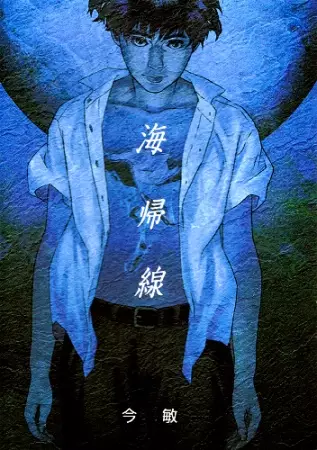
海帰線
7
1
Finished
Mar 26, 1990 to Jun 18, 1990
7.4/10
Average Review Score
67%
Recommend It
9
Reviews Worldwide
Well that was just a little heavy-handed. Kaikisen: Return to the Sea falls into a classic trap. Is the greedy land-developer character not perceptibly evil enough despite the fact that he literally wears sunglasses indoors? Let's also have his driver almost hit the main character in his fancy car then, just to show that he really isn't someone who cares. It should be enough to let the motives and major actions of your characters speak for themselves, but sometimes authors just can't resist adding that extra little "kick." Yes, our villain actually kicks a dog. The absurd portrayal of the people behind the development project ruins what whatwould have otherwise been a relatively reasonable portrayal of the trade-offs between sticking to tradition and accepting modernization. (Well, it would be a little biased still, but we can accept that fiction in general has an inescapable fondness for the days of yore.) Instead, what we get is some hackneyed pseudo-profound mash-up of "respect nature/tradition/something" and "Magic and Miracles are Real!" The climax and conclusion of Kaikisen, I feel, are similarly poor. A poorly-integrated extended car chase and a gratuitous all-out brawl at a festival might be excused perhaps, but some things are unforgivable. Not only is the age-old (and just absolutely tiresome) trope of Faithful Dog Companion Frees Hero By Attacking Evildoer invoked, but a similarly cringe-worthy moment is when the main villain has a complete change of heart in the space of two pages. And how can we be so sure that he's a good guy now? Well, just look at how sympathetic he looks without his sunglasses! Clearly, the sunglasses had been controlling him all along. All that said, there is one major redeeming quality. As others have mentioned, the art is superb both technically and stylistically, and the confident linework, solid panelling, and careful shading and texturing can feel like a clinic in how to actually draw manga that looks good. Stylistically it's nothing to write home about, but that's just fine. Not everything needs to look like Gogo Monster or not simple, and if I were to borrow for just a moment that good old MAL system of assigning sub-scores for art, characters, and et cetera, I'd give this a full 10 in that category. First and foremost, the particularly strong art saves Kaikisen from being an unengaging read, but it is also valuable in one other notable respect. The subtly expressive way in which figures are sometimes drawn by mangaka can bring instant yet meaningful characterization to a character if done properly, and some of the best characters of this manga are not the main characters, with the exception of Natsumi, but characters like Yosouke's father, the mermaid, and the less caricatured of the townfolk. Ultimately, however, it is difficult for Kaikisen to save itself from its heavy-handed moralizing, and while enjoyable enough most of the time due to the excellent artwork, the shallow build-up and entirely empty conclusion will not leave very many readers satisfied.
Yosuke Yashiro's family has a strange, unique tradition—once every 60 years, they receive an egg from a mermaid where it sits protected in a shrine. After the egg matures, the family dutifully returns it to the sea, and the process is repeated. In exchange for this favor, the merpeople bless their coastal town with bountiful catches of fish and calm seas. However, commercial developers encroach on the sleepy seaside hamlet and Yosuke's father is lured away from tradition toward modern prosperity, turning the mermaid's egg into a tourist trap. What will happen to the promise their family made to the mermaids all those years ago? Included one-shot: Volume 1: Summer of Tension
If I have to sum up Kaikisen in a few words, they would be: Mesmerizing, Serene, Euphoric, Profound, Phenomenal. A modest coastal town, the tranquil sea and an intriguing legend about a mermaid that engulfs the town. It might not be the most original setting or premise but it is done so well, the first few pages were all it took to draw me into the story. While the manga’s charm without a doubt lies in the mystery surrounding the mermaid’s existence and her ‘egg’, the characters and their portrayal are yet another of its redeeming points. We have our protagonist Yosuke who iscaught in a dilemma as whether to be rational and shrug off the legend that’s so earnestly accepted by the superstitious town folks or to believe in the whimsical and accept the fact that the mermaid does indeed exist somewhere deep down the vast sea. Then there is Yosuke’s grandfather, a headstrong believer in the sanctity of the pact that has been said to be sealed between his ancestor and the mermaid, and in stark opposition is Yosuke’s father who wants to make quick money by taking advantage of the sensational legend and by complying with the development projects launched in the town. In the midst of it all is Yosuke himself who doesn’t know what to and what not to do. My only gripe and a small one at that is the way the story is wrapped up. The ending feels a tad abrupt and doesn’t make much of an impression. However, on the whole, Kakisen is a very good manga that is worth your time if you are looking for something intriguing to read. The story is appealing and the art is neat and detailed. Definitely one of the best short manga I have read.
I'm usually a big fan of Satoshi Kon. Some of my favourite movies are his own creations, Paprika and Tokyo Godfathers being prime examples, and I adore his artwork. Kaikisen--or its English 'Tropic of the Sea'--is itself beautiful on paper, yet falls short while trying to convey something significant beyond the pages. On the surface, Kon divulges a potentially profound story of a seaside town at risk of being commercialized while trying to maintain the tradition of keeping safe a mystical mermaid's egg gifted to them once every sixty years. In exchange for such care, the mer-people bless the village with warm weather and safety allyear round. Still relevant to Japan to this day, the conflict of modernization and tradition is a significant debate always interesting to explore and see integrated into a manga narrative. Sadly, the story falls flat and fails to explore anything further about the characters themselves beyond their very evident cliches. The protagonist himself is the antithesis of complex and the villain almost painfully predictable. I hate to be so down on something of Kon's, but I admittedly forgot most of the story after I finished reading it. The art is beautiful but I personally feel Kon could've done a lot more with this material.
Tropic of the Sea – Spoiler Free – Recommended TLDR Story – 6,5/10 – 6,5 x 0.275 = 1,7875 Art – 8/10 – 8 x 0.2 = 1,6 Characters – 5/10 – 5 x 0.225 = 1,125 Enjoyment – 7/10 – 7 x 0.3 = 2,1 Total: 6,6125 -> 7 Story – 6,5/10 Tropic of the Sea is a one-volume manga by Satoshi Kon himself. It mainly deals with the debate of progress and tradition and about novelty and familiarity. However, Kon incorporates a mythical element in the plot: mermaids and a mermaid egg. Supposedly, there is a tradition in which a mermaid egg has to be returned to the sea periodically (from60 to 60 years), in order to satisfy the seas and maintain the peace between the sea and the little town, which is experiencing a boom in tourism. Meanwhile, there are other people, who represent progress, that want to use the egg in their own experiences and study it scientifically. Tropic of the Sea's mythical elements help create an original and engaging story. However, the plot is really simple, and there are no twists and turns. It is foreseeable how it will end, and it (almost) ended the way it was supposed to. Art – 8/10 Tropic of the Sea’s art style features Satoshi Kon at his best. The art feels unique and does justice to the impeccable character design. Moreover, the cadence of the panels is great. The fact that it is hand-drawn also helps make it feel special. Characters – 5/10 The characters in Tropic of the Sea aren’t bad, but they are just average. They are archetypal characters that present either progress or tradition, whereas Yosuke – the main character – is caught in the between. In a sense, this manga is bipolar: there is a constant tension between these two opposite poles. And the characters represent just that and play to that tune. It is thus up to Yosuke to find out the secrets that the egg has. Enjoyment – 7/10 Tropic of the Sea is a quick and enjoyable read with great art. The story is rather simple, but not necessarily dull, and serves more as a way of interrogating the tension between modernity and tradition than in telling a story. It deserves, nonetheless, a non-enthusiastic recommendation.
I was going to give this one a '9', but out of spite towards the user average score, I will hit this with a '10'. Seriously, I have never been so appalled at such a rating. Like, did any of you read this? Its story is a struggle between tradition and progression, community and capital, ideals and greed, nature and man. All of this happening simultaneously, while orbiting around a singular object: a mysterious orb whose roots are that of myth and whose powers can destroy or heal its land and inhabitants. When reading, the plot progresses slowly and gradually, taking time in unfolding the mystery pieceby piece and entangling the at first seemingly separate plot lines together into a most rewarding, satisfying and bitter-sweet finale. In short, to give this book a '6.70' is undeserving at best and deceitful at worst. Pay respect to the name, read this book and thank me later.