Links go to search results. Availability varies by region.
ć„ć
19
2
Finished
Jan 10, 1972 to Jun 9, 1973
7.6/10
Average Review Score
80%
Recommend It
10
Reviews Worldwide
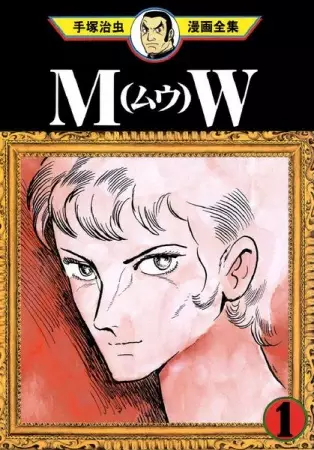
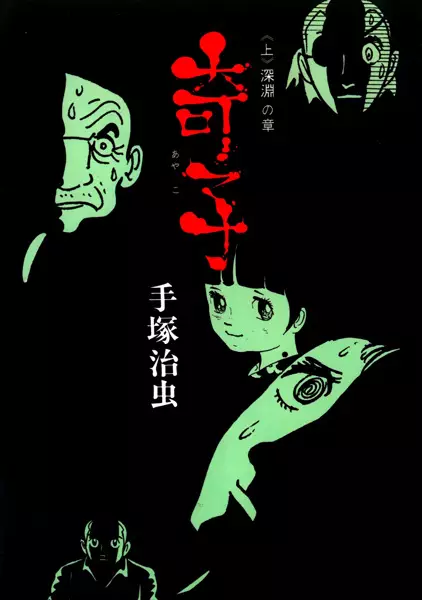
The late Osamu Tezuka needs no introduction. Over his lifetime he created dozens of classic stories that have helped shape manga and anime into what it is today. âAyakoâ is one of his lesser known works. Rather undeservingly so seeing as itâs yet another excellent demonstration of Tezukaâs imcredible storytelling abilities. The story begins in 1949. Japan is slowly getting back on its feet following the devastating losses it suffered during World War 2 and Jiro Tenge, son of a wealthy family of landowners, has come back home. Reluctantly so, I might add, seeing as he finds out upon returning that not much haschanged. His father Sakuemon (the head of the family) is still grumpy, condescending and more than a bit xenophobic while his older brother Ichiro tries his best to match him. The women in the Tenge family are treated as non-entities which reflects how sexist Japanese society was in that time period. The children, meanwhile, are raised to fill in similar roles once they grow up. There is one exception, though. A child named Ayako, a new niece of Jiroâs who is particularly favored by patriarch Sakuemon. The story spans a time period of approximately 25 years and during that time a series of events, varying from shifts in the political climate to personal tragedies, take place that greatly affect members of the Tenge family in different ways. We see a family desperately clinging to their power as the world around them begins to change, an ambitious son whoâll use his children as pawns to win favor with his father, a man who gets caught up in espionage for shady agencies in order to build up a personal fortune and a child trying in vain to change his family from the inside out. The lynchpin of the entire narrative is young Ayako (hence the title). Her role as an innocent child is initially played straight but as the story goes on it eventually becomes clear that it serves a symbolic purpose. She represents an undying innocence that is cruelly repressed and (if possible) denied by a society that sacrifices integrity for personal gain. This, in turn, is the major theme of this manga. And Tezuka deserves props for brilliantly exploring the way principles and innocence are corrupted in the face of selfishness. Other themes that pop up in the story ultimately serve to support it. Some may be surprised at how cynical all of this sounds coming from the man whoâs mostly known for rather upbeat stories (though he also wrote âMWâ) but let it be clear. This is a very somber story with a very harsh view on human nature and society. It is nonetheless a very thematically rich and frighteningly timeless work that deserves to be read by any serious fan of manga. Itâs not all perfect though. There are a handful of events that are rather rushed and/or contrived, while most characters ultimately functions as little more than pawns in the grand scheme of things. Characterization is minimal seeing as their roles in the story are largely symbolic. Some may also find that Tezuka pours his (political) views on a little too thick at times. Tezuka was never one for subtlety. The visuals of this manga are excellent. Osamu Tezukaâs ability to frame all sorts of emotions in tiny pictures is on full display and he doesnât stuff his panels with unnecessary detail. Another great aspect of the art is the way the characters are designed. Theyâre all very distinctive and they really look different yet instantly recognizable as they get older. The art does a perfect job supporting the narrative which is the main attraction here. And in that regard, Ayako delivers in spades. Very highly recommended.
Jirou Tenge, the second son of what used to be an influential Japanese family, returns home after being a POW in an American camp during the Second World War. He finds his family corrupted by the terrible social aftereffects of the war. His elder brother, determined to keep what remains of the family patrimony after the Government's forced land reallocation, has prostituted his wife to his father to secure his blessing, while other members of Jiro's family have been drawn into similar corruption, and he himself is being forced to spy for the Americans after being broken as a POW. Now the family's youngest daughter Ayako will have to bear the brunt of the family's sins. (Source: ANN)
This is my first review on MAL. I posted this on Goodreads and figured I may as well post it here too. I am not a very strict reviewer, but hopefully this helps give some perspective. This is my first exposure to Osamu Tezuka, and I must say that this lives up to his legacy. This is a historical piece and a commentary on the many cultural and political shifts in Japan from 1949 to 1973, as well as an analysis of an insidious family dealing with the ever-changing climate of the time. We follow the once powerful Tenge family as they desperately cling to power bywhatever means necessary, and the family politics and treachery that result from that. The Tenge family is depicted as rancid and rotting, with each family member being despicable in their own right; all but the titular character Ayako. Ayako starts off as a background character, being 4 years old at the start of the story, but she gains relevance as she grows up and the family dynamics change over the years and decades. She is a fairly simple character initially, but after one pivotal point in the story, her significance becomes obvious as a symbol of the repressed purity and innocence by a family that only cares to keep their name in a position of power at any cost. I won't elaborate further, since you're better off reaching your own conclusions and I don't want to spoil anything. As for the other characters, they are all fairly interesting and have their own arcs. Most of them go through drastic changes over the course of the two decades of the story, their arcs generally holding a lot of symbolism. It's fun to see them bounce off of each other and react to the changes in family dynamics and political climate. Despite my love for this story, I do have a few complaints. The first of which is the lack of characterization. Most of the characters are fairly simplistic. They do evolve over the course of the story, but most of them are very straight-forward. This is more a product of the several interconnected characters and plot lines that Tezuka has to balance over the course of 19 chapters. However, I do think there is a beauty to how Tezuka writes them, and there is depth to be found in their interactions with each other and the world. Another complaint, that also stems from the sheer amount of plot lines to be juggled, were the time skips. Obviously a story taking place over the course of 25 years will need to have time jumps, but sometimes it was unclear how much time had passed or what had happened in that time off-panel. Most of the big time skips were fairly obvious, as we were presented with narration explaining it, or we would see characters that had noticeably aged a discernible amount of years. Just sometimes, the smaller time skips would be somewhat unclear. I think these are very minor complaints in the grand scheme of the story, and I don't weigh them heavily against my score. As for the art, it is generally fairly simple, but like the characterization, I think there is a beauty to it. Tezuka's strengths are facial expressions and paneling, which for the time was way ahead of its time, even compared to American comics of the '70s. Some parts do feel rushed, but Tezuka does prove that he can draw with more depth if needed, and he does succeed in showcasing his skill and versatility over the course of the book. All in all, this is an amazing story, firmly cemented in its historical context. I imagine being familiar with this era in history and Japanese culture adds a lot to the story, but it can most definitely be enjoyed without. The strength of the book lies in its heavy use of layered symbolism, historical context, and cultural criticism. The weaknesses lie in the sometimes rushed plot and art and the use of some contrivances to move the plot. All in all, I rate this a very strong 9/10 and would highly recommend it to most manga and comics fans.
From Osamu Tezuka, I'm far enough from having read everything, but Ayako still amazed me with a blackness and "maturity" that I did not expect, even after manga such as the story of the 3 Adolf. In 3 massive volumes, the maestro with a bonnet thus interweaves the story of a cursed, murky and unhealthy family, in that of post-war Japan, of the American tutelage of 1949 at the time of the publication of the story in 1972. And it is rather very interesting! The historical context therefore reveals, with an a priori no doubt a bit nationalist, almost unsurpassable in Japan, even in a Tezukawho seems to have a certain sympathy for the leftists, the stranglehold of the Americans on internal affairs. Thus, the massive layoffs in the rail sector expose bellicose Americans, scheming various assassinations in the shadows to bend the unions which threaten to strike, while the new director goes (maybe?) To suicide. This obscure political framework gives a not insignificant relief to the TengĂ© family which we will also be talking about, and whose youngest, Jiro, returned from the war after being taken prisoner, was initially condemned to play double agents. (and disguise the railway murders mentioned above). The TengĂ© family, feudal residue of agrarian lords, saw itself dispossessed of its land and its influence and was held by a patriarch and his eldest son, unscrupulous, libidinous and ready to do anything to maintain their power. The darkness of a rearguard system in which Tezuka plunges the reader with perpetually renewed terror. Cuissage rights, sexual negotiations, incest ... The family lives in isolation and is not encumbered with any morale. The younger generation certainly seems a little brighter, with a progressive girl committed to the gauchos (the PPT, an apparently fictitious party but inspired by the socialists / communists), a brilliant 12-year-old cadet imbued with an embryo of sense of the justice and empathy that seems to be lacking in others (Shiro) and, finally, the young Ayako, with a childish candor that would seem to be able to hatch a saving bud ... But by the force of family pressure (an excommunicated , a depraved and a kidnapped), the new generation seems to be plagued by the stinking feudal mores of the TengĂ©. Also, a pity that for this salutary demonstration of the rapacious character of an aristocracy on the return, and a more than toxic, deadly venomous machismo, Tezuka presses a little too heavily: sequestered Ayako becomes, as in the annoying Lars Von Trier, a sex object. Of course, cut off from the world, like Kaspar Hauser, she develops a non-moralized personality through socialization, seems rather logical, but the unbridled insistence with which Tezuka delights in the sex scenes of the more and more voluptuous Ayako. sometimes leans towards a form of unhealthy voyeurism that he no doubt hears, a little hypocritically denounce. Or an umpteenth iteration of Japanese perversity, which does not retreat quite a bit from the transgression of incest or rape, visually. Uneasiness all the more strange as Tezuka's line remains relatively naive, childish, with a staging that is still unraveling (the sequence on twenty pages copied and pasted on the same backdrop, like a cartoon embryo ). Despite everything, by denouncing male and aristocratic oppression, while inscribing it in a relationship of societal domination (an amalgam of American colonialist interference, rotten politicians and mafiosi: all supported by a third volume 70s after an ellipse which reveals the enrichment of these environments after the Korean War, by the military steel industry), and by opting for a tragic finale (the story is peppered with murders and suicides, but knows a dazzling final acceleration). ORIGINAL REVIEW IN FRENCH D'Osamu Tezuka, je suis assez loin d'avoir tout lu, mais Ayako m'a tout de mĂȘme Ă©tonnĂ© pr une noirceur et un"maturitĂ©" Ă laquelle je ne m'attendais pas, mĂȘme aprĂšs des mangas tels que l'histoire des 3 Adolf. En 3 tomes massifs, le maestro Ă bonnet imbrique donc l'histoire d'une famille maudite, glauque et malsaine, dans celle du Japon d'aprĂšs-guerre, de la tutelle amĂ©ricaine de 1949 Ă l'Ă©poque de la publication du rĂ©cit en 1972. Et c'est plutĂŽt trĂšs intĂ©ressant ! Le contexte historique dĂ©voile donc, avec un Ă priori sans doute un tantinet nationaliste, quasiment indĂ©passable au Japon, mĂȘme chez un Tezuka qui semble avoir une certaine sympathie pour les gauchistes, la mainmise des amĂ©ricains sur des affaires internes. Ainsi, les licenciements massifs dans le secteur du rail exposent des amĂ©ricains belliqueux, magouillant divers assassinats dans l'ombre pour faire plier les syndicats qui menacent de grĂšve, tandis que le nouveau directeur va (peut-ĂȘtre?) jusqu'au suicide. Cette trame politique obscure donne un relief non nĂ©gligeable Ă la famille des TengĂ© dont il va par ailleurs ĂȘtre question, et dont le benjamin, Jiro, revenu de la guerre aprĂšs avoir Ă©tĂ© fait prisonnier, est condamnĂ© dans un premier temps Ă jouer les agents doubles (et maquiller les meurtres ferroviaires Ă©voquĂ©s ci-dessus). La famille TengĂ©, reliquat fĂ©odal de seigneurs agraires, se voit, elle, dĂ©possĂ©dĂ© de ses terres et de son influence et est tenu par un patriarche et son fils aĂźnĂ©, peu scrupuleux, libidineux et prĂȘt Ă tout pour maintenir leur pouvoir. Noirceur d'un systĂšme d'arriĂšre-garde dans laquelle Tezuka plonge le lecteur avec un effroi perpĂ©tuellement renouvelĂ©. Droit de cuissage, nĂ©gociations sexuelles, inceste... La famille vis en vase clos et ne s'encombre d'aucune moral. La jeune gĂ©nĂ©ration semble certes un peu plus lumineuse, avec une fille progressiste engagĂ©e chez les gauchos (le PPT, parti apparemment fictif mais inspirĂ© par les socialistes/communistes), un cadet de 12 ans brillant et empreint d'un embryon de sens de la justice et de l'empathie qui semble faire dĂ©faut aux autres (Shiro) et, enfin, la jeune Ayako, d'une candeur enfantine qui semblerait pouvoir Ă©clore un un bourgeon salvateur... Mais par la force de la pression familiale (une excommuniĂ©, un dĂ©pravĂ© et une sĂ©questrĂ©e), la nouvelle gĂ©nĂ©ration semble gangrĂ©nĂ©e par les moeurs fĂ©odales puantes des TengĂ©. Aussi, dommage que pour cette dĂ©monstration salutaire du caractĂšre rapace d'une aristocratie sur le retour, et un machisme plus que toxique, mortellement venimeux, Tezuka appuie un peu trop lourdement : Ayako sĂ©questrĂ©e devient, comme chez l'agaçant Lars Von Trier, un objet sexuel. Bien sĂ»r que, coupĂ©e du monde, telle Kaspar Hauser, celle-ci dĂ©veloppe une personnalitĂ© non moralisĂ©e par la socialisation, semble plutĂŽt logique, mais l'insistance dĂ©bridĂ©e avec laquelle Tezuka se complaĂźt dans les scĂšnes de sexe de la plus en plus voluptueuse Ayako penche parfois vers une forme de voyeurisme malsain qu'il entend sans doute, un peu hypocritement dĂ©noncer. Ou une Ă©niĂšme itĂ©ration de la perversitĂ© japonaise, qui recule assez peu devant la transgression de l'inceste ou du viol, visuellement. Malaise d'autant plus Ă©trange que le trait de Tezuka demeure relativement naĂŻf, enfantin, avec une mise en scĂšne qui se dĂ©friche encore (la sĂ©quence sur une vingtaine de pages copiĂ©-collĂ©es sur un mĂȘme fond de dĂ©cor, comme un embryon de dessin animĂ©). MalgrĂ© tout, en dĂ©nonçant l'oppression masculine et aristocratique, tout en l'inscrivant dans un rapport de domination sociĂ©tale (un amalgame d'ingĂ©rence colonialiste amĂ©ricaine, de politiciens pourris et de mafieux : le tout Ă©tayĂ© par un troisiĂšme tome 70s aprĂšs une ellipse qui dĂ©voile l'enrichissement de ces milieux aprĂšs la Guerre de CorĂ©e, par la sidĂ©rurgie militaire), et en optant pour un final tragique (le rĂ©cit est Ă©maillĂ© de meurtres et suicides, mais connaĂźt une accĂ©lĂ©ration finale fulgurante).
Usually when I get paid every month, I'll try and at least buy something different from my usual reads. I've been a slight fan of Astro Boy and the sort of spin-off Pluto series. I looked up some of Osamu Tekzuka's other works and had a look at Ayako. After reading the synopsis, I thought it would be an interesting read seeing how much darker than it seems in comparison with Astro Boy. The start of this was very promising, you get a good feel for each of the characters, their motivations and all of that. The culmination of the first arc, so to speak, ledfor an interesting read. However, as the manga continues, it sort of begins to lose its momentum in terms of plot and how the characters were used. The art is what you expect of a Tekzuka work, one of a kind. It still surprisingly holds up to this day and was great to look at. My gripes are more to do with maybe mid-end of it. Without spoiling anything, the titular Ayako becomes character of circumstance and faces punishment. The timeskips, which were well done, I have to say, show how she has been affected by this. However, it becomes very frustrating when the same thing happens over and over. The ending is very confusing in terms of how I felt when I finished it. I suppose it's punishment for the characters involved and justice for Ayako but it ends very abruptly with a couple of lines of text that basically say "and Ayako was never heard from again." I suppose it just came down to constraints on the author at the time of creation. Overall, I wouldn't say i'm disappointed by this by any means. My gripes are more to do with some of the plot and character development. I would recommend this definitely if you're a fan of Tezuka's. The journey is definitely a strange one and some of the stuff will have you cringing at the mere thought of what happens on the way through it.
I was fortunate. Fortunate in that I had a learned individual informed me of the background in which âAyakoâ was created which allowed me to understand the reasoning behind many of the plot points and the overall theme. Because the story would have looked awful without the understanding of that background. The reason being that much of it isnât presented well, and it ends up looking silly and vapid without the proper presentation. Eventually, the story does get around to leading readers in the right direction of understanding, but that is well over 50% into the story and it is still fairly easy to lose sight of. Thingis that the themes within Ayako are actually pretty universal and timeless. Intra-family power struggles, changing times upheaving old knowledge/structures/understanding, complex individual personalities acting immoral in some cases and moral in others, and all forced within the rigid framework known as âsocietyâ. However, the above themes get lost due to the seemingly simple and rather blunt story. The simple and crass characters. The simple and unsubtle plot. And so on. It's unfortunate, but the manga is really outdated, though it was likely good for its time. Today, though, even low-ranking modern manga tend to create superior stories with more well defined/created characters. But, again, I was informed that much of the story was written as a sort of overview of post-WWII Japan and the feelings Tezuka has about the American occupancy and the dirty laundry of Japanese aristocracy. Due to that background knowledge, I had read the story while viewing all the characters within the story as symbolism rather than actual characters. Each character we are presented are representative of an aspect of Japanese society. Theyâre inter-connected and the actions of one ultimately affect the other in a sort of circle of tragedy, uplifting, and just plain olâ life. Through this view, it seems to me that the story made much more sense and the complexity which seemed non-existent seemingly came into play and became visible. The events that happened which seemed to have made little to no sense suddenly became understandable. As a result, Ayako became vastly more enjoyable. Should everyone read the manga as I did? No, absolutely not. I believe manga (or any medium, really) is better experienced and perceived by individual's own taste. However, I think many people would enjoy Ayako much more so long as they do not accept everything at face value as I might have done had I not known.