Back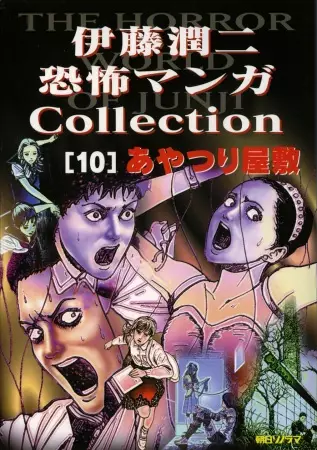
Where to Read
Links go to search results. Availability varies by region.
Find a Specific Chapter
7 chapters total
Itou Junji Kyoufu Manga Collection: Ayatsuri Yashiki
あやつり屋敷
7.42(4K votes)
Ranked #4143Popularity #2975chapters
7
volumes
1
Status
Finished
Published
1998
Authors:Itou, Junji
Drama
Worth Reading? — Global Verdict
7.0/10
Average Review Score
50%
Recommend It
2
Reviews Worldwide
International Reviews
Rust_Cohle
Recommended
8
My favorite stories in this volume are The smoking club, House of marionettes and Den of the sleep demon, those three stories belong to a group of stories by Junji Ito that remind me of the stories of the contemporary American writer Thomas Ligotti, I'm not going to To extend this much because he did not master English well but those who have read Ligotti know what I am talking about, it is that horror that some have called "ontological horror" or "philosophical horror" (another point of comparison with Ligotti and Ito is the creepy puppets as symbolisms of the human condition) synopsis: - Den ofthe sleep demon In this manga we find that story. Yuyi can not sleep, not because he does not want to but because he should not. The protagonist of his dreams -which is the same- has discovered reality and wants to live it by forcing him to "turn around" -literally- and live in his own dreams. So that it does not happen Yuyi asks for help to her friend Mary to whom it involves in the subject beyond a spectator. -The smoking club A high school teacher called Shikishima catches a group of his students smoking in the toilets. He confiscates their cigarettes, which they tell him were given to them by another boy called Nakaya who does not go to the school. The students dislike Shikishima because he strongly opposes smoking and always punishes them if he catches them with tobacco. The town is in the shadow of a crematorium, and the playground has to be swept every day because of the ash from the chimney. While on playground duty Shirai invites a classmate named Kondou to join the "tobacco club." Shikishima shouts at them for talking too much, causing Shirai to worry that their conversation was overheard. He takes Kondou over to Nakaya's house. Nakaya's room is filled with boys smoking, and Nakaya agrees to let Kondou join them, on the condition that he keeps it secret. The cigarette smoke is extremely thick and black, unlike anything Kondou has ever seen before. He is taken aback by the bitter and "dark" taste of the cigarettes. Nakaya confesses that he makes the cigarettes himself from leaves taken from outside the crematorium. He chose this location because he had heard that the ashes make plants grow stronger. Kondou is appalled that the cigarettes had been fertilized by human ashes but Nakaya figures it's no different from eating the food grown in the town. He talks about the exhilaration of exhaling the smoke and says that all he can see before his eyes is darkness. -House of marionetes Here we accompany a family of puppeteers who go from town to town with their show, however, there is something that worries the eldest of the brothers of this family, as their lives revolve around these curious dolls, which seem to be these those who control them and not vice versa. It is certain that?