Links go to search results. Availability varies by region.
蟲師
50
10
Finished
Oct 8, 1999 to Aug 25, 2008
8.9/10
Average Review Score
100%
Recommend It
12
Reviews Worldwide
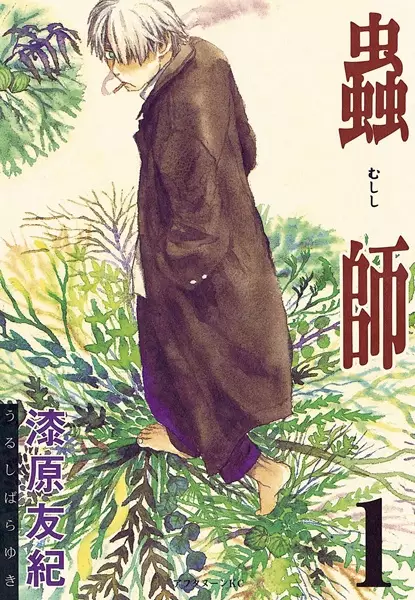
It's surprising to see the lack of reviews for this manga, considering the fact that the anime boasts 56. Now, I've never seen the anime, so I don't know how it compares to the manga. However, I have read a large scope of manga, of many different genres, and I say this honestly: Mushishi is a masterpiece, a one-of-a-kind work of art, and the mangaka, Urushibara Yuki, is one heck of a storyteller. The plot in Mushishi develops in a rather episodic format, rather like Natsume Yuujinchou or the anime Cowboy Bebop. Each chapter follows Ginko, who is a wandering 'Mushishi', a specialist who dealswith 'Mushi', curious lifeforms whose existence may define the meaning of life. Most of the stories deal with Ginko coming across a mushi-related problem during his travels and solving it, however the story avoids becoming sluggish by occasionally breaking the flow with tidbits of Ginko's past. This change in focus offers us something more from this tale and keeps it interesting. Despite what I said there, the mushi-of-the-week stories aren't something to fool around with either. Each are extremely original and varied, some happy and hopeful, some tragic, some bittersweet, and each with something to add to Mushishi's already complex kaleidoscopic world. Indeed, one of Urushibara's strengths is her ability to present clear storylines and sympathetic characters within the limits of each chapter without overreaching herself; Instead, she cleverly uses wide blocks of scenery and close-ups of conversations and monologues to create a slow languid narrative which, by the end, haunts you and lingers in your memory. In this case, the art works well. With her pen Urushibara brings to life her bizarre mushi and the wild, earthy feel of nature. Except Ginko, everyone wears a kimono, setting the manga in rural Japan, complete with hills, swamps and rice patties. The style is between sketchy and solid, with clear lines and clean backgrounds present for the most of the time, while sketchy styles animate the wilderness of nature. Character development is effective in this manga. The protagonist , Ginko, is truly a wonderful character. His calm and reliable persona is one, which I've yet to see in any other manga and it automatically puts you to ease as you follow him on his journey to discover more about mushi. However, although he is the protagonist, he is presented as more of a side character in the stories and it is the 'mains' (the people with the mushi problems) who are given ample focus to develop their personalities. While you may not remember all their names, you learn enough about them so that you want to know what happens to them, or even care about what happens to them. It's a powerful achievement, considering that most of the characters only appear once in the whole manga. Ginko, on the other hand, is an enigma with his western clothing and white hair and green eye, and his character is developed only by a couple of chapters revealing his past and through his numerous interactions with others within the manga. While this could be a weakness in other mangas, it is a strength in Mushishi. Ginko's lack of background story allows more focus on the other characters, the mushi, and their problems. He acts unbiasedly, and only does what he thinks will be best for the people who ask him for help. While the manga follows Ginko, the story is all about the mushi and how they affect the world. In the end, the story is about that: Mushi, life and nature. We see the effects that Mushi have on people and their lives. We see the array of their powers. We see how they coexist with nature. We see how we can mistake them for the supernatural. And we see how they can bring out the best and worst in us. If you are a fan of fairytales, the supernatural, or even slice-of-lifes, give Mushishi a try. I think you'll find it's graceful way of storytelling a beginning to an addiction.
Mushi: the most basic forms of life in the world. They exist without any goals or purposes aside from simply "being." They are beyond the shackles of the words good and evil. Mushi can exist in countless forms and are capable of mimicking things from the natural world such as plants, diseases, and even phenomena like rainbows. This is, however, just a vague definition of these entities that inhabit the vibrant world, as to even call them a form of life would be an oversimplification. Detailed information on mushi is scarce because the majority of humans are unaware of their existence. So what are mushi and why do they exist? This is the question that a Mushishi, Ginko, ponders constantly. Mushishi are those who research mushi in hopes of understanding their place in the world's hierarchy of life. Ginko relentlessly chases rumors of occurrences that could be tied to mushi, all for the sake of finding an answer. It could, after all, lead to the meaning of life itself. [Written by MAL Rewrite]
"It’s not your fault. Nor was it the Mushi’s fault. You were both just trying to live. Nobody is guilty. Don’t die. You’ve done nothing wrong." - Ginko "Its a beautiful painting with an amazing story on it" - Me, describing this manga Mushi is a creature concept that Yuki Urushibahara made for describing strange event that happen in this manga, so we can said mushi are the causes of strange phenomenon that happen in this story. so, is that mushi bad? quotes from MAL, "Mushi": the most basic forms of life in the world. They exist without any goals or purposes aside from simply "being." They arebeyond the shackles of the words "good" and "evil"" And Mushishi itself, we can said its like a doctor or maybe researcher, because Mushishi is a people who declare theyself for researching about mushi. This story involves about Ginko, a mushishi who always deals with the strange phenomenon, the focusses of this story itself was The character from each charapter and their odd event. since in this manga, is 1 chapter 1 story (episodic), and of course the character itself from each character is different except for Ginko. So whats so good about this manga? 1. Ginko is not your "all-can-do-hero", he is not god. he is usually help people with what he can do, and again, he is so much different with other Mushishi who thinking Mushi is bad creature that affects so many people. for himself, Mushi are beyond the shackles of the words "good" and "evil". Furthermore, he is always think rational and logically, the calmness that Ginko shows was the main reason why this manga is in top 30. 2. The story itself was really spectacular yet its so calming. The joyness from reading Mushishi is when you're tired after working or school then when you're reading this manga you will feel your tired is gone and your body feels light (based on my experience), from what i read, the story is focus on the character that have a strange phenomenon and Ginko was like the side character (since sometimes he appears so slightly) but that was make this manga is so appealing, we can really feels the strange phenomenon itself more deeper, and even sometimes i dont realize that my tears were fallen. 3. For some readers, maybe this manga is like a picture book, since so many beautiful scenery pictures that appears in this manga, but for me especially, this manga is like a painting with story. You can enjoy the magnificent story with a beautiful art. Cool, huh? and what make this manga appealing was the traditional ink that Yuki Urushibara used. I believe you will not get bored seeing the art in this manga. 4. And what makes me more surprise was the character development that this manga has. with just one chapter (50-60 pages) Yuki Urushibara can make us falling in love with each different character that appears in each chapters. 5. Its not always happy ending, yet it can be a sad ending. Yeah, this story was not for you who seeking a happy ending (although there was a happy ending), each chapters ending can make you feels happy, sometimes can make you feel sad or cry and even your tears can fallen unconsciously. If you're looking for an amazing manga, this manga is surely what you're looking for.
As you well know by now, I love the occult and anything that has a sense of sophistication in its writing. I fell in love with the anime version of Mushishi and now I like the manga as well. The manga is pretty much the same as the anime, same stories, pretty much same time frame. People may think this is a let down but not to me. Since the anime was so good, the manga didn’t need to do anything in order to be as good and I think it would have taken away from it if they had changed anything. The stories themselveshave sort of life lessons that we should take to heart and some of them are rather old lessons that we had to worry about long ago. Because the acts have happened because of ‘mushi,’ these strange creatures that act according to there desires, that it sort of speaks to today’s world as well. Since these creatures have no time connected to themselves, it means that they can be affecting us in this high tech world. Some of the stories are like the desires of people now a days, things like hunting to much that you are taken over or acting higher then you are because of something special you found out. Other stories are just things around you that you wouldn’t be able to stop and seem like explanations of why things have happened the way they did, like losing your voice, memories, or even losing your hearing. Now for those who hate when the manga and anime are the same, fear no more because the manga goes farther then the anime. We get even more stories and it starts about half way through the sixth volume. Many of the stories are actually rather sad though we get small parts of comedy so that we don’t get to teary eyed. I really think everyone should read these around the time your about to go to bed or to get some relaxation because none of the stories are big adventure action packed stories. Many times, they are made for you to think about what the characters have said and meditate on the story. I personally loved having meditation music on while reading the manga as it sort of zones me into the manga just as the opening song for the anime would zone me into the story then. There was a small thing that did annoy me a bit about the mangas though, and that is the little bonus pieces that for some reason the author decided to put in-between a couple chapters. They break up the stories and I found myself skipping them at times because I really wanted to read more of the actual manga. The bonus ones were ‘badly drawn’ compared to everything else and just got so hard to read at times that I just felt it broke the mangas. I believe most of them were supposed to be about the author’s life but still, I found myself not really caring about it since it was so hard to figure out if it really was from Urushibara-san’s life or part of the chapters, or even just random bits from someone else’s life. The artwork is rather sketchy, sometimes looking like blobs without much detail and then there are other times that the background is really well detailed while the characters look bland and simple. I guess it helps the characters stand out but the characters deform a lot more then you would think. Chins are elongated, eyes have little to no definition of where they end and the rest begins, and even the clothing feel like little blobs at times. The times we get colored pages, the artwork is blobs of watercolor sort of merging together as though from a dream. I think it adds to the idea that these creatures we are reading about are things that we may only see in dreams and the imagination. As the books go on, the artwork gets better and better though still keeps its sketchy look.
Story: 6/10 Usually when we start a manga the first impression is usually the one we use when we decide if we want to continue reading or not. For me and mushishi that was not the case. I read the first two books and felt completely confused, so I continued reading. after about the 4th book I understood everything and the story started getting interesting (why wouldn't it be? it's about a guy who roams the country in search of scary insect thingys (mushi) and tries to cure people of them, now that's dang interesting). But once I finished the 4th book I noticed arepetitive storyline. He goes to one village, cures it of a "disease" and quickly runs off to save another village. The other repetitive part was that the diseases were all related to people's eyes, hands/feet, and ears. There wasn't anything related to any other part of the body that could provide a change from the basic routine. Art: 8/10 The artist really knows how to weird it out. He drew the weirdest things to use for mushi which would add to the effect of mystification. The people that were drawn didn't look anything near inviting to look at, but it added to the effect of the hardships they face with the mushi. Characters: 7/10 Ginko is really cool in the fact that he is really calm and it sometimes feels like he isn't human because he knows all of this about mushi, and because of the setting and the events. The negative part about the other characters is that compared to Ginko, they are either really superior, or really inferior, there is rarely a good balance between the power characters have over one another and/or the intelligence of the characters. Enjoyment: 7/10 I enjoyed this manga for books/chapters 5-7. Then I got bored but for some reason kept on reading it. Probably cause I didn't have anything else atm. But there's something about this manga that kinda makes people want to read it till the end, where there's nothing left to read.
Mushishi is a historical manga, and I believe it fulfilled every requirement the genre demands. It conceived the idea of Mushi, a living form that was very close to what was the essence of life. They were hardly perceptible, yet it didn't mean they weren’t around. Following their traces was a man expertising in those species, a Mushishi. He collected the remainings of a world that would soon be forgotten, while occasionally encountered the incidents between human and those unbeknownst kinds. He would stop by, talk, lend a helping hand and once again set off, and those actions were rinsed and repeated over the courseof the journey. From normal point of view, isn’t that unexciting and unremarkable? I agree. The characters seemed lacking of outstanding traits, the incidents hardly attracted attentions and there were even fewer emotional explosions. The supernatural occurrences happened and were resolved, just to be left within the memories of those involved until the end of their time. However, it feels alright, as it is history, anyway. There is no reason to be bothered with them, unless you are interested, and it speaks the very truth of historical spirit. On the other hand, I think the way the series lacking of arc, over-arc and the character’s inner development did live up with the objective point of view of history. Every incident was a fresh experience, and all necessity were to observe and record. Then comes the end. Having encountered an incident involved with Mushi, the protagonist once again continued his journey, leaving no trace in the vast and pristine scenery of nature. The manga just ended there, without any final ceremony. Nevertheless, it did make a conclusion for the work the author had created. Mushi was a resemblance of what was called the foundation of life, and those being able to see them were also the rare witnesses of that world. With the storyteller blending into the surrounding, that world would certainly continue to exist, but without one being aware of it, it would then fall into oblivion, covered with dust due to the flow of time, but surely stay there, waiting until one day, someone with the ability comes to uncover it. That is the charm of history, and Mushishi gave me the urge to set off alone, seeking for the world Ginko left behind. Behold, there would be a sequel in the near future, but like you’ve already noticed, it is definitely a joke. About the incidents, there were something interesting, some tragic, some sorrowful, as the types of Mushi were either harmful, or able to make one’s life colourful. Nothing was absolute, and at the turning point between coexisting and discarding them, people made decisions accordingly to their own will, just like how one would study and valuate the meaning of a historical event. In the rare occasion talking about it, in your face Attack on Titans. This is what I call peak fiction. You guys could just go back crying for your ‘124 chapters of peak fiction and inspiration…’ Hoohoohoo, heeheehee, haahaahaa. The art is perfect. I firmly believe the ink colour brought more than any other could, as well as the design of characters didn’t leave anything too attractive. All those elements constructed a mysterious fictional world, yet it was so close with how people had actually lived and died. At this point, even though the adaptations managed to do spectacular things, I guess sticking with the manga is still better. In conclusion, Mushishi is not only a manga, it is also a historical report of how people had lived with Mushi. In the spirit of Slice of Life, the series would quickly excite or lull one, but anyway you would have experience, even though it could be unenjoyable.