Links go to search results. Availability varies by region.
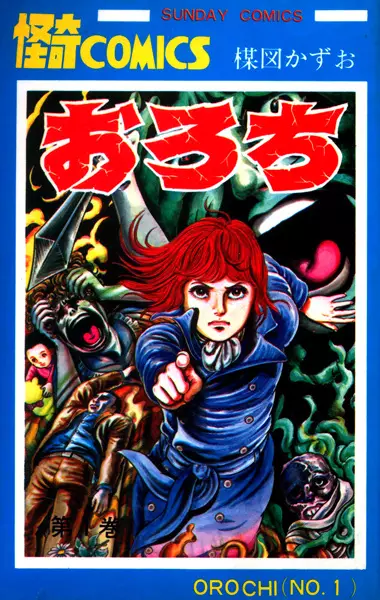
おろち
Ongoing
6
Finished
May 21, 1969 to Jul 29, 1970
6.3/10
Average Review Score
67%
Recommend It
3
Reviews Worldwide
One of the first, and lesser known works from horror master Kazuo Umezu, Orochi consists of 9 tales linked between them by the eponymous narrator; Orochi, has the appearance of a beautiful girl and is a keen observer of humans she deems interesting. Sometimes she will even exit the shadows and intervene with the lives of those she observes, altering their fates using her array of supernatural powers. Unlike more famous Umezu works, like Hyouryuu Kyoushitsu (The Drifting Classroom) or Kami no Hidarite Akuma no Migite (Left Hand of God, Right Hand of the Devil ), horror; gore; and the supernatural, have to backpedal to alesser role and allow the humans to take the spotlight; this is a series of dark secrets, revenge, and accumulated hate. With Orochi as our guide, we get to witness the corruption of our human hearts with little-to-no aid from the traditional supernatural scapegoats. There is a variety of themes explored and some stories will better suit your tastes than others. I found some of them lacking, especially compared to Blood -the last one. All the stories are pretty long for manga ones, averaging well into 100 pages, meaning that characters and plot are well developed. The psychological focus, may alienate some readers who were maybe expecting a more mainstream horror setting. I have to admit that sometimes I, myself hoped for a more sinister turn of events. The artwork is superb. Umezo puts to shame today's computer-aided mangaka. Each panel is masterfully drawn; the women are especially beautiful and the depth of the details of the backgrounds seems to draw the reader inside the story. This is an important manga because it can be clearly seen how it influenced Ito Junji, arguably Umezo's successor and a horror master in his own right; we have the beautiful women, the existential dread, and the heavy panels. Although Ito always opts for the most sinister of turns, it is obvious that this manga was a big inspiration for him. Orochi is a good manga, although the quality of the stories is uneven. If you find Blood at some bookstore's shelves do not hesitate, the great story and even greater artwork will make it a great buy. 7.5/10.
Orochi is a philosophical horror manga series from Japan's master of the horror genre. Each chapter is a separate story that explores different aspects of humanity and the human condition. The main character, Orochi, is a mysterious woman with odd powers and a keen interest in understanding human nature. In her travels, she meets people that she is so fascinated by that she takes an interest in their lives, sometimes for the better and sometimes for the worse.
I honestly just read this because it was fairly short and on the Viz app. However, I am glad I read it to some extent. The presentation is mostly timeless. The art is very good and always fits the atmosphere and the composition of the panels is pretty standard but still very good. It's likely the most consistently great thing about the manga. As for everything else, this manga is very hit and miss. Immortal beings acting as a tie-in for mostly self-contained stories isn't entirely unconventional, but it's still a framing device I rather like. Unfortunately, this manga doesn't really use that trope particularly well.The titular character, Orochi, lacks pretty much any characterization or contextualization. Her personality is generic, any of the philosophical questions of immortality aren't touched on at all, and there's never a concrete explanation of what she can and can't do. She's usually just a passive character, and aside from her convenient powers, one could remove her from pretty much every story here without changing much. To me, this missed opportunity is the greatest overall flaw of this manga. Aside from that, as it is episodic, it's a bit difficult to speak generally about the plots/themes, but there are some common characteristics in the stories. Some of these stories have pretty major plot twists that are logical enough, but have little impact because of the poor character writing and repetitive plot. I generally think the character writing is pretty simple here, as there's little nuance in terms of morals and motivations (Aside from one pretty big exception I'll get to). I think the best stories play to having likable main characters for this reason. I know that's a give for many people, but a ton of these stories have characters that are simultaneously unlikable and shallow. To me, the best story was of the kid with the really nice father. His backstory was actually really well done, and the way the modern-day events tie into that backstory is great. It feels like the main character really learned something in this one. I also rather enjoyed the one with the blind girl. Ultimately, the good kinda just cancels out the bad. 5/10, it's pretty average overall. Next I'll read the author's next work, 'The Drifting Classroom'.
Horror through human suffering is the core theme of this manga. As a passive observer, Orochi witnesses the suffering in people’s lives, serving as the narrative device for this episodic series. To emphasize the severity of that suffering, Umezu often used children as central characters. Most stories are over 200 pages long, allowing the psychological aspects to develop decently. I also liked Umezu's art style in this manga, it complements the overall theme well. That said, the manga has its shortcomings. Every writer tells stories of their time. Orochi is Umezu’s voice from the 1960s. Having witnessed war and its aftermath, his stories are deeply rooted in thatcontext, which is commendable. But I believe these would have been more effective as pure drama rather than psychological horror. Horror through suffering can be powerful. But the grounded, down-to-earth horror of over 55 years ago feels too basic today. That’s understandable as more than half a century has passed. Society evolved, storytelling evolved, and we’ve consumed countless stories since. Orochi felt ordinary by modern standards which isn’t ideal for a horror manga. I appreciated its humanistic approach and raw honesty. But I never truly felt the horror. That’s why I’m giving it a 6 out of 10. Still, because it reflects stories from a post-war Japan, it’s a meaningful and somewhat satisfying read. So yes, I do recommend it.