Links go to search results. Availability varies by region.
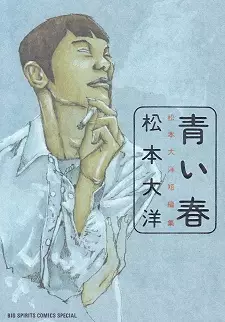
青い春
7
1
Finished
1993
7.8/10
Average Review Score
100%
Recommend It
5
Reviews Worldwide
This work is Matsumoto's sandbox and it's up to you whether you want to play in it or not. His style is completely devoid of mainstream boundaries; linear narration is substituted for juxtaposition of almost non-cohesive panels. The effect of such an approach is that instead of a passive observer, you feel as if you're inside of character's heads. There are no moral of the story moments, it's more like sheer realism; you could even call it conveyance of youthful boredom. As such it obviously doesn't pertain to the excitement, but the mood is set in a masterful way to keep you interested. Positive pointsfor implementation of surreal slapstick which Matsumoto doesn't even bother to throw it in subtly. Aspects such as development are completely thrown away, these characters simply live their empty and purposeless lives. No justification is provided for their actions nor are there any hints for a better future. You'll either hate their dull existence or consider it comically realistic. It will feel quite heavy, especially due to the abundance of Japanese pop-cultural references, lack of vivaciousness, ostensible non-coherence manifested in erratic presentation, and simply the fact that Matsumoto refuses to serve it on a platter. I'm also sure that his artwork won't appeal to many, especially since it's not consistent, albeit really shines here and there. Aoi Haru is a dichotomic work, it's perfect in its imperfection. It's definitely not a masterpiece in every sense of that word, but for its attempt to tackle such a risky theme and present it in such an experimental way, one could consider it a masterpiece by its own standards.
This dark and intense drama is set in a boy's high school where Kujo becomes the official leader of a gang. Kujo must constantly defend his position by playing a dangerous rooftop game with the other boys vying for his position. This manga has also been made into a film which has shown in various festivals throughout the world. (Source: MU)
It's strange that no one has even bothered to write a review about this awesome manga. But then again I guess it's not much of a surprise given how it isn't very well promoted. However, this manga is one of the buried treasures of the manga world. STORY: Alright, this story is actually a compilation of several stories all done by Taiyo Matsumoto, best known for his work Black and White, about a group of students during a Blue Spring, or a dull depressing spring in which nothing happens. These kids are on the fringes of society ranging mainly from punksto thugs and it deals with their problems, many of which are quite dark and disturbing. That said, while some of the stories are absolutely jaw-dropping (If You're Happy and You Know It Clap Your Hands, Mahjong Summer) some of the others are mediocore (Revolver: 1-3) to just plain bad. (Peace) These stories are dark and for the most part thought provoking, much like his previous work B&W, but some are just fillers that won't cause you to look twice. This is why I had to give it a 5 in this category although I consider some of the singular stories as 9s or 10s. ART: Like Taiyo Matsumoto's other works this one's art is somewhat strange. It is not the standard manga-style as is seen in many of the shounen jump works, instead it is much more cartoony and a little more unrealistic. Some people I'm sure will be turned off by it, it took me some getting used to, but others will latch onto it from the very beginning and love it to the very end. CHARACTER: As in many other manga compilations, the characters are hard to relate with simply because they are only in one story or chapter. The other problem with the characters is what I mentioned before, the characters themselves are just plain hard to relate to because for the most part they are punks and thugs. None of them are really driven by their own desires and they generally belong to a group and follow the demands and needs of the groups. Pretty much, they are sheep. The only good thing is that some of the other characters in the manga, for the most part they are very minor, but they seem to have more impact on the story than the main characters do. Espiecially in the If You're Happy and You Know It... story. These characters are for the most part not sheep like the main characters and therefore much more likeable. They really make it worth reading. ENJOYMENT: For the most part, I enjoyed this manga. Like I said before there were a couple of stories in it that I just didn't care for but then again there were some stories that I absolutely loved and reread frequently. A couple have actually inspired the way I write my own stories. For the most part I really enjoyed it. OVERALL: Like I said before, their are a couple of bad stories, the art may not be for some people's liking, and some of the characters are rather week. BUT (And this is a big but.) some of the stories are simply masterpieces, as is to be expected by a master storyteller like Taiyo Matsumoto. It's just a a shame that he couldn't keep it up all the way through. Despite all its faults the goods outweigh the bads, and it is certainly worth checking out espiecially if you enjoyed Black and White. As said before, it is one of the lesser known great mangas. Definately worth the read.
Blue Spring is a collection of short stories centered around the theme of questioning one's future. The characters are all high school delinquents, and the answer to their question lies in crime, dissatisfaction, or death. As one might expect from Taiyo Matsumoto, the presentation is unconventional both in visuals and style. Matsumoto's drawing style is aesthetically pleasing and captures the gritty reality he is examining. The stories are understandable enough, but I feel a lot of it is lost on me due to a lack of cultural knowledge. I think after some research and time, a reread would allow me to give a better analysis.
This is my first Matsumoto manga, and it won't be my last. Taiyo Matsumoto really knows how to elicit a very specific feeling and tone. These short stories aren't great stories in themselves; they don't have any plot or character development. They are tone pieces through and through. The art isn't all that great either, but it oozes with charm and really captures that punk rock vibe that's present throughout the book. I loved how there were tons of graffiti, to the point that the bottom of the page was chock-full of annotations from the translator. Loved all the music references too (Jimi Hendrix, TheBeatles, Sex Pistols). Really helps cement the type of tone Matsumoto is going for. All in all, this manga is a perfect snapshot of teenage delinquency in the 80s and 90s in Japan, and the blues that fueled it. I'll leave you with two quotes from Matsumoto's after thoughts at the end of the book: [talking about teenage delinquents] "In retrospect, I realize that for these youth, for whom the present was already the past, the camera was an important item. But at that time, when their actions didn't quite make sense, I was strangely attracted to them. They answered to reason with their fists and never questioned their excessive passions. Their frankness and their sense of being true to themselves won me over. They were my heroes." [after talking about how those delinquents now have families, are responsible, etc] "No matter how passionate you were, no matter how much your blood boiled, I believe youth is a blue time. Blue - that indistinct blue that paints the town moments before the sun rises. Winter is coming."
[ versión en español más abajo] english: "Blue Spring" (Aoi Haru) is an anthology of seven rebellious, badass and crazy stories. These stories are a reflection of a turbulent, harsh, carefree and, above all, lost adolescence. Starring heroes who, as Matsumoto himself points out, respond to reason with fists and never question their raised passions. The particular drawing style of the mangaka carries the feelings of these characters: even without aiming for their lives, they are faithfully honest to themselves. His irregular and messy line and the angles with which he draws the characters, reflects this unstable reality that is their adolescence, which according to the author,it’s like a blue period. Matsumoto has a great control of the composition and the rhythm of the story, as we also observe in other works such as "Ping Pong". The stories happen at breakneck speed with their fragmented and crooked compositions, and the chosen images create an interesting tour of visual sequences. His stories are so synthetic that, at times, it is difficult to follow the development correctly and to be able to enter the narrative, which is often a problem in anthologies. Still, the humor and irony with which he treats the stories draws the attention and makes a great representation of this blue generation. All in all, I wouldn’t recommend this manga to people who haven’t read any Matsumoto’s work, only to people who already know and are used to and fascinated by it. español: "Primavera azul" es una antología de siete cuentos rebeldes, macarras y locos. Las historias son un reflejo de una adolescencia agitada, cruda, despreocupada y, sobre todo, perdida. Protagonizada por unos héroes que, como apunta el mismo Matsumoto, responden a la razón con puños y nunca se cuestionan sus enarboladas pasiones. El particular estilo de dibujo del mangaka nos transmite los sentimientos de estos personajes: aún sin rumbo por sus vidas, son fielmente honestos a sí mismos. Su trazo irregular y desordenado y los ángulos con los que dibuja los personajes, nos refleja esta realidad tan inestable que es su adolescencia, la cual según el autor, es una época de color azul. Matsumoto tiene un gran dominio de la composición y el ritmo de la historia, como también observamos en otras obras como "Ping Pong". Los cuentos suceden a una velocidad vertiginosa con sus composiciones fragmentadas y torcidas, y las imágenes escogidas crean un interesante recorrido de secuencias visuales. Sus historias son tan sintéticas que, a veces, cuesta seguir el desarrollo narrativo correctamente y poder entrar en la narración, lo que suele ser un problema en las antologías de cuentos. Aun así, el humor e ironía con el que trata las historias atraen la atención y conforman una gran representación de esta generación azul. No recomendaría este manga a personas que no hayan leído nada de Matsumoto, solo a personas que ya conozcan su estilo y estén acostumbrados y fascinados por él.