Links go to search results. Availability varies by region.
女声男子
32
5
Finished
Apr 5, 2012 to Jul 18, 2013
5.5/10
Average Review Score
0%
Recommend It
2
Reviews Worldwide
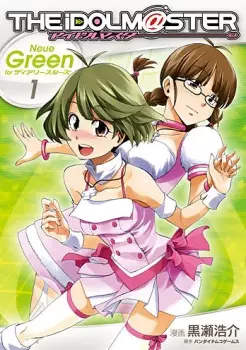
As you can read from the preview, this manga is about a boy with girlish voice who went on to sing in a band. Premise is very simple and straightforward. Now I will go into the story a bit. - Story: To summarize, it's a story about facing your past trauma with some band club shenanigans. Pochi the protagonist was ridiculed because of his voice and he proceeds to never speak in public since entering highschool, he met with Ageha who have an issue with men, but couldn't let go of Pochi's beautiful voice for her band as a vocalist. Now that sounds like it could bean interesting story, however the way it is executed are beyond cartoonish and borders into the ridiculous territory. Drama keeps popping up left and right when there's little to no reason to; there is almost no downtime at all to reflect or establish the "normal" if you will, things just keeps happening and it cuts down on time where Pochi can make genuine bonds with his band members. Everyone that aren't immediately established to be a nice person are just straight up jerks or a-holes (some of them might get some sort of shallow redemption and realize the error of their ways). Weirdly enough the story is almost structured in a "monster of the week" format. A drama arises and then a villain will show up for the band to defeat using Pochi's singing voice. - Art: There's not much to talk about on the art, it's cute and simple (might even be too simple). If you don't like it then I don't recommend reading this at all. - Character: Other than the two main characters, the characters barely gets fleshed out. Some of the "villains" might change in some unnatural way just because they heard Pochi singing; which doesn't make much sense because listening to a pretty voice won't suddenly turn jerks into saints. A noticeable trait in most of the background characters are as I previously mentioned, if they are not a good person then they're straight up a piece of human garbage, there's no middle ground. Hoo boy you can bet that almost every guy that isn't Pochi are either: A. Some sort of sexual predator, B. A massive idiot, or C. Doesn't talk whatsoever. This can get really annoying when you keep seeing the same kind of people everywhere and almost no variety. - Summary Overall it's a pretty painful read; I really wanted to love this manga (I remember reading parts of it years ago and find it enjoyable enough) but I will only give it extra point for the unique premise. Then again you could just read iDOLM@STER Neue Green if you're only here for the "a guy in drag is singing on the stage" thing.
Three girls want to make a girls-only band, but they need a singer. This one cute voice turns out to be from a boy! What will happen when this boy gets involved with them? (Source: MU)
The opinion I have about this series is that the initial ideas were quite light, but the actual execution and character development later on made it enjoyable. At the beginning of the manga, the main foundation is pretty much set. The main character, nicknamed "Pochi," had been made fun of for his voice and would refuse to speak at school as a result. However, a member of an all-girls band, Ageha, heard his voice and saw something special in it, and wanted him to be the vocalist of her band "Sora". However, she made him crossdress and hide that he was a guy to theother members. The panels and dialogue were clean, and the art style wasn't insane or anything, but it was cute and fairly well done. From the premise alone, it sounds like a lighthearted comedy, which was the case initially. The latter half of the manga started taking a turn for more drama, and some more backstory on Ageha. I do appreciate that the story strayed a little from the start, focusing more on the actual band, though the struggles depicted were brief. In terms of the moments themselves, Ageha's and Pochi's backstories and the band's moments weren't particularly special or stood out. The author tried doing comedy but tried bleeding in deeper moments. You can tell the author didn't plan much of it initially and tried to wing it. However, the ending itself wrapped up pretty smoothly; they ended up really tying it up nicely despite those small issues. The aspect that stood out most was Ageha's character development, how she developed a stronger sense of music when she went overseas, and worked through her fears at the end, although both were brief. The other band members, outside of Pochi and Ageha, are completely flat in writing. Although many of the side characters weren't very developed, I found them to have more personality than the main characters. Michael Gabriel, the old grandma in New York, the guy who became a superfan of Sora, and the guitarist of the band that Ageha admired had more personality than the rest.