Links go to search results. Availability varies by region.
怪力の母
28
3
Finished
1993 to 1996
9.0/10
Average Review Score
100%
Recommend It
2
Reviews Worldwide
Sobre a história... como o Hirata evoluiu desde O Preço da Desonra, né? Terminei o volume já pronto pra devorar o próximo, e uma coisa que notei é que em todos os mangás os Bushis tem um forte relacionamento com os pais, pode ser bom ou ruim, mas tem. E é isso que me pega bastante, porque eu brigo bastante com o meu pai por causa de algumas divergências, mas o amo. E o que eu mais curti é a seriedade que o autor da no mangá passa, pois tem uma parte quase que pro final com o filho da protagonista, que é constrangedora, se fossequalquer mangaka dessa nova safra, certeza que mesmo sendo a mãe (HISA), o desenhista faria a própria progenitora corada, com o quimono grudado de suor para dar um tom de pudor escrachado. Contudo o Hirata fez isso de forma séria com a mãe ensinando sobre os corpos dos filhos e filhas. E é isso que me fez eu me tornar fã do Hirata! --- About the story... how Hirata evolved since The Price of Dishonor, right? I finished the volume ready to devour the next one, and one thing I noticed is that in all the manga Bushis have a strong relationship with their parents, it can be good or bad, but it does. And that's what gets me a lot, because I fight a lot with my father because of some differences, but I love him. And what I liked the most is the seriousness that the author of the manga shows, because he has a part almost towards the end with the protagonist's son, which is embarrassing, if it was any mangaka from this new crop, I'm sure that even being the mother ( HISA), the designer would make her own mother blush, with the kimono stuck to her sweat to give a tone of shameless shame. However, Hirata did it in a serious way with the mother teaching about the bodies of sons and daughters. And that's what made me become a fan of Hirata!
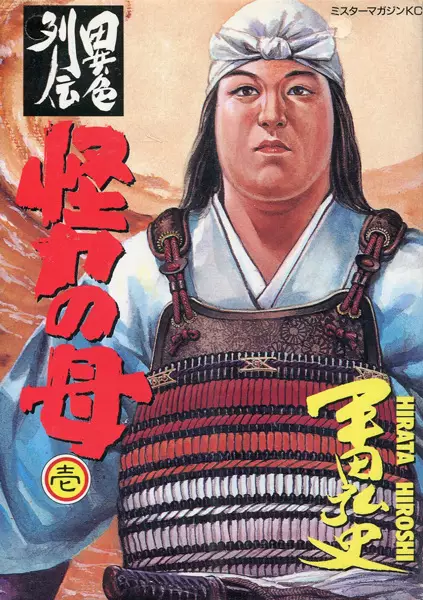
From the day of her wedding, Hisa was recognized for her extraordinary moral strength by her family and the people. The same cannot be said of her husband, who sacrifices lives on behalf of his lord. She would like to instill her compassion for all human beings... But is a woman able to turn a soldier into a real man of honor? (Source: Editions Delcourt, translated)
[Preliminary review based on the first volume of an out-of-print series. Will be updated if I can find the next volumes] -If you think being a bushi only means to kill and slaughter, then perish here and now!- Women tend to have close to no agency if they're not totally excluded from war dramas, in this case occurring during the Sengoku period as expected from Hiroshi Hirata who is a specialist of this era. It shouldn't be that much of a surprise as they weren't allowed on the battlefield for a few exceptions and didn't have any business in the complicated position occupied by their husbands whohad to uphold their positions and not dishonor their clan, and as such, women were only being defined by their role as wives and mothers. Kairiki no Haha takes the unusual stance of following one such woman but needless to say she's not that common among her kind. Married at 15 to Yasuhide Shimizu, a retainer of the Hōjō family, Hisa is clearly not resigned to be servile and subordinated to her husband; strong as a bull and with a determination of steel, she will have her own role to play on the sidelines to straighten up the clan that has fallen from its previous glory. Indeed, after the death of his father, Yasuhide will realize that he was left with nothing but a colossal debt that threatens to make all the glory accumulated by his family for generations crumble in a flash if he doesn't do anything about it. On the one hand, the story follows Yasuhide, forced to trample over the codes of bushido most precious to a warrior, stooping very low for money and committing acts of piracy and murdering of innocents. It also put his role as a leader to a stalemate as it also forces him to create new taxes and be resented by the people or domain, even forcing some of them to desert him. On the other hand, it follows Hisa, who will assume different distinct responsabilities at home. The first is obviously her responsability as a mother which is shown in the beginning with her giving birth by herself without sparing every gruesome details as well as the pain and agony that she has to repress which already imposes a great deal of respect for her. She also is in charge of their education and has to inculcate them important moral and values though this part is not yet elaborated because her children are still very young. Her responsibility as a wife provides a really interesting clash of ideals as she is very opposed to violence and to the idea of killing anyone else and will intensely confront her husband each time he comes home with his clothes stained red with the blood of others. She'd rather live solely from fishing rather than sacrificing so many lives all for their sake and even consider killing herself to stop being a powerless witness to this bloodshed. The difference in Hisa and Yasuhide's mentality, each tortured in their own way, is really fascinating to follow. The last responsibility of Hisa, similarly to her husband, is that of a leader. She will train the other women of the village to use bamboo sticks and create a small militia, not with the goal of waging war but to protect themselves against assailants that would try to rape or steal from them which was far from a rare occurrence at these times. Shisa is well trained with the sword but she doesn't use it willingly, seeing in it something that destroys and leads to ruin. The brush of Hiroshi Hirata is still magnificent, geared toward ultra-realism, everything shown on the pages is minutiously detailed, the traditional clothes and armors, the weapons, the boats and the horses… What strikes me the most in this one is the horrifying imagery, especially in the scenes where Hisa gives birth and when she has to kill a group of men that were trying to rape her. I can only applaud Hirata for not trying to soften up or elude those moments, it doesn't try to glorify or sexualize Hisa but creates awe for this out of the ordinary woman. Kairiki no Haha is an exceptional title and it could be another one of Hiroshi Hirata's masterpieces depending on how the story progresses.