Links go to search results. Availability varies by region.
Find a Specific Chapter
12 chapters total
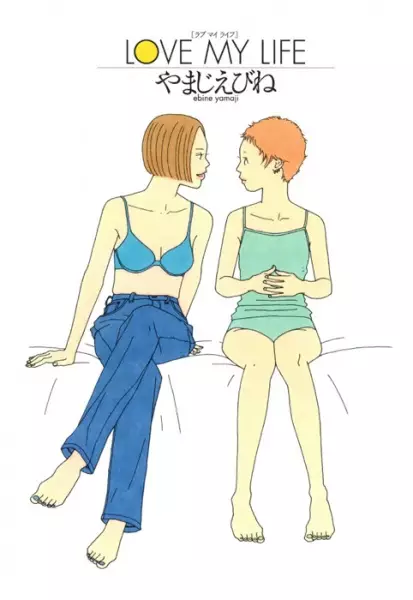
Love My Life
ラブ マイ ライフ
7.39(2K votes)
Popularity #6245
chapters
12
volumes
1
Status
Finished
Published
2000
Authors:Yamaji, Ebine
DramaGirls Love
Worth Reading? — Global Verdict
7.6/10
Average Review Score
80%
Recommend It
5
Reviews Worldwide
International Reviews
coffeecat
Recommended
8
To be honest, I'm not particularly fond of Ebine Yamaji's art. Although I have come to recognize it as a style all her own, I still have to state that it is quite unappealing. But having said that, the manga Love My Life is still worth reading. The characters' personalities, especially Ichiko's, was given much thought. Her feelings and her thoughts are well-motivated. Her gradual maturity is interesting to read. Her realizations don't feel like expositions but more of a natural growth for her character. The slice of life take to the topic of lesbianism and sexuality is perfect in this manga. It avoids romanticism andchooses to present how similar a gay relationship is to a straight one.
There are weak spots to this manga but I cannot recall it at the moment. Which just means that the good stuff outweigh the flaws.
Definite thumbs up on this one. Great scenes, great characters.
24 found helpfulJul 6, 2008
greenteajunkie
Recommended
Community Discussion
Romance
Slice of Life
Erotica
Synopsis
Ichiko Izumiya is a young student of English who would like to walk in the footsteps of her father is a translator of trendy American novels. She finally decides to confess to him that she is in love with Eriko, a law student. Ichiko will attempt to live out her homosexuality in peace and will be brought to wonder about the nature of her relationship: is she really homosexual or simply in love with a sensitive being who happens to be of the same sex? (Source: MU)
3,954 Members
8
Although the dull, unappealing art might discourage many from reading Love My Life, it does not take away from the fantastic story. The style of Love My Life actually requires a simple format and style, as it is josei and asserts a much more down-to-earth theme. Ostentatious, flowery art typical of shoujo would merely be detrimental to the book's evocative disposition. It is also very mature, and gives a deeper insight into [all] relationships, lesbian life, and discrimination of homosexuals within Japan. If you are a lesbian or simply interested in the topic of homosexual relationships, or perhaps you have a close friend or relativewho is a lesbian, then it is a must read. This short novel will aid ANYONE in understanding homosexuals. However, if you like exclusively girly-crap, or are very narrow minded, then you will not enjoy this manga.
15 found helpfulApr 6, 2010
RBoul
Recommended
8
Breath of fresh air to read. The characters can be unrealistic at times, but overall they're great. I've seen some people say that the artwork is dull but I like the simplistic design as it allows the reader to focus on the story more. Overall, the manga is really well written and for me, personally, the queer story is what I need at this time. I would genuinely recommend this to whoever. It explores mature themes, such at the discrimination of homosexuals within Japan. In the end, Love My Life aims to be an inspiring novel that touches on the difficulties of queerness, self-actualization, and loveas they coexist in an unclear universe. For the story's protagonists, everything turns out perfectly. To put it another way, as a pessimistic cynic, I don't think it's entirely practical. The beginning of Ichiko's life and her family are almost amazing. The characters never truly hurt or betray one another, or even actually dispute while handling difficult situations. But I do believe that there is a need for stories that are upbeat and neatly conclude on a positive note, and this one is perfectly suited for this purpose.
2 found helpfulOct 25, 2023
Marleonka
Mixed Feelings
6
"Love My Life" is definetly a lot different than I expected from it at first glance. This manga very much about how gay people view other gay people. It feels like the characters often bring up what it means to be "a proper gay/lesbian" and would resent each other on that basis. It's honestly quite suprising how many of the characters lacked compassion for each other and were quite easily put off by other gay people, when they got to know their journeys. The manga is from the year 2000, so the lens it portrays might be. a little old, I do think it is prettyinteresting in it's take on those relationship people have with queerness and how they view others in their own group.
What I think didn't quite age as well, is the lack of acknowledgment and perspective on bisexuality. The system the manga operates on is very binary, you're either gay or straight, nothing in between. Hence the fact the main character's, Ichiko's, parents were gay people who married each other is a thing people frown upon so much by their community.
And yes, not mentioning bisexual people doesn't mean they don't exist and we can say that the characters in the story are just gay and not bi and that isn't erasure on its own, but I wish the concept of bisexuality was at least brought up as something that exists. (There was a passing mention of a character called Nana, but it was only for one page and the words "bisexual" werent really used, just that she was "free")
One other thing that I feel is somewhat neglected is the social pressure and actual accounts of it. The characters, like the mentioned above parents, marry each other, so they can have a child. Ichiko herself pretends to date one of her male gay friends in college. However, we're only ever told that they do it, "because it is easier". While making this jab at heteronormative society, I feel the series failed to say anything meaningful. They do it, because "it's easier" and "it's what society wants", but never really takes an extra step to delve into how society percieves them and why it's easier. We're only ever told that the DO do it, but not really truly WHY.
The manga is tagged as Erotica, but I feel like there really wasn't nearly as much as I would've expected by the pressence of the tag. There definetly is a sort of fixation on who the characters make love to and whether or not that's "pure and proper". Sex is also very much treated as the ultimate remedy for problems, so whenever anything goes ary, intercourse is usually the anwser. It also brings me to the fact, that the main characters don't really have a proper chemistry. To be perfectly honest, most if not every character, is mostly just a prop that the story is told through. They aren't really complex, nor very interesting, they just exist to fulfill their purpose in the story.
That's not to say, that the manga doesnt have its merits. Some of its views on individuality, the nature of breakups, difficult relationships with one's family, the time apart and cheating on each other are pretty universal. Quite well portayed too. I liked the focus on the importance of communication, despite it being difficult. The ending is also genuinely really sweet andties a neat bow on the story. Every part of this manga was made in earnestness, it's just that some managed to come out better than the others.
I think the manga is worth a read, as to see how queer stories looked 25 years ago and understand how far we've come in such a short time like a quarter century. (For example, the same sex couple living together is not considered a possibility in this manga). I don't think there's anything wrong with it or that it is bad, but when I treat it more so as a piece of queer history than just a story I want to find something meaningful in and I enjoy it just that little bit more.
0 found helpfulFeb 8, 2025
catsighs
Recommended
8
Love My Life is pretty easily summed up in two words: sensitive & minimalistic! (Review complete, really? I can sleep?! jk) I really enjoyed both the content and art style of this manga, while the style of drawing faces is possibly a little inexpressive at times, Ebine Yamaji is outright masterful in how she illustrates bodies. I wouldn't say that it's a particularly deep dive into an understanding of homophobia and Japanese LGBT lifestyles, more a slow slice of life that places you gently into the characters' lives and allows you to experience a small piece of it together with them. The focus is on love, family(whether that's a nuclear family, found-family, or a couple planning a future together) and sensuality/sexuality, so it's important that the main character's love for her girlfriend and her somewhat unusual family really comes through! The reflective style of the manga was a really great choice on this front.
The characters really were the strong point for me. The author does a fantastic job of very naturally providing a basic outline of character motivations without throwing the reader into chapters and chapters of exposition for exposition's sake. We're told exactly what we need to know about each character. Minimal in a very very good way!
Love My Life is a horizon-broadening manga for those familiar with yuri, and perhaps an interesting entry point to manga for those who are perhaps a little more familiar with western LGBT comics.
I highly recommend this if you're looking for a mature and relaxing LGBT-related read!