
Links go to search results. Availability varies by region.
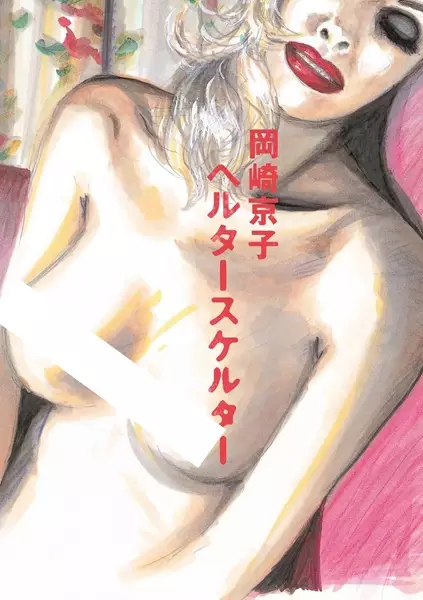
ćć«ćæć¼ć¹ć±ć«ćæć¼
9
1
Finished
Jun 8, 1995 to Mar 8, 1996
7.5/10
Average Review Score
68%
Recommend It
19
Reviews Worldwide
Itās not a surprise that Inio Asano (the acclaimed creator of works like "Oyasumi Punpun") cited Okazaki Kyoko as a heavy influence. For those unfamiliar with either Okazaki or Asano, both are revolutionaries within the medium. Their hard-hitting realism driven by āa need for truthā regardless of how bitter, and laced with explorative psychological power has shook and captivated the world with every frame. Both are truly masters of portraying various facets of the human condition and the world that shapes it. From that familiar cut comes Okazakiās short but powerfully evocative piece titled āHelter Skelterā. The manga follows a high-fashion model named Liliko who issomething of a Frankensteinian creation; the āfinalā product of repeated surgical transplants, stitched together by artificial fluff. Nothing about her is real. The world she lives in is artificial so why shouldnāt she be? What could possibly be wrong with being a legitimate product demanded by oneās environment? Okazaki answers these questions in the most literal, grotesque way possible while revealing something essential. Through Lilikoās descent into a sure form of madness, where she is mentally and physically falling apart, Okazaki speaks certain realities about her condition (and *perhaps* ours). Being at the rise of Japanās fashion/modeling scene, Liliko flourishes as a top candidate but in order to please her position and her fans, she must struggle voraciously. She must eradicate herself on the inside and outside, and in the process, lose the little bit of identity she so dearly tries to hold on to. In effect, the story is one about inevitable self-destruction; itās so heavily apparent, it seems almost fatalistic. āHelter Skelterā isnāt really about showing a demanding and spiritually-exhausting industry, but about the horrors of losing face (literally) at superficial whim, while emphasizing the need to retain individualistic spirit, especially of oneās true self. Identity is eternally important and key here. Japanese creators and artists of all kind have struggled with this topic as a product of their ever-changing collective society and are constantly attempting to resign to individualism and self-expression, and this is the primary undercurrent of āHelter Skelterā. Liliko is both a visual and physical lie, and her face isnāt hers, but of the many that find themselves faced with the kind of internal erosion Liliko does. It is a huge understatement and a disservice to this manga to reduce it to some generic commentary about how horrible the fashion industry is or whatever. It is so much more. Itās one of the most brutally honest pieces Iāve read within the medium that is able to combine so many intense themes into one heart-wrenching narrative. And this shines brilliantly through the storyās main character Liliko. It seems that Okazaki must be some sort of human-istic genius that sheās able to create such a contrasting, and unfounded character like Liliko who is both a woman of shame (and artifice) and a symbol of empowerment, as diluted and wrong as the latter may seem ā she is, undoubtedly. Her perpetual acts of self-destruction are probably the only things real about her and the only times she experiences real joy (even if they seem illusive to us). The graphic, cold sexual acts, the remarkable lust for attention, the revolting deeds brought on by jealousy all make her seem incredibly villainous from the eyes of society, and for moments, to the reader. Yet, something real continues to beat under all that vindictiveness that keeps Liliko in the heart of the readerās sympathy. Perhaps, it is the sharp fatalism, or perhaps something more. A woman like her can never be destined for happiness; it is impossible, but through her decadence, her vile nature, and her trapped personality that everyone around her tries so hard to destroy, a woman exists that fights viciously - even if subconsciously and in vain - to live for herself; the way she wants. And nothing accentuates the impact of this narrative more than the art. Okazakiās art in āHelter Skelterā is spot-on. Itās sketched with little regard for beauty ā each line portraying the inner distress of the workās essence. Itās messy at points, overtly simplistic, and wildly raw ā and thatās precisely why it works. That which is beautiful is often deceptive, and there is no deception in Okazakiās art. Those wishing to revel in decorous, sparkling art will not find it here, and itās actually a little silly to read criticisms demanding that. The entire point of this work is to avoid that. Okazaki aimed to focus on the ugly side of ābeautifulā, to present the concept as an insanely real phenomenon that is destructive, revolting, and evocative. Her art achieves just that. There is absolutely no merit in beautifying that which is not and was never supposed to be. Her art remained true to the intentions and ambitions of her work and I found it absolutely fitting considering the subject matter and tone of this work. A last point of interest that must be addressed relates to one of the genres that this manga falls under: Horror. Think back on what the horror genre entails. As a general rule, it must invoke some degree of fear. Now most horror works focus on monsters, the supernatural, or various external entities that gridlock the characters of the story, and by extension, the consumer into an impasse blocked by some scary or fear-inducing phenomenon. Most successful horror is able to do that because it forces the viewer to speculate the possibility of it translating into reality or at least by producing a shock-value effect that just genuinely disturbs the mind. Now, āHelter Skelterā isnāt standard horror, but it is very appropriately placed into horror for the very fact that it induces a kind of visceral fear that may be guising itself as discomfort or disgust, but it is fear nonetheless. Imagine: when the monster moves inside your head, into the very cranium of your being, and unleashes its destruction from within, the psychological toll and weight it brings can be nothing but devastating. Consider it a possession of sorts, but not by a supernatural entity or some biblical demon, but one that has long existed within you. That is why Liliko is terrifying. That is why āHelter Skelterā is terrifying. It is real and you can feel it in your bones. This is truly a fantastic work. I stumbled upon it on whim and was introduced to a world of chaos, which was morbid and real. Okazaki deserves all the acclaim she gets, and really leaves no room for surprise that one of the greatest mangaka of our generation has cited her as a sole point of influence. For being a short in length, only nine-chapters, what this narrative manages to bring forth is nothing short of amazing. Overall, āHelter Skelterā is a disturbingly eclectic manga suited for those who yearn for mature works not just geared towards āwomen-issuesā, but ones that paint grander sentiments about society, identity, and the duality that exists between both.
Japanese supermodel and fashion icon Haruko "Liliko" Hirukoma leads a posh life, wearing and promoting the biggest brands in the country. She stands at the top of the modeling industry with the beauty she has attained through full-body plastic surgery. However, Liliko's body soon begins to break down due to the extensive surgery she has been through and the medication she has taken. Worse still, her fear of growing old and being rendered useless begins to drive her insane. Helter Skelter is the story of Liliko's struggles to remain in the limelight in a world where people are so easily replaced. [Written by MAL Rewrite]
"A word before we start: laughter and screams sound very much alike." Okazaki Kyoko "Helter Skelter" When I finished chapter 9 of this manga, I felt a intense need to listen Beatles song "Helter Skelter" to complete the feeling that "Helter Skelter", the manga, started in me. Do you know all the definitions of this title? Originally, Helter Skelter is a amusement park ride with a slide built in a spiral around a high tower. On Paul McCartney's explanation to the song we got: "Using the symbol of a helter skelter as a ride from the top to the bottom; the rise and fall of theRoman Empireāand this was the fall, the demise". Charles Manson, a serial killer who believed Beatles songs contained a coded prophecy of an apocalyptic war, defined it as: āHelter Skelter is confusion. Confusion is coming down fast. If you donāt see the confusion coming down fast around you, you can call it what you wishā. It's pure chaos and that's what we slowly see in this manga, we got confusion and chaos, a ride from the top to the bottom with Riroko. Story: Our main character is the anti-heroine Riroko/Ririko. We enter her celebrity life following her twisted mind since the beginning when her perfect body starts to crumble. When your work is based on using your body image, you start to do everything to achieve the world's beauty concept and to maintain it as time pass by. But, unfortunately, isn't enough. Even with more and more surgeries, the time will come. "It's a rat race". Helter Skelter introduces us a lot of subjects, be it in dialogues, little panels showing high-school girls talking, quick and smart quotes, small jokes or in one of the character's thoughts. Talks about the media and how it controls the news, about how a person can be loved by millions and still be lonely, makes you question if the person became that way because of the world, the pressure or because of her own choices... and it doesn't give the answer. Tells us about relationships and how weak they can be... Makes you thinks in your principles. Are they right? Aren't you filled with conformity? This manga has background stories too. The characters are connect somehow, a police detective doing a investigation can be "a feather of the same wing" with Riroko. Her manager Hada, one of those who suffer with Riroko imposing herself, can choose a path that she never imagined. Life is full of decisions. Are your decisions based on your principles? On the world's ideals? On the others orders? Which one? Development: I like the development. Some details in the story you can consider overdone a little, but still amazing how everything happens. Like Riroko bruises, surgery after surgery... Can we consider Riroko a Josei creature from "Frankenstein"? She's compared with a chimera, built with every fashion sense of that time, "a unnatural face, it doesn't match". Riroko's story is compared with Norma's from "Sunset Boulevard" too. The way the fashion industry influences womans everywhere, "I want to become her, I want to be like her!". Easily hearing a "I just sleep and eat what I want" from the ideal successful model makes you yearn even more for it. Where did her fall began? People stopped liking Riroko a bit, she became even more twisted and bothered, people stopped liking her even more... It's a vicious circle. For the background stories, the way Okazaki Kyoko connects it is just great. A detail here and there in chapter 1 to 6, one page for the mama, the manager, the clinic... And in chapter 7 to 9 everything collides. Art: I must say, I wasn't happy with the art style. Since we were dealing with the concept of beauty, I was expecting a detailed art with a perfectionist touch. I was expecting more beauty. Then, I stopped to think: "What was I expecting...? Was MY concept of beauty. What I find pretty." and a quote from the previous chapter snapped in my mind: "Her beauty is a manifestation of our own desires"... Oh, you got me there, Okazaki Kyoko. So, giving a second thought, you realize the art style is just... necessary. Specially for the quickly transformation of beauty to freaky, which is just so easily and well done with a alternative art like this (Nakamura Asumiko is a great example too of how quickly a calm face can change to a face full with anger). How I can't give a 10 to a manga who answered my question with its own character's dialogues? Overall: You have to read it slowly to enjoy everything. Or read it fast to have a quick ride from the top to the bottom. I don't know. I'm pretty sure this manga is not for everyone and that some won't appreciate it. I was thinking in a 8 when I started it, a 9 in chapter 6, but I could only give a 10 when I finished and started thinking about the quotes and the way she connects everything in the end. Remember: "Youth and beauty are not synonymous. Youth is beautiful, but beauty isn't youth". What is beautiful for you?
Maintaining the top position in anything is a hard task, be it sports or intellect; this is no different for the modelling world. Where beauty is top priority, people will try to use all types of methods to maintain it, be it by the use of makeup, drugs or even plastic surgery. Meet Ririko, Japan's top model who abuses of these methods to the extreme. Helter Skelter shows the life of Ririko, a japanese top model who thrives to maintain her position, as the concept of beauty changes and new models come in. As stated earlier, Ririko uses plastic surgery to adapt herself to the changesof the concepts of beauty. This doesn't come without any consequences: frequent maintenance is necessary and if done in excess, even that won't help over time. As the story goes on, we observe how aftereffects of the plastic surgery begins to show up: bruises, skin problems, psychological problems related to the ingestion of different drugs, you name it. This has effects on herself as well as the interactions Ririko has with her staff. Being emotionally unstable is one of the side effects. The storytelling is done well using meaningful dialogues that gives the reader a good insight in the emotional states of all the different characters, and the actions they do. One thing I missed in the story were the reasons why Ririko became such model. Personally I'd have liked to see her gradual "transformation" into the current Ririko, as well the emotional state she was in. Several characters are introduced in Helter Skelter: Hada, Ririko's assistant; 'Mom', her manager; the detective that is investigating a case related with Ririko, her sister... Most characters lack a bit in development, however in exchange we see their interactions with the lead character, though it has an issue: these characters have near to no influence in Ririko's development. It must be said that some secondary characters have interesting backgrounds or motives, making the story for the reader more enjoyable. Ririko's development is mainly influenced by the media and her own view of beauty; this shows how big her ego is and gives the reader an insight on how she possibly decided to do plastic surgery. The art of Helter Skelter is rather lackluster. It is very simplistic with little detail, which I personally think is a big minus to the manga. The main focus lies on the beauty theme, so you would expect very well drawn characters as well as a big variety in the physical appearance of the characters. Because of this art style, the physical changes Ririko undergoes are barely noticeable. This goes for the other characters as well, as little difference is observed. Some may think otherwise, that it fits the manga as beauty is a subjective concept. I personally think this is not the case as it fails to transmit well the concept of beauty and the changes Ririko undergoes. Helter Skelter was an enjoyable read with a great story, giving a good insight into the modelling a world, as well as the problems extensive plastic surgery gives.The art style didn't quite fit with the story, though the story made up for it. I would recommend this manga to anyone with an interest to the modelling world, or wants to read something different, as it is relative short with a good story. Thanks for reading, any feedback is appreciated.
this was one of very few manga i've ever read i just could not stop reading - it was like watching a traffic accident: you have to look - an amazing exposure of the cancer and pain that is the rotten center of modern celebrity culture - it is the saga of ririko, a rather plain girl who achieves super-model status through the complete subjection of her former self beneath layers of make-up, plastic surgery, pain, and drugs and her ever advancing dissolution from stone-cold beauty to stone-cold crazy and falling apart - the art is beautifully water-color sketchy and perfectly captures the mind stateof our "heroine" - story is perfectly paced and draws you in like a runaway train - ririiko reminds me of similar sad stories of hollywood goddesses such as marilyn monroe, francis farmer, or veronica lake: beautiful doomed idols who will always capture the imagination of similarly lost people - a must read!!!!!!
This review isn't my usual more formal style, but figured I'd post it here regardless. Helter Skelter is another great manga by Kyoko Okazaki. While I didn't think this was as solid as Pink, it is very close in quality. For the most part, it is just as good, but the art suffers from what appears to be some rushing (apparently this manga didn't go through the cleaning process that manga usually go through before being collected in tankobon due to Okazaki getting hit by a car near the end of the publishing process). In Pink, I praised Okazaki's deliberately messy style, but here it ismessier and it doesn't feel deliberate most of the time. It's not necessarily bad, and I do still find the style appealing, but I think others wouldn't. The art does, however, drastically improve in the last few chapters. As for the story, it is a lot more plot driven than Pink. Even though it's very predictable, the ending was very satisfying, and despite advertising a continuation, I think it is perfect as is. While this story doesn't really do anything new, even for the time that it was originally published, it does present the subject matter in Okazaki's unique style of storytelling, sometimes taking ridiculous and even surreal turns. The characterization of Liliko and the other characters was absolutely spot-on, being both realistic and a caricature of those types of personalities, walking the line between real and surreal, actuality and hyperbole. The facial expressions were incredibly expressive, the dialogue was unflinchingly raw, and the inner monologue was sublimely revealing. The pacing was absolutely perfect, ramping up (or down) as the story progresses. The whole thing was a joy to read. The immensely cathartic ending was the cherry on top the series needed to punctuate on the thesis. Would highly recommend unless you have an aversion to the art style.