Links go to search results. Availability varies by region.
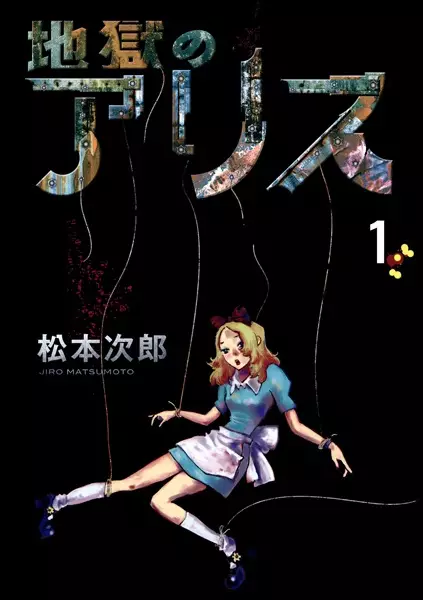
地獄のアリス
43
6
Finished
Sep 22, 2010 to Jan 22, 2014
7.6/10
Average Review Score
71%
Recommend It
7
Reviews Worldwide
I don't know why it bothered me that this doesn't have a review, but it did, so here goes: I'm not going to tell anyone that this is an absolutely amazing manga that will change your life, but I do think it is worth a read if you are a certain kind of reader. The 7/10 it has right now on the site is probably what it deserves. If you enjoy works like Goodnight PunPun, or possibly Elfen Lied than you might get more mileage out of Alice in Hell than others. The author uses death, sex, gore, violence, and abuse to highlight a lot offairly contemporary topics. The violence in this manga is not heroic or meaningful, the sex is not sexy, and you may find that your emotions are inverted or switched off during certain scenes. The entire work explores the consequences of violence, dehumanization, and alienation in society, while touching on personal issues such as escapism, god complex, isolation, and sexual dysfunction. The manga of course takes place in a fictional world, but it is easy to draw parallels to common trends in real modern societies. The story can be read as literal, or as allegorical, and works well either way. In fact, I think one of the hardest things to deal with while reading this manga, is that everything in it is not only plausible, but has happened in real life during times of war, or has been dreamt about or perpetrated by lone isolated individuals. The art is good for the subject matter, and I think the artist highlights extreme material in a way that moves the story forward rather than just being gratuitous. Pacing is overall consistent, but is a weak point in some chapters. The timeline is compact and fast paced, but some major plot points are introduced in a really abrupt manner. Flashbacks and changes in perspective are generally well used, but there are times when it is jarring, or when it forces a theme about a character’s personality that is already obvious. The characters are well fleshed out, especially the main three (Shuu, Eliza, Kenji,) and Alice. There are two supporting characters I can think of that are completely stock and unrealistic, and who serve only to move the plot along, but for the most part the supporting cast (especially in major flashbacks) are either well done, or nameless cannon fodder. A final note, which comes back to what I touched on about you the reader, is that this is definitely not for everyone. A lot of people seem to enjoy manga where you are supposed to relate with, root for, or self-insert into the role of the characters, and they get frustrated while reading stories with little, or no, resolution or closure. If this describes you than you might want to give this one a pass, but hey, who knows, maybe going into it prepared you might enjoy it regardless. Solid 7/10, great story for kids O_O
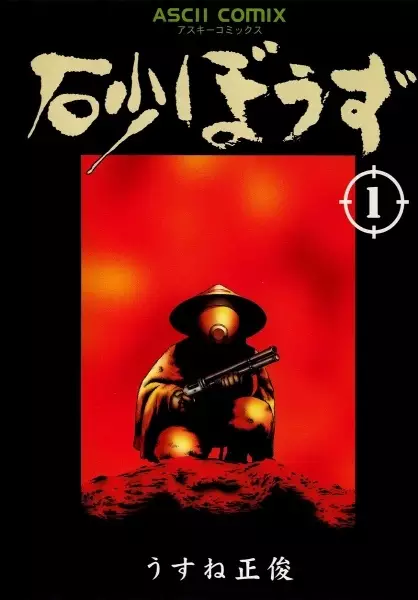
This world is broken, so are humans. Shuu is one of them. He's a talented sniper who keeps a broken android, named Alice. Together they live like hermits and make living by exterminating caravan robbers, until one day the woman that Shuu saved invites him to live in a commune. (Source: Illuminati-Manga)
Why read Alice in Hell? I don't think there are compelling arguments one can use to exhort anyone into doing something. Because of this my review will focus on the themes and ideas that the manga presents. It will be on you to decide if they are any good; if they deserve your time. The set of this story is a post-apocalyptic world. Civilization doesn't exist as we know it and skirmishes for basic resources abound. The characters of this manga behave more like non-human animals than like socialized people. For these characters to live is to fight. In comparison you and I, as habitual readersof manga, live confortable lives; if you are reading this review, you probably have a computer, be it in the form of a PC, smartphone, tablet or whatever. We live in a world in which all resources are usually accesible if you have enough money. We, in our current world, work together to build complex systems of resource extraction, exploitation and trading. This recquires firstly abundance and, secondly, a degree of peace. In this manga, the opposite is the norm: scarcity and conflict. It's in a world of scarcity and conflict in which a proganist as the one of this manga is born: Shuu is a misantropic teenager, a hermit who hunts down plunderers hundreds of yards away. He lives in the ruins of a large city, which he calls "Alamo", these ruins he knows like the palm of his hand. He masses guns and manga inside his fort: the former to keep anyone away and the latter to entertain his mind. Jiro Matsumoto, the author, often uses war as a form of exploring the human soul and intrapersonal relations (see Mikai no Hoshi). On this work of his, he achieves the perfect identity of signifier and signified: Shuu's heavily armed fort is a direct reflection of his mind/psyche/soul. Shuu lives all by himself, his only companion is a pseudo-human android called Alice whom he uses as bait to kill people. Much like his impenetrable fort, he despises human touch, close emotional relationships, his fear of other people is such that he can not bring himself to kill peole if they are close. The former is but the prologue of the manga. The plot starts with Shuu's need of relying on others when he runs out of food. The manga is basically Shuu's confrontation with the need of being with others. Shuu agrees to work a season for Makilda, the political leader of a refugee community. At that point we are laid before us fundamental philosophical issues: how to build an ideal political body? Makilda's work is basically achieving peace within her community and among its neighbors. Another topic is when can humans trust each other?: Shuu was somewhat safe at Alamo all by himself, but he needed to be always working to get what he needed; within a community he himself does not need go get what he needs; he can buy it in exchange for money he recieved for his labor, though the fact that there are other people around him puts him always in peril. From the issue regarding trust is born another one: after and during times of war, can people regain what we may call an ethical behavior? It is not unknown that in war people usually commit atrocities: rape, torture, pillaging, arson. Such actions hurt the soul of the survivors, the mere sight of these orgies of violence may be as well called a form hell. The emotional scars left by generalized violence take away most of what we call "humanity". It's in that place that forms after emotional trauma where Shuu stands and lives, he was born in war and has always known war. On Plato's dialogue "Phaedo", Socrates says that the misanthrope is born because he has had bad experiences with people after he thought he knew how people were. Shuu at one point on his life had hopes of love but they all were blown away by the sandstorm of war. On the final chapters of this manga Shuu is shown reading the American comic book The Walking Dead. I don't think that this be just a way for the author to namedrop his influences. The Walking Dead is quite similar regarding the themes with which it deals: a dead civilization and what it means in terms of human survival. How a tough world shapes human psychology and its effects on morality. What is needed to build a state, can trust exist when there is not enough for all of us?. On the TV adaptation of TWD we are shown a character who spends his time coming up with traps to kill anyone who comes close, a character who lives all by himself and can only think of death and dying, much like Shuu. We are faced with the question "is anyone bad enough to be considered unforgivable"? in other words in a life without peace "do humans posses humanity"? That is the question of both Alice in Hell and The Walking Dead. On "Alice in Hell" after a traumatic experience of death, rape and pillaging a woman says "This is Hell", just as Rick Grimes says after having to kill several people for the first time "WE are the walking dead".
(this manga is for mature readers only) STORY: 5 One of the more coherent and accessible work from Matsumoto Jiro. Despite the nihilism and surrealism that characterizes the author's works, the main character (and his mental issues) felt quite realistic within the settings and gave some ground to a story that would feel too far and grotesque otherwise with its millions of weapons, teenage daredevils, wars that start from a misunderstanding and countless deaths. ART: 7 Jiro's art is easily recognizable and looks messy and sketchy compared to the usual manga style. There's a lot of lines everywhere and not many are straight, a welcome break from tidierand sometimes colder titles in the industry. Expressions are great but bodies look quite similar. Most women have the same body and their clothing is not drawn to look realistic but to insist on their curves. POLITICAL POTENTIAL:3 A bit of complicated human interactions and dreams and emotional scars but mostly: guns, nihilism, big breasts, violence. FEMINISM: 1 Well I've read almost all mangas from this author and I cannot remember one title that does not include rape (always depicted with some violent porno gaze). It's also hard to think of a title where there is no woman tortured or assaulted (torture happens here). This title has some strong women but they mostly fall under the stereotype of "chicks with guns are exciting". CONCLUSION: 6 Since "Alice from Hell" has less disturbing content and violence than others of the author's titles, I recommend to try this one if you don't know this author yet and want to check if his bold universe is your cup of tea.
I will put a spoiler warning here. Jigoku no Alice presents the story of a young loner, who uses his sniper skills and his disfunctional humanoid doll "Alice" to survive in the ruins of a city within the desert. The Story is overall good and I liked the setting and different locations, for example the different districts of the community and the city ruins of the beginning. Different characters actually have some depth and backstories, keeping the story at a good pace and giving us an insight into the way the world looks for each character. The art was not "good" in a common way. However, I appreciatedthe artstyle a lot as it seemed kind of scruffy and full of motion. It looked to me like someone from this world could have drawn it, which added a huge amount of charm to the story. Here is what I did not like, and why the manga got a 6/10 from me. It's the ending. After all the progress and the time in the community, getting a sense of change from the protagonist, he reverts back to his loner life in the ruins by killing everyone that follows him there. basically we go full circle and it ends at the same spot it started, just for the reason of "not needing or wanting anybody". It heavily dumbed down my satisfaction of the manga. To put it simply, I can recommend this work to someone who wants to apprewciate the art and/or likes a dystopian setting.
I’ve never wrote a review for any manga I’ve read before, but something about how i stumbled onto this and how I feel it deserves more eyes on it compelled me to write this. I accidentally put Alice in hell in my reading catalog while trying to add Alice in borderlands. And when I started the read I was gripped by the unique rough art style and its seemingly clique main character. And I read it non stop for the entirety of the school day and that night. I really don’t know why this honestly over brutal over sexualized manga gripped me the way itdid. But it had been a while since I read a manga with such soul within its characters. Shuu the protagonist is flawed and kind of unlikeable, you just feel bad for him and just want to see how he will fuck it up even more. But the real soul of this manga is the character of Alice, Alice represents this pain and suffering. A pure child that mirrors Shuus lack of a childhood. Alice and Shuus relationship just brings this unique quality to the story, feeling almost like the relationship of a post eclipse Casca and Guts. The message of pain, loss, acceptance, and those who will always live in denial; brought me to reflect personal experiences that many people suffered as well. I honestly think that this is one of the best reads I’ve had even with it’s short time I had reading, I feel so connected to these characters which I find I miss a lot with the manga I’ve been reading lately. Overall I think this should be on a lot of people’s lists if you are a fan of the seinin genre and I honestly hope one day this manga gets the reads and views it deserves.