Links go to search results. Availability varies by region.
ZERO
22
2
Finished
1990 to 1991
8.0/10
Average Review Score
100%
Recommend It
4
Reviews Worldwide
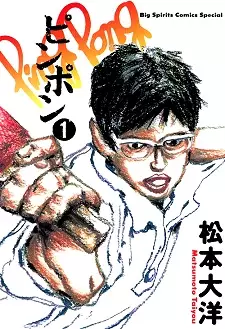
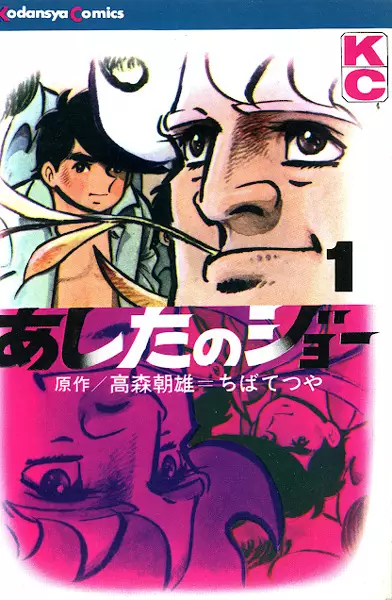
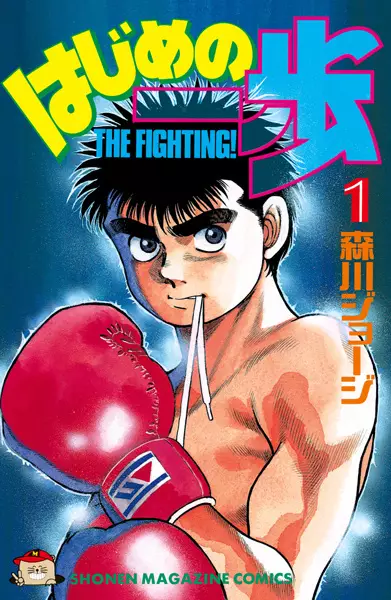
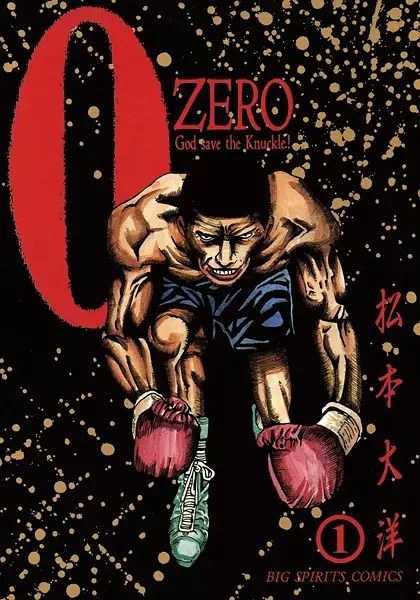
Any boxing manga will immediately be compared to the most famous one: Hajime no Ippo. I'm gonna say this once and for all to probably only a few dozen people who will read this review: Hajime no Ippo is ridiculously overrated. But I get it, it's good, it does everything right, and neatly follows the rules and tropes of the sports genre. But it barely manages to get out of the shadow of the one that came before all of them: Ashita no Joe. Ashita no Joe set the bar and made the rules, and frankly, no one has yet managed to get close todethroning it. It's still more original and better than anything more recent, as addictive as they may be. Hajime no ippo follows the rules, and therefore, loses. Taiyou Matsumoto on the other hand, doesn't follow the rules. He couldn't care less about conventions of the medium. This is a guy with style. Just like his characters, he likes to do it wrong. The pages are way too cluttered, but if you compare it to another one his works Hanaotoko, you can tell he deliberately changes his style to suit a more serious or comical type of storytelling. The clutter is part of his unique style and he can bend and shape it to enhance everything he tries to convey. On the other hand, as unique as the art may be, Zero still bares the stamp of the inescapable legacy of Ashita no Joe. But the artist realizes this, and manages to copy what Hajime no ippo, to my eyes, failed at copying: the spirit. The more you get to the end of the story, you can't help but be thrown back to the iconic match between Yabuki Joe and Carlos Mendoza. Readers of both stories will know what I mean. But this is not a copy cat at work. He's paying homage to Joe and by extension, to manga itself. These pages are dripping with love for the sport and for manga as an artform. Master. Excuse me for getting sentimental.
Goshima is a boxer who has held the world championship title for years and never once lost a match—thus earning himself the nickname "Zero." His coach, Araki, describes him as "a flower that blooms only within the ring." But with his 30th birthday approaching, everyone begins to question Goshima's worth. Thus he decides to look for the ultimate opponent to give him his final match. (Source: MU)
This is my first Matsumoto manga and i couldn't have asked for a better one. This manga is one of the only mangas that could be compared to Ashita no Joe in terms of the passion for Boxe, how it can convey certains emotions... The protagonist Goshima is a flower that has blossomed on the ring and is waiting for another flower to bloom before dying in the ring. He has never been able to make another flower bloom before because they were all too fragile, until he found one worthy of being called a friend. The art style in this manga really was abreath of fresh air, Matsumoto's style is precise but at the same time incredibly rough but most importantly its style is dynamic, he can do whatever he wants with his character bodies like, for example, he distorts them to make them look grotesque, the same goes for the background. (No wonder why Yuasa style matches perfecty Matusmoto's style in Ping Pong the Animation). This manga is only 2 volumes and overall it gives you an exciting experience, especially in the second volume.
I’ve really missed sports series like this, emotional, and grounded in character development. Zero brought back the same intensity I felt watching classics like Ashita no Joe. The emotional weight of the final fight in Zero instantly took me back to Joe’s legendary match against José Mendoza—one of the most unforgettable moments in anime and manga history. You can feel every punch, not just physically but emotionally too. What stood out in Zero wasn’t just the boxing itself, but the internal struggles of the protagonist—the quiet moments between matches, the psychological toll, and the slow unraveling of his past. It gave the story a deeper edge,something that’s rare in modern sports manga. By the end, I was both satisfied and slightly frustrated. The manga was excellent overall—gripping, emotional, and full of heart—even though I’m not usually a fan of open endings. Personally, I would have preferred a more definitive conclusion, something more conclusive to wrap up the journey. Still, the ambiguity does leave room for reflection, which I can appreciate in its own way. ZERO Lets 8o Toavis! Come with me up to the Wonderful place!...highet......stronger I'm on your side forever ! 🥀🥀 🥀🥀
Esta obra corta de TaiyĹŤ Matsumoto nos permite apreciar su estilo artĂstico caracterĂstico, expresivo y dinámico, aplicado en un contexto de boxeo. La historia se centra en un campeĂłn veterano invencible, y explora la disciplina, la rivalidad y la tensiĂłn dentro del ring, mostrando la habilidad de Matsumoto para capturar emociones y acciĂłn en pocas páginas. Si bien la obra es breve, funciona como una entrada ideal al trabajo del autor, dejando entrever su estilo narrativo Ăşnico y su capacidad para transmitir intensidad con pocos recursos. Sin embargo, existen otros mangas de boxeo que abordan el deporte con más profundidad y desarrollo de personajes, por loque la obra puede sentirse limitada en comparaciĂłn. En conjunto, es un trabajo destacable y recomendable para quienes quieran explorar el arte y narrativa de Matsumoto, aunque su corta duraciĂłn y su enfoque limitado hacen que sea más un aperitivo que una obra completa sobre boxeo, aĂşn con esas, logra explorar la psicologĂa de sus personajes y entregar un mensaje potente de manera efectiva. ENG: This short work by TaiyĹŤ Matsumoto allows us to appreciate his characteristic, expressive, and dynamic art style, applied to a boxing context. The story centers on an invincible veteran champion and explores the discipline, rivalry, and tension within the ring, showcasing Matsumoto's skill in capturing emotion and action in just a few pages. While the work is brief, it serves as an ideal introduction to the author's work, hinting at his unique narrative style and his ability to convey intensity with limited resources. However, there are other boxing manga that approach the sport with greater depth and character development, so this work may feel limited in comparison. Overall, it's a noteworthy and recommended work for those who want to explore Matsumoto's art and storytelling, although its brevity and limited focus make it more of an appetizer than a full-fledged work on boxing. Even so, it manages to explore the psychology of its characters and deliver a powerful message effectively.