
Links go to search results. Availability varies by region.
ăčă«ă€ăă€
10
2
Finished
Mar 22, 2001 to Apr 11, 2002
7.6/10
Average Review Score
100%
Recommend It
5
Reviews Worldwide
You are dead. Now, you have three options: accept your death and go to heaven, donât accept it and stay as a ghost, and one more⊠haunt and kill someone in the world, but if you kill someone you will go straight to hell, and your suffering will never end. These options are presented by the long dark haired Izuko, the guardian of the gate for the murdered ones. The art is creepy and far from what we consider a typical manga style - the brushes are blurred, the contrast between black and white is elevated to the maximum,connoting even a metaphorical level. Some illustrations at times seem to be just drafts but this rough style fits the subject of the manga pretty well. There are a lot of large frames and zoom in on the faces of the characters, since Takahashi likes to deform his lines when heâs picturing a deformed human heart. Additionally, you can see some panoramic photos in the end of each chapter what always fits perfectly with the subject of it, and itâs a lot alike with the style that Takahashi used in ALIVE. There are also pictures of the city that make the reader reflect about his own life in a chaotic urban environment, with its sins and sadness; furthermore, Takahashi enjoys using ample black squares with only the assertion of the characters in big ideograms when the statements carry a lot of sentimental burdens. The subjects are rape, murder, fake friends, suicide, voyeurism, bulling, vengeance, past, unemployment in times of crisis, unfulfilled dreams, child abuse. Thereâs no clichĂ© here, only brutal reality. The morals arenât what we are used to see like the power of friendship and idiotic things like that. The morals are surprisingly appalling. Itâs a deep reflection about some Japanâs issues: people who isolate themselves, who fantasize with the filthiness. I donât think all the sex scenes were really necessary, at most of the time they were just fanservice, and that would be one of the few complaints that one can makes, but we are talking about a plot which involves some Freudian subjects so probably itâs inevitable. Besides, Takahashi links these scenes with some deep reflections about hypocrisy and the masks people wear. Actually, in some sense 90% of the manga talks about human hypocrisy. Hidden tears mixed with fake ones. The ugliness of humanity presented with no fear, as well as the distant path to salvation which consists in the rebirth and trying once again, even with no promises that the same mistakes wonât be committed in this cycle of death and rebirth. The characters are almost like personifications of some dark sides of the heart, but we cannot call them takeoffs when the development is always far away from generalization. The twisted art fits a narrative that distorts values: heroes become villains, victims become culprits. Thereâs no salvation, people just keep going down in the path of the hate. They could go to heaven, but they prefer to destroy themselves with dark feelings. The past is a chain that cannot be easily broken, and it consumes the prisoner. People have problems to move on when the unsettled things of the past come to meet them. The chapters are episodic, always following a tragic ending of some poor human being. As the story always involves murders, there are some parts in which it seems like a detective manga, although the focus is more in the psychology of the characters than in the mystery. Comparisons with Jigoku Shoujo are inevitable, seeing the plot, the episodic development, the vengeance subject, and the fact that Izuko looks like a grown Enma Ai, but as a matter of fact this manga came first. But Izumo still cannot use the internet Like Enma and thatâs why Skyhigh doesnât outstand here on MAL. Youâre tired of the same clichĂ©d manga. Now, you have three choices: Move on and read something more intelligent, stay in the mainstream stuff⊠and one more: haunt and kill this reviewer, but if you kill someone you will go straight to hell and your suffering will never end - something to look forward to when you die.
After death, another gate opens for victims of unspeakable crimes, terrible accidents, and hellish lives. The Gate of Grudges is guarded by a lady named Izuko, who offers those that enter three options: to accept their death and ascend to Heaven, to remain on Earth as a ghost, or to haunt and kill someone. While the last option is appealing to most, the moral implications of their actions will cost them an eternity of damnation in Hell. As each victim has 12 days to weigh their options, Izuko is there to guide them to a decision they will not regret. [Written by MAL Rewrite]
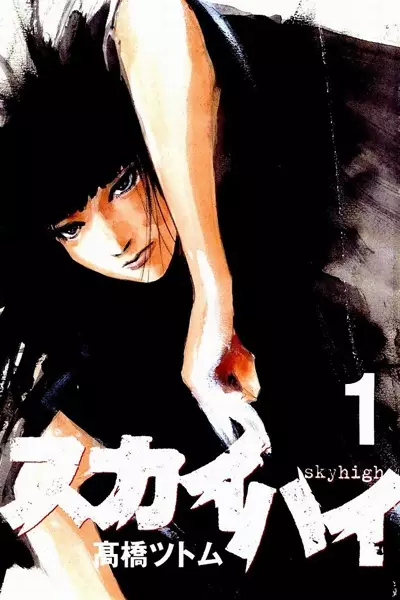
I’m not sure why it is that whenever I chose a manga at random I seem to end up with something creepy and/or gory. Suffice to say Skyhigh, despite its somewhat misleading name, is probably the most gothic of gothic horrors I’ve come across since… er… Goth. Then again, seeing as it comes from the pen of the same mangaka who gave us “Alive”, "Blue Heaven" and "Jiraishin" maybe I shouldn’t be surprised. The ten stand-alone stories that make up the two volumes essentially focus on the particular character’s death, events leading up to it and the choice they make upon meeting Izuko. Seeing as they’rearriving at the Gate of Grudges, it’s hardly likely their passing was a happy one, even though they are at first unaware of what is going on and rely on Izuko to fill them in. Unfortunately, even though Izuko is the only constant in the stories, we’re told nothing of her background or why she’s the Gate Keeper. She just is, deal with it. It’s a shame really, because that could have provided an interesting side-story and fleshed it out into a few more chapters. This doesn’t mean that the overall story is lacking – anything but. You’re mired knee-deep in just about every negative human emotion and action imaginable right from the start. Envy, Hatred, Depression, Murder, Greed are all mixed together and served up with a liberal dose of vengeance. Given it’s gothic roots, Skyhigh’s artwork is dark and stark and yet finely detailed at the same time. The mangaka fills each panel with effective imagery, especially when it comes to conveying emotion. However, and maybe it’s because I’m getting old, I did find it a bit heavy-going on the eyes after a bit. Is there a downside? Well, it’s a gothic horror, so brace yourself for copious amounts of blood, nudity and sex (tastefully done, of course), as well as some fairly interesting plots. In that regard, it doesn’t really pull any punches, nor does it apologise for not doing so. If dark and gory isn’t your thing, I’d say avoid this. If you liked works such as Goth or Alive, you’ll probably enjoy this too. It’s certainly not one to read if you’re looking for something that’s feel-good or uplifting. However, you could easily argue that without those elements present, it would lose its gothic and slightly surreal edge and become another “Jigoku Shoujo” spin-off (or precursor), which it very much isn’t. The individual stories also make the flow of the overall tale a bit stop-start, which could have been overcome by expanding on Izuko’s character and thus providing a bit more continuity to the stories., but that’s just me. Overall? It’s grim, graphic, gory, gothic… and pretty darn good too.
Tsutomu Takahashi is an extremely underrated mangaka. His works have only the smallest of niche followings in the west. This is in spite of the fact that not only did he mentor Tsutomu Nihei (who is much more famous than he is), he has produced a very large body of work over the years; unlike some artists who stagnate, relying on their old franchises and/or having any new projects be very underwhelming, Takahashi has arguably only gotten better and better over time. Skyhigh is a short story anthology that focuses on people who were murdered or who have lingering feelings of resentment. The Guardian of theGate of Grudges, Izuko, offers them three choices: they can go to heaven and be reincarnated, they can choose to roam the earth forever as a ghost, or they can possess someone and go and kill one person, at the cost of being sent to hell for all eternity. Skyhigh is a seinen manga, meaning it's aimed at an older male demographic. As is typical of series in that demographic it's relentlessly brutal and griml. The stories are very often extremely tragic, featuring graphic violence and sexual content that really shows the dark nature of humanity. Often the people who end up at the gate are so full of hurt, rage and bitterness that they are unable to let go and end up choosing the third option, but the stories where the characters choose the other two are made even more memorable in light of this fact. Skyhigh is a very good example of how important the art is to a series. The stories, by themselves, are decent and have good ideas, but it is Tsutomu Takahashi's exceptional draftsmanship and storytelling that brings them to life and gives them their power. This is an older work of his, dating back to 2001, so it is not representative of his current ability, but even before I saw his more recent work, I was still very impressed by the art in Skyhigh. Takahashi has a very unique, instantly recognizable style, often referred to as being "sketchy" due to his frequent use of thin lines and thick blacks. This in no way is indicative of laziness or lack of talent however, it's merely a set of stylistic decisions. Indeed, Takahashi is much more skilled than the majority of mangaka; all of his characters look completely distinct, and his facial expressions are incredibly powerful. If I had one complaint to make is that he goes a bit over the top at times, which in retrospect may make it hard to take the darker moments seriously. But that's pretty damn subjective. Overall Skyhigh is a great read if you are looking for something dark and different with amazing art.
First review I'm writing, so I apologize if it's too short or lack of any information. ART - 9 The manga has some pretty cool art, it's very dark and dirty like a pretty emotional sketch, different from every manga I have ever read. STORY - 8 It is good but I thought it delayed too much to finally develop the "main story". It made me think about life, reincarnation and stuff. CHARACTER - 7 Characters are pretty unique although their stories may be a bit rushed or kind of poorly developed.ENJOYMENT - 7 Art is cool as I said, unique, story is great with a different theme, but IMO lacks a bit of character development. OVERALL - 7,5 Definatelly this manga is not a waste of time. Maybe if you never thought about life after death, the story can open your mind about this matter. Art is great but a bit dark if you are used to lighter drawings.
Another solid work from Takahashi Tsutomu, once again capturing the drama and emotions of human life. As seen in the synopsis, this series revolves around what happens after death. The gatekeeper, Izuko, presents the recently deceased with three choices at the moment of their passing. Skyhigh explores this premise in a variety of ways, showcasing the different emotions and circumstances of both the dead and those they leave behind. Despite its simple premise, the writing manages to bring enough variation to keep each chapter engaging. Takahashi Tsutomu effectively captures the range of emotions experienced by the dead as they reflect on the world theyâve left behind.However, since each chapter presents a new story, there is little character development, making it harder to form an emotional attachment. Itâs compelling to see different portrayals of death, but none of the stories resonated with me on a deeper level. Takahashi Tsutomuâs art always carries a distinct style that enhances the storytelling. In this series, I particularly liked how he illustrates hairâusing bold, thick strokes that make the character designs feel more dynamic. If you've read Zankyou, you'll notice a similar approach not just in hairstyling but also in the use of bold outlines. This technique adds depth to the artwork and brings a sense of motion to each sequence. The heavier lines also create a feeling of isolation or suspense, further intensifying the mood of certain panels. His approach to large panels is equally impressive, whether through highly detailed backgrounds with cross-hatching or carefully composed shots that emphasize emotions. Close-up facial expressions are especially well-drawn, adding weight to the charactersâ feelings. Overall, itâs a short yet solid readâjust 10 chapters, making it perfect for a single sitting. The simple plot keeps it easy to follow, while Takahashi Tsutomuâs distinct, detailed art elevates the storytelling. Plus, thereâs a sequel (which Iâm still reading), so Iâm curious to see how the story develops. If you're a fan of Takahashi Tsutomuâs works, whether for his art or storytelling, this is worth checking out. Or if stories about the afterlife catch your interest, this series might be worth a look.