Links go to search results. Availability varies by region.
おにいさまへ…
18
3
Finished
Feb 1974 to Aug 1974
8.3/10
Average Review Score
100%
Recommend It
4
Reviews Worldwide
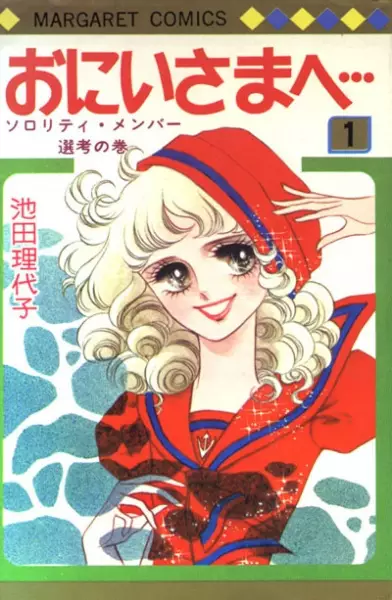
Oniisama e... is a famous shoujo manga from the 70's, written by the talented Ikeda Riyoko. Although the anime (which is also amazing by it's own) is probably more popular in the west, the manga is also incredible. The story of Dear brother is focus on the first year adventure of Misonoo Nanako, a sweet innocent girl that just got into Seiran high school, an all girl private school. Sending letters to her former teacher (which she asks from to be her brother) about her life in school, she finds out that school life isn't all roses. The manga deal with a lot of very real, andeven controversial themes (for the time of the publishing). With the elite sorority at the school, girls will do anything to get into it, resulting in broken friendship, jealousy, verbal bullying and gossiping behind the back. This atmosphere of competition and hatred fall on Nanako as she simply can't handle all of this. We also see some more darker stuff in the school-forbidden, sometimes even destructive love, that can ruin someone, and make her depressed to the point of self harm , the usage of drugs, family connections and secrets in the family such as betrayal, cheating and bastard children... all of this is shown in Dear brother, delivered excellently. As for the set of characters, we have a few main ones, and Nanako being the main-est. Her personality is of a gentle, caring girl. But exposed to the harsh bullying and the sick sorority which basically serve as sort of a old fashioned "class system", being the most elite and beautiful, but ugly and empty inside, sometimes even downright cruel. She is changed and maturing faster by that, and also falling in love for the first time, having complex thought about if the love of her is right and if it's okay to love other girls. Shinoubo Mariko is presented at the start as a jealous girl the fall in love with Nanako and will do anything to protect her and to have her for herself. She is a complex character that change a lot during the manga, suffering from her shameful family ties and her feelings toward others. We see a lot of focus on the three most popular girls in the school. Fukiku Miya which is the head of the sorority is a very prideful woman, sometimes even to the point of being cruel. She has a lot of secret motives to her actions and put herself above all. Asaka Rei which is "saint just-sama" is presented as very cold at first but as we read we find out more and more about her and the reasons which drove her to drug usage and her past, suffering from being unaccepted by the only person she loved. And Kauro no kimi, which is presented as being the nicest and having the strongest sense of justice out of the three, resisting the existence of the sorority and having secrets of her own... We have a few minor characters that serve to develop the story and the character change of the main ones, resulting in a character development for all the girls. When you look at the art, well, can't say it's the best thing ever. For me this old shoujo art style (sparks and big eyes) is not really appealing. The lack of backgrounds can also be bothersome, but the great story cover for it. The author also has an excellent way to present character expressions and a sense for dramatic effects (effects of glass shattering with the character shocked face, the reactions of the characters are all very dramatic) this is fit perfectly with the tone of the manga. The character design itself is OK, I guess, although the author always had a preference for good looking girls that pretty much look like a man, which is not my thing. Other girls looks also okay, stuff like hair designed very good, in a smooth way. Overall, this is an excellent manga, that manage to cover a lot of different real topics (even if some are kinda dramatic and not anyone can experience/relate to them) in a wonderful setting and dark atmosphere. Private high school for only girls make a truly magnificent setting, Yuri or not. The ending itself felt a bit lacking in my opinion, it is overall fit for this kind of manga, but it is too sudden, like "boom, end. Can't do nothing about it" and although it bothered me it didn't felt like it was too horrible, although I will leave that to your own judge. Enjoy the manga, enjoy the anime, all is great.
Optimistic, 16-year-old Nanako Misonoo anticipates a blissful experience at her new high school. Enrolling alongside her best friend Tomoko Arikura, she is confident that her freshman year will be exciting and filled with pleasant memories. However, upon entering the prestigious all-girls Seiran Academy, the wondrous school life Nanako had envisioned quickly vanishes as she is inducted into one of the school's most elite clubs, the Sorority. Normally only accepting the wealthiest and most prominent students, Nanako—who is neither rich nor well-known—is rumored to have cheated the selection and becomes a target of bullying from her envious peers. To make matters worse, she gradually becomes involved with Seiran's most popular students, the "Magnificent Three," comprising of the disconcerted pianist Rei Asaka, the competitive tomboy Kaoru Orihara, and the dignified Sorority President Fukiko Ichinomiya. As a result of her abnormal situation, Nanako begins documenting her daily life in the form of letters to her former teacher, Takehiko Henmi, whom she fondly refers to as "brother," all while striving to find peace amidst the turmoil that is Seiran Academy. [Written by MAL Rewrite] Included one-shot: Volume 3: Early Spring Trembling
With all respect to the small but dedicated fanbase who keep this nearly 50 year old series alive, “Dear Brother” is in many ways a forgotten, or rather overlooked, classic that offers a unique and exhilarating view into the formation of Shoujo as a serious method of storytelling. Drama and Romance at its best is not only its situations but rather its characters which drive and react to said situations, and “Dear Brother” excels at just that with not only an interesting and charming protagonist who has an intimate understanding of herself and her desires but also an even more impressive background cast capable ofstriking fear into the reader as well as garnering affection. This subtly anti-authoritarian story is conveyed rather excitingly through Ikeda’s (still) avant-garde panel layout and dramatic framing, and is an inspiration I would very much like to be pulled from in the future of manga and comics as a whole. Unfortunately this use of the medium can also be a weakness, as it is overused. Characters are so often overtly expressive and strikingly framed that it can be difficult to tell what are meant to be passing reactions from genuine devastation, making the tone feel a bit one note. “Dear Brother” is in many ways emblematic of more troubling and problematic aspects of Shoujo and Yuri, but I would argue that while many topics are handled imperfectly there are many scenes carried out with far more tact than what I am accustomed to today both within and outside these genres. The character Rei Asaka’s substance abuse can feel like a parody of itself at times, but I am also hard struck to give multiple examples of modern media that treat teenagers’ addictions with the severity such situations require, something “Dear Brother” is not afraid to do. I would also argue that “Dear Brother” succeeds as a Yuri even before the expectations of the genre were set in place. Nanako is willing to explore her feelings towards Rei not only within the confines of the relationship, but even outside of it, and it is very easy to assume that Nanako will continue to experience attraction to women even after the events of the manga. I am by no means arguing that “Dear Brother” is a pure and revolutionary expression of gender and sexuality, but I would argue that it does outpace many modern stories with similar themes because of Ikeda’s passion and authenticity. Overall I would really like to see more manga fans engage with “Dear Brother” on a serious level, regardless of whether or not they have interest in Shoujo and Yuri, and for that reason I would recommend this series to anyone who is willing to delve into its darker subject matter.
Oniisama E is a lovely, classic shojo that is absolutely worth reading, especially for anyone interested in the development of the yuri genre, as I believe it was highly influential on other series. I love Riyoko Ikeda's classic shojo art, huge eyes and dripping tears and all. I'm simply obsessed with the way she draws the masculine female characters! They look like real butch women! And the 70s fashion is incredible. (The only thing that threw me off about the art was that the pages often use solid black backgrounds just for effect, whereas I'm used to black backgrounds behind panels meaning this is a flashback scene-- this confused me for the first few chapters as I kept thinking I was skipping back to the past when actually the background meant nothing, haha...) The plot is VERY melodramatic, and the ending of this series is both somewhat abrupt and bittersweet. There are no happy endings here, but I didn't find the sadness to be over the top. And it was nice how the angst isn't centered on "I love her but we're both girls" or anything, just a passionate story of high school first love that ends tragically. For a short read that sweeps you up in the dramas and intense relationships of an all-girls high school, Oniisama E is one I highly recommend devoting a day to. I'm hoping this series gets officially licensed in English someday because I would love to own it in physical form.
Oniisama e is considered a classic shōjo manga from the 1970s. Written and drawn by the famous Riyoko Ikeda, also known for The Rose of Versailles, the story follows Nanako Misonoo, a young high school girl who regularly writes letters to her former teacher, whom she affectionately calls “Dear Brother,” to share her daily life at the prestigious Seiran Academy. The story is straightforward, coherent, and easy to follow. The drama is engaging, with a clear plot that encourages the reader to keep turning the pages. The dialogues are simple and effective in conveying the characters’ emotions. Inner monologues are very frequent, but they allow fora deep immersion into the inner world of certain characters, especially Nanako and Rei. The metaphors used are accessible and often elegant. However, the narration suffers from a lack of development. Many events are presented without being fully explored. The side plots lack depth and are resolved too quickly, which sometimes gives the impression that the story moves too fast. This issue is partly due to the relatively short length of the manga. The ending reinforces this feeling of haste. Events follow one another without leaving enough room for emotional impact or for the consequences on the characters to be fully felt. The arc surrounding the sorority and Kaoru no Kimi, for example, is handled rather abruptly: decisions and their outcomes are shown without a real exploration of the members’ reactions or inner conflicts. Still, the manga provides a certain sense of closure for most of the cast. The characters remain one of the work’s strongest points. They are charming, clearly distinct, and driven by believable motivations. As the protagonist, Nanako Misonoo stands out through her gentleness and sensitivity, which are well conveyed through her letters, making her a deeply empathetic character. Her relationship with Rei Asaka is particularly touching. Mariko Shinobu is bold and passionate, never hesitating to express her emotions; Kaoru, the courageous tomboy, always tries to give her best; and Rei Asaka, troubled and obsessed with Miya-sama, remains endearing in her interactions with the rest of the cast. Visually, one regrettable aspect is the lack of backgrounds. They are almost nonexistent, replaced by highly symbolic compositions of flowers, waves, and sparkling effects that surround the characters and their thoughts. While this artistic choice enhances the emotional and introspective tone, it sometimes comes at the expense of spatial and narrative grounding. In conclusion, Oniisama e remains a shōjo manga that deserves its status as a classic. With an easy-to-follow story, effective drama, lovable characters, and a strong focus on inner emotions, it is worth checking out. However, due to its sometimes rushed narration, it may be preferable to watch the anime first before, if interested, diving into the manga. In short: Dear Brother is a sensitive correspondence where emotion sometimes takes priority over narration.