Links go to search results. Availability varies by region.
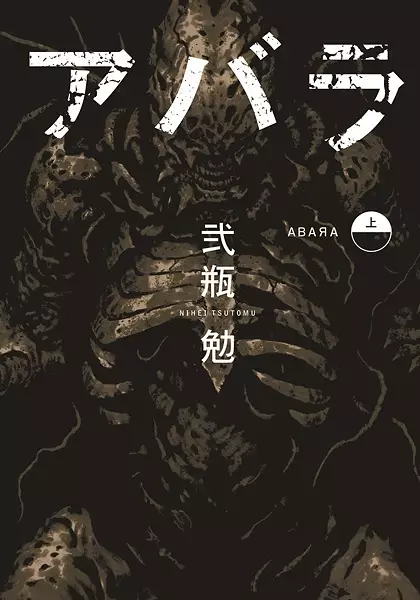
アバラ
13
2
Finished
May 19, 2005 to Mar 18, 2006
5.8/10
Average Review Score
45%
Recommend It
20
Reviews Worldwide
Set in the same universe as all Tsutomu Nihei's manga are: the nondescript urban landscape of our nightmares. The architecture is as suffocatingly bleak as usual; the story is faster paced than Nihei's most well known work, Blame, due to this manga's short length. Maybe it would be a good litmus test for newcomers to his world. This time the Akira vibe is heavy, with body horror at the forefront. Expect human transformation and ugly metamorphosis aplenty. Though unlike Akira, I doubt Nihei's aspirations are as lofty as commenting on Japan's relationship with technology in the post Meiji-era. No, he just wantsto immerse you in something completely alien, and burn his surreal Kafka-esque inspired imagery into your brain, while thankfully kicking your ass at the same time. What we have here are a guy in black and a girl in white who are compelled to beat the shit out of each other while destroying everything around them. The beauty as ever, is about revelling in the graphic detail of Nihei's universe, not necessarily what's driving the story. How were these sprawling structures built in the first place? Something I've been asking myself ever since reading Blame. It always takes my breath away. Tsutomu Nihei's scene composition is masterful, regularly showing the scope and perspective of structures that are inhuman in their massive presence. Nihei is a master in 'show don’t tell'. You won't see long monologues or rambling dialogue. You won't see narrative clichés rampant in mainstream manga, in his works. Nihei lets the images do the talking, what you see is what you get, and luckily for us there's a lot to see here. Painstakingly detailed environments reveal a lot and nothing at the same time. Ironically sound is more of a narrative force than dialogue from characters. Sounds such as doors sliding open, objects falling down stairs, all combine to lead you along the way. Characters only talk when they need to, and usually mumble meaningless words that only become coherent if we use our imaginations too. Characters that look like they'll be mainstays are introduced briefly, but then are promptly decapitated. Oh what decapitations! You will not see any as swift and graceful, as humorously mundane as the ones in this manga. The action is striking, occasionally a mess of clouds and lines, but often crowd-pleasing with clarity, and all building to a shattering climax that even Nihei has to introduce with dialogue. Abara is a great sci-fi actioner. A little diversion from a master of the craft.
Abara is set in a dystopian world, filled with large structures. The story revolves around creatures known as Gaunas, those who can shape bone like armor and weaponry around themselves by transforming. The transformation begins around the spine and then shapes layered armor. The story focuses on one such Gauna known as Kudou Denji, though he uses Itou Denji as a fake name earlier. (Source: Wikipedia) Included one-shot: Volume 2: Digimortal (two parts)
Before I begin I will say that I don't know if there was a movie or something that this is based on. If there is I would gladly watch it and consider changing the score here. *sigh* so lets' begin: Story: 6 It had potential. I like reading apocalyptic stories, but I can't help but think this wasn't done well. It reminds me of some other apocalyptic series', only more cliche and watered down. It's almost like the artist wasn't allowed to draw any more than two volumes worth of material, and everything was forced into the series; that adds to the confusion. For the longest time Ihad no idea what was going on and I had to read many sections over a few times. Art and character: 2 and 3 respectively. I'm putting these two together because they both make little sense. The mangaka knows how to draw, and I can see that, but the extra lines almost hides the story behind them. There were times when I had no idea what was going on because the weird lines were everywhere. The characters were good, but what they looked like confused me to no end. A good many of the "normal looking" characters looked identical to each other. On the other hand, the "bad looking" characters were all had disfigured faces and wrinkles where there shouldn't be. If you want to read something where the "good guys" and the "Bad guys" can easily be identified by how awful they look, then this is the series for you; that is if you can find the minute details that make each "normal" character unique(I've yet to find them). Enjoyment: 1 There were way too many ideas crammed in the series to make it enjoyable. That, and the weird art ruined the series. There were many times when I just wanted to leave the manga alone, but I kept thinking that it will make sense at the end. Unfortunately I was let down. Overall: 1 There's nothing to see here. Everything about this series could have been done much better with the exception of the story. This is probably one of the first times I've read a manga where the story couldn't possibly help it. Please don't flame me or anything. Like I said in the beginning: if this was based off of a movie I would like to see it. If this manga actually did the movie justice then I will honestly change this review to reflect it.
You have to be a true blue fan to enjoy Abara. This manga is not recommended for people who cannot appreciate an intellectual manga where much thinking is involved, for Tsutomu Mihei's style is to let the pictures tell the story rather than the dialogues. This story like most of Tsutomu Mihei's work (Creator of Blame!), consists of few dialogues. His work is fabulously beautiful, the intricate style of drawing and minute details never ceases to amaze me. Abara's plot is fairly simplistic, the man saves the world typical plot. With the short 2 volumes, Tsutomu Mihei weaves its subplots intoits simplistic plot adding flavour to it. While his plot is interesting and his art work is fabulously, he lacks character development. The characters are simple and what you see is what you get. You'll probably get a different opinion on everything, every time you re-read this too.
You'll need a Wikipedia after this one. Abara's precursor is a 2 chapter one-shot named Digimortal written in 2004, shortly after Biomega started airing. It, with its 11 chapters, was written during said airing. With how short it is, you aren't losing much even if you end up not liking it. It's also a good starting point when getting into Nihei's catalogue as it gives you a taste of what he is all about. And, in case you are here from Chainsaw Man: indeed, Fujimoto values this work a lot and it's easy to see its influence. If you are coming from Blame! looking for more, Abarais the closest that will fill the void. Saying that on one hand feels good, while on the other... Disappointing, as I think there is a big discrepancy between the two. Ultimately, Abara is an interesting and unique experience, but unfortunately not much more than that. I still like it, but... Yea... Abara is a lot more of biological nature, compared to Blame!'s cyberpunk aesthetic. I adore it. Some of my all-time favourite panels are from Abara. They display brutality and vehement force, sometimes even solitude and dread. The designs of Black and White Gauna are insane. It is sheer carnage on display. As for the story: the first thing you'll do upon reaching the end is most likely going to some YouTube video, Reddit post, or straight up Wikipedia's "Plot" for explanation. The story is interesting, but it's so shallowly narrated it makes Dark Souls lore look intuitive. As with Blame!, said lack of information gives it its charm, but unlike Blame!, where you always had this basic core structure of "Follow Killy and see what jumps his ass this time", here you don't even know who is jumping who nor why. It gets more value on re-read when you have some necessary context. My gripes with Abara are it's length and lack of clarity. I would have loved if this got the runtime of Biomega, let alone Blame!. It's actual length often felt as a disservice to its potential and presentation. Alongside that, you often won't be able to make out what's happening in front of you. Sometimes it's because of the art, sometimes it's due to lack of context, and sometimes due to sense of rush; whatever way you put it, it's there. The story in itself is not anything ground-breaking, but the added confusion does not go in its favour. The art of Abara is, in my opinion, the closest it got to Blame!'s highs, and, depending on the mood and day, sometimes I'd even say I view them equally as good. I'd also consider it the last work that got ''that Nihei aesthetic'' which was, in my opinion, lost in Knight of Sidonia and Country of Dolls; that, however, is a digression I won't delve into now. Back to Abara's art: it is as messy and gritty as it gets, frequently on the verge of any resemblance; truth be told, it is sometimes too much, but when it's just right, it is brilliant. It beautifully complements the biological structure of the work, giving it that necessary relentlessness. To repeat myself: sheer carnage on display. It is practically pure black and white. I am just sad we didn't get more. To conclude, I view this work dear. It was actually my introduction to Nihei's repertoire, and I am glad that I still find value in it despite it all. I'm just sad it didn't get more spotlight. I recommend it regardless with how little of an investment it is to read. A very unique experience, for sure. Thank you for reading up to this point. I wish you all the very best. Kind regards.
SPOILERS AHEAD! TL:DR: It's bad, but you can read if you want, there is some great art and its short. While Blame! Manages to create a compelling narrative with little to no dialogue, Abara is too rushed, concepts are not build up, if the white Abaras invaded earth, who are the monsters that activated the tower? What is the tower? Did the city blow up in the end? Did the white Abaras died? Then why there were two out of place chapters about with the two women? What happened? At the end of the scan I read, there was a glossary explaining all the concepts, names andevents that happened in the manga, I don't know if that was in the original manga, but I know that in Blame!, a manga by the same author and that also used less dialogue, didn't have one, that was because unlike Abara, Blame! actually builds up the world, the characters, the machines, the technology, everything, Abara starts with a man turning into a monster, killing another monster, then gets beheaded and comes back in the end, then we see other types of monsters? But what are these monsters? Weren't the Abaras the ones that invaded earth? What was that skeleton-cyborg-man that activated the tower? WHAT IS HAPPENING HERE? "B-But you have to see the symbolism! And you must interpret your own opinions!" Nah Nah Nah, the greatest writers, movie directors and mangakas showed that you can't make symbolism and interpretation the basis of the history, you can add them as much as you want, but they can't hold the entire thing together alone, there has to be characterization, themes, world building, tone… etc. This was rushed, weird, nonsensical and disappointing.