Links go to search results. Availability varies by region.
ζ±δΊ¬γγ΄γ
24
3
Finished
Jun 12, 2019 to Jun 12, 2023
9.0/10
Average Review Score
100%
Recommend It
3
Reviews Worldwide
I'll start by saying that I believe this manga is an escellent work, a great title by an already famous and skillfull artist. The story is simple enough, an editor for a manga publishing company resignes after a failed magazine he curated. From here, he starts to question his love for the genre and ultimately decides to publish on his own, as a freelancer, with all the artists he loved most during his carreer. But this title is not only on manga and the creative process of every author we encounter in its pages, it's about denouncing the serialization of art, against the oppressing systemthat sucks all life from the artists in the name of profit, this magazine from the editor Shiozawa is a silent rebellion, destined to remain unnoticed, or at least destined to leave the status quo untouched, but also to change the lives of who works for it. The art reflect perfectly the soft, mellow and sometime rough, tones of the characters. I recommend this manga to everyone who wants a genuine story and slice of japanese life.
On his final day as an editor, Shiozawa takes a train he's ridden hundreds of times to impart some last advice to a manga creator whose work he used to edit. Later, he is drawn to return to a bookshop at the request of a junior editor who wants his help dealing with an incorrigible manga creator who used to be edited by Shiozawa and now refuses to work with anyone else. For Shiozawa, Tokyo these days is full of memory and is cocooned in the inescapable bonds among manga creators, their editors, art, and life itself. (Source: VIZ Media)
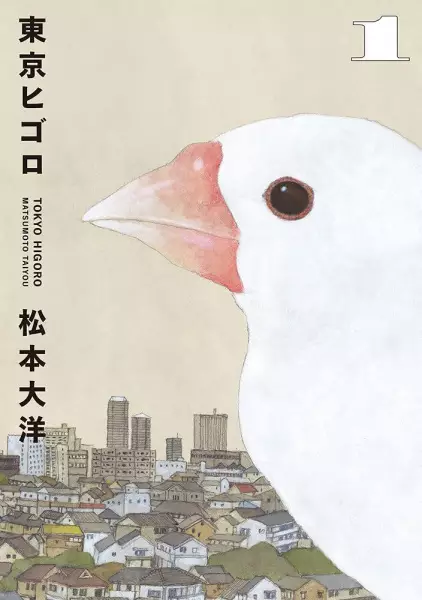
"I wanted you to read something of mine, just one more time. Well, then. How've you been these days, Shiozawa?" Do you ever think about how your favourite mangaka feels about their own work? How they've felt about different series they've crafted throughout their career? What makes them keep at it, despite cancellations, tight deadlines, endless rewrites? Tokyo Higoro is, at its heart, about the love of manga. About how creators and readers are drawn to it, about creating the truest and most authentic works our hearts can produce. About one editor, freshly freelancing after a long tenure at a well-known publisher, seeking out the creators he'sworked with in the past whose work he still holds in his heart. I've read manga about creating manga before, but I don't think I've ever read one with an editor as a main character. Shiozawa is a bit of a flat character aside from his love of manga (and an ability to converse with birds, which is never explained), but somehow, it works. He's a template for the manga-loving reader to project on, a means to explore the various mangaka he meets with throughout the story. A hub for them to gather around. A personified reminder to each creator of why they love to create. It's no secret that Matsumoto Taiyou's style is not typical of manga, sometimes resembling European comics, sometimes erring more on the side of realism. I haven't read all of his titles so I can't speak in absolutes, but I can say that out of the half-dozen series I have read, Tokyo Higoro has the most realistic art. It works nicely with the story, emphasizing the down-to-earth realism, and contrasting interestingly with the few whimsical moments (the talking bird, Shiozawa's meeting with a mangaka whose funeral he just attended). The series especially shines when it comes to scenery shots, which serve to anchor each scene in various locations in Tokyo and throughout Japan. Matsumoto's work may not be as tidy as some others, but few can wring as much pathos out of a panel of a rainy Tokyo street. Tokyo Higoro is here for you if you love manga, even when you hate it. If you love drawing, or writing, or creating, even when it makes you want to tear your hair out. If the only thing worse than creating something is not creating. In subtle, understated ways, Tokyo Higoro is a love letter to manga, warts and all.
Please be patient while reading this review, my thoughts are very scattered and I don't think I can collect them well enough to properly convey how I feel about this manga. But I will try. I think I need to preface this with the fact that this is the first thing I've ever read from Taiyou Matsumoto. I haven't also seen anime based on his work before, so this is truly a first hands-on experience for me. As someone who creates sometimes, and generally desires to tell stories in whatever form feels correct for the story, these books are a truly beautiful read. Therefore I believe that anyonewho likes creating, and especially people who really enjoy manga/comics as a medium, will most likely enjoy reading this. Now without spoiling anything about the story itself, I will talk about the things I really loved when reading this manga. First is the paneling/ story-boarding(?) (I don't know if this is the correct term for what I'm about to describe, hence the question mark). When reading this I felt like I was watching a movie. I can't really put it into words better than this. The flow between the panels is so smooth. I genuinely don't know how to better explain this, but it's so damn satisfying. Reading this made me feel like I could see the images in the panels moving, like I could hear the noise of the streets depicted, like the people were actually walking and living in this world. I don't think I've ever felt so truly immersed reading anything like this before. Honestly, a magical experience. Second would be the feeling/ vibe. The entire work is dressed in this melancholy that isn't so heavy as to drown you in it, but it's always there, softly perceptible, coloring everything in its tone. There is a touch of somberness in this, that is palpable throughout the whole story, but again, not to the point that it drags you down emotionally. It feels very grounded and real. The story itself can make you emotional nonetheless. Third, let's talk about the characters. The characters also feel very real, very human. Everyone is its own character, with their own quirks, their troubles, their hopes & dreams. It never feels like there's someone that doesn't belong or that is the same as someone else. Everyone's story is unique and interesting enough to read. It keeps you wanting to learn more about these people and their lives. Fourth is the art. Again, as this is my first time reading anything from Taiyou Matsumoto, I was intrigued by the art-style. It's most certainly not something I'm used to. It feels like a painting. It's not something that I'd call conventional in the manga space, but it's so unbelievably charming and gorgeous to look at. It quickly grows on you. Lastly, I just want to say that this man seems like a really good storyteller and I can't wait to read more of his works in the future.