Links go to search results. Availability varies by region.
çŸćźééżăăŠăăăăăăă«ăȘăŁă話
13
1
Finished
Nov 7, 2019
7.2/10
Average Review Score
60%
Recommend It
5
Reviews Worldwide
In every way, this feels like an improvement over My Solo Exchange Diary as a reading experience. I phrase it that way, rather than calling it a better book, because the fragmented, violently chaotic, and circular structure of those two volumes was probably an accurate reflection of the author's mental state at the time, so it was appropriate. This latest memoir is more focused and structured, detailing Nagata's diagnosis with acute pancreatitis and the impact that had on her life. We gain a lot of insight into both the condition and her time in hospital, certainly enough to make the reader want to do everythingthey can to reduce their own chances of developing pancreatitis. The artwork is also a significant improvement over the last couple of volumes. While Nagata's style has always been simple and sketchy, by the end of My Solo Exchange Diary volume 2 it had disintegrated into childish scribble, though that was no doubt a reflection of the state she was in, having been drawn while she was either in rehab for alcoholism or shortly after. Elsewhere, Nagata has long been vocal about how much she regretted berating her parents in previous volumes, and she has eliminated that aspect almost entirely this time. The tone retains her constant state of fear and anxiety, but there's less of the vitriol. Interestingly, while the details of her time in hospital make this the most horrifying volume, it's also the funniest due to the way she anthropomorphises her symptoms. I kind of want a plushie of Nagata's pancreas now...
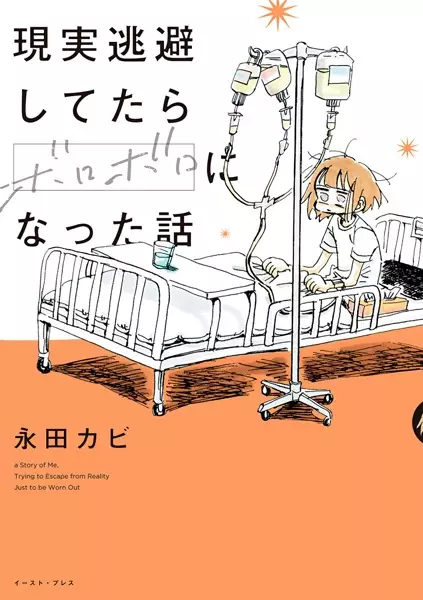
Kabi Nagata's downward spiral is getting out of control, and she can't stop drinking to soothe the ache of reality. After suffering from unbearable stomach pains, she goes to a clinic, where she is diagnosed with pancreatitisâand is immediately hospitalized. A new chapter unfolds in Kabi Nagata's life as she struggles to find her way back to reality and manga creation in the wake of her breakdown. (Source: Seven Seas Entertainment)
Whereas Kabi-senseiâs first two works shared some of her internal and mental issues, My Alcoholic Escape From Reality is more of a physical experience for both her and the readers. And while the newest entry doesnât reach the peaks of introspective reflection as its predecessors do, it doesnât take away from the quality and is still a great read for fans of the series. Kabi-senseiâs struggle to draw and write manga about herself is no secret to anyone reading, and the hesitance is as clear as day after she reveals that she and her mother talked about how much of their private relationships theyâre comfortablewith sharing to the public. Quite ironic, isnât it? A writer whoâs most successful when writing about her struggles now struggles with sharing her more personal struggles and ends up encountering newfound struggles overcoming her creative block. But the recurring theme of one problem leading to another isnât a huge surprise at this point. The third installment doesnât pick up right where the second left off, but it wouldnât be wrong to say that the second leads up to the third. After trying to deal with moving out, living alone, and periodically moving back in with her parents, our tragic hero picks up a habit of alcoholism, which is lightly touched upon in the second and is now the main focus of the third. Through this she hits not exactly a new low, but a different low, where her unhealthy physical body has finally caught up with her deteriorating mind and now she must find a new way to well⊠live. Whether it be intermittent stomach pains, a demotivating hospital diet, or an irritating IV drip, Kabi-sensei carefully illustrates how ordinarily negligible pains become considerably more painful when stacked upon an already anxious and draining lifestyle. Sheâs no model citizen (and she acknowledges this), and while itâs easy to just take her mistakes as decisions NOT to make, I think thereâs more value to be found in learning how her mistakes made her a stronger, slightly more capable person. The main internal struggle of this entry deals with Kabi-sensei deciding whether or not to continue writing memoirs or to switch to writing fiction. This struggle is outlined by the unfolding of events in her hospital but is also apparent in how she approaches this book itself. Like I mentioned before, there is a clear hesitance for her to share her relationships with her friends and family compared to her previous books, whether it be because she thinks itâs wrong or that her writingâs getting stale. It leads her to digress into writing about her more surface-level, obvious struggle in a sickbed and stretch a month-long hospitalization into something readable. Thatâs why to me, this doesnât directly feel like a 3rd entry but a 2.5th. But as she finds a new level of solace in her writing style following this condensed experience, I am left feeling confident that Kabi-sensei will deliver a new, compelling sequel to come.
My Alcoholic Escape From Reality. Nagata Kabi, seeing the author draw out a manga of their real experiences, is comforting seeing how they got there and where they're going. Although, it goes to say Kabi previous experiences felt more personal and emotional tied together. Often dealing with loneliness and depression. This is moving forward after having a hit wonder with their previous manga series, 'My Solo Exchange Diary' & 'My Lesbian Experience With Loneliness.' At this stage in their life, Kabi-San is still dealing with anxiety and fears that she chooses to resolve by drinking their problems away. Only to develop an acute pancreatitis and havingto deal with it for the rest of their life. Oddly enough, I find that all the more enjoyable being that I have a fatty liver, however it wasn't' caused by excessive alcoholic consumption. So this really stuck home with me because my doctor would constantly ask if I was a drinker or smoker, which I'm neither of. Anyhow, the artwork continues to improve and is why I love reading Kabi-San work, there's warm feeling about her art-style that I'm fond of. A welcoming sequel that readers of Kabi should read and see her rehabilitation through this part of her life.
I love this author. This is the second manga I've read from her and I don't regret it one bit. Being able to follow again another story of hers, is again a very good experience not only as a personal learning, but also very fruitful in general. It may be important to talk about something more serious first before continuing to write. I highly recommend this story for all types of teenagers in particular, who may consume alcohol to deal with their anxiety, I imagine that if you are in this situation, or even you who want to understand who is going through this, they cancome to understand this world around you and even yourself much better by reading these 13 chapters. I think one of the big questions that make not only this, but also "my lesbian experience with loneliness" being so good is without a doubt the author's honesty. Her ability to write down everything that happens to her, her thoughts, even what she finds most embarrassing, the situations, her fears, her happiness, her moments of relief, but without hiding the fact that she thinks that (there is a chapter which is her wondering if she would really publish a story that claims she is an alcoholic, claimed that she was afraid of other people's judgment and her low self-esteem doesn't help and her revealing that it adds a lot to the manga as a whole), show that she is an excellent, phenomenal , perfect autobiographical manga writer. After all, this is exactly what everyone seeks by reading biographies, we want to know the writer's thoughts, what he feels, how he feels about what he feels and even the fears he has for feeling it and Nagata, Kabi manages to pass them all these feelings masterfully. Her honesty not only makes the work a perfect biography, but also makes the stories much more relatable and realistic, in addition to adding a lot to the times that the author addresses themes in her life, such as low self-esteem, depression and addictions. Such an approach flows excellently well, containing thoughts that many who have been through this have already felt (I asked more people before writing, it's not just my opinion here, there were 14 "interviewed" and kind of everyone said at some point "I thought that already". Not to mention that everything is very "didactic" the message the author wants to convey is very clear, her thoughts collide with this message, everything in the story manages to fit perfectly into a single "lesson". I'm going to talk, after all I think it's up to a lot of personal interpretation. Finally, I reinforce what was said in the second paragraph, as well as "my lesbian experience with loneliness", "Genjitsu Touhi shitetara Boroboro ni Natta Hanashi" is undoubtedly a very important reading, besides presenting an absurd quality in its beautiful art. Grade: 9 (I didn't give 10 because another manga of hers is already in the top and in my view they kind of complement each other a lot).
My first experience with Nagata's autobiographical oeuvre and, despite the relatable means of self-medicating with alcohol, it's mostly a lackluster cautionary yarn about the too-obvious perils of alcoholism itself with not much else to speak of. It of course takes courage to be as vulnerable as she is throughout, however her transparency in this regard wears itself pretty thin given the singular through line at play and sparse creative wiggle room on either side of her rehabilitative stretch. There's no denying her uniqueness of artistic stylism though, which leads me to believe that I should've just started with either My Solo Exchange Diary or MyLesbian Experience with Loneliness. Oh well.