Links go to search results. Availability varies by region.
ăă„ăŻăčăźè§çŻăă©ăłăżăłă
50
6
Finished
Mar 27, 2015 to Jun 27, 2019
7.0/10
Average Review Score
100%
Recommend It
1
Reviews Worldwide
Essa resenha serĂĄ escrita em inglĂȘs e portuguĂȘs (PT-BR) This review will be written in English and Portuguese (PT-BR). đđđđđđđđđđđđđđđđđđđđđđđđđđđđđđđđđđđđđđđđđđđđđđđđđđđđđđđđđđđđđ đșđž âŹïžđŠđ„ đ” The portrait of an era and maturation in "The Lantern of Nix." I find it interesting to begin by saying that "The Lantern of Nix" is not the manga that will please everyone. It's not because it addresses super-sensitive themes or because the reading requires a dictionary by your side. None of that. The peculiarity of this manga lies in the fact that it may not be appreciated by everyone, as its main purpose is not to discuss people but to explore concepts and objects and howthese elements end up influencing people's lives... đ” The need for belonging "The Lantern of Nix" immediately introduces us to the setting of this story, which is Japan in the late 19th century. Right from the start, we meet the protagonist, Miyo, a seemingly ordinary young woman who possesses a special gift: by touching objects, she can glimpse both the past and the future of the people who interacted or will interact with that object. This ability becomes a strategy for her to secure a job at Momo's store, which sells decorative items, imports, and more. The plot unfolds from there, exploring not only Miyo's life but also the cultural transformations in the lives of those characters. When Miyo started working at Momotoshi's store, it was the starting point of her journey to find her place in the world. Before that, she didn't have a sense of belonging, not even to her own family. The store, along with everyone she meets there, becomes a little push in her formation. It was the moment when she felt truly important, both to others and to herself. Miyo emerges as a central catalyst for the exploration of this theme. She is introduced as a somewhat out-of-place young woman, lacking skills valued by the society of her time. However, Miyo finds her place at the Vingt antique store, which is a bit strange at first but eventually becomes a world of her own, where she finally feels she belongs. In this peculiar place, Miyo not only learns a lot of practical things but also finds people who value what makes her special, even if it's something simple. This makes her feel part of something, as if she has an important role, and no longer as a hindrance to others. Miyo's relationship with other characters, like Momo and Ganji, is crucial to building this sense of belonging. The coexistence of different personalities, interconnected stories, and the support they give to each other forms a complex web of human connections. The author does a great job of showing that belonging is not just about following social rules; it goes beyond appearances and depends on people understanding and accepting each other's differences. As the narrative shifts to France, the question of belonging is expanded beyond national borders. Miyo, once a displaced orphan, finds herself involved in a global context, confronting not only cultural differences but also the social transformations of the Belle Ăpoque. The dichotomy between Japanese tradition and Western influences stands out, once again, as fertile ground to explore the concept of belonging in a broader context. The inclusion of cultural curiosities, such as the Japanese adaptation of "Alice in Wonderland," serves as a mirror of this quest for belonging and the mutual influence between cultures. Through these details, Takahama not only enriches the manga but also emphasizes the importance of these cultural exchanges for a healthy relationship with the people around us. đ” The Importance of Materiality In this manga, objects are not just a detail; they are responsible for triggering the motivation of some characters within the plot. It's not just because Miyo has a kind of clairvoyance, able to peek into the past and future of anything she touches. It's that these objects are what set the lives of the characters in this story in motion, you know? Of course, what I'm saying is not explicitly stated within the manga, but I noticed that every major decision and the driving force to change the perception or feeling of the characters towards something is given by a material possession or the influence of external culture, which in turn also directly involves material goods. A clear example is Nix's brooch, through which a series of events is triggered that change the course of the story. By embracing the concept of materialism, the traditional notion of objects as inanimate entities is challenged here, suggesting that material possessions have their own agency within the story. In this sense, the narrative of this manga adopts a perspective that goes beyond the conventional view of objects as simple physical and inanimate things. The central idea I want to discuss here is that objects, instead of being passive, have an active influence on the plot, acting as dynamic participants in the narrative, you know? When Miyo touches an object, she can visualize the life of the owner of that object, often giving her the chance to relieve a person's heartache, revealing whether the owner of that object is alive or dead, for example. And notice how a simple object can totally change our state of mind, making us sad or happy. This made me reflect a bit on our relationship with material possessions. Not that this is actively discussed within the plot, but I found it curious how various aspects of this story are governed by matter, from that brooch I mentioned earlier to the practically disposable woodcuts that cause a commotion in the artistic community in France, or the craftsmanship done by Miyo's uncle, which also plays an essential role in exporting Japanese art to other countries. I don't perceive a direct mention of materialism in this work, although the author makes various comments about art pieces and objects in general that she possesses, and how she somehow incorporated them into the manga's story. I believe this has more historical and even educational value than a kind of critique, whether positive or negative, of the concept of materialism. Anyway, this combination of elements led me to this reflection. đ” Cultural Exchanges of the Meiji Era I find the entire cultural context and assimilation and exchange between Japan and Europe in the post-Industrial Revolution period very interesting. This is largely due to the fact that, for me, everything there was unprecedented. I had never delved into how this cultural export from Japan to the rest of the world took place. The aesthetics of that time, combined with the secondary plot of cultural export and market speculation, made me even more interested in the work. Vingt, led by Momo, acts as the protagonist of this entire process, introducing Western products and ideas into traditional Japanese culture. The importance given to European fashion and technological innovations seems to reflect the cultural influence unfolding before the characters. The manga not only shows the importance of these cultural exchanges but also weaves a narrative that critically examines the effects of this foreign influence on Japanese society at the time. And, of course, the economic impact in this context goes hand in hand with the social impact caused by contact with this foreign culture. The plot shifts to the issue of exporting objects, especially when Momo decides to take his store and products to Paris during the Belle Ăpoque. This movement is not just a narrative choice but symbolizes Japan's economic transformation in the global context. This export is not limited to tangible goods alone, you know? It also serves as a metaphor for cultural export, highlighted by the world exhibition in Paris. In this scenario, the manga explores the complexity of trade relations, the search for economic opportunities, and the influence between different societies. These influences also impacted the geopolitical dynamics of the time, with Japan emerging from an isolationist period to become an active participant on the world stage. Momo's pursuit of trade between Japan and France is not just a business strategy but also reflects well the political and diplomatic changes of the Meiji era. Through her characters, the author offers an interesting view of the political implications of these international interactions, subtly addressing the complexities of relations between nations, such as the strangeness of seeing a Japanese person walking the streets of Paris, or the fact that Momo is often described only as "mixed-race." It's in these small things that we can grasp the complications that some societies still face today due to ignorance of each other's cultures. đ” Beauty lies in simplicity Takahama's attention to small details is evident on every page, with sharp outlines and a richness of textures that provide a tactile sensation. This is also reflected in the settings, with the environment being crucial for the reader's immersion, especially in the case of a period manga. The faithful representation of historical locations, such as Nagasaki and Paris, reveals the author's meticulous research to authentically recreate the story's backdrop. The smooth transition between urban and rural landscapes, as well as the detailed representation of the interiors of the Vingt store, demonstrates the author's knowledge, essential to situating the narrative in distinct cultural contexts. The simplicity of the author's strokes does not diminish the visual complexity of the work; on the contrary, there is an elegance in the lines that make up the characters, clothing, objects, and more. The story's rhythm is carefully guided by the arrangement of panels, resulting in dynamic reading despite the absence of many action scenes. The strategic use of panoramic panels at crucial moments in the plot highlights the grandeur of certain scenes, along with the various landscapes and settings presented. The incorporation of cultural elements in the scenes, such as the representation of ancient objects and the fashion of the time, along with cultural curiosities at the end of each chapter, adds a certain authenticity to the manga's world, making it almost palpable. The balance between these narrative and visual elements showcases Takahama's artistic commitment. In summary, I appreciate what the author has built here in this work, where each component integrates harmoniously. The art does not separate from the text, which, in turn, is intrinsically linked to the complexities of page construction. Analyzing the art of this manga in isolation would be a waste of time because all elements converse with each other in a unique way. đ” The portrait of an era In short, I really enjoyed my experience with "The Lantern of Nix." The manga has a very light read while managing to delicately address some themes without delving too deeply into them. I see that the main goal here was to speak more about the changes and cultural exchanges in Japan rather than developing the characters throughout the plot. And don't get me wrong; I know that the "screen time" given to the characters for development is much greater than the text about cultural exchanges and technological evolution of that time. Still, I get the impression that the author used all these plotlines to talk more about the historical context of the time, which seems to be a hobby for the author... and that is by no means a problem. đđđđđđđđđđđđđđđđđđđđđđđđđđđđđđđđđđđđđđđđđđđđđđđđđđđđđđđđđđđđđ PortuguĂȘs [PT-BR] đ§đ· đšđŠđ© đ” O retrato de uma Ă©poca e o amadurecimento em A Lanterna de Nix. Acho interessante começar falando que "A Lanterna de Nix" nĂŁo Ă© o mangĂĄ que vai agradar geral. NĂŁo Ă© porque ele aborda temas super sensĂveis ou porque a leitura Ă© daquelas que vocĂȘ precisa de um dicionĂĄrio do lado. Nada disso. A peculiaridade deste mangĂĄ estĂĄ no fato de que pode nĂŁo ser apreciado por todos, uma vez que seu propĂłsito principal nĂŁo Ă© discutir pessoas, mas sim explorar conceitos e objetos e como esses elementos acabam influenciando a vida das pessoas... đ” A necessidade de pertencer "A Lanterna de Nix" jĂĄ nos apresenta, logo de cara, a ambientação dessa histĂłria, que Ă© o JapĂŁo do final do sĂ©culo XIX. JĂĄ de inĂcio, somos apresentados Ă protagonista, Miyo, uma jovem aparentemente comum, mas que guarda um dom especial: ao tocar objetos, ela Ă© capaz de vislumbrar tanto o passado quanto o futuro desses das pessoas que interagiram ou irĂŁo interagir com aquele objeto, e meio que isso Ă© usado como artimanha para ela conseguir um emprego na loja do Momo, que vende artigos de decoração, importados etc. O enredo se desenrola a partir daĂ, explorando nĂŁo apenas a vida de Miyo, mas tambĂ©m as transformaçÔes culturais na vida daquelas personagens. Quando Miyo começou a trabalhar na loja do Momotoshi, foi como o pontapĂ© inicial da jornada dela para achar o seu lugar no mundo. Antes disso, ela nĂŁo tinha esse sentimento de pertencimento, nem em relação Ă prĂłpria famĂlia. A loja, junto de todo mundo que ela conhece ali, acabou sendo um empurrĂŁozinho na formação dela. Foi ali o momento em que ela se sentiu importante de verdade, tanto para os outros quanto para ela mesma. A Miyo emerge como um catalisador central para a exploração desse tema. Ela Ă© apresentada como uma jovem meio deslocada, sem habilidades valorizadas pela sociedade de sua Ă©poca, mas Miyo acha seu lugar na loja de antiguidades Vingt, que Ă© um lugar meio estranho no começo, mas com o tempo, vira tipo um mundinho sĂł dela, onde ela finalmente sente que pertence. Nesse lugar meio peculiar, Miyo nĂŁo sĂł aprende um monte de coisas prĂĄticas, mas tambĂ©m encontra um pessoal que valoriza o que ela tem de especial, mesmo que seja algo simples. Isso faz ela se sentir parte de alguma coisa, como se tivesse um papel importante, e nĂŁo mais como um estorvo atrapalhando os outros. A relação de Miyo com os outros personagens, tipo o Momo e o Ganji, Ă© super importante para construir essa sensação de pertencimento. A convivĂȘncia entre personalidades diferentes, as histĂłrias todas interligadas e o apoio que eles dĂŁo um para o outro formam uma rede complicada de conexĂ”es humanas. A autora manda muito bem em mostrar que pertencimento nĂŁo Ă© sĂł seguir regras sociais, vai alĂ©m das aparĂȘncias e depende das pessoas se entenderem e aceitarem as diferenças de cada um. Ă medida que a narrativa se desloca para a França, a questĂŁo do pertencimento Ă© expandida para alĂ©m das fronteiras nacionais. Miyo, uma vez uma ĂłrfĂŁ deslocada, se vĂȘ envolvida em um contexto global, confrontando nĂŁo apenas as diferenças culturais, mas tambĂ©m as transformaçÔes sociais da Belle Ăpoque. A dicotomia entre a tradição japonesa e as influĂȘncias ocidentais se destaca, mais uma vez, como um terreno fĂ©rtil para explorar o conceito de pertencimento em um contexto mais amplo. A inclusĂŁo de curiosidades culturais, como a adaptação japonesa de "Alice no PaĂs das Maravilhas", serve bastante como um espelho dessa busca por pertencimento e da influĂȘncia mĂștua entre culturas. AtravĂ©s desses detalhes, Takahama nĂŁo apenas enriquece o mangĂĄ, mas tambĂ©m enfatiza a importĂąncia dessas trocas culturais para uma relação saudĂĄvel com as pessoas ao nosso redor. đ” A importĂąncia da materialidade Neste mangĂĄ, os objetos nĂŁo sĂŁo apenas um detalhe; eles sĂŁo responsĂĄveis por desencadear toda a motivação de alguns personagens dentro da trama. NĂŁo Ă© apenas porque Miyo tem uma espĂ©cie de clarividĂȘncia, conseguindo bisbilhotar o passado e o futuro de qualquer coisa que ela encosta. Ă que esses objetos sĂŁo aquilo que coloca a vida dos personagens dessa histĂłria em movimento, sabe? Claro que isso que estou falando nĂŁo estĂĄ explĂcito dentro do mangĂĄ, mas notei que toda a grande tomada de decisĂŁo, bem como a força motriz para alterar a percepção ou o sentimento dos personagens frente a algo, Ă© dada por um bem material ou a influĂȘncia da cultura externa, que por sua vez tambĂ©m envolve diretamente bens materiais. Um claro exemplo Ă© o broche da Nix, que, por meio dele, Ă© desencadeada uma sĂ©rie de acontecimentos que mudam o rumo da histĂłria. Ao pegar o conceito de materialismo, a concepção tradicional de objetos como entidades inanimadas Ă© desafiada aqui, dando a entender que os bens materiais possuem uma agĂȘncia prĂłpria dentro da histĂłria. Nesse sentido, a narrativa desse mangĂĄ adota uma perspectiva que vai alĂ©m da visĂŁo convencional de objetos como simples coisas fĂsicas e inanimadas. A ideia central que quero debater aqui Ă© que os objetos, ao invĂ©s de serem passivos, tĂȘm uma influĂȘncia ativa na trama, agindo como participantes dinĂąmicos da narrativa, sabe? Quando Miyo toca um objeto, ela consegue visualizar a vida do dono daquele objeto, dando a ela muitas vezes a chance de aliviar a angĂșstia do peito de uma pessoa, revelando se o dono daquele objeto estĂĄ vivo ou morto, por exemplo. E perceba que um simples objeto consegue mudar totalmente nosso estado de espĂrito, nos deixando tristes, felizes, e isso me fez refletir um pouco sobre a nossa relação com bens materiais. NĂŁo que isso seja algo discutido ativamente dentro da trama, mas achei curioso como vĂĄrios aspectos dessa histĂłria sĂŁo regidos pela matĂ©ria, desde aquele broche que comentei mais acima atĂ© as xilogravuras praticamente descartĂĄveis que causam todo um rebuliço na comunidade artĂstica da França, ou entĂŁo o artesanato feito pelo tio da Miyo, que tambĂ©m tem um papel essencial na exportação da arte japonesa para outros paĂses. Eu nĂŁo percebo uma menção direta ao materialismo nesta obra, apesar de a autora fazer diversos comentĂĄrios sobre peças de arte e objetos em geral que possui, e como de alguma forma, ela os incorporou Ă histĂłria do mangĂĄ. Acredito que isso tenha mais um valor histĂłrico e atĂ© mesmo educacional do que uma espĂ©cie de crĂtica, seja ela positiva ou negativa, ao conceito do materialismo. De qualquer forma, toda essa combinação de elementos me levou a essa reflexĂŁo. đ” As trocas culturais da era Meiji Acho muito interessante todo o contexto cultural e a assimilação e intercĂąmbio entre o JapĂŁo e a Europa no perĂodo pĂłs-Revolução Industrial. Isso se deve muito ao fato de que, para mim, tudo ali era inĂ©dito. Nunca havia estudado a fundo como se deu essa exportação cultural do JapĂŁo para o resto do mundo. A estĂ©tica daquela Ă©poca, aliada Ă trama secundĂĄria de exportação cultural e especulação de mercado, me fez interessar ainda mais pela obra. A Vingt, comandada pelo Momo, atua como o protagonista desse processo todo, introduzindo produtos e ideias ocidentais na cultura tradicional japonesa. A importĂąncia dada Ă moda europeia e Ă s inovaçÔes tecnolĂłgicas me parece ser um reflexo da influĂȘncia cultural que se desdobra diante dos personagens. O mangĂĄ nĂŁo apenas mostra a importĂąncia dessas trocas culturais, mas tambĂ©m tece uma narrativa que examina criticamente os efeitos dessa influĂȘncia estrangeira na sociedade japonesa da Ă©poca. E, claro, o impacto econĂŽmico nesse contexto anda de mĂŁos dadas com o impacto social causado pelo contato com essa cultura estrangeira. A trama se desloca para a questĂŁo da exportação de objetos, especialmente quando Momo decide levar sua loja e produtos para Paris durante a Belle Ăpoque. Esse movimento nĂŁo Ă© apenas uma escolha narrativa, mas simboliza a transformação econĂŽmica do JapĂŁo no contexto global. Essa exportação nĂŁo se limita apenas aos bens tangĂveis, sabe? Ela tambĂ©m serve como uma metĂĄfora para a exportação cultural, evidenciada pela exposição mundial em Paris. Nesse cenĂĄrio, o mangĂĄ explora a complexidade das relaçÔes comerciais, a busca por oportunidades econĂŽmicas e a influĂȘncia entre diferentes sociedades, influĂȘncias essas que tambĂ©m impactaram a dinĂąmica geopolĂtica da Ă©poca, com o JapĂŁo emergindo de um perĂodo isolacionista para se tornar um participante ativo na cena mundial. A busca de Momo por transaçÔes comerciais entre JapĂŁo e França nĂŁo Ă© apenas uma estratĂ©gia empresarial, mas tambĂ©m reflete bem as mudanças polĂticas e diplomĂĄticas da era Meiji. A autora, por meio de seus personagens, oferece uma visĂŁo interessante das implicaçÔes polĂticas dessas interaçÔes internacionais, abordando sutilmente as complexidades das relaçÔes entre naçÔes, como o estranhamento de ver uma pessoa japonesa andando pelas ruas de Paris, ou entĂŁo o fato de Momo ser descrito muitas vezes apenas como "mestiço". SĂŁo nessas pequenas coisas que conseguimos captar as complicaçÔes que algumas sociedades sofrem atĂ© hoje, devido a toda a ignorĂąncia da cultura alheia. đ” A beleza estĂĄ na simplicidade O cuidado com os pequenos detalhes por parte de Takahama Ă© evidente em cada pĂĄgina, com contornos nĂtidos e uma riqueza de texturas que proporcionam uma sensação tĂĄtil. Isso reflete tambĂ©m nos cenĂĄrios, sendo a ambientação crucial para a imersĂŁo do leitor, especialmente em se tratando de um mangĂĄ de Ă©poca. A representação fiel de locais histĂłricos, como Nagasaki e Paris, revela a pesquisa minuciosa realizada pela autora para recriar autenticamente o cenĂĄrio da trama. A transição suave entre paisagens urbanas e rurais, assim como a representação detalhada dos interiores da loja Vingt, demonstra o conhecimento da autora, essencial para situar a narrativa em contextos culturais distintos. A simplicidade do traço da autora nĂŁo diminui a complexidade visual da obra; ao contrĂĄrio, hĂĄ uma elegĂąncia nas linhas que compĂ”em os personagens, roupas, objetos, entre outros. O ritmo da histĂłria Ă© cuidadosamente conduzido pela disposição dos requadros, resultando em uma leitura dinĂąmica, apesar da ausĂȘncia de muitas cenas de ação e coisas do tipo. O uso estratĂ©gico de requadros panorĂąmicos em momentos cruciais da trama destaca a grandiosidade de certas cenas, junto com as vĂĄrias paisagens e cenĂĄrios apresentados. A incorporação de elementos culturais nas cenas, como a representação de objetos antigos e a moda da Ă©poca, juntamente com curiosidades culturais ao final de cada capĂtulo, adiciona uam certa autenticidade ao mundo do mangĂĄ, tornando-o quase palpĂĄvel. O equilĂbrio entre esses elementos narrativos e visuais mostra bem o comprometimento artĂstico da Takahama. Em resumo, aprecio muito o que a autora construiu aqui nesta obra, onde cada componente se integra harmoniosamente. A arte nĂŁo se separa do texto, que, por sua vez, estĂĄ intrinsecamente ligado Ă s complexidades da construção das pĂĄginas. Analisar a arte deste mangĂĄ isoladamente seria perca de tempo, pois todos os elementos conversam entre si de maneira Ășnica. đ” O retrato de uma Ă©poca Em suma, eu gostei muito da minha experiencia com A Lanterna de Nix. O mangĂĄ tem uma leitura bastante leve, ao mesmo tempo que consegue abordar alguns temas com delicadeza, mas sem se aprofundar muito nos temas que aborda. Eu vejo que o objetivo aqui foi realmente falar mais das mudanças e trocas culturais do JapĂŁo, do que de fato desenvolver as personagens ao longo da trama. E nĂŁo me entenda mal, eu sei que o âtempo de telaâ dado aos personagens para se desenvolverem Ă© muito maior do que o texto sobre as trocas culturais e a evolução tecnologia daquela Ă©poca, mas eu fico com uma impressĂŁo de que a autora usou todas essas tramas para poder falar mais sobre o contexto histĂłrico da Ă©poca, que parece ser um hobby para a autora... o que de forma alguma Ă© um problema.
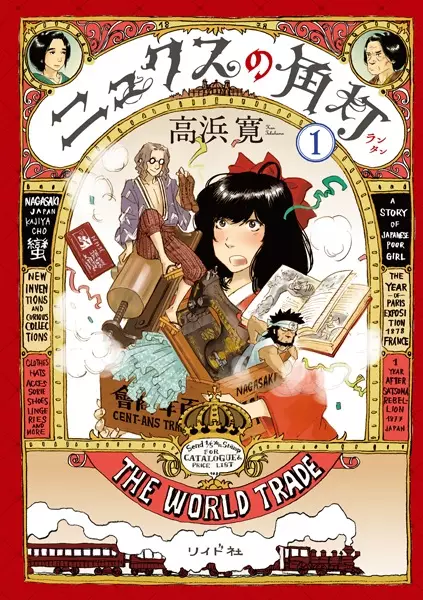
Having lost both parents, Miyo Yamaguchi ends up in the care of an aloof uncle and a stern aunt who is impatient to find her a job. After consecutive failed attempts, luck finally smiles on the wretched orphan when she lands a sales clerk position at a curiosity shop. Despite not meeting the requirements, Miyo possesses a rare ability that piques the interest of the shop's proprietor Momotoshi Koura: upon touching an object, she can tell who its past and future owners are. Along with the exotic merchandise from distant countries, Momotoshi's whimsical demeanor and his assistant Ganjii's menacing appearance cause Miyo to feel like Alice straying in Wonderland. Nonetheless, the two prove to be very supportiveâguiding her through this fascinating environment. As she adjusts to her new tasks, little does Miyo know the descent into the rabbit hole opens not only an exciting chapter in her life, but also the doors to a miraculous world that is bound to change her destiny forever. [Written by MAL Rewrite]