Back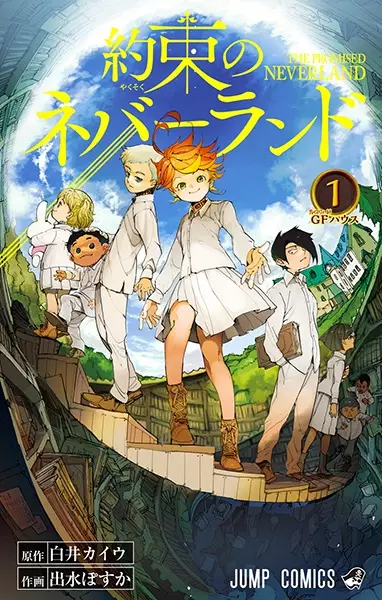
Where to Read
Links go to search results. Availability varies by region.
Find a Specific Chapter
181 chapters total
The Promised Neverland
約束のネバーランド
8.14(172K votes)
Ranked #654Popularity #19chapters
181
volumes
20
Status
Finished
Published
Aug 1, 2016 to Jun 15, 2020
Authors:Demizu, Posuka, Shirai, Kaiu
Award Winning
Worth Reading? — Global Verdict
6.8/10
Average Review Score
55%
Recommend It
20
Reviews Worldwide
International Reviews
moozooh
Mixed Feelings
6
*CAUTION*: Contains minor spoilers. Skip to the last two paragraphs for the summary. It is really a twist of cruel irony that The Promised Neverland has lived up to its name in a way I did not expect it to: it continually PROMISED a clever, poignant story but NEVER followed it through. (I'm sorry I couldn't LAND this joke better.) TPN became an object of hot discussion among the manga-reading crowd already after the first few chapters. For all the good reasons, too: it was, at the time, a competently done psychological thriller, something that Weekly Shonen Jump typically didn't feature, which immediately made it stand outfrom the endless conveyor of action and sports series, low-brow comedies, and various mixtures thereof. And not just that—right from the beginning TPN had established a gripping conflict with clear stakes, believable balance of power, and an awesome antagonist. Wow, what's not to like? All of this, combined with Urasawa-esque cliffhangers, made the first arc of TPN one of the tightest pieces of writing to come out in Weekly Jump this entire decade. Not perfect by any means—but damn impressive nonetheless. And more than that, it was a story that really wanted itself to be taken seriously. It was the first manga in many years that took relatively normal characters—without any sort of superpowers or the like—and put them in a relatively realistic setting where actions have intentions, words have meaning, and decisions have consequences. And then it just... took a bungee-jump off the cliff. Each and every time the plot itself would stretch a helping hand for the author to make a turnaround, they would high-five it and plunge deeper down the abyss of mediocrity. And if I were to identify every little bit that went wrong, you'd probably be reading this all day, so I'll just call out the most glaring, deal-breaking issues. CORE PROBLEM #1: Emma is far too sterile to be a protagonist. Don't get me wrong, Emma is not a bad *character* in principle. Her goals are lofty but ultimately agreeable. She is very one-note but could potentially work in a supporting role, considering both Normal and Ray are deeper, more relatable characters with some inner conflict that could work as a premise for a proper character arc. But the way she's written into the story makes the whole thing a farce. She's an overly optimistic Mary Sue with an unshakable conviction and a resilient physique, a set of traits typical of a better half of Jump protagonists of the last three decades at least. What makes this walking pile of cliche much worse, however, is that she is constantly put in charge of decisions based chiefly on her optimism, and this leads to situations where she is (or, by extension, her followers are) put in unnecessary danger or required to make some morally ambiguous choices... ...Thankfully, in *every single one* of those situations she suffers no long-term consequences and never actually *has* to make those morally ambiguous choices herself because others are eager to do it for her. For example, in the second major arc of the story, Emma—who at that point is already averse to all loss of life—needs to pick a weapon for herself, but Ray suddenly picks one for her. Why does he do this? We learn the reason later when she reluctantly has to shoot said weapon to protect herself, and—lo and behold!—it just happens to be the only non-lethal weapon in that entire arsenal, which is something she didn't know about and never gave it a second thought. The enemy was then killed by somebody else, which was totally okay with her! Didn't even deserve a passing mention! Isn't it just wonderful when you get to cheat your way out of a situation that challenges your morals? And the same thing happens every time, really. She plays the card of the goody two-shoes, and the world's logic bends and contorts violently to her aspiration of never getting her hands dirty. If an enemy has to be killed, they will be killed by someone else; plenty of other characters are conveniently willing to take the fall, and Emma doesn't complain. If she makes a risky or erroneous choice, she never has to deal with the consequences herself, at least not for long—somebody else will, anyway. Her obstinacy never comes into question and never really gets her into trouble... well, unless your definition of trouble is other kids yelling "Emma, you big dummy!" while crying profusely. Emma never processes her losses in a way that makes her question her methods going forward. What this means, essentially, is that there is no real progress to her character. She starts off as an unrealistically perfect, morally immaculate human being and ends the story in the same exact state. She never changes and never needs to. Her development stops several chapters into the story pretty much completely, and any further attempts at it end up with nothing of consequence. Naturally, even her last big sacrifice, which is already made on unreasonably favorable terms, ends up forgiven (read: cheated away) soon afterwards—because the only semblance of consistency the story has is Emma consistently having her cake and eating it, too. She's got no business being as successful as she is; it simply feels undeserved and fake. Considering that she already starts the story with some pretty high specs—being a top-quality human material and all, already smarter at 11 y.o. than most adults—she fails to serve as a source of inspiration or a role model because the real world is never so overwhelmingly convenient. You don't start out as an overachieving genius with unquestioned leadership qualities, and it clearly isn't enough to just believe in yourself to attain an ambitious goal. In the real world, you won't conveniently have adults and/or helpful cues left by them that would tell you what to do every time you're at a loss. You will often be wrong, and just as often will fail to present convincing arguments even if they're sound. You will often find that there are no ready-made solutions for your situation and you will need to come up with new solutions by yourself. You will often find out that your humanity is actively working against you—not helping you. And, in the unfortunate case of having a close brush with death, you will find the experience deeply traumatizing. You will need to adapt to circumstances and be flexible. You will need to make hard decisions and be ready to pay the price if you take the hard way out. All of these simple principles could carve a great character out of an amorphous blob of stereotypes, but Emma's example teaches you nothing that could be realistically applied in the real world because she's cheating at *every single step* of the way and just coasting on her plot armor. You cannot do what Emma does and achieve even similar results, period. It would be the literary equivalent of telling a homeless person who has lived in poverty and misery most of their life to save for a house, or telling an incel virgin in their 30s to go seduce a beautiful woman, or telling an obese person with severe eating disorder to just eat less—because that's clearly what they're equipped to do successfully if they only believe in themselves™. It's never relatable but it's always extremely frustrating. One might say this is the norm for a shonen protagonist—but no, this is not the case at all, either! I mean, let's take perhaps the most typical, most Weekly-Jump-esque MC around: Luffy of One Piece (doubly relevant, as TPN's editor Sugita has also worked on it at some point). He is also overly optimistic, is unshakable in his convictions, with a clearly stated end goal and a badass physique. Sounds very similar to Emma on the surface. However, before he got to that point, he grew up in a literal lair of bandits, was best friends with trash scavengers who pretty much made him go through an obstacle course every time he wanted to play with them, had one of said friends apparently be killed before his eyes, and trained for years to master his unusual physique before he even got to leave the hometown. His morality is also remarkably grey in that he doesn't explicitly want to do good deeds and doesn't care for anyone who isn't his friend, crewmate, or family. By the D&D alignment system he would be somewhere on a fringe between a Chaotic Neutral and a Chaotic Good. He selfishly puts his crew through dangers for his own dream but also doesn't shirk from taking the hits for them. He makes rash and unfortunate decisions and in many cases pays dearly for it. He is traumatized by personal loss. He's also an actual criminal who has taken from others and made unprovoked attacks on the Navy, and the story does not pretend this will be written off even if he saves a nation or two. He bears the full weight of his sins, knowingly so, and does not expect a happily-ever-after when he's done. Not quite a Gary Stu, is he? Luffy is undoubtedly cartoony, but aside from the fantasy attributes coming from the setting and personal quirks like the narcolepsy and love for meat, he is, for the most part, a surprisingly grounded, fallible, well-balanced and three-dimensional character. His past informs his present, he has good and bad sides complementing each other, his self-confidence is grounded in the fact that he and his crew are some of the most ambitious and capable people in the world in their respective areas, who have spent their entire lives working their ass off to become better at what they do. I want to underline that at no point this is taken for granted, and both the in-universe characters and the readers know how much pain and trauma they had to go through to attain their amazing expertise. In contrast, Emma is a certified Lawful Good who grew up in a sheltered, happy, unproblematic environment with no hardships to strengthen her character, nor choices to make when there's an adult whose job is to decide everything for her, nor facilities to make her into a trained soldier she so very quickly becomes on demand (I'm pretty sure most of us had played outdoors as kids but not everyone grew enough bulk from it to run long distances over deserts and forests with rifles and such). Her self-confidence is based on second-hand knowledge, unreasonable extrapolation of her relatively minor past experience onto the unknown, and her family, well... being good at being family, I guess. How this setting managed to produce such an all-around capable, successful, mentally resilient character, or how she managed to end up less down-to-earth than the protagonist of the high fantasy setting of One Piece is utterly beyond me. To go on a yet another tangent, most of the other children aren't much better in this regard, with none of them so much as soiling themselves or becoming catatonic after multiple actual near-death experiences. (I mean, this is still presented as a thriller series, right? Act the part sometime.) But all of them would bawl their eyes out every time they have to say goodbye to anyone or have an otherwise emotional scene with forced melodrama, of which there are plenty. How does this even work? This is neither the genre nor the setting where these discrepancies fly well; even if a story is fictional, it still has to be self-consistent and maintain enough realism to suspend disbelief. The way it is, almost the entire cast becomes completely unrelatable and, consequently, unlikable. CORE PROBLEM #2: Every antagonist after Isabella is a goddamn joke. It is no secret that many genres of fiction, especially thrillers, live and die by their antagonist. TPN has several major arcs, each having a main antagonist of sorts, for a total of four. For the opening arc, this is Isabella, the "mama" of Grace Field House, and she has been fantastic in this role. Being a human just like the other cast members, she is familiar, which leads the characters—and the audience, by extension—to question that which they *think* they've known, and this is very cool. Her motivation is also inherently human, and the backstory compelling enough that you don't have to question why she ended up this way. She is, above all, a relatable person, so one ends up accepting her ruthless demeanor not as an act of petty villainy but as a necessary trait for survival in her unfortunate position. These traits—humanity, relatability, and deceptiveness—are pretty much universally shared between all of the best literary antagonists out there, in manga or otherwise. But the other three antagonists of TPN are so boring and cartoony you'd have to pay anyone to care about them and their agenda. This will be the shortest section of this review because there's just so little to be said about these guys. The first one is a psychopathic, prideful, gluttonous, overpowered villain demon that hunts humans for fun and riles them up on purpose so that they come for him with extra bloodlust... so that he feels more thrill killing them. He also has superhuman strength, superhuman speed, superhuman endurance, and his mask is tougher than the rest. (Just typing this up makes me apathetic.) This is also where the "but this is just what we humans do to animals in our world!" metaphor breaks apart, because this guy is a certified criminal who would be charged guilty of animal cruelty and put into a mental institution at the very least if he were real. This is not what "we humans" do to animals—no, in fact, this is something for which we humans *punish other humans*. Naturally, the guy is completely flat and uninteresting, and is disposed of in a very disappointing manner in a lazy shonen shoot-out that is nowhere near as gripping as the mind games of the first arc. The second one is also a psychopathic, prideful, gluttonous, overpowered villain demon, but with one-tenth the creative budget. She has even more superhuman strength, etc. She's so non-descriptive and uninteresting I don't even know what else to write about her. I couldn't come up with any antagonist more boring and faceless even if I'd tried. Oh, but she's *literally* faceless. I guess that checks out? And then there's a human edgelord who would have been the principal antagonist of the entire series if his presence ever amounted to anything but a temporary setback for Emma and her rescue rangers. His personality? Of course, he's psychopathic, prideful... well, you get the idea. They're all cardboard cut-outs made from the same basic stencil, neither engaging nor relatable. This guy in particular dies the most hilarious death. It's so stupid and wonderfully convenient I can't even mock it better than it mocks itself. The whole sequence is completely devoid of logic and reads like satire. Of course, without good antagonists, the psychological thriller aspect breaks down completely, and all unresolved conflicts become a pile of loosely connected garbage you don't want to sift through, let alone empathize with protagonists who choose to. There's just no point nor reason to care anymore. But you know who would be a great antagonist? Norman! He's somebody we are inherently invested into, somebody who is smart and relatable, with an ultimately well-meaning motivation that is just a step away from being corrupted by fear and newfound power, and he is close enough to Emma that it would force her to think and make some very hard decisions instead of taking the easy road for the win/win scenarios. Sounds perfect, right? And he's almost set up that way... but nope, we have to deal with these sorry losers instead. I have no idea who came up with Isabella and Sister Krone, but I find it hard to believe it was Kaiu Shirai, judging by their laughable attempts to write anybody else and always arriving at the *exact same* poor result. The sad part is there have been plenty of opportunities to make actually good antagonists and a more engaging power play if only the author was willing to take some risks with the characters. Unfortunately, herein lies the core problem #3... CORE PROBLEM #3: Kaiu Shirai is, after all, a weak, risk-averse writer without any clear message to tell. This is probably the most damning one. The Promised Neverland has a really good premise and would have been an all-time hit if it had played all of its cards right. And make no mistake—there were a *lot* of cards to play. Opportunities to take the story in much more convincing, daring, interesting directions were aplenty. Instead, the author almost always chose to tread by far the safest, most predictable and least controversial paths. Even the brightest plot ideas were beaten into the most trite, cliche-ridden pieces of uninspired shonen action. Furthermore, it would often be muddled even more—and on purpose!—by sudden tonal shifts from completely serious to comedic, as if the author were actually scared that the audience would take the already shaky narrative seriously after setting up such a convincing world that demanded better. To put the changes in more concrete terms... The horror and mind game aspects from the opening arc evaporate almost completely along the way and are replaced by dumb action (where the solution is quite literally "bring better guns") and occasional tone-deaf comedy. The ethical dilemmas raised so sharply in the beginning are dodged and resolved in increasingly convenient, low-stake manners—the author would not hesitate to use deus ex machinae if needed. Characters become able to achieve unrealistic feats of hardware and software engineering which are hand-waved by "well, they're geniuses, duh" without ever accounting for the fact that making anything complex or precise requires reference materials and tools that enable that complexity or precision in the first place—and I doubt they would be conveniently lying around in an alien world which looks like it's gotten stuck in the Bronze Age. The kids' athleticism and control over their body also becomes so comically exaggerated that at one point a girl in her mid-teens can be seen shooting two heavy machineguns, each of them probably half her entire body mass, while standing on a tree branch, unsupported, without any regard for the recoil. So yeah, they basically gain physics-defying superpowers as well. Naturally, this means that every message, every piece of social commentary that is normal to have in any given story—as either an attempt to put an idea forth or to discuss its implications—falls completely flat in TPN. Even the pro-vegan message that everyone had considered to be on the nose in the beginning ended up nothing more than a red herring in the end. I'm not sure if this was an attempt at subversion (subverting veganism with a herring?) or just an admittance of failure to make a convincing point, but either way it went nowhere. Both the premises and the resolution to the conflict between the eaters and the eaten undermined the argument that could be made in favor of veganism, or at least in favor of not engaging in livestock breeding. And I don't even subscribe to any particular side of this or other arguments—I just wanted them to be convincing and self-consistent in their presentation! There are other themes, concepts, ethical dilemmas, and questions that could have been explored but were only briefly touched, such as: * The dangers of recklessness (raised but never explored). * Machiavellianism (toyed with but snuffed out and forgotten). * The law of the jungle (invoked multiple times but miraculously averted each time the opponent was a human). * Corruption of power (briefly mentioned but not explored). * Life fulfillment (briefly mentioned and promptly dealt away with). * Utilitarianism (raised multiple times but mostly dodged). * The ethics of euthanasia (touched upon but never explored). * Redemption arc (invoked multiple times but was almost comically shallow in every case). * Forgiveness of cardinal sins (something Emma and others are all too eager to do for both humans and demons, but it's never discussed). * Likewise with all of the hinted-at religious undertones and many more aspects that were either never explored or were dealt away with in the most crude and hamfisted manner. There are tons of other manga that have done these and more; perhaps not at once but in a much more elegant and thoughtful manner—which is more important. Even the blockbuster Attack on Titan, which many people only perceive as a dumb schlocky action romp, has actually addressed many of these concepts quite thoroughly and from a more balanced viewpoint. There is also the issue of overusing cliffhangers and—worse still—exaggerating scenes at the end of a chapter and then retroactively modifying them at the beginning of the next one (such as by inserting extra dialogue or moderating them to be less impactful). To put it into perspective, somebody like Naoki Urasawa executes a cliffhanger by arranging the presentation of events such that the engagement peaks right at the end of a chapter, so the only thing he has to do there is cut the chapter off at the right time, like when a character reacts to something. When Shirai does a cliffhanger, they're *misrepresenting* the events to be more exciting than they appear in the next chapter, thereby artificially doping the engagement. In other words, "oh, it didn't actually happen like that—that was just me messing with you" is what happens. This deliberate sabotage of narrative consistency between adjacent chapters is a pretty egregious offense by any literary standards. It is such a cheap, aggravating way to engage the audience I'm surprised the editor allowed a continuous abuse of this trick. Right up there with that Shinsekai Yori scene where the MC mistakes one character for another *for no reason* other than to rile up the audience's expectations for the next episode. I'm normally against corporal punishment, but public flogging of such authors suddenly sounds appealing to me. But the most baffling part, perhaps, is that the blueprint for the entire story had been completed—get this—*years in advance* while Shirai and their editor were looking for an artist. There was more than enough time to flesh out the narrative and make the characters—particularly Emma—more complex and three-dimensional. Again, the opportunity wasn't taken, and it's all conforming to a consistent trend of being lazy, cowardly, and/or uncreative. At this point I'm fully convinced that the better parts of the story were coined by somebody else entirely; I refuse to believe that an author who could do so well in the beginning and had this much time on their hands to work on the story could ruin it to such an extent. But even if that is actually the case, it only drives home the point that in the end it's not the ideas that matter but their execution. To summarize, The Promised Neverland is a story that could have been fantastic and had continuously promised to do better but barely managed to escape utter mediocrity by the end of its run. The first arc is a high 8 out of 10 on its own, but the rest averages out to a weak 5. So my resulting score is a 6 as a nod to all the squandered goodness. Disappointing, very disappointing. My advice would be to read the first arc (or, alternatively, watch the first cour of the TV adaptation, as it covers the whole arc and does it just about as well as the manga). If you notice something in it that annoys you or may become a potential deal-breaker, be sure that from that point on it will only get much worse, so it's best to stop there and treat it as a self-contained story. But if you were perfectly happy with how it went, proceed at your own risk. Some have enjoyed this to the end, after all. 2022/04: MAL now has Interest Stacks, a feature that allows creating thematic listings, so I've made one for similarly disappointing manga with a good start: https://myanimelist.net/stacks/2361.