Links go to search results. Availability varies by region.
ăŻăłăăŒăšăă°ă»ăă©ă€ăȘăȘăăŁ
12
TV
Finished Airing
Jan 13, 2021 to Mar 31, 2021
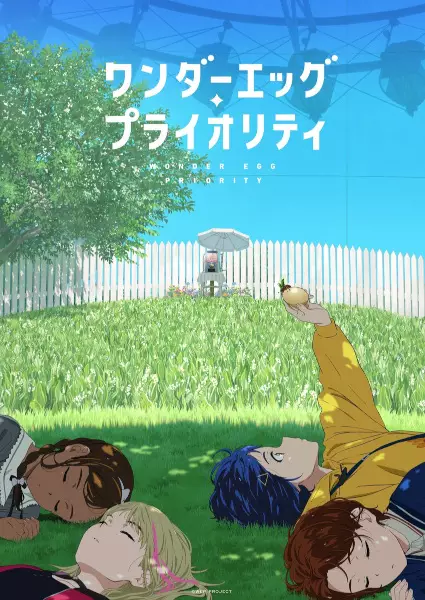
Following the suicide of her best and only friend, Koito Nagase, Ai Ooto is left grappling with her new reality. With nothing left to live for, she follows the instructions of a mysterious entity and gets roped into purchasing an egg, or specifically, a Wonder Egg. Upon breaking the egg in a world that materializes during her sleep, Ai is tasked with saving people from the adversities that come their way. In doing so, she believes that she has moved one step closer to saving her best friend. With this dangerous yet tempting opportunity in the palms of her hands, Ai enters a place where she must recognize the relationship between other people's demons and her own. As past trauma, unforgettable regrets, and innate fears hatch in the bizarre world of Wonder Egg Priority, a young girl discovers the different inner struggles tormenting humankind and rescues them from their worst fears. [Written by MAL Rewrite]
6.3/10
Average Review Score
50%
Recommend It
20
Reviews Worldwide
This review mentions sexual assault, self-harm, and suicide. I have rewatched Wonder Egg Priority multiple times in an effort to organize my conflicting feelings towards it. On one hand, it has beautiful visuals, an intriguing aura, and a great first couple episodes. On the other hand, it has shallow concepts, a messy narrative, a lack in direction, problematic messages, poor character development, exploitation of sensitive themes, and a failed execution of ideas. Yeah, the cons definitely outweigh the pros with this one. Wonder Egg markets itself as an odd yet beautiful dream of self-acceptance full of imagery and symbolism. The first scene of the anime introduces usto our protagonist, Ai, in the middle of the street when a strange voice taking form of a firefly brings her to an underground arcade and gives her an egg. Breaking the egg transports Ai to a surreal world that slowly reveals itself as a danger zone where she is tasked to protect a person called a âWonderâ from a creature called a âWonder Killerâ, a representation of the personâs struggles or trauma. Ai then meets friends who also take part on their own journeys to defeat Wonder Killers. Every character has their own backstory and a set of convictions that affect how they act and fight against trauma. Itâs a very original and mysterious Ikuhara-esque concept that aims to tackle how we overcome our issues. But with each episode, the anime gets more and more problematic until it completely falls apart. One of Wonder Eggâs main fallbacks is its use of imagery. Ironically, imagery is the whole appeal of the show and the reason why I admittedly had high hopes for it. But over time, it got repetitive, and I realized that it was due to the constricted nature by which imagery in Wonder Egg is presented. The wonder killers (victimâs trauma) are always actual beings. Thereâs the abusive teacher, the abusive teacher #2, the abusive coach, and so on. Not only is this the same thing over and over again, but I find this pattern problematic because when we talk about sensitive topics like self-harm and suicide in real life, trauma doesnât always take form of one specific event or attacker. We can see how this issue affects the story in one of the episodes that focuses on Momoe, a tomboyish girl learning to deal with societyâs ideas of gender and appearance. Fitting with the theme, the person Momoe was tasked to save in that episode was a non-conforming girl who identified as a boy. This is great. Having Momoe pair up with someone who is also subjected to societyâs standards is a very thematic plot choice that allows the opportunity for Momoe to maybe learn something about herself from their encounter. I thought, âCool, so this whole dream sequence is going to focus on how they accept themselves despite societal pressures.â Perhaps the wonder killer would be a representation of society that they could beat together. But no. Instead, the Wonder Killer was a rapist⊠which I found completely random. Yes, rape is an issue. But is it a good issue to poorly tie into the topic of gender norms for no deep reason? Absolutely not. Why suddenly insert a rapist when the topic isnât about dealing with rape? Doing this just feels like the show is forcibly inserting rapists everywhere. It also feels a lot like the show is just digressing from the initial topic at hand. If Wonder Egg wants to tackle challenging societal norms, then the issue should be society itself. But this anime consistently uses one specific attacker to encompass the whole issue. In doing this, it only focuses on face-value encounters and makes it seem like the entire problem lies within just one superficial enemy or trauma. It is a wasted opportunity that hinders Wonder Egg from using imagery in a broader way. Had they used the dream sequence in order to symbolize society and its issues as a whole, the anime would have better succeeded in connecting to the bigger picture. Instead, Wonder Eggâs imagery is too narrow, relying on a single person to put the blame on. Object symbolism in this anime doesn't come with much meaning either. The firefly from the first episode is seen every once and while but doesnât represent anything. It couldâve been any other bug or small object, and everything wouldâve remained the same. Ai has heterochromia which is supposed to show how different she is and tie into the fact that she was made fun of in school. But then the anime contradicts this symbolism by introducing another character with heterochromia who was considered smart and beautiful rather than someone who was made fun of. All of the main girls have different weapons when they enter the dream world, and the show even draws attention to this when Ai first fights a wonder killer with one of her friends. But the weapons barely catered to their backgrounds OR only referenced one small part about their personality. It would be easy to assume that the creators just randomly gave them something cool that would look good with their character design. For the most part, this isnât a huge issue. But itâs disappointing because the anime sets itself up to be something deeper and because most of these ideas take place in a dream world thatâs supposed to be some representation of reality. I love analyzing and reading between the lines, and I thought that Wonder Egg would make me do that with its unusual concepts. But itâs mostly just pseudo-symbolic repetition without thought. Despite this shallow repetition and narrow imagery, the girls-fighting-against-wonder-killers formula was still a solid one that produced decent results in the beginning of the anime. We got to see girls be badass and overcome their trauma. Everything was running smoothly, and there werenât any big plot issues. But thatâs exactly why when Wonder Egg abandoned this formula, the narrative completely collapsed. For some reason, the creators of the anime couldnât stick to one idea. So before we even hit halfway through the series, they started playing around with the messages of the anime. One line that shifted the tone of the narrative was âBoysâ and girlsâ suicides mean different things. Men are goal-oriented, and women are emotion-oriented. Women are impulsive and easily influenced by othersâ voices.â Suddenly, Wonder Egg was no longer a show that focused on girls simply to show their growth and strength. It became a show that focused on girls because apparently âtheyâre emotional and easily manipulatedâ. Tying those stereotypical ideas into suicide was a horrible choice. The show tries to make sense of it later on in the anime, but it just ends up being rushed. So the lines came off like something that the writers genuinely believed in. A lot of the smaller dialogue started relying on similar gender stereotypes as well. For example, some quotes from the anime are âMen who ask women for money are all fakeâ and âA beautiful woman never needs a wallet.â Both of these lines come from Rika, one of Aiâs friends who is involved in acts of self-harm and lives in a single-parent-household with an alcoholic mother. Knowing this, I assume that the dialogue was meant to show the mindset of a child from a troubled home with absent parental figures. However, I donât understand why they had to be so stereotypical. There are multiple other ways to display a personâs mindset without having to rely on problematic dialogue. The fact that these messages are repeated throughout the show makes it feel like the anime is exploiting Rikaâs background and using these lines more as shock factor rather than to show her growth. This is even more evident when Rika implies that she hasnât gained a sense of self-acceptance. After one of her Wonder Killer battles, Rika says âEven if it means hurting myself, Iâm going to live.â Anyone who knows how dangerous self-harm can be should understand why this line is a big issue. Not only did the anime actively promote self-harm, but it also marketed it as growth. Now I like to give shows the benefit of the doubt, so I thought that the line might have just been a part of the story. Maybe the anime is self-aware of how incorrect it is and is only using it to build bigger themes. I tried to think of it as a means for Rikaâs characterization to maybe emphasize her troubled background. But I recently rewatched that episode and saw no indication of that line having a deeper connection to Rikaâs family life. In fact, that line was part of the last episode of the series that fully focused on Rika, so the anime never clears up the way it poorly handled self-harm. Though Iâve tried to think positively, I cannot find anything to justify that piece of scriptwriting. It blatantly views self-harm in a positive light to the point that I can no longer call this an anime about self-acceptance. The creators also began flooding the show with too many ideas and cheap plot twists, most of which were crammed towards the end of the anime where the writers didnât have enough time to cover them all. New antagonists and backstories were introduced in the last few episodes of the series, unnecessary changes to the storyline happened at every corner, and random events were inserted just for the sake of shock value rather than actual relevance to the overarching plot. Wonder Egg even introduces inter-relational conflicts that never get fully explored. One example of this is with Neiru, one of Aiâs friends. Neiru has a tense relationship with her sister, and when she tells Ai about this, we learn about the sequence of events that led to their complex sisterhood. But the details were incomplete. The anime set it up as a mystery to unfold as the story went along. What really happened? Why did her sister act the way that she did? Even after watching all twelve episodes of the anime, I still donât know. The show just brings up the issue but never resolves it. When I expressed these concerns, fans argued that there would be more episodes or at least more content to close things up properly. Though a special broadcast in June has been announced, I highly doubt that the franchise will be able to tackle all of the issues found in the anime and tie all the loose strings together in a twenty-minute episode. The storyline is already a mess and there would be too many relationships to cover. This is a clear production, time management, and story building mistake on the studioâs part. And the need for a special broadcast only emphasizes their shortcomings. Amidst all of these flaws, I admit that there are still some things Wonder Egg does well. For example, the directing really stands out in some of the quieter scenes of the anime. From the moment weâre introduced to Ai and the world of Wonder Egg Priority, thereâs this calming aura of quiet eeriness that pulls you in. The atmosphere is immersive and will keep you hooked to find out what happens next in the series. Wonder Egg also has stunning visuals. The animation looks like it came straight out of KyoAni with consistent and fluid drawings. The color palette is unique with bold colors that grab your attention, and the artists use this with a good understanding of contrast and tone. Flexible and eye-catching, Wonder Eggâs art is one of the few parts of the anime that remained consistent throughout its twelve-episode-run. Paired with the messy plotline, some may call Wonder Egg an anime that chooses style over substance. And they arenât wrong. Looking at it as a whole, Wonder Egg was an imperfect but cool idea that ended up being too ambitious for its own good. It introduced too many plot points without properly bringing them together which affected the messaging and made the show feel less cohesive. While watching this anime, I often found myself wondering whether the creators even knew what they were doing. It seemed like they couldnât decide the direction that they wanted to go, so they just let the story jump around until they found something that evoked some sort of emotion from the audience. Itâs messy writing that falls short in multiple aspects of story building and fails to connect to the initial topic of self-acceptance. Putting aside the solid beginning and fun visuals, I canât find much to recommend about this show. And though Iâm frustrated that weâll never see how this anime couldâve gone with proper execution, Iâll probably just remember it as another one of CloverWorksâ cringeworthy letdowns this season. 4/10
Click an episode to read its synopsis.
Wonder Egg Priority is babyâs first anti-suicide propaganda. Itâs just the next, trendiest puberty anime on the block, and the egg symbolizes bad writing. Itâs a teen drama filled to the brim with metaphorical imagery and action which screams their exact meaning so loudly and with so little nuance, theyâre nearly literal, and as a result of this, anyone with even the slightest modicum of emotional maturity or life experience will find themselves knowing everything this show is going to say as soon as its subject matter is made so clumsily clear. Minor spoilers ahead. I once said about Nijigahara Holograph, a great thing about crushingyour story under the weight of its own symbolism is that it becomes so interpretive, critics canât even parse through enough to say it made no sense. However, unless you, the author, actually dare to explain yourself and your imagery, you yourself canât say it did in fact make any sense either. This is why abstract art isnât typically respected by critics, and thatâs a problem for Wonder Egg Priority, because ultimately, itâs just an artsy student film. Itâs abstract art which portrays teenagers fighting personifications of suicidal tendencies in an effort to overcome them in this weird egg limbo to empower the audience who presumably finds their problems relatable, but the degree to which the show actually grasps what it seeks to comment on wavers greatly throughout the show to the point it almost makes these very legitimate adolescent anxiety issues seem laughable as a consequence of how over-the-top the imagery is. Ugly little CG goblin bullies called âSeeno Evils,â other ugly CG abominations called âHaters,â a heterochromic main heroine named âOhto Aiâ whoâs name is enunciated âOdd Eye.â I mean, come on people! Explaining this kind of shit to an eleven year old would be patronizing, yet when these kinds of symbols appear in the same show as a very realistic portrayal of someone cutting themselves and a very poignant analysis of why people generally do so, it really begs the question how serious the authors were about tackling either issue. One episode itâs dangerously suggesting all chĆ«nibyĆs are medically schizophrenic, another episode itâs outrageously claiming boys never commit suicide for emotional reasons, and another episode it places a transgender boy, a biological girl, in the egg limbo after having established no boys are allowed in the egg limboâŠso I guess itâs based and redpilled? My point is itâs extremely hit or miss, but when a show is hit or miss while touching on delicate topics, especially a show like this which is always soapboxing and using its cast as a moral mouthpiece, it just comes across as ignorant and disingenuous. For a show about dissecting peopleâs problems and helping them fight their mental hangups, the characters are, ironically, by far the weakest link. In the first episode, Ai completely rejects to the point of physically running away from the cordial and friendly advances of the most calm, collected, and kind girl on the planet, but then immediately afterwards in episode two, sheâs suddenly trying her hardest to shamelessly insert herself into the life of the most stuck-up and thoroughly unapproachable character in the show, Neiru, as if we didnât just watch an entire episode of her being portrayed as unmanageably shy. Momoe is a masculine looking girl who's self-conscious about her appearance and wants to look more feminine. Her problem is even though she's straight, she only attracts girls she has to constantly turn down who thinks she looks handsome and dashing. Men don't approach her because she looks too boyish, and she doesn't approach men because she lacks the self-esteem. One day, a man approaches her and asks her to go on a date, but when she shows up for the date, this time wearing a dress that accentuates her femininity, the man reveals he was gay and mistook her for a guy, and dumps her. The problem is this established Momoeâa character with short, straight hair who for some reason wears a collared shirt under a slim-fit sweater and khaki slacksâcan, indeed, look like a girl if she puts even the slightest bit of effort into doing so, therefore invalidating her entire internal crisis. Aiâs school counselor who the show insistently implies is a creep who grooms his students, and who Ai saw after school being intimate with her friend who committed suicide soon thereafter, is suddenly turned into a contrived love interest/father figure when he hooks up with Ai's mom. Even character development that sticks the landing like that of Rika, the final of the four main characters, feels fruitless because it doesnât change the group dynamic at all, and unfortunately, the plot turns out to be way more important than you thought, and the plot is nothing short of boring. The writers seem to be under this weird impression that by introducing supernatural elements into their story, youâre not allowed to criticize its internal consistency in any way. The whole egg limbo with all the crazy egg fights and bizarre monster designs never have any thematic weight, and despite the fact what little emotional weight is there usually misses the mark entirely, the big autistic shounen battle speeches they give usually leaves you feeling as if their emotions are all that really matters in this world and not to really mind the details of the allegory since itâs probably shallow anyway. However, given everything I discussed in the last paragraph, trying to dissect the characters typically falls apart, so all thatâs eventually left to chew on is those visuals, which the show seems to want to sell you on without actually offering you any understanding of, kind of like how a magician will let you watch their trick a thousand times but never let you touch any of their mechanisms. Now, donât get me wrong. I'm all for interpretive media, but said media has to actually suggest interesting interpretations. The egg monster representing a rapist has a big dick nose on his face with an unruly mustache around its base, the egg monster representing a coach who body shames their students has giant rolls of fat and absurdly large and saggy tits...okay, cool, so is that it? The issues the show wants to portray are always deeper than the symbolismâlet alone its thin characterizationâgives them credit for, and when the plot finally rears its ugly head, it tries to lazily wrap everything up by explaining away all the supernatural nonsense with a ridiculous pseudo science fiction plot which takes the time to imply all women who take their own lives only do so impulsively, and if it wasnât for that fleeting moment of weakness, our villain who we just introduced five seconds ago who can poison peopleâs minds never wouldâve been able to lead them to suicide. Meanwhile, I still canât decide which is more offensive. That shit, or the aforementioned suggestion that boys donât kill themselves for emotional reasons. Unfortunately for the ideologues in charge of writing Wonder Egg Priority, their little snowflake here isnât special, and the same rules of storytelling which apply to everything else also apply to it. The show always comes down to pacing, but since everything gets shoved towards the tail-end of the story, elements of the narrative which probably wouldn't have been as egregiously melodramatic with proper set-up end up piling up at the end and making the whole thing a total slog, because the empty-headed artsy student film it was at the beginning ultimately didnât have any legs, and the misguided Flip Flappers/Magical Girl Madokaâ Magica/last two episodes of Evangelion/Kara no Kyoukai: Fuukan Fukei rip-off it was at the end did little but make an internal mess of its already externally messy symbols and expose this show for exactly what it is: a largely incongruous anime inspired by those far more genuine and artful than itself. I have an inherent respect for a commentary on how modern Japanese society handles mental illness and suicide, but as entertainment, itâs mediocre far longer than it is interesting. One may argue the show concerned itself more with visualizing its themes than it actually did with being mysterious about what they were, but that would imply any of these images were deeply meaningful, and more to the point, part of a plot which explored them appropriately at all. Iâm only now realizing I havenât said a single positive thing about this show yet, so I guess, if only in keeping with how back-heavy the show itself is, Iâll flip the script and admit this isnât actually a horribly bad show as much as it is a confused one. Despite a hellish production crunch which resulted in a recap episode and some inconsistent quality throughout the latter half of the show, Wonder Egg Priority is gorgeous, and this obvious passion behind the animation proves the show isn't as much of a grifter as I made it out to be. Itâs just an amateur therapist who needs to work though their own problems before trying to help others overcome theirs. Thank you for reading.
It has been a long time since an original anime truly pushed the bounds of the medium and really diverged from standard cookie cutter series. Wonder Egg Priority is not only original in that it has no source material, its original in that its concept has rarely been done before in any other anime series. If you have long been awaiting an anime with a dark magical girl atmosphere similar to that of Madoka or Flip Flappers, along with Mawaru Penguindrum style character designs and color pallets, with all the symbolism included of course, then this is a must check anime from the 2021 winterseason. This review will delve into why Wonder Egg Priority stands out among anime originals and why it is a contender for anime of the season even among one of the most stacked anime seasons in years. Story: 7 Initially the premise seems like the backstory for a high school set drama, however this quickly shifts during the first episode. At the start the protagonist, Ai Ooto, goes full hikkikomori due to personal issues, some of the issues include a close friend committing suicide and Ooto generally being ostracized while at school. She lives her days full of regret and dreaming about her friend, Ooto knows she should have stood up her for her friend who was being bullied, especially since it was because her friend protected her that she became a target. All of this is just the prologue to the actual story which begins when Ooto picks up an egg which asks her if she wants to change her future. The story really launches at this point, the audience is introduced to a dreamworld full of the regrets and the personification of inner problems that suicidal girls face, Ooto is given the task to save the girls who are in the eggs. She obtains eggs from a gacha machine and cracks them open, afterwards she needs to find a way to solve their regrets or help them overcome their inner problems. More is revealed about this later on, the plot twists involving the gacha eggs and the system are really well done and the messages the show deliver are executed in a completely satisfactory way. Every important scene is full of symbolism, this is definitely the type of show to watch with your full attention, it is also highly recommended that you pause and reflect between each episode. There are also a lot of heavier themes in place mixed with the lighthearted atmosphere, the themes are handled well and do not conflict with the more easy-going atmosphere outside of the dreamworld events. The director very effectively balanced the show so that it was never oppressively dark or painfully edgy but still carried the serious tone that should be expected given the themes and subject matter. Overall, the story is, until its ending, fairly well executed and one of the most original ones in recent anime, it tells a wonderfully crafted story of self redemption and overcoming inner turmoil, it gets a 7 out of 10 for its creativity and originality but it loses points for failed execution near the end. Art: 10 The artwork is movie quality, it does not feel like a TV anime at all, every single scene looks like something out of an anime movie. From the background art which looks lifelike at times due do some absolutely amazing tracing work, to the food which looks like it belongs in a Ghibli film with its detail and rich colors, everything in the show has a lot of love and care put into it to an extent that is shocking for a TV anime. Most of the transition scene backgrounds, such as Ooto walking in the rain or the flowers in the fields can very well work as wallpaper for a 4k computer background, it cannot be understated exactly how detailed all the art is for this series. The symbolism is reminiscent of Mawaru Penguindrum and Madoka, while the action is about as fluid as Mob Psycho despite the massively more detailed character design. With a combination of rather unique looking enemies, excellent fight Choreography and cuts during major attacks, Wonder Egg Priority might have some of the best action scenes among recent anime even though action is not even the main focus given the nature of the story. Character designs for all the girls were quite well done as well, the studio used a very saturated vivid color pallet for each character which can conflict with lighter backgrounds, however the characters actually contrasted in quite a beautiful way with the scenery present. The girls had unique traits such as a variety of skin tones, eyes colors, hair highlights and subtle differences in body type that set them apart from each other in a bold way, the studio did not use cheap tricks like recycling the character model with different hair colors or overdoing the body type differences between the girls to differentiate them. Every girl also has a unique outfit, texting style and accessories that convey their personality, an interesting weapon in the dream world which reflects their trauma, and they all have some of the most detailed reaction facial animations for when the girls are tense, excited, smug, frustrated, upset. Its worth adding that very few shortcuts were used like blank faces during distant convos, characters speaking without being seen, and there was next to no CGI at used at all for character movements despite the intense detail in their character design. Now the combat animation wasnât perfect in that characters did have a lot of transition cuts during fights, however it was done in a tasteful way that actually added a lot of impact to the hard hits, blood splatter, knock back effects present. Wonder Egg Priority also managed to achieve something only a handful of anime have ever achieved, true horror during a fight scene, anime by design is pretty terrible at conveying a sense of horror due to how difficult it is to make a scene looks revolting, but that crocodile and butterfly scene really does it. Overall, the presentation of Wonder Egg Priority is spectacular, the show essentially has no notable flaws and exceeds expectations in every way, there is nothing present or lacking that lowers its score and due to this it receives a very rare perfect score for its art production values. The sound: 8 Interesting OP, an ED that closed each episode perfectly, sometimes in a hilarious tonal shift, but I maintain that it was perfect, the show also highly effective sound effects for fights. The OP itself including both the sound and the visuals really fill the audience with a strong sense of familiarity, it genuinely feels like the richness of daily life and all those small moments we take for granted being highlighted in the form of a warm and slow song. The background music soundtrack by itself was not that impressive, unlike other shows this series is compared to, for example Madoka Magica. However, on its own, it still complements the show well enough, and its memorable, therefore an 8 feels like a fair appraisal of the music. Characters: 8 The cast is all female, and they are all focused on saving someone they knew that committed suicide, this binds them together and gives them a common background. Outside of the common tie, these girls come from entirely different socio economic and familial backgrounds and they all have entirely different, but complementary personalities. Every girl is well fleshed out and this anime feels like an inverse Bechdel test in ways, there are next to no men present, if they are present, they are either a source of trouble or irrelevant to the cast. In short, the cast is very similar to most magical girl shows; however it goes a step above and beyond in both their characterization and their distinct designs, all of the girls have an important story to tell and they are all in this important journey together. As noted, before, men in the show are usually portrayed as bystanders or active antagonists, there is not much character development for them except one man who was very relevant for the protagonist. This is a notable weakness for the show, the antagonists are not really solidly fleshed out, the final antagonist was thrown in without any significant foreshadowing. It can be argued that the system itself and the girls inner problems can substitute as an antagonist, but its always nice to have a well characterized antagonist with their own motivations and goals that are clearly explained, while a true antagonist is sort of provided near the end of the series it felt a bit too rushed in to be counted. Despite missing a properly built up antagonist character, the main cast does grow together and complement each other well, they have their disagreements, conflicting opinions on whether or not they really have to undertake the egg gacha, and their moments of coming together after a major event. Overall, the main cast do feel like real characters with a lot of substance and depth, with multiple motivations for their actions and solid foundation behind the friendship they form with each other. The characters are a solid 8, it would have been better if there were solid antagonists and if the secondary cast such as family or the girls being saved had some more interesting moments, but the strength and development of the main cast was still quite well done. Enjoyment: 9 Between the exceptional visuals, the original plot, interesting cast, and initial great direction, Wonder Egg Priority was easily among the 3 best shows this season. This is despite the fact that some of the most well awaited and popular sequels came out in the same season. Every episode was a fun ride, and it was entertaining to come up with theories on where the show was going to go and ending up being right or wrong. It ranks very high on the enjoyment scale overall, definitely one of the most fun anime in recent history, probably the most fun original anime in years. Overall: 9 The production values, direction, story, cast all being excellent lead to this show being given a 9 overall. This was one of the best recent anime that made, definitely one of the best original anime in years, it had an excellent approach a lot of hard issues without making the story edgy and outside of the last leg of the story it was executed with perfect direction. If you enjoy visually impressive abstract shows with a psychological thriller plot, Wonder Egg Priority is right for you.
Wonder Egg Priority is a self-defacing, indecisive, insensitive, and genuinely insulting car wreck of a story seemingly only able to commit to the authorâs insistence that young women definitely always kill themselves because they want to fuck older men. While often stated to be an example of a âstrong start, weak ending,â this always feels highly disingenuous. While the opening act is carried by the mesmerizing forward momentum of the flash-and-fire a talented director and hardworking animation team brought to it, their devotion could only carry a horrific script so far. Beneath the facade of a sophisticated art anime lies a blatant continuation of Nojimaâstrauma-porn fueled daytime tv drama roots. The portrayal of young womenâs suffering is at best blunt, on average voyeuristic, and at its worst actively abhorrent. The finaleâs reveal of the story of Koitoâs death is a thematic poison pill that retroactively rots away every inch of the story as Nojimaâs true lack of empathy for the subject matter of his traumatically indulgent shitshow is revealed in full. Even ignoring thematic elements, the final act utterly fails to weave together anything resembling a compelling narrative, throwing new plot points at the wall like a drunken game of darts before it jumps out the window and baits a second season so it doesn't have to pay its tab. I originally planned to make this a much longer review, but it rapidly became clear to me that Wonder Egg didnât deserve this level of thought - not when the sum total of itâs cultural legacy has already been reduced to âtop ten darkest moments in animeâ listicle fodder, and not when Nojima clearly didnât put anything resembling that level of thought into his own work.
So, Wonder Egg Priority. Interesting show to say the least, it's up to interpretation either this show is good or a complete garbage. Well I will explain to you why this is an outstanding show, the best of winter season 2021. Story: Story is pretty simple and you could get it from the premise, but basically it's a bunch of teens fighting against depression and suicidal thoughts in human form. Every episode is a one week adventures, roughly connected with one another. An evil force is mostly metaphorical, rather than being a real thing, but as show goes on we uncover some stuff in reality also. As a standaloneepisodes are really good with giving you an important message. Art is movielike, fight scenes in this show are the best, very colourful and well drawn. Each character has unique design which in a way represents their personalities. Everything is fluid, backgrounds are well drawn. Not much to say about it, other than that being an excellent piece of work from the artists. Sound design are very good, some scenes are silent than it is necessary, OST as a whole is alright. Opening is unique, cause of how quite it is, that actually works perfectly with the saddest episodes, ending is sung by main cast voice actors, song is upbeat and catchy, idk if it fits, but I was ok with it. Characters. Well, characters is something why I enjoy this type of shows, and this one doesn't let me down. Each character has a distinct personality and goal, all of the have their own stuff to deal with. Trauma is real in this show and it making me feel what the characters feel at the moment of time. Characters progress, and have more development as the show goes on. Slice of life moments are so good, and these heartwarming moments just making me feel even more sad than something traumatic happens to them. Enjoyment: You definitely will enjoy this anime if you enjoying weird psychological dramas like Eva, or Madoka Magica. If you are not fan of these shows than you might enjoy it, idk, but I liked that either way. Overall: So that just ended on an... ... interesting point, there has to be another season overwise idk what to make of this. I will give it a ten for now and wait for the some announcement from the studio if there is gonna be an additional episodes or not. *Update so additional special, was comedically bad, but I won't change this review, cause some people seem to like it. Thanks for reading my first review! Enjoy the show.