Links go to search results. Availability varies by region.
ăăăăăŸă
11
TV
Finished Airing
Apr 12, 2019 to Jun 21, 2019
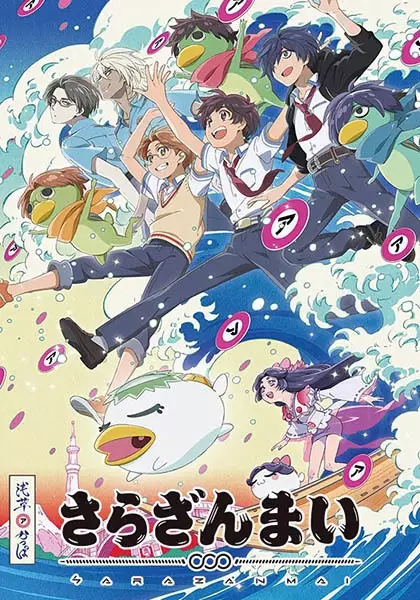
After the noble Kappa Kingdom falls to the Otter Empire, the Kappa prince Keppi loses much of his power and becomes helpless against the unseen Kapa-zombies. These zombies plague the world, and are the creations of the Otters and manifestations of people's deepest desires. With no other choice, Keppi must rely on three young boys: Kazuki Yasaka, who must carry a box with him wherever he goes; Enta Jinnai, Kazuki's childhood friend; and Tooi Kuji, a delinquent and a school truant. By having the mythical organ called a shirikodama removed from them, the boys are able to become Kappa themselves and fight the Kapa-zombies. However, to defeat them, the boys must connect with each other via their minds, bodies, andâmost importantlyâsecrets. As the Kappa Kingdom relies on these boys, they must reveal themselves as they have never done before, all the while learning that connections are fragile and truly precious things. [Written by MAL Rewrite]
8.0/10
Average Review Score
80%
Recommend It
20
Reviews Worldwide
Sarazanmai is Kunihiko Ikuharaâs first director project since 2015. Itâs been four years since we were graced by his body of creativity. This man is no doubt a legend. Whether you enjoy his style of creative content or not, he has been involved with outstanding anime that people still talk about today. These include the iconic Sailor Moon, the infamous Revolutionary Girl Utena, and one of the most bizarre shows of the past decade, Mawaru Penguindrum. Yuri Kuma Arashi may have been one of his lesser known projects but to make a comeback with this show called Sarazanmai is a feat of itself. Be preparedto be graced again by his absurd talent that few can step into the shoes in. To ask the obvious, what is Sarazanmai really about? Looking at the synopsis will probably raise a few eyebrows just judging by its bizarre plot. Within the first episode alone, we are introduced to mysterious creatures based on the amphibious youkai demons known as kappa. Anyone who is familiar with Japanese folklore will recognize their character design. With their green bodies, duck-shaped mouths, and long legs, you canât help but find this show to be decorated with bizarreness. Of course, this isnât a big surprise considering Ikuharaâs unorthodox style. What actually make a break for the show is the unusual storytelling. With our main characters connected by the bizarre creature known as Keppi, this evolves into a labyrinth of crazy adventures. Indeed, the opening episode of Sarazanmai is devoted to establish our main characters â Kazuki Yasaka, Tooi Kuji, and Enta Jinrai. Their personalities are what you can easily find in middle school students. However, the showâs story reveals more about their secrets with every episode. This connects to the overall tone of the main plot as the boys are tasked to collect the Dishes of Hope for Keppi. As strange as it sounds, the overall execution of this idea makes a lot of sense. It helps us understand these boys besides what they seem to be on the surface. On the other hand, there are also two policeman â Reo and Mabu who fights against Keppiâs Kappa Kingdom. The show sets a tone for carefully exploiting charactersâ motives. With Reo and Mabuâs involvement in the plot, everything gets even more complicated. But truth to be told, Sarazanmai itself is not an overly complicated show. Some longtime fans of Ikuhara may take time to get used to this anime as itâs his first directing project with a main set of male characters. However, donât let that alarm you. His unorthodox style can still be felt with the overall craziness of the show. As one of the core themes, we have character connections. The show builds on how humans convey their feelings and hidden desires that each of us have. The elephant in the room can also be addressed as well with some noticeable BL tones. Itâs hard to pinpoint the exact meaning of this show as a whole but understanding the connections and desires of the characters is ever so important. On a scale of 1 to sayâŠ100, Sarazanmai can be judged for a variety of content. Ikuhara delivers his own creativity that does a lot more than just telling or showing. Sometimes, I feel like he can write just about anything he sets his mind on. Even before I watched the first episode, I knew what a ride this would be with the charismatic character trailers. The show seems to communicate through visual dialogues and graphic sequences. What we have here is more than just a straightforward story. In fact, many of the first episodes follows a monster of the week format but always staying connected to its central themes. Asakua (the setting of the show) is also a beautiful place for this showâs motifs. However, donât be alarmed if youâre not Japanese. The show may take some more time to digest but once you get sucked into this, there may be no turning back. Of course, itâs easy to say Sarazanmai is a niche type of show. You either like it or will reject it as a dumpster fire. Anyone who is unfamiliar with Ikuharaâs creative mind will get lost easily. Hell, it took me a half dozen times to get this show myself. Also, I wouldnât say the story itself is outstanding. To believe that sounds outlandish considering at least half the show follows like a loop-like format. Thereâs not much plot developing despite different events happening. To say the least, Iâm not too surprised by the overall content of this showâs plot elements. Still, thereâs definitely praise to give for this show with how eyecatchy it is. The charismatic dances is one of the prime examples of being able to hook a viewer on in the early stages. While not being an idol show, itâs distinctive of how much energetic aura it contains. Just looking at a group of kappas performing in outrageous dances will get you staring at your TV. Guess what? Kunihiko Ikuhara is back and he brings with him his avant-garde creativity. What Sarazanmai delivers is a show people will talk about for many reasons. The most common one is just how peculiar it is especially in regards with the overall execution. Thereâs a set of characters that brings you human emotions despite how offbeat the show may get. You may have to watch this more than once to really appreciate what it is. But for now, I just want to say, welcome back Kunihiko Ikuhara. Welcome back, you magnificent Brainaic.
Click an episode to read its synopsis.
Sarazanmai is a prime example of a show that falls under style-over-substance, and those who are aware of the industry's state should already know that this field of anime hasn't exactly been very praise-worthy in the recent years. This is.... an addition to the overall selection we have. Not much more since its substance is so lacking that it lessens the impact of its style + those who know the director won't see anything new. Moreover, it recycles animation and entire scenes to such extent that it becomes partially skip-worthy. The repetition level is extreme, especially during the first half of the show. If we lookinto the audiovisuals and directing, Sarazanmai comes with high values. Directed by Ikuhara Kunihiko, Sarazanmai was expected to be a polished work driven by passion, and, if we limit our judgement to production and ignore the repetition, it's easy give a *shrug* and say "yea, whatever". It's hard to agree and almost as hard to actually care. When exclusively looking into technical achievements, practically any term relevant to art, art directing, visual execution and animation techniques could be described with a wide spectrum of praising adjectives. I don't see the point in doing any separate writing work to go into detail with this. In short, if you want to see how good modern anime can look like, this is your must watch series from this anime season.. unless you have any other type of demands in which case watch something else because it still sucks. And now to why this show is not very impressive from other departments. Assholes. I am not entirely sure why this work was so deeply inspired by the action of inanimate objects and living things alike entering and leaving the anus(es) of all sort of weird looking monsters and whateverhteshits, but it happens to unbearable extent. It just feels childish and, well, shit. Something that could have easily been avoided ends up playing significant role in the series. Since this was clearly a driving factor in the director's own vision, it gives an unnecessary bad impression of the entire show already early on, and due to it being one of the scenes that are repeated almost every damn episode, it is hard to overlook. Then we have the characters, who... exist. At least most of the time. I am already done with this criticism , by the way, because there just really is nothing to talk about for the characters are quite literally "nothing". Okay, bit more: It becomes obvious soon after the start that the entire cast is just a part of the animation and story, sometimes nothing but tools that exist in that moment for no other reason than to act out a lame joke. Due to this, the main characters' own, non-existing personas rarely have the opportunity to put weight on any action. To make it clear as possible: this show doesn't have a single character who could be considered an actual self-aware person who has their own will. Finally we have the story. What the series is trying to say I do not know. There are weird creatures, beings that are neither dead or alive, otters/liars (word play that only makes sense in Japanese), bad and good people (note the lack of quotation marks), flying 'everything', police force ran by dudes whose entire beings are build around homosexual undertones, cross-dressing celebrities, at least one furry and kappa + gay frogs, also; truck-kun has his 1 second cameo just to run over someone. This could as well be placed in the character section, but since none of these described.. elements have any actual character value -- rather, their features are limited to what they look like and what type of a role they have in the story -- you see them here. The story events seem to be a rather obscure collection of highly random things that simply occur and not much more. Most things are rather loosely connected to each others because apparently, it's really important to make the whole thing seem mysterious even if it makes the entire story the opposite of coherent. It was hard to find any real importance or significance from the anime itself. Nothing seems to really matter much. Meaningless little tales that all play out the exact same way. After episode 01, you have seen it all, figuratively. The dialogue and Sarazanmai's themes center mainly around being connected, desire, something something meaning of life and also love exists + cats are cool, and desire twice. But at the end of the day, all it has here is its style, the rest is secondary, dragging miles behind the audiovisuals, which also got old immediately after the start. All of these things mentioned above collide and create one hell of a weird combination. Series which core idea seems to be resolving around "desire" and "love" shows no passion, no soul and has personality-lacking characters that are not, at least in my standards, not even passing the requirements of being characters. My main question is this: How can this "desire" and "love" reach anyone under complete absence of resonance? Object don't feel either and self-insert is close to impossible. From viewer's perspective, all I can say is this show didn't even try to make me like it. "Look at me" is all it wanted. Then it asks to look at it again 10 more times, but essentially, you're just rewatching what it did already on the first time. It's not all, 100% bad, but each time when it looked like my opinion could change for something more positive, the series threw in some incredibly generic/filler-ish drama (such as the cameo of truck-kun, like mentioned before, and scene which slaughtered the heroic sacrifice trope) or alternative close up of a g-frog's twitching asshole giving anal-birth to an object the size of their own head. I am not making this up, just to be clear here. Do I recommend this show, then? I watched it for the production and saw just about everything it had to offer by the end of episode 01. I also found it hard to accept the show without complaining about some of the decisions that were made, some of which were just downright cringey, others which just come out bland and left so little impression that they weren't enjoyable even in the given moment. The style wasn't enough to make me overlook all the things that I found to be meaningless or just garbage, which formed a decent pile by the end. After the finale, I can conclude this series is incredibly forgettable and, just like most modern anime; became irrelevant the second it ended. That's a "no" in English.
âI want to connect, but I want to lie.â Sarazanmai presents two sides of the same coin. On one side, we have desires; the sense of longing and hoping for a certain outcome. Often considered an innate part of our humanity, they can also be attributed with the darker aspects of oneâs personality. Theyâre the deep secrets we hold to ourselves, not wanting the world around us to know about, and dreading the thought of if they were found out. But as much as the show focuses on desires, itâs just as focused on connection. The world is comprised of all kinds of connections, whether byblood, through communities or even with similar desires. We are all connected in some way to one another⊠But connections can be broken just as easily as they were formed. And even with a desire to connect with others, can we truly form the connections we want with the desires we hold still intact? âI want to connect, but I want to take.â Sarazanmai is the latest series of one of animeâs most stylistic and socially-conscious directors in Kunihiko Ikuhara. His ability to tackle thematic topics such as love, adolescence, destiny and power hierarchies through surreal plotlines and symbolism is arguably unmatched in the entire industry. Lauded as a visionary by fans, Ikuhara seems to increasingly escalate the bizarre nature of his works as theyâre churned out. Sarazanmai does little to change this notion, taking viewers on a journey thatâs honestly hard to describe on first impression. It should come as no surprise that the show can be very difficult to follow at first despite how overtly direct it is in its ideas. Thereâs such a unique blend of sexual symbols and homoerotic imagery on display that could easily warrant essays analysing just those aspects. But my interest in the show lies more in the characters here, with Ikuhara having crafted in my opinion an oddly compelling character drama in the span of 11 episodes. âI want to connect, but itâs not meant to be.â The main cast of Sarazanmai consists of three middle school students, all vying to protect the desires they hold dearest. The first of the trio to be established, Kazuki Yasaka, also happens to be the most fortunate of the group on the surface. Liked and appreciated by practically everyone around him, itâs not until his more startling hobbies are brought to light that reveals a clearer picture of Kazuki. Heâs a child burdened with self-guilt, feeling responsible for crippling his younger brother because of his own selfish wishes, and as a result tries giving him the happiness he felt was taken away. But make no mistake, Kazukiâs actions are made for his own sake, not his brother, and show a fundamental flaw in his character: maturity. Kazuki understands his own mind and wishes, but is unable to recognize the minds of others, and without the latter remains wary of the connections he still has. Until heâs able to appreciate others more, his struggle with connection can only continue. âI want to connect, but youâre so far away.â Toi Kuji is an interesting case in that he acts as a direct opposite to Kazuki initially. The delinquent to Kazukiâs upstanding persona, he ironically counters Kazukiâs self-centredness through being the most empathetic and mature of the three. He understands the feelings and relationships of others best, and despite some troubles with communicating his own thoughts, connections can be formed with others. But in Toiâs case, itâs not so much about forming them, but preserving them. Toi underneath his mysterious nature and dubious actions does have respectable desires â to save the soba shop his parents owned and to get away from the illegal circumstances his brother pushed him towards. From an early age he was taught of the importance of familial bonds, though under the inkling that it ultimately came at the cost of other potential bonds. However now he arrives at a crossroad between preserving the relationship he has with his brother, or valuing the connections made through friendship more. Maybe more importantly, is he worthy of having these new connections? âI want to connect, but I canât be forgiven.â Enta Jinnai is the last of the three to be enveloped in Sarazanmaiâs story, whose desires are probably the most simplistic of the group, but still a core part of his character. Unlike familial love or friendship, the kind of connection Enta yearns for is romantic love, specifically toward his best friend since childhood, Kazuki. But as much as Enta might try to form that connection, his feelings are not reciprocated. Enta can clearly be seen as cheerful, innocent and the one with the least amount of baggage, but overtime itâs readily apparent how frustrated and fearful he is about Kazuki and his situation, at times even hallucinating about what his ideal romantic relationship would be like. A connection already exists between the two, just not the type he honestly wants most. A solution may seem obvious to us as onlookers, but if it were us, what choice would we make? Abandon this desire for unrequited love with someone who has never registered these emotions? Keep these strong feelings bottled up for fear of losing your closest and possibly only friend? Or end up pursuing them, and risk falling in a cycle of heartache as a result. âI want to connect, so I wonât give up.â Three distinct personalities all different from each other are brought together through the strangest of ways â being transformed into kappa and having their shirikodama removed from the anus, before having to fight zombies and remove their shirikodama in order to become human again, assisting the Kappa kingdom in their ongoing war against the Otter Empire. The premise is certainly original, but the themes are what take centre stage here. How connections between people are forged, strained and how that pain can affect each other being the most overt example, but for as much as the series shoves connections at the audience, the relationships between the cast are formed rather organically. The way each characterâs darkest secrets are revealed after each fight is what leads to the natural bonding in the show. Thereâs a trust created as they rely on one another whilst holding their own goals that would put each other at odds, a dynamic rarely explored in anime and is reinforced through the explicit symbolism. But these bonds may also speak to the level of trust required in a world not accepting of their desires, with the backdoors of society being the one place where people can freely express themselves. Or perhaps the world is not as it seems, and in reality is controlled by an industry feeding and profiting off our desires through corporate means. Or maybe itâs just saying that itâs ok to be gay. This is both the beauty and difficulty of Ikuharaâs works; always shrouded in so many visual metaphors that it presents itself as a puzzle, almost devoid from the typical standards of storytelling but still encapsulating a myriad of ideas and messages, to where viewers are inclined to decipher the dense tale themselves. Itâs not a style that everyone will enjoy, or even acknowledge, but for those who do, itâs part of the charm, something that is constantly gleaming off of Sarazanmai âI want to connect, but I want to betray.â Now while I am personally a fan of Ikuhara and this series, there are some glaring issues I have with Sarazanmai, most notably due to how this eccentric tale is contained in only 11 episodes. Ikuhara, as beloved as he is by many, is known for his many tropes, from wacky animal hijinks and overly flamboyant poses, to increasingly surreal and almost gratuitous imagery, to the worst of his traits: his re-use of animated scenes. Sarazanmai features all of these quite regularly throughout its broadcast, to a degree where it can be no longer inviting for viewers unfamiliar with Ikuharaâs work. But speaking for myself, watching so many of his trademarks on display leaves very little room for the show to breathe when it needs to. The directorâs previous work, Yuri Kuma Arashi, is the worst example of this. To quote a review for the series: âWatching Yuri Kuma Arashi is like trying to memorize the first 100 digits of Pi. Succeeding might technically be considered an accomplishment, but good lord is it meaningless.â Thankfully Sarazanmai does not become this insufferable, staying a joy to follow moment by moment whilst remaining coherent on top. But the quirks do leave their marks on the series. For a show so based around connecting to its characters, the audience is given little incentive to care for the characters in the first place. Factor in the repetitive tropes, a breakneck pace and a script that beats the term âconnectionâ into your skull, and as a result weâre left with inconsistent development and key events not able to fully capitalize on their emotional impact. I truly believe it would have benefited from having more time available to explore the world, the cast, their backstory, etc. in order to tell a more complete story without rushing to the finish line. But alas, we fans get what we are given. âI want to connect, but weâll never meet again.â Ikuharaâs history as a director is riddled with him having to compromise in some way on most of his projects, whether it be the numerous limitations that faced the production team for Yuri Kuma Arashi, or him completely abandoning his position on the Sailor Moon TV series. But with Sarazanmai, itâs hard to tell if there were any issues the crew faced. Very rarely does an anime emerge with the kind of intensity that Sarazanmai brought in the first episode. At face value, the show is visually stunning, using a multitude of vibrant colours and attractive character designs that immediate distinguish it amongst the crowd. The show has a knowledgeable understanding of colour theory, with red, blue and yellow used to help define the personalities of the main trio. The series also features a surprising amount of action thatâs animated very well. I find it extremely praiseworthy that despite MAPPA being credited as the main studio, the first 4 episodes were produced by Ikuharaâs small team at Lapin Track and look no different from MAPPAâs work on the project. The show is like an explosion on the screen, bringing Ikuhara's vivid creativity and imagination to life. âI want to connect, but I canât express it.â The music for Sarazanmai is fantastic and well-voiced even with how repetitive it can be. Each of the fights feature the same tracks over re-used animated footage of the same dance sequence most episodes. The show takes inspiration from musicals with how it uses a mixture of diegetic and non-diegetic songs that help propel plot and character development, another rarity to be found in the medium. The themes of desires and secrets mesh well with the musical format, utilizing the basic structure and common song format to help give the series a theatrical essence in these moments. The voice acting is also excellent in conveying the appropriate tone, clarity and emotions required from each scene, effectively helping to humanize the characters. The soundtrack was composed by Yukari Hashimoto who also worked on the soundtracks for March Comes in Like a Lion, Toradora, Osomatsu-san and one of Ikuharaâs other works, Mawaru Penguindrum. Yukari has a knack for combining traditional Japanese motifs with modern electronic-style music to create a collection of tracks thatâre uplifting in their own distinct way. The opening and ending themes are also bangers if that means anything to you. âI want to connect, but I canât.â Sarazanmai, as much as I may like it, is an anime I find difficult to recommend, simply due to how hard it is to describe the kind of experience someone is in for. And in a way, thatâs how Ikuharaâs works differ from the norm. Thereâs a story to be found and characters to move it forward, but they rely on interpretation to the point where my experience could end up completely different to that of the average anime watcher. But what I will say is that Sarazanmai sums up a bit of every original work from Ikuhara: The structure of a battle closing each episode with meaning behind each foe faced from Utena, the comparison of love and desire from Yuri Kuma Arashi, and the way society works with a shredder to destroy what the world doesnât accept from Mawaru Penguindrum, all while maintaining its own identity. Sarazanmai is a weird show, but the weirdness is not complicated, as it constantly bears two sides of the same coin. Connection is an important part of the show, and our lives, but the show is also about hidden desires â the embarrassing parts of ourselves we donât wish to share. The truth is we all have weird parts about ourselves, and weâre afraid we wonât be accepted if we admit those things. Yet in Sarazanmai, admitting those desires allows for real human connection to foster, and thereâs something worth fighting for in that. âI want to connect, so Sarazanmai.â
âJesus Butt-fucking Christ, what the hell is this?!â Art⊠kero. Itâs no secret that Kunihiko Ikuhara is one of the most out-there anime directors, conjuring up several queer-focused, high-concept mystery box anime on whatever themes he feels like exploring. This fact has only become more apparent over time as Sarazanmai becomes his third anime in a row this decade to focus on this type of narrative. In 2011, Mawaru Penguindrum focused on themes of changing oneâs fate, with a compelling cast of characters and marvelous setpieces across a tight, binge-worthy 24-episode plot. Yuri Kuma Arashi came 4 years later, focused on love, lesbian relationships, and desire overthe course of 12 episodes, only 4 of which I managed to get through before quitting. It had none of the coherence or humor of its predecessor, and its exceptionally gratuitous and insufferably blunt nature on such themes further turned me off. The lack of compelling or even consistent characters served to solidify my disappointment, as gorgeous as most of them are. Now, 4 years later and with only 11 episodes to work with, Sarazanmai focuses on the struggles of forming and keeping connections, as well as the painful, even shameful nature of secrets through the lens of gay kappas. I donât think itâs quite as exciting or compelling as Penguindrum, but itâs certainly an improvement from its predecessor, bringing back some of the loveable quirkiness and solid writing that made Penguindrum so engaging. Visually, this might be my least favorite entry in Ikuharaâs repertoire, but itâs mesmerizing to look at. The joint efforts of Studio MAPPA and Lapin Track (the latest in this decadeâs horde of new studios) pay off as charming character designs move beautifully across vivid and sometimes exceptionally animated setpieces. These setpieces are so good that the anime reuses them throughout almost every episode, just with new designs and sequences being added to the action setpieces at the end of most episodes. This probably has the most reused animation of Ikuharaâs shows yet, as the sequences shown here are the longest to date. That, along with the repetitiveness of the first 5 episodes and the fact that each of the âbattlesâ that make up half of each climax setpiece feels exactly the same, drags everything down. The finale resorting to a slideshow sequence towards the end doesnât help matters. The CGI is also more frequent than ever, though rarely is it truly awful. Thankfully, the animation is still more fluid and full of sakuga moments than Yuri Kuma, and its art style is about as charming as that of the previous two works, thanks to the aesthetic brilliance of Ikuhara and chief director Nobuyuki Takeuchi, who did some of the best sequences of Penguindrum, like the library scene in episode 9. The music falls into a similar boat. "Massara" by KANA-BOON is an energetic and enjoyable OP that gets me a bit more excited for what our trio of gay middle schoolers go through next. Surprisingly, given my distaste for their song on Bunny Girl Senpai, the peggies do a wonderful job with the equally energetic rock ED, "Stand by meâ. The OST is where the show falls a tad short, with barely any memorable tracks outside of the mediocre song they play at the climax of nearly every episode (regardless of who sings the bulk of it in any given episode), and a few small jingles. Itâs probably the weakest OST of all Ikuharaâs shows. The writing is where I was worried, given how much I grew to dislike Yuri Kuma before dropping it. Thankfully, outside of occasionally abrupt editing and a few trashy cliffhangers, coherence and good character writing are actually present again, even if the pacing becomes an issue every now and then. The main trio each come with their own easily identifiable baggage and fun interactions that make their dodgy actions not detract from them as relatively likable characters, at least outside of a few idiotic cliffhangers. For the most part, even if they arenât exceptionally engaging, theyâre consistent, and the emotional turmoil they deal with regarding their horrible actions and their difficulties regarding human connection is easily felt. The supporting characters and major antagonists are also quirky and entertaining, even though the main antagonist of the series is just an evil thematic entity, making him not as fun as the two gay cops that slowly come to oppose our protagonists and the kappa prince who guides them. Said prince (named Keppi) is the most entertaining and quirky character of the lot, as he is responsible for the funniest moments of the show. Part of why I feel this way is that the show never resorts to abrupt tone-shifts despite the abundance of cute and or quirky comedy moments which Keppi instigates or is otherwise involved with. As for how Sarazanmai unravels each character, itâs not only poignant and heartfelt but surprisingly brutal. Itâs hard not to feel bad for some of these people despite how awful their actions are, especially Toi. Even with the painful realities of the characters in Penguindrum, the problems were always fantastical in nature, not like Sarazanmai where characters are traumatized by murder and witnessing their loved ones getting run over. Their dynamic, slowly developing, and sometimes charismatic personalities make it easier to feel for their suffering and the awkward situations they often find themselves in. Of course, the themes of the show revolve around the castâs suffering, and barring a few forced moments of characters breaking character for one scene, the themes come in cleanly and powerfully, despite some of the exhausting repetition of the showâs big thematic setpieces. It helps that, again, thereâs logic to the transformation sequences and most of the charactersâ actions, and the themes arenât presented in a gratuitous or illogical manner, unlike Yuri Kuma. The show does get a tad rushed and melodramatic towards the end, and it does fall into one of my least favorite writing traps regarding one of its mechanics, but thatâs not enough to stop the show from being emotionally or thematically resonant. Hell, they actually use one of the tropes I generally dislike and make one of the most gut-wrenching character moments out of it. This doesnât mean the show is great, especially with the absolute mess that was the finale, which just spells everything out while being a complete clusterfuck. Itâs unfortunate that the show becomes wearisome and rocky in places, and that the reused animation and setpieces tend to take up a third of the length of most episodes. However, the relatively solid writing, cute comedy, and vibrant presentation keep this self-unraveling mystery box show entertaining, and even powerful at times. Itâs certainly not my favorite Ikuhara work, but itâs still one of the better shows to come out this year if you can look past the finale⊠kero. Written and edited by: CodeBlazeFate Proofread by: Peregrine
Where I typically talk about anime, this opinion is something which is a great source of shame for me and quite controversial, but here on MAL and other mainstream anime forums I feel quite at home saying I donât personally care for Kunihiko Ikuhara. Do I think heâs a Satoshi Kon level, visionary genius? Yeah, who wouldnât think so? But do I personally like his storytelling and find his direction entertaining? No, unfortunately I do not. I think itâs really forced and heavy-handed, and I hate how esoteric his shows become because of this. Revolutionary Girl Utena is a show about simple human chemistry, butwhen filtered through the lens of Ikuhara it becomes one of the few original anime in history which feels oddly ridden with filler. Mawaru Penguindrum is a show not quite as simple as the former yet still thematically straightforward with its discussion of broken families and dysfunctional affections and aspirations, but again, when filtered through Ikuhara it becomes a nigh incomprehensible tornado of abstruse symbolism I had to watch three times to fully wrap my head around. And then you get to Yurikuma Arashi, a show which simultaneously pretends to be retarded, while also pretending to be genius, but then, IS actually retarded. I wouldât say Ikuhara shows have bad character writing per se, I donât know anyone who would, but I think at the very least itâd be a fair diagnosis to say they have very convenient character writing. Ikuhara is the kind of romantic who believes in the likes of fate and karma, and so do his stories. Every character is meant for something, and even if their characterization is partial to another direction or even if their personas are something you yourself can relate to and have taken down another path in life, Ikuharaâs self-made destinies will always have the final say. Recently, a little known show called Game of Thrones ended, and many viewers found themselves listless by the conclusion when they realized the places all their favorite (main) characters closed their arcs was exactly where they had been planned to all along even though theyâd been coaxed there by overly suggestive and straight-up bad writing, which was the true issues the fans had. This is usually my experience watching Ikuhara shows: well established, empathetically humanized characters getting lead astray by an auteur who doesnât share any of my sensibilities whatsoever. However, the fact the disconnect between the creators and the fans was spawned by incompetence is the obvious undoing of the Game of Thrones comparison, because the disconnect between Ikuhara and myself is simply subjective on my part and purposeful on his. Whether someone such as myself likes it or not, Ikuhara places narrative impetus and thematic inspiration behind every single development in his stories, and characters under his purview will always go the way the were meant. I think a lot of what perturbed me watching Revolutionary Girl Utena and Mawaru Penguindrum was the characterization being so strong, even though thatâs a good thing (most shows canât even deliver on), because when the story would forcefully pull them the directions Ikuhara wanted in service of his message, Iâd start getting pissed off. And this is honestly why I loved Yurikuma Arashi so much. The cast is comprised of nothing but plot devices and thematic mouthpieces, so at no point was I under the false assumption they were actual, human beings. I got the point from episode one and just sat back and relaxed myself in the hurricane waves of symbolism and the cutest, fluffiest, most visually appeasing art design outside of Kyoto Animation. That all said, this paragraph was just a demonstrative analog to say he doesnât do that here. Ikuhara finally wrote real characters, not plot devices, not author-inserts, not caricatures, not anyone who only makes decisions because fate this, destiny that. He wrote people who make decisions based on their actual human emotions and motivations. He wrote living, breathing characters, and it made for what Iâm calling a serious contender for his best show yet. If you donât know Ikuhara, donât read this review. If you do, heâs back at it again. This time itâs otters versus kappa, a war of symbolism to serve as a podium for what I can only confidently boil down to his current thoughts on the human collectiveâs capacity for greed and what it reflects back on to the individual, specifically posing the question if greed can hold genuine emotion or if itâs just animalistic craving. The kappas, our three main protagonists, are forcefully enlisted by a kappa deity who âextracts their desiresâ to make them become a sort of humanoid kappa themselves, where they can only return to being human once theyâve taken a desire from someone else by consuming their shirikodama. According to Japanese folklore, a shirikodama, the organ kappas are said to eat when attacking a human, is said to contain the human soul, but in the show it is more precisely said to be the location of âdesiresâ specifically and only. This is clearly Ikuhara saying your desires are what make you human and form your soul, and this isnât very unlike him looking back at Yurikuma Arashi. In addition, while fully retaking their human forms after having eaten someoneâs shirikodama, their deepest secrets are put on display for the others to see, which is probably him saying the parts of yourself which you wish to keep hidden the most are what ultimately ground you within yourself and define your soulâŠor something like that. The otters, our two main antagonists, are voluntarily enlisted by an otter deity who has them âextract desiresâ in much the same way as the kappas do, only whereas the kappa extract peopleâs desires completely to calm them down, the otters extract desires only far enough to allow the victim to see them, become invigorated by them, and use them as an excuse to lose control. While we Westerners probably see otters as little more than cute animals, in Japanese folklore, otters have been vilified if not outright demonized all throughout their history as deceitful spirits much in the same vein as something like the kitsune, which if youâve seen more than three anime youâre probably well acquainted with given its constant reoccurrence as a motif. In some prefectures, otters are sometimes seen as kinds of kappa themselves, which is a great segue into a big point of confusion I could see many having towards this show which I kind of mentioned a second ago and experienced myself while watching. For a good portion of the show, in much the same way as otters being similar in lore to kappa, the âgood guysâ and âbad guysâ of Sarazanmai donât seem to be all that different. As far as the viewer can understand, both the kappa and otters are extracting peoplesâ desires, and while the end goal of that extraction is as clear as I explained, WHY theyâre doing it is whatâs left in the dark. This is where you really have to put in the detective work to figure out the Ikuhara-isms. Given his past works, I began trying to study the visuals, but it was more than a bit of a challenge because they seem to contradict what is supposed to be actually going on. The kappas are calming peoplesâ restless souls while the otters are pushing individuals whoâve managed to contain themselves over the edge, but when you watch their transformation sequences, the imagery suggests the opposite. The kappasâ transformation sequence Iâll link here, https://www.sakugabooru.com/post/show/74950, is explosive, unconfined, expressive, and takes place in a loose hand-drawn environment spiraling out of control with the characters trying their hardest to ride the wave, and the ottersâ transformation sequence Iâll also link here, https://www.sakugabooru.com/post/show/75522, is littered with boxes, assembly lines, shutting stamps, and takes place in an angular mechanical environment with the characters confined to a single square and only shown dynamically via low detail projections. Needless to say, this is obviously the opposite feeling of what theyâre actually doing respectively. What had everything finally click for me was this cut which always appeared at the end of the kappaâs transformation sequence, https://www.sakugabooru.com/post/show/74952. It reminded me of a certain cut from Yurikuma Arashiâs transformation sequence, https://www.sakugabooru.com/post/show/73972, where the charactersâ clothes are ripped off to return them to their most genuine state, (because Yurikuma Arashi is a show about accepting homosexuality and rejecting social homophobia just in case youâre reading this review having not seen that show). In that cut, their shredded clothes become part of the effects and drop detail until they basically just look like leaves, and this particular cut from Sarazanmai used that exact same visual style. Comparing the two scenesâ meanings with one another speaks volumes. In Yurikuma Arashi, the clothing are what was obscuring the soul, the nude skin, the purest form of the characters, but in Sarazanmai the characters are already naked, so Ikuhara is now clearly taking it one step further and saying their bodies themselves are whatâs obscuring the soul, which would explain why theyâre blown away just as the clothes were from Yurikuma Arashi. Ultimately, the kappas are calming people down by extracting their desires, but itâs only after theyâve seen their deepest secrets as I mentioned earlier the victimsâ stress is fully released, almost as if the victims only needed to be witnessed in their purest form and sincerely accepted to become tranquil. The otters donât do this. The idea they could quell someoneâs anxiety simply by accepting them for who they are and by accepting their desires for what they are never even crosses their minds, because they donât think desire is a feeling with true emotion behind it. When they extract desires, they first ask their victims if what theyâre about to extract is âdesire or love.â To me, this question shows how divorced their concept of the two really are, and the lyrics to the insert song which plays over their transformation sequence confirm this. -Neutered dogs, bare your teeth -Mere insects coasting through life, live passionately. -Donât let go of your desires -Donât let go of your desires -Weâve attained two fates -Weâre all alike, one life form -Wring out the desire -Wring out the desire And this is sung all while chanting âsoiya,â as in the efforts karateka use when striking their target. Clearly, the otters see humans with these secret desires, not love or general emotion, as animals who are declawing themselves to try and fit into human society. They donât view desires worth hiding as something to define yourself with, but rather as something to be ashamed of. This is why they criticize their feigned modesty and seek to âwring outâ their desires to show the world what they really are, and itâs this which someone as free spirited as Kunihiko Ikuhara obviously has a problem with, hence the main conflict of the show. Masao Maruyama had always talked of his passion for anime production in so far as the creators which he was privileged, in his own words, to foster at Madhouse. The utterly insane time, staff, and budgets he put behind people like Yoshiaki Kawajiri, Rintaro, and the legend Satoshi Kon were in part what eventually bankrupted the studio, and after Madhouse forced him out, fledgling geniuses he was fostering there like Mamoru Hosoda and Masaaki Yuasa had to leave for their own studios too. Even after this series of unfortunate events, though, he had no intention of halting his practice of elevating geniuses when he founded MAPPA, and he wasted no time bringing in and cashing out on godsâ works like Shinichiro Watanabe and Yoko Kannoâs Terror in Resonance and Kids on the Slope, and he even backed lesser known but equally deserving Sayo Yamamoto and her passion project, Yuri on Ice. I vividly remember reading about Ikuharaâs time trying to get Yurikuma Arashi off the ground at Silver Link of all places and thinking about how awesome it would be to see Maruyama pick up his next pitch now that MAPPA was stabilized, and when I saw their name alongside the announcement for Sarazanmai I couldnât help feeling proud. The result? Not only is Sarazanmai the prettiest, most gorgeously well produced Ikuhara show by leaps and bounds, but itâs also MAPPAâs penultimate animation production. I was constantly blown away by the visuals, and they seriously pulled out all the stops on Ikuharaâs brilliant reused animation clips including but not limited to the ones I linked earlier. The aesthetics are among the most irreplaceably unique in the medium, and the consistently above average work the animation staff put into the basics like expressive character art, detailed background artwork, crisp 3DCG environments, and all the flair to back up Ikuharaâs typically unhinged direction made everything all the more impressive, and thatâs not even mentioning what Iâm calling Yukari Hashimotoâs best soundtrack yet with endlessly creative lyrical insert songs working with the voice actors themselves as vocalists. Sarazanmai is simply a delightful addition to the medium I think anyone can appreciate on a technical level, and I couldnât miss the opportunity to boast about the magnificence of the production before closing off this review. Sarazanmai was amazing, and as much as I poke fun at Ikuharaâs eccentricities, I canât help but become further and further endeared to them as time goes on, and not to sound too pretentious, simply after I started actually receiving and fully comprehending the messages his shows were sending. If youâve found Ikuharaâs past works to be difficult, you certainly wonât find Sarazanmai any easier, but if it means anything, please know I myself used to name Ikuhara as my least favorite director in the medium, and now his works are some of the most exciting treats I can get out of such a stagnating market. Back when I was rewatching Mawaru Penguindrum for the second time and bitching about it on forums, someone gave me a piece of advice I think would be an appropriate thing to give heading into Sarazanmai. I was talking about how frustrating it was having already gotten the point of the series yet still not having completely parsed all the symbolism itself. Someone replied with something along the lines of the following, which I would quote directly but unfortunately didnât bother saving. The symbolism in Ikuhara shows isnât the point, itâs just a garnish. Itâs just making it so every part of the experience feeds back into the original message. Itâs not as though youâre going to study these images and suddenly gain an entirely new meaning from the show. Itâs more that having all that imagery reinforces the message and allows you to view it through different lenses. The message itself comes from the heart, and if you can manage to pin down any one character and just listen to their emotions, you can find the purpose of the insanity a lot easier than you couldâve otherwise. Thank you for reading.