Links go to search results. Availability varies by region.
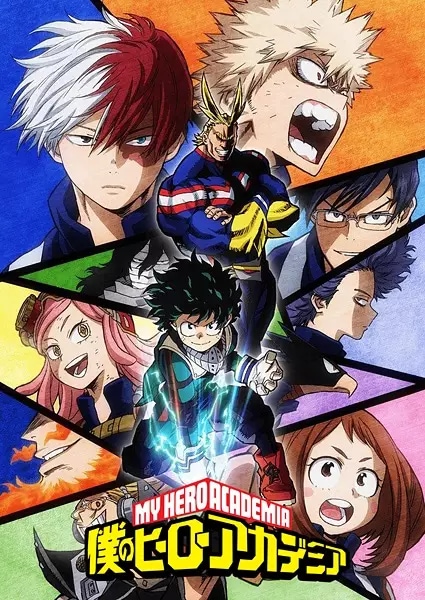
My Hero Academia Season 2
僕のヒーローアカデミア
8.05(1856K votes)
Ranked #675Popularity #16
episodes
25
Type
TV
Status
Finished Airing
Aired
Apr 1, 2017 to Sep 30, 2017
Studios:Bones
Action
Synopsis
At UA Academy, not even a violent attack can disrupt their most prestigious event: the school sports festival. Renowned across Japan, this festival is an opportunity for aspiring heroes to showcase their abilities, both to the public and potential recruiters.
However, the path to glory is never easy, especially for Izuku Midoriya—whose quirk possesses great raw power but is also cripplingly inefficient. Pitted against his talented classmates, such as the fire and ice wielding Shouto Todoroki, Izuku must utilize his sharp wits and master his surroundings to achieve victory and prove to the world his worth.
[Written by MAL Rewrite]
2,736,464 Members
Worth Watching? — Global Verdict
6.5/10
Average Review Score
55%
Recommend It
20
Reviews Worldwide
International Reviews
Stark700
Recommended
9
After watching the first season of Boku Hero no Academia (My Hero Academia), I can’t help but feel wanting for more of this series. The first season consisted of only 13 episodes. It adapted the general premise of the story and had its character roster in set. However, it missed the opportunity to expand more and build on those elements. Have no fear. Season 2 is here and it’s set to fill the gaps for you diehard fans of this classic shounen adventure. One major part of the sequel is that the length is almost twice the duration of the first season. It consists of 25episodes (including an anime original) as part of its storytelling. Therefore, expect almost twice as much as details. As an avid fan of the manga, I’m also rather impressed by the faithfulness of its adaptation standards. Expecting this show to hit a lot of its marks is no easy task and I had some doubts at first. Still, the sequel does a splendid job at crafting the essence of its story. At its core, the show is about heroes in a fictional world. Protagonist Izuku Midoriya (nicknamed Deku) tries to make a difference in his world by trying to become a hero.
Something that I often found appealing about Boku Hero no Academia is how stylish it establishes itself. It’s a typical shounen series yet is able to spread its themes and knows how to do so. The second season asks a question: what really makes a hero? From the first half, we get a tournament (U.A. Sports Festival Arc) that pits the best of the best between classes. While this may seem like a generic battle tournament you can find in many shounen series, Boku Hero no Academia sets itself to establish characters within its tournament. Prominent characters such as Deku, Ochako, Bakugo, and Todoroki gives the audience their insight on their reasoning for fighting. While some of their principles can be disputed, they sent a clear message that becoming a hero is no easy path. At least for these characters, being a hero is more than just about saving others. The Sports Festival arc also examines the background story of Todoroki, a character that we knew little about from the previous season. It invites moments of sympathy as we see how tragic his past has influenced his character in the present.
Meanwhile, the show still maintains its presence of antagonists. Perhaps the most prominent of these is Hero Killer Stain, a new villain with his own objectives and morals. Again, his character ties with the question of “what makes a hero”. In his mind, there are certain rules that establishes what a “true hero” is from the “fake ones”. Season 2 has psychology that makes antagonists such as Stain feel meaningful as a character. It motivates other heroes to realize what they are and what to fight for. Don’t believe me? Just ask Tenya.
As I watched more and more of season 2, I can’t help but realize that the sequel serves as a way to prepare for the characters/heroes for what’s really ahead. What I mean is that while the second season is rich in content, it still leaves some gaps to fill. Mainly, prominent villains such as Tomura Shigaraki and his right-hand man Kurogiri play very minor roles despite establishing themselves as a dangerous threat from the first season. All Might also plays a lesser role in this season despite still being the main hero. Although his role is still important for Deku’s development, it feels that his character dynamics with the boy is less. As a show loaded with characters, don’t expect everyone to get the same development as the main cast. While most characters gets some time to shine, others are left with less memorable moments or comic relief. (yes, I’m looking at you, Mineta) Finally, season 2’s storytelling can occasionally feel stale at times with the academy setting and themes. Luckily, the comedy gives the fans its entertainment value that’s deceptively fun to watch.
Bones studio (known for their adaptation of other super power and hero theme shows) returns with their animation quality. I must admit, season 2 sets the bar for is stylish animation. Battle scenes from the Festival Arc particular stand out that is simply mesmerizing. The fight between Deku and Todoroki is especially noticeable that captures the stellar choreography as I’d expect from this studio. Camera angles feel smooth with vibrant colors and body movements. However, there are a few scenes that feel stagnant especially during the fight with Stain. Perhaps some of those can be fixed later in BD/DVDs but it’s nothing too distracting. Character designs in this sequel also remains memorable for characters ranging from the barbaric design of the Hero Killer, pro heroes, and our main cast.
When listening to the soundtrack, I can’t help but feel that everything is on point. From character voice mannerisms to the battle OST, it succeeds far more than it fails. I can honestly say that the voice mannerism of the characters really brings out the personalities of the cast. Characters such as Stain, All Might, Bakugo, and Todoroki especially stand out this season whenever they speak with dynamism and purpose. The theme songs offers a classic hero-like tune that’s hard to miss.
If you’re going to watch this second season, just know that it will be a thoughtful experience beyond the colorful battles. Everything has a reason ranging from the story, themes, morals, and even character names. I can’t say this enough but season 2 really bought out what I had expected as an adaptation. It’s faithful on most parts and leaves me hunger for more each episode. That being said, season 2 is still far from resolving the end story. It actually feels more like building up for more as certain characters are foreshadowed and more threats looms in the horizon for the main characters. However, I came into this show with high expectations and left with awe. With season 3 announced, this sequel is nothing short of been a classic.
Episodes (25)
Filler Recap
Click an episode to read its synopsis.
Community Discussion
350 found helpfulSep 30, 2017
DarthInvader
Recommended
9
*Minimum Spoiler Plus Ultra Review* If you did not watch BNHA S1 then go watch that ASAP. TL;DR: Hype Hype, Finally a Shounen Anime worth watching Plus Ultra Hype! BNHA S2 is basically Naruto and DBZ's illegitimate child, Hunter X Hunter's bastard child raised by the all mighty Bones STUDIO that has stayed true to the manga and doing the show justice it really deserves! Definitely Binge-Worthy! [Story: 8/10 , Characters: 9/10, Art: 9/10, Sound: 8/10, Enjoyment: 10/10] "So many to kill, so little time. None of you are worthy. None of you are All Might" - Stain If there is one genre that can always hype peopleup time after time, it's the classic shounen genre in anime. It's like scrambled eggs. The recipe is very simple yet the execution to get it consistently right day after day is difficult. Luckily, fans of one of the most acclaimed manga, BNHA, can rejoice that studio Bones have done yet another great job in beautifully adapting it their own way without deviating away from the manga to give the viewers total indulgence over a shounen anime people will remember for years to come. If you thought season 1 was good, well this season they just went PLUS ULTRA!
The story is great. The anime being 25 episodes long is able to cover 3 different arcs from the manga. In season 1 we mostly focused on the character development of Deku. However, most of the supporting characters this season underwent major character development, especially characters like Todoroki, Iida and even Bakugo. That being said, the overaching development of Deku is ever present feeding off from the development of others. Really embodying the "All for One" motif as the show goes on. Aside from the characters, the art and animation is bold and vibrant. Nothing short from studio Bones standard. Even the OST and the OP & ED songs are just outright catchy and worth listening to over and over again. It's really hard to find flaw in such a good anime when even the two filler episodes are done so well that it catered to the fans long-time needs & curiosity! With that being said, let's dive deeper into the anime to really get a good grasp of what all the hype surrounding the anime is. Keep in mind, some spoilers might be revealed!
*Minimum Spoilers Zone Begins*
"If you wanna stop this, then stand up! Because I've just got one thing to say to you! Never forget who you want to become!" - Todoroki
There is no point revisiting the premise of the show. It hasn't changed since season 1. We know the end goal is Deku learning how to fully use All for One. The real plot is the whole journey to get there. This season had three different arcs. First we have the ever cliche shounen tournament arc; where all of the UA students battle it out from team battles to finally 1v1 battles. Surprisingly, the tournament arc actually ends with someone actually being declared a winner. No major interruptions or surprise villain gank happens. Now that's a surprise. This arc also features one of the fan favourite episode: Todoroki: The Origin. Next, we have the Stain arc, where Stain, a new villain or anti-villain, that has taken it upon himself to purge the world of fake heroes. It's a really dark arc and one of fan favourite arcs to be adapted. Lastly, we have the much rushed UA Final Hero Examination Arc, where UA students must fight against their teachers (Heroes) to pass their final exam. It also features the second fan favourite episode: Bakugo the Origin. In between these three arcs we are revealed more about the power of All for One and it's origins as well as League of Villains intentions and who is really pulling the puppet strings. Needless to say, Bones, with the help of Yoshihiko Umakoshi (Tournament Arc) and Takahiro Komori (Stain Arc + Exam Arc), did a great job adapting them in anime format. The only major issue was how different each directors take on how they adapted the arcs. Viewers will notice significant difference in battle sequences and camera angles from one director to the other.
"Needless to say... I'll be a hero that even surpasses you (All Might)" - Bakugo
Aside from the plot, the major highlight of this season is the character development. Besides Deku, other characters like Todoroki, Bakugo, Iida, Uraraka and even All Might goes through great lengths of character developments. Just as the two major side characters, Todoroki and Bakugo acts as great foils for Deku, actually all three personify the different attributes of All Might that establishes him as the best superhero of all time that not only saves lives but inspired the next generation to be the hero the nation deserves. Deku wants to save people with a smile. Todoroki wants to be his own person and not a prisoner of his blood. Bakugo wants to be the strongest and win with overwhelming force. This just goes to show you why Endeavor could never be the number one hero. It's never been about how many villains you beat or how strong you are. To be the number one hero means you have to be the beacon of hope and inspiration for all of Japan. The show's main running theme of quirk strength vs physical & mental strength is again revisited through this. The reason pros are good is because of their skills and judgment not because of their quirks. Besides the heroes, the most interesting character of the season has to be the villain or anti-villain, Stain. His motives are good because he wants to restore the title of Hero to something more respectable and pure. However, the method he uses to achieve this is similar to of a villain. Because of this, he starts a chain reaction of inspiring villains similar to how All Might inspiring heroes. All the parallels and juxtaposed characters in this series really adds to the depth and complexity of the show.
*Minimum Spoiler Zone Ends*
"Meddling when you don't need to is the essence of being a hero" - All Might
Beside the linear plot and dynamic characters, the technical aspects of this show really makes it stand out from other shounen animes. The animation quality from studio Bones is just Plus Ultra. The characters, the fight sequences, the background cinematography are all beautifully hand-drawn. The vibrant colour palette gives it a rich warm tone that resonates throughout the anime. If that wasn't enough, the background OST coupled with the epic OP/ED songs slowly grows on you the more you listen to it. Out of the two OP songs, I think Peace sign is still my favourite. Lastly, the seiyuus of this show does a phenomenal job. There isn't a single character who did not benefit from having a star-studded seiyuu cast in BNHA. Kudos to them. Everything as a whole, really sets the mood and the hype each episode brings to the table.
Overall, BNHA S2 is probably one of the best shounen animes we've been blessed with in the last decade. The shounen anime recipe have been replicated numerous times however it hasn't been executed to this degree in quite a while. The last great shounen anime of this calibre was FMAB. Oddly enough, it was actually studio Bones who also adapted it. They know that staying true to the manga is the ultimate rewarding experience for both new viewers and manga viewers. Nevertheless, I personally really enjoyed this anime and I can see myself easily binging this show again with my friends. It's just that type of show. Also Season 3 has been confirmed. Anyways, I recommend this show to all shounen anime fans and new fans wanting to venture into the shounen anime genre. Check it out let me know later how you like it as well as share with me your favourite quote from the anime! Plus Ultra!!!
P.S. Thank you for reading. I hope you found this short and supaishi review helpful!
215 found helpfulSep 30, 2017
LiaNF
Recommended
7
This is a two-part review where I'll be weighing in the positives and negatives of this show. Starting with what I thought it did right: Despite Boku no Hero Academia’s rather familiar and simplistic premise, its thematic consistency and high production value made it possible for this title to gain recognition and significant following among the anime community. Season 1 managed to deliver in an impressive note and thankfully, that didn’t waiver at all in its continuing season. Much like its predecessor, Boku no Hero Academia 2 looks and sounds just as good—if not, even better. While it still didn’t take any risks, it did capitalizeon the tried and tested formula in battle shounen that never failed to appeal to this genre’s fans and took the liberty to put its own creative spin to it—which I daresay has been pretty successful: Solidly executed action-packed superhero show with a competitive school life and comedy on the side. The tone shifts felt natural and it didn’t fall into the trap of forcefully incorporating dark, tragic themes nor did it get too hung up on its more serious tone just to make it look deep or mature. This anime is fortunately devoid of any of that pretentiousness and instead, it embraced its simplicity, which resulted to a cohesive storytelling. It’s a show that knows what it wants to do and doesn’t go beyond its limitations. At least, not yet anyway.
Although Boku no Hero Academia also happens to lump in almost every character archetype in shounen, it was at least able to turn them into a colorful bunch with just the right amount of exposure. More importantly, there has been better characterization amongst its main cast, which I guess is to be expected since this season delved further into the actual plot where it opened more room for character growth. Our protagonist grew from a cry-heavy (it's not really a word, I know) underdog to an impressive hero in-training who now has more control over his power. His progress felt smooth and his worth as All Might’s successor was constantly tested and proven in all of the arcs covered. Todoroki also had a more significant role, wherein we also learned about his backstory, motivations, and we saw the shift in his dynamics. As did Ida, who was a key player in the second arc that involved the Hero-Killer, Stain. All Might is just as majestic and his power display against Deku and Bakugo in the exam arc was nothing short of spectacular. Their fight was awesome and arguably the best in this season.
Bakugo is still a mixed bag to be honest. He was still quite obnoxious with few redeemable moments, who also couldn’t seem rid himself off of the insecurity and hostility that he had always felt towards Deku. But on another note, he was absolutely hilarious and entertaining this season and I find it hard not to enjoy his chemistry with other characters, especially when he becomes the object of their mockery. His rage reactions are comedy gold and I wouldn’t be surprised if people actually consider him a walking meme at this point. There were also subtle hints of his development thrown here and there to keep us at the edge of our seats whenever he's on screen. The rest of the supporting cast, most especially the class A students, also had their fair share of the spotlight. Though some may complain about how little exposure the rest of the class A students had in the sports festival, I'd argue that it worked out for the story given that the focus of the arc were meant to be Deku and Todoroki in the first place.
I also want to commend how superb the sound, visuals, and animation were in this anime. This was mostly displayed in the Sports Festival arc, which in my opinion, is also this season’s highlight. Hats off to the voice actors as well, who did a phenomenal job conveying the characters' emotions in the most intense moments. They truly didn’t hold back in making this season a spectacle, contributing further to the anime’s general appeal.
My issues with this show:
First that comes to mind is the underwhelming antagonists, given that there seems to be a tad few legitimate threats whose characters also managed to be interesting – Stain (granted that we haven’t seen the last of him) and a couple of new villains introduced by the tail end of the season might draw some intrigue back. In contrast to them, Tomura Shigaraki and his other minions in the League of Villains, ever since their introduction up to the most part of this season, are honestly just really—for the lack of better word—bleh. Second, it’s still lacking in world-building. I was hoping to see even just a glimpse of how the rest of the world fairs in this storyline, but I guess it’s too early for that. Note that those I mentioned above are just very minor issues that I have with this season, hence, I'm not going to elaborate on it further. I’m aware that this is one of those overarching series that would take a little more time to explore its full potential; and that is fine, so I'll just leave it at that and that I’m not docking off points because of that. I will still keep these in mind as I tread further into the series, however.
Having all that said, my actual gripe with it is that it feels too comfortable. While Boku no Hero Academia is certainly one of the better battle shounen anime out there today, its generic or rather ordinary nature is also why I can’t consider it to be great. Besides its very impressive technical presentation and solid delivery, the story simply lacks the ingenuity or in other words, the “wow” factor that makes anime like Fullmetal Alchemist: Brotherhood or Hunter x Hunter, in my honest opinion, the pinnacle of the genre. Don’t misunderstand though—I don’t intend to draw comparisons just to glorify those aforementioned titles nor to put BnHA down. I’m also not necessarily implying that it’s automatically mediocre just because it doesn't have complex themes or isn’t unique. I simply want to make a distinction that justifies my score for this given that I also use the rating scale differently. While I believe that storytelling and execution are what separates the good shows from the bad, I also believe that a compelling narrative with equally compelling characters are what separates good shows from the elite. BnHA is simply lacking in that department.
As mentioned beforehand and despite its stylish, cartoon-esque style and my initial praise for its well-delivered plot and colorful characters, it doesn’t have any trait that makes it truly stand out and incomparable to others. As such became more apparent this season as we continue to witness yet again some very familiar and overdone concepts in shounen: the underdog protagonist who continues to work hard and also tries to seek acknowledgment from the rival who hates his guts; the good ol’ tournament that actually serves as a stage for the protagonist to inspire and subsequently “soften” another rival who has parental issues; a chance encounter with the murderous villain with misunderstood intentions to help a friend who was in a quest for revenge; the mysterious big bad lurking in the shadows; etc. That's not a fault in itself considering that it's normal to have shared themes or tropes in this genre. It does what shounen anime do after all. That said, such idea unfortunately doesn't save it from being predictable, run-of-the mill story wherein we can only look forward to how the creators will put their own spin to these tropes. And since it took inspiration from other well-known titles, it also suffers from the inevitable comparison due to it having very similar concepts that have already been done and outdone (arguably) by some of its predecessors.
It is still a good show for those who appreciate simple, solid, and well-animated shows though. I generally like action anime, so I was consistently invested. But for those who are not a fan of this genre or have seen almost everything it has to offer, it takes more than what BnHA presented to keep them genuinely impressed—which I really couldn’t blame them for.
To wrap it up:
I still think that Boku no Hero Academia 2 is a fun-filled, easy to watch show with so much potential and it seems to tread in the right direction. Whatever it may lack in story, setting, or characters, it still kind of makes it up with its consistency and entertainment value. Not to mention, its excellent animation and sound. It’s an eye candy that’s still worth the watch.
* To anyone who's interested, this is the actual breakdown of my score:
Story: 5/10 | Execution: 8/10 | Characters: 6/10 | Presentation: 8/10 | Enjoyment: 7/10
185 found helpfulSep 30, 2017
77AnonyMei__77
Not Recommended
2
I know this might sound exaggerated — “2/10? Are you insane?” — but please just hear me out for a second... Spoilers ahead: Protecting people in the face of adversity; even in the means of sacrificing yourself, using unique strength only found in the hearts of some people for good, being brave and standing up for the people you love… this is what it means to be a hero. A hero isn’t something you strive to be, nor is it something to be viewed as a career. To be qualified as a hero in the first place, is to be selfless. By devoting all your life tryingto become a hero by wearing a cape and a superhero outfit made by plastic is, in and of itself, a selfish and childish dream. By dreaming so only results in a messiah complex.
To be running around and jumping from building to building wearing goofy clothes only defeats the purpose of being a hero. Only people who are looking for attention do this; narcissism at its best.
Having a girl wear a suit that reveals most of her cleavage, and a skirt so short to the point where it should be called a belt, only makes me wonder why she didn’t become a prostitutional entertainer instead. And also having a character wearing a cape whilst stepping on the bad guy they just beat up whilst laughing like a maniac and shouting, “Don’t worry, your savior’s here.” only makes me wonder why he didn’t become an exhibitionist.
Every character in My Hero Academia only have a single goal in mind: to become a hero that everyone looks up to. That’s really it. There’s no other character in the series that has a different ambition — even if they do have a bit of a different ambition, it’s still completely connected to being an admirable hero. Being a show about heroes, it’s okay for everyone wishing to become a hero. But if that’s the only primary goal in their mind, then that’s just a writing excuse — all of these characters have a goal, thus, all of these characters are three-dimensional — or so the author thinks. The characters are like a group of Flamingos who have chain reactions. If you can’t handle writing a very large cast of characters — especially by trying to flesh out all of them — then don’t try to do it in the first place.
Characters are indeed hard to write. It’s definitely okay to have a large cast of characters, but do so at your own risk. The writer, in this case, tried to give some personality to other side characters. But what resulted in was underdevelopment of main characters — not to mention failing at even making the side characters decent.
Deku is the underdog of the world. He’s also shy and not so good socializing with girls; in other word, he is us. This isn’t supposed to be an ecchi-harem show, Kohei Horikoshi.
Trying to make us experience everything through Deku’s body only admits that he’s flat as a character. Normally, we’re supposed to put ourselves in the protagonist’s shoes, but to actually become the protagonist is lazy writing. This is just an excuse trying to make the character “relatable”. A character can still be flat even if they have an ambition, backstory, and development. Because execution is what matters.
Deku’s ambition and backstory are quite simple. He wants to be a hero like All Might, but he doesn’t have a quirk, unlike most people. He then gains powers from All Might by eating a single piece of his hair. This is all fine and all, but what about his development? He pretty much stays the same and has the same mentality throughout the whole two seasons. Being stronger and being able to control your powers better isn’t character development. What Kohei Horikoshi tries to do is make Deku break his bones over and over again just for the sake of looking “cool”. And then he breaks more bones in the second season, which tricks you into thinking that he developed as a character. But he has the same ideology and personality intact; only being able to control his powers, or rather All Might’s powers better.
I doubt the possibility that Deku will ever improve as a character throughout the whole show; he’ll stay the same; crying, speaking, thinking, and acting the same exact way he did at the start. The reason is simple: there is no room for improvement. Deku is, at first, actually what he should have developed into, not start with it. Only if he develops into an evil character — developing an ideology about heroes the opposite of the one he had before — can he be able to improve, or develop as a character. But the spoiler which Deku gave us at the beginning, and also looking at the genre of this show, there’s zero percent possibility. Having better powers, or controlling a power better, or creating your own proper power is often confused with character development. But it’s not.
Deku is known as a rare protagonist because he’s smart and analytical. But he’s stereotypically so. Putting your hand on your chin and thinking aloud while having words flying out of your head isn’t identified as being smart; it’s just an attempt at being one. It’s very easy to make other characters point at him calling him “smart”, when in reality, he’s only slightly above average. He actually reminds me of Sakamoto from Sakamoto desu ga — due to the fact that every character looks up to him, for the exception of some characters who hate him and want to surpass him, but end up giving up and acknowledging the main character’s superiority. But let’s not forget that Sakamoto was loved due to him being cool, meanwhile, Deku is liked for no justified reason whatsoever. Sure, he is strong. But don’t forget that he was a loser who was being bullied at first and viewed negatively by almost everyone. So there’s no way people’s view on him would change in such a short span of time just because he got stronger.
What about the girl he saved once which automatically made them very close friends — Uraraka? She’s very poorly written. She reminds me of Tenten from Naruto when she kissed Neji’s ass in the Chunin exam. Her main purpose is to be cute and support the main character. She shouldn’t be one of the main characters of the show, especially considering how weak her character arc was. Her backstory is basically having bad family circumstances, so she wants to become a “hero” for financial gain. She has about two or three personality traits. And that’s it. I can’t help but think that this show would’ve been fine without having her even appear in the show. There’s nothing to add on to her character because I feel like she’s even more underdeveloped than other side characters.
Avenger stories are, at best, fine. Iida’s whole drama about avenging his brother was executed poorly, and was extended way longer than it should have. The best way to realize if a character is three-dimensional and has depth, is to have the character pursue a certain motivation, but doesn’t see the need in explaining his or her actions to other people. Iida’s long monologue explained all of his motivations to Stain; his enemy. This is the best example of how you should be showing instead of telling. If a story tries to flesh out their characters by having them tell their ideology, instead of showing their ideology through their actions just shows the lack of the author’s writing ability to do so. Iida’s motivation is in and of itself fine, just done very poorly.
Another example of a fine character with a fine backstory, yet terrible execution — Todoroki’s whole character development is eventually decided by mister psychiatrist, Deku. Todoroki is a decent character, but was very inconsistent throughout the whole show. His personality changed through dialogue — meaning that he’s Todoroki in one scene, but a totally different person in another. His ideology, personality and perspective change in a very short amount of time, making him inconsistent. He started as a very promising character, but is slowly evolving into another one of Boku no Hero’s ordinary characters.
If you can remove a particular character from a story and can still have the story function as well as it did before means that the character should either not be there entirely, or write them differently so that he/she has a purpose in the story. If the author of Boku no Hero did this, then he would be left with a total of four-five characters that can actually function as an independent character. For a show praised by the way it handles its characters very well, it’s actually very subpar when it comes to characters.
The author wrote a character for the sole reason of being hated — Minoru Mineta, the pervert. Why? Was this used so that we hate a character so much that other characters feel like decent people compared to him? There is no doubt that the author wrote this character this way intentionally. Was he expecting people to like him? I doubt it, hence why I think my reasoning is correct. If the author himself doesn’t care about his own characters then why should we?
The characters in Boku no Hero remind me of IDubbbz; dressing in a very weird costume, and dancing around here and there, shouting, “I wannabe gay!” — If this analogy isn’t true, then I don’t know what is.
If the writer is eagerly trying to make me like the characters by using very cheap techniques, then I might as well admit the absurd fact that my, and also many other people’s emotions are being toyed by. I don’t see any positivity from this show — if the character’s are merely “simple”, then why use tricks such as melodramatic character arcs to further our bond with the characters? Doesn’t this contradict the simplicity of the characters?
The characters’ existence is for a sole reason: comedy. Whenever a comedic scene comes by — which is very frequent — I’m reminded of Black Clover because of the amount of screeching thrown at the screen. Characters are eventually used as a remark-factory in this case, as in remarks are the only things side characters ever say. Not only does this make for very cheesy comedy, but it also confuses my emotions. This show is ultimately a comedy, so when a serious and “emotional” moment comes up, I laugh, wondering why the characters are all of a sudden taking everything seriously. I’ve laughed more at sad and emotional scenes than I did in the actual comedy scenes.
When Deku finds out that he doesn’t have a quirk and goes home and plays the video about All Might on his computer, I was smiling, because that’s what this show wants me to do, right? I mean, look at Deku’s crying face. He’s crying with a hysterical smile. I automatically take this as the show trying to tell me not to take this seriously. If the show wanted me to take it seriously, then why have him smile instead of frown? I know a lot of people try to hide their actual emotions by smiling, but kids are straightforward with their emotions.
Uraraka’s character arc wasn’t supposed to be emotional at all, yet they somehow tried to make it emotional. Same with Momo losing her confidence. As I came upon this particular episode, I tried to watch the previous episode thinking that there was something I missed. But there was nothing. I was very confused as to why she’s even acting like that. It was apparently because she lost her battle in the tournament, but they went way over the top with her drama. The show can’t draw a clear line between comedy and drama. E.g. Showing a character’s breasts in the middle of a “horrifying” battle, Mineta gripping another character’s breasts while another character is on the verge of death, etc… And so when I come upon these overdramatic scenes, I no longer care what happens to the characters, since you can’t take something seriously when it doesn’t even care to take itself seriously to begin with.
People like to point fingers at other shows like Anohana and Kiznaiver and call them overdramatic. Yet Boku no Hero has as much, if not twice as much overdramatic events — a shounen having more drama than some other slice of life-drama show is very weird. What part of Boku no Hero is overdramatic, exactly? All of it, probably. As I said before, this anime is a comedy; a pure one in that matter. So when the show throws in these overdramatic emotional moments, I laugh off — not considering the possibility that the characters are on the verge of dying.
Since we’re talking about death, let’s talk about plot armour. I’ve heard many times from many people comparing Boku no Hero with Naruto, calling it superior. Even though Naruto had immense amount of plot armour with its main characters, Boku no Hero goes beyond the limit as to give every single character in the series plot armour. Plot armour is okay as long as it has the right amount of it.
Naruto is tragic, and had a lot of characters die. Meanwhile, Boku no Hero is a very carefree and a childish series. The kids were beating up the villians in ease. It’s like they’re so experienced in their first try. None of them even had any major injuries. If Naruto was Boku no Hero Academia, then Naruto would’ve become Hokage in episode four.
I would’ve fallen in love with Boku no Hero Academia had I been an eight year old, because that’s what children want: a fun series about heroes saving the day, which has no development or tragedy; something you watch on Saturday mornings.
I’ve got nothing against simplistic shows. In fact, I love a lot of shows which are very simplistic, and in some cases, generic. But that’s not how I view Boku no Hero; rather than finding it simplistic, I thought of it as bland and subpar.
Boku no Hero Academia isn’t generic. It’s actually subpar. This show is praised for having simple characters. But that’s my down point, because they aren’t even simple; they are so much simpler than simple. They are flat cardboard characters that are very hard to connect to. To begin with, one of the most important point of a story is to connect with the characters. Sure, there are shows and stories I’ve enjoyed and loved without liking the characters, but the possibility of that happening could be because of the superb storytelling. Does Boku no Hero Academia have that? No. The story is, at best, average. The world building is underexplored (Using my knowledge upon completing the first two seasons).
At the very least, I remember the names of about four or five characters from the series. As for other characters, I don’t even remember them in general, let alone their names. As I said before, the characters are dealt with simultaneously; like a chain reaction. Making all of them have the same personality traits and reactions to particular events. They speak, eat, fight, and react in the exact same way. E.g. when everyone in the class talks simultaneously.
The characters don’t each stand on their own because they aren’t even a fully fleshed out character to begin with. Characters are indeed the weakest part of the series — but the ideology is not only poor, but horrible.
Back to heroism, I don’t like the way heroes are viewed and treated in Boku no Hero Academia. Some of the most memorable heroes of anime aren’t characters that wear capes and acknowledge their heroicness, they’re rather the complete opposite. Okabe from Steins;Gate is, in my opinion, the most memorable hero of all anime. He went through more than a thousand wordlines, experiencing so much adversity, pain, and death just to save his friends. This is what it truly means to be a hero. (Not shounen, but still profits my point) Never did Okabe say, “This is a story of how I became the greatest hero of all time.” Admitting your own heroicness, no matter how good of a hero you are, defeats your title as a hero.
I can also say the name of a lot of characters from other series that can absurdly be considered better heroes than the characters of Boku no Hero ever were.
Put any hero in Boku no Hero in a situation where they have to choose between two options — those options being: Would you rather save humanity from a disaster that could potentially kill billions of people, but be considered evil by everyone, or save a single person, but be considered the greatest hero of all time; being admired all over the world, forever — most, if not all characters would definitely choose the second option. Basically, it’s Boku no Pride Academia, not Boku no Hero.
Now ideology aside, the underlying issue of this series is that, I don’t see this anime going anywhere. I don’t see any meaning for its existence. At the beginning, Deku says, “This is a story of how I became the greatest hero.” I, and many other people, know that the main character is going to be the best; prevailing over any other character in the series. But we still have a feeling of uncertainty at times. Deku confessing the future on screen, in the very beginning frame of the first episode, just removes the whole point of this show. At the very least, I wanted to experience the journey that Deku went through without knowing what’s to come in the future. There’s no point in watching this series anymore because I’ve basically watched the whole show now. And the problems of Deku’s character, as I talked about before, removes the potential of me caring for his journey.
I despise this show in all of its being. There’s a barricade wall between me and the characters; distancing us from each other and preventing any further connection other than merely knowing two bland personality traits of each character. Additionally, the thought of having my emotions toyed with by cheap tricks makes me feel disgust, combined with the fact that the second season was two-cour even though there wasn’t any strong necessity; not to mention how the dullness of the show made it feel like a sixty-four episode series.
The only thing preventing me from rating it a one out of ten is the superb visuals by Studio Bones. I respect this show as a piece of art, but no more fabric of the show do I admire.
I’m open to any criticism I’d get upon closing this review off saying this is one of my least favorite show of all time.
88 found helpfulApr 22, 2019
Lindle
Recommended
9
Boku no Hero Academia is often said to be the new Naruto or One Piece - the next smash-hit action series. Season 1 laid the groundwork for that, but at a mere 13 episodes, it couldn't truly demonstrate why Hero Academia deserves to be considered THE new great action series. But with season 2 comes a solid 25-episode run, giving it the chance to spread its wings and prove that not only is it a great successor to the old genre greats, but in many respects improves on them. A big part of why this works better than the first season is that where the firstseason could be slow at times, season 2 is perfectly-paced. It moves at breakneck speed with barely a wasted moment, even despite the presence of a single (surprisingly good) filler episode. This makes Hero Academia an excellent binge-watching experience.
Season 2 covers three key arcs from the manga, the first of which is a tournament arc (in true battle shonen spirit) based around a school sports festival. Throughout this arc, the fight choreography is utterly exceptional. Bones have always been a studio known for their impressive production, but even by their standards the animation is jaw-droppingly good, made all the better by mangaka Horikoshi Kouhei's unique sense of style. Even the directing is a notch above their standard, averting the usual use of lazy panel-to-panel adaptation that is excessively common in this genre in favour of more elaborate compositions that can only be achieved because of the change of medium.
But though the Sports Festival arc excels for its action, that's not the reason this arc stands out. Instead, it's because at its core is a strong character arc for Shoto Todoroki. The arc ultimately becomes less about who will win the tournament as whether Todoroki will overcome his inner demons. While there's nothing wrong with a standard tournament arc, this turns it into something greater, using our investment in not only Todoroki but in Izuku to create some of the series greatest emotional highs and compelling moments.
This represents one of the greatest tools that HeroAca has at its disposal - an ensemble cast of lovable characters. The characters we were briefly introduced to in season one are all given greater detail here, with their motivations, personalities, and friendships with one another all built upon (especially in the third and final arc of this season). With only these few simple details, the writing builds the characters laconically, giving even minor characters strong personalities while allowing the core cast the screentime for full character arcs.
Another such character arc comes in the story immediately following the tournament, revolving around Tenya Iida. After a traumatic event, his sense of morality is shaken, resulting in a story arc that sees him come to understand the meaning of him being a hero.
This is all brought about by the biggest masterstroke that Hero Academia has had so far - Hero Killer Stain, this arc's primary antagonist. Where the previous villains of Hero Academia are more outright evil, Hero Killer Stain acts in rebellion against society, against the nature of heroics in the universe of HeroAca, where people become heroes out of greed and pride rather than for truly noble reasons.
His presence in the story is brief, but the ramifications of it are huge. Stain's moral code turns the focus of the series onto the morality of heroics - what makes someone a true hero. Alongside some of the darker elements of hero society introduced into this series, this fleshes out the setting, sowing seeds of discontent with the world as it is and bringing an element of social commentary into the fray. The conflict from here on out isn't just one of heroes vs. villains, it's a conflict of change vs. the status quo.
But the most interesting change to the conflict in HeroAca isn't the external battle, it's the internal one. The question of what makes someone a true hero turns the development of the main cast - especially Izuku Midoriya - into more than just one of becoming stronger physically. It becomes a story about growing as people. With every step that Deku grows in power, he grows as a person, becoming one step closer to being a true hero.
It's the slow growth of Deku's character that forms the emotional core of the series, and the newfound focus on moral codes helps us become even more invested in him and the rest of the cast. This turns Hero Academia into something more than the standard shonen fare whilst keeping everything that made those series compelling to begin with.
With this, Hero Academia has become one of the greats of its genre.
Story/Plot: 8/10
Animation/Graphics: 9/10
Music/Background: 7/10
Characters: 9/10
Overall: 9/10
For Fans Of: One Piece, Naruto