Links go to search results. Availability varies by region.
ęē©čŖ
4
TV Special
Finished Airing
Dec 31, 2014
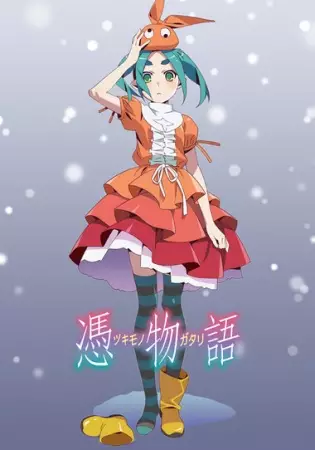
Koyomi Araragi is studying hard in preparation for his college entrance exams when he begins to notice something very strange: his reflection no longer appears in a mirror, a characteristic of a true vampire. Worried about the state of his body, he enlists the help of the human-like doll Yotsugi Ononoki and her master Yozuru Kagenui, an immortal oddity specialist. Quickly realizing what is wrong with him, Kagenui gives Araragi two choices: either abstain from using the vampiric abilities he received from Shinobu Oshino, or lose his humanity forever. [Written by MAL Rewrite]
8.0/10
Average Review Score
85%
Recommend It
20
Reviews Worldwide
What a way to cap off the year of 2014. Tsukimonogatari may be only 4 episodes but these captures the point of the series quite well. In retrospect, we get Araragi with his presence in this show that is well felt in the beginning. To top things off, these four episodes captures the very essence of what the Monogatari franchise should be. Produced with Shaft at the steering wheel and a mission to adapt the novel, Tsukimonogatari is quite something that ought to be remembered. Of course, any fan familiar with the Monogatari franchise should know its unorthodox style. Tsukimonogatari is no different despite being justfour episodes; or to be more precisely called āYotsugi Dollā. Why? Well a particular character going by the name Yotsugi Ononoki with no real personality could be described as such. A doll is after all without any real feelings although they can be a symbolism for innocence, playfulness, and youth. Taking a few steps back though, the first episode of Tsukimonogatari introduces Araragi who is in his college years. However, he is more busy with his sisters especially Tsukihi who he has a rather peculiar ābattleā in the baths. All seems silly at first until Araragi discovers something wrong at the glance of himself in the mirror. By no doubt, the first episode sets the stage for the remainder of this series and in a fashionable way at that. What follows is the ingenious dialogues of what Monogatari is all about as well as the overall tone of the story. Itās both well directed and a pleasure to relieve another chance at the stages of the final season. Here, we are also introduced to Shinobu once again. For those who donāt remember her, she is the vampire girl that sucks on his blood daily. The reason for this is explained and also creates the theory of Araragiās newfound problem in the second episode. It gets to the point where characters such as Kagenui Yozuru is involved along with her familiar. While they seem like characters (and even described by Kagenui as actors on the stage), itās their stellar performance that makes them worthwhile to remember. It helps bring to life the story that crafts the style of Monogatari. Through word plays and clever dialogues along with effective comedy timing, the series becomes fine calibrated entertainment. Not only does it create appealing entrances and exits but the character interactions are first class with their expressions. Thereās not a dull moment with timing and precision being part of the formula of success. This is even emphasized with the soundtrack and OST that specifically markets its creativity. At the same time, thereās clear intelligence to the writing with every dialogue that fits to the storyās purpose. Another aspect of the series is its ability to command attention. One event leads to another that creates a thrilling feel for the audience to anticipate whatās to come next. Itās through the appealing setup that makes the series stands out with dangerous adversaries with their motives. While it seems stereotypical at first, thereās still no doubt about complex performance of the characters. Not only does it shine through their roles, but the show also explains the story fairly well through unique ways. Like I mentioned before, Tsukimonogatari is about storytelling and no story is complete without a background. In this series, that background is not just thrown into the audience face like an auto-pilot info dump. Instead, it mixes unique word plays and engrossing scenarios to tell the story. And true to its style, the series also delivers its conclusion through with everything it has set up. The finale of the series sparks the climax but not before we get even more nicely textured dialogues. Some of these evokes various feelings such as fear, angry, and hatred. At the same time, thereās a moving experience that can be felt through these episodes and in particular with the finale. Everything comes together and even Araragi realizes what has happened that leaves him a bit stunned. Indeed, the series tells the anti-thesis of a doll and what itās truly like for someone without a real personality; perhaps something as Ononoki is far from a human. Despite with all the events going on in these four episodes, I still find it interesting how itās able to squeeze in comedy. While this may be a mixed bag for is some, I have no doubt about the way the series is handled in an attempt to exaggerate Araragiās relationship with his sister. Thereās honesty there too with how Araragiās emotions becomes evident after realizing the danger they are in. Furthermore, these episodes also has bits of lighthearted moments at the end to give the audience a bit of ease. Anyone familiar with Daiki Konno would also easily recognize his artistic talents which is clearly shown in the first episode. The surrealistic backgrounds along with Shaftās zany and idiosyncratic style is also hard to miss. Along with the background symbolism, this seriesā artwork is a testament of what unorthodox is all about; and I do say that in a good way. Character designs also gives off a feeling of fresh air especially with Ononokiās doll-like appearance and behavior. Similarly, Araragi returns in full force with not 1, 3, 6, but an 8-pack! Itās hard to miss any of the fan service since they are all over the screen to be quite honest. Half of the first episode takes place in the bathroom with Araragi and his sister being nearly fully naked. Not to mention the rest, we also have other suggestive camera angles that will raise some eyebrows. Still, this shouldnāt be new or a surprise at all given the way Shaft handles this adaptation. What may surprise you though is the powerful soundtrack. Each scene in every episode has a bit of it to keep up the momentum. Somehow, the soundtrack is also able to carry through this whole series wherever it goes. Regardless where the setting is or what event takes place, it tells of a cinematic grace with a pensive style to convey the story. Itās also hard to not let yourself be indulged by the dialogues of this series as the words spoken are wild, perspective to the point, yet able to remain intact all the way through. Finally, the OP and ED songs are cleverly decorated. The opening song āOrange Mintā has a catchy tone and in all respects decently coordinated by its illustrative tones. Similarly, ClariS returns with their performance that although isnāt groundbreaking still has an attractive appeal. Looking back at these four episodes, I have no shadow of a doubt that the Final Season will be an upcoming saga of the coming ages. These four episodes tells more than just a story. Itās the kind of uncompromising adaptation that we donāt see too often these days. Tsukimonogatari may be only four episodes but is richly imaginative with brilliant characters and a well-developed story. Director Shinbou Akiyuki once again shows the world his talent with this adaptation and the future is looking brighter than ever.
Click an episode to read its synopsis.
Wow coming into Tsukimonogatari i knew i was gonna get a different vibe from Hana from the start. The reason i liked tsuki more than hana is because hana seemed liked a conclusion and conclusions aren't really "fun" per say, they are just to wrap everything up. With Tsuki we are getting more plot progression and ALOT of foreshadowing. Honestly for those who don't know even the littlest hints of spoilers these foreshadowing will go over your head. When Oshino Ouji states that "the more u lose the more you mature" it just gave me chills cuz after seeing hana (which is the last partof the story, for now who knows what nisio wants to do) we realize how mature Araragi has become. To the point where he is still Araragi but you can tell there was a great deal of maturity (thx god his character is always there ie. lifting Ononoki's skirt). Also the ending with interactions with Teori and Araragi. Thats all i gotta say i know if i say more ppl will hate me for spoiling an essential part of the series and i will be exterminated from existence by hate messages. Without spoiling it lemme just say, you really gotta read into what he is actually saying. Cause there is a lot of meaning in it. For being Ononoki's arc it did a decent job at progressing her character. With every arc we sense more growth with the characters at hand. You don't see Ononoki as just a doll anymore but more as a human, or monster. However you want to look at it. I was beginning to doubt her involvement in all of this because of how much screen time the fire sisters were getting. But the fire sisters were an important asset to this arc so it made sense. Now the fan service. You truly can't have SHAFT directing something without giving u top notch fan service. THANK U SHAFT FOR MAKING THE FIRE SISTERS SO FUCKING BEAUTIFUL. I doubted fire sister lovers for the longest and giving no mind to them. But god damn. GOD DAMN. GOD DAAAAAAAAMN. (Beyonce flow). Shinobu is great as always, seeing her cute face makes me wanna rip my cock off because i'd rather rub my non-existent genitalia on her pussy and make sweet lesbian love to her because no dick in this world is worthy of Kiss-Shot Acerola-Orion Heart-Under-Blade's vagina. Overall i would say this arc is one of the stronger arcs in the gatari series. And Nisio never fails to be soooo fucking anticlimactic with that ending. Its cute that we got to see Hitagi at the end. Moreover SHAFT really did do this arc justice. The music felt fresh, the art was amazing, the transition scenes changed from the traditional style but it fit this arc. Also, the backgrounds, honestly the most detailed and colorful backgrounds this series has gotten in a while. Im really glad they changed the vibe from hana but it just shows that hana was meant to look that way. It was a conclusion after all. I rated it a 9/10 on mal but honestly it deserves a 9.5 or higher. It didn't just match my hype like hana did but it actually exceeded my expectation.
After spending alot of time without touching the 'monogatari' suffix, I decided it was time to get my daily dose of insanity by watching Tsukimonogatari. It was kind of a good decision, I guess. I'll start with the bad points. Tuskimonogatari (and probably the entire franchise, if that's the right word) has a problem with keeping the viewer's attention, I've come to acknowledge. This is something I've talked to my friends about, and they all share the same problem that is getting lost in the middle of the dialogue only to rewind so they don't miss any important information. It is like this because the paceof the show (even though it hardly involves action and/or a very fluid animation) is very fast. The dialogues come in what I like to call "concrete walls", masses of words that never stop coming, and the screenplay is always showing interesting scenarios and viewpoints (for our pleasure or displeasure) that drags the attention away from the information. I think the execution could be alot more interesting if there were pauses between the dialogues. And I am not mentioning this because I watch subtitled anime, but it certainly doesn't help. This is a show that starts off without giving much time sense. It's easy for MAL users to understand when it was set by looking at the prequels and sequels, but as a layman it's difficult to situate yourself and acknowledge what has happened and what has not - that's something that also kept my attention off the dialogue while I was searching for clues. Letās talk about the first episode, now. It shares a common problem with Nisemonogatari with the pointless fanservice it delivers ā one entire episode was gone just to get Araragiās toe broken while the whole conflict couldāve been delivered with much less screentime and filler (like a tripping scene, for example). All of that so we could spend some time with Tsukihi, an overall bad character, to develop almost nothing. I also take points away for this anime not being a family show. Screw society, I wanna watch this with my friends and family. Iām not even going to mention how confused I was by the last episode. Not all of it was confusing, but some of it. And hell, it was nothing to be proud about. The show speculated as heck. Iāll start off with the good points by saying how unpredictable this show is. I think itās Shaftās specialty to mess up with peopleās minds, and it delivers. Oh, it delivers. Itās refreshing to get more screenplay on the solid and interesting characters of the series (like Shinobu and Yotsugi, even though the doll-girl is the protagonist here). We got to see a lot of story development and a little character development, something that was pretty lacking in the entire āmonogatari series. Iād say Tsukimonogatari did a very good job at situating the entire story, similar as Second Season did, but better. The art and animation are amazing, as always; I think the sound work could do one thing better. The music playing in the background serves its purpose to add a feeling to the atmosphere/scene, but itās nothing amazing and the viewers could never recognize the songs if not while watching the show. At least, I couldnāt. It serves much more as an ambient sound for the scene than as a theme that could define the identity of the show. It was a good installment, probably the best of all of them. And it was enjoyable. Iām looking forward to end this madness as soon as possible.
Much like with western entertainment, there are certain TV series and movies that stand out not just as promising installments of new or existing franchises, but also as popular events that a large portion of the community with wait in massive anticipation for. In the world of anime, the "events" that captures the most attention are new additions to the Monogatari series, an anime that began back in 2009 and is continuously pumping out sequels to this day. However, during the past year, the formula for how new entries into this franchise are premiered haschanged drastically. Rather than being part of the regular seasonal lineup, new Monogatari arcs are now released in large chunks, with one entire story being contained in each of these chunk. So, does the newest entry into the Monogatari franchise live up to its household name? Before diving into the actual story, I want to briefly give praise to Shinbo and Studio Shaft for finally recognizing a formula that works best for Monogatari, and that is giving us a single adaptation of one of the novels all at once. With a story as complicated and complex as Monogatari, pacing out each story over the course of four to six weeks felt incredibly prolonged and not very engaging because it practically requires a recap every time a new episode came out. However, by releasing it in feature length film-sized chunks, we can get the entire story all at once, making the loss of certain details over time less acute. This might sound like a very minor detail, but presentation is hugely important, especially with something as eclectic as Monogatari, though I can't say with zero reservations that I would be all for continuing this formula for the rest of the franchise, as it would also mean that the hype levels would fluctuate uncontrollably over the course of releases. Getting back to the matter of Tsukimonogatari specifically, I wouldn't say that this is one of the worst stories to come from the franchise, but coming off the heels of Hanamonogatari last summer makes it feel a bit weak by comparison, though there wasn't anything necessarily wrong with the main story of this arc. My biggest problem, however, lies in the introduction. While I did very much enjoy the beginning scene that contained a prolonged philosophical discussion about the nature of life and "not" life, despite taking up the entire first five minutes of this four-episode series, my true problem lies in what happens once the story actually begins, as we are treated to nearly fifteen minutes of what I can only describe as a self-congratulatory revel in Monogatari-style fan service. To put it bluntly: Araragi is messing around with his sisters' naked bodies again. While I wouldn't say that it reaches "toothbrush" levels of perversion, it still reminded me of a lot of things that I didn't like about Nisemonogatari. Once we get into the meat of the story, however, Tsuki immediately kicks it into high gear, and we spend the rest of the series enveloped in the "talking heads"-style intense discussions and schemes of Araragi and the other characters. This one isn't so much a character study like Hana was, but instead has more emphasis on the actual story, and the thrill of following Araragi and the others as they plan and debate over the most minute of details is just as thrilling as it was way back in Bakemonogatari. While the characters don't necessarily take center stage for this arc, there's still quite a bit of interesting development that occurs. Araragi surprisingly ends up getting more development than he's gotten since Nekomonogatari, as we watch him struggle with the changes in his vampiric powers and how that's affecting him on both a strategic level and an emotional one. Yotsugi Ononoki also takes on the main character role once again, and while I initially didn't really see them being able to do much with a character that wasn't very interesting in the first place, she ends up being surprisingly compelling, both for herself and for Araragi, and discussions centered around her that focus on what constitutes true life and the difference between true and artificial life give this series its trademark introspective edge. As for new faces, there is one new character named Tadatsuru, and while I can't go in detail into how he plays into the plot due to spoilers, I will say that despite his short appearance on-screen, he ended up being rather fascinating. Finally, we have Ougi Oshino, whom the series has been continuously teasing us with since the beginning of Second Season, and while her appearance is rather brief this time, much like in Hana, she still manages to interject a new perspective into the discussions being had. As always, the animation was produced by Shaft, and, to be honest, there's very little need for me to discuss the animation by this point, assuming that those of you still reading are up-to-date on the series. The massive contrasts in color, surreal CG that manages to fit rather well despite being very obviously CG, random "black screen" cuts, and as many head tilts and you can snap your neck at are all still present, though in terms of symbolism, I still think Hana, while still a bit on the blatant side, did a much better job with attempting to convey the overall message of the story. There is still no dub for this series, and, once again, this series stands as one of the few that I think would be significantly hindered by a dub, simply because of how much talking there actually is. The soundtrack seems to be firmly stuck in the hands of Kei Haneoka now, who took over for Satoru KÅsaki starting with Hana, and while I wouldn't say that the soundtrack has changed significantly from its usual eclectic nature, it did feel a bit more "traditional" and less overtly stylized. I can't really complain about any of the tracks specifically, and some of them were actually rather moving, but I would certainly hate to see the usual Monogatari style soundtrack disappear completely. The opening theme "Orange Mint" was performed by Saori Hayami (VA for Ononoki) and opens with a techno-inspired song with the usual Monogatari flair that puts it a step above the average, while the ending theme "border" by ClariS plays us out with their usual energized J-pop sound. Overall, while I wouldn't say it's one of my favorite stories from the franchise so far, Tsukimonogatari is yet another welcome addition into the franchise, though to be honest everything I'm saying right now is rather pointless when you think about it. If you like Monogatari as much as I do, then you probably already finished watching this new story before I could even post this review, and if you don't like Monogatari, then this is certainly not going to change your mind because it really is just more of the same.
(This has been adapted from my reddit thread) "To err is human" is a famous proverb that helps to explain the mistakes that people often make. It's only natural that, as humans, we trip up, we cause trouble, and we otherwise make life more difficult for ourselves and those around us. Making mistakes is common, but is only one facet to what makes us human. Personalities, actions, ideas, thoughts, emotions, understanding; these and many more complex areas form the basis for what it means to not only be considered a person but to also reveal just what being human actually entails. And for Tsukimonogatari, this delvinginto the nature of humanity is at its core, presenting the audience with yet another "classy" entry in the series. STORY Tsukimonogatari takes place before Hanamonogatari (Kanbaru's second tale) but after the events of Second Season. Getting ready to take the college entrance exams, Araragi enters his bathroom to clean himself. But upon looking in the mirror, he sees -- or more specifically, doesn't see -- something rather peculiar: he has lost his reflection. Tsuki comes off as a culmination of everything that has made Monogatari the series that it is today. Concretely, it boils down to three different aspects: heavy dialogue, appropriate fan-service, and interesting characters. The majority of Monogatari contains more or less of each of these traits, but here with Tsuki, a fine balance is struck. The anime consists of one conversation to the next, usually switching up talking partners as it goes. The girls are cute, the situations are unique, and it's a combination of blatant and tasteful. And the characters involved are both old favorites, newcomers, and the underutilized. It mixes everything together, providing the execution it is also known for. Witty exchanges, Tsukihi's bath entrance, and Tadaratsu's fascinating characterization are small examples of the refined way in which Tsuki provides the audience with a higher-caliber journey. Tsuki, like the iterations before it, is a character-driven anime. As such, the themes it explores are done so through its cast. To this end, the show contains two prominent ideas, one obvious and strong, the other slightly subtle and weak. The weaker of the two is the notion of compensation. That the actions one performs "have an equal and opposite reaction." Everything requires an exchange. Buying food costs money, moving about uses oxygen, and writing a letter needs ink. Trivial instances, but it gets the point across; nothing comes free. Araragi learns this throughout the tale yet it's not as powerful a message as it could be. This stems from the cast's small relation to the topic. Namely, only Kagenui and Ougi give their outlook on the subject, but cannot directly relate to it in context. Kagenui brings up ideas about self-sacrifice and the effects it has on the soul, whereas Ougi talks about such sacrifice leading to newfound maturity. Interesting discussions that lose their edge because it is both not brought up enough during Tsuki and is drowned out by the stronger theme. This "louder" motif being a look at what it means to be human. Where the case of compensation comes from a couple of characters, here the entire cast is involved. From the Fire Sisters and Shinobu to Senjougahara and Ononoki, everyone provides insight for Araragi and, subsequently, the viewer. People are complex beings: they make choices, they have ideals, they support others, and they act unexpectedly. Being human doesn't boil down to a single rule or phrase, because it's simply not that easy. Because it isn't just looking at what a human has to have to be human, but what constitutes a non-human to be one, too. Some of the characters are more "in-your-face" about it while others make one really think about who they are or what they represent. And since the dilemma involved revolves around this issue of being human and/or non-human, it makes sense that the main and supporting characters bring their own flavor to the thematic meal. ANIMATION If the Monogatari series is known for anything later in history, it will be in the art and direction it provided. To that end, SHAFT presents their signature style in full-force once more within Tsuki. When it comes to the art of the anime, it's quite beautiful to see. Pieces are rife with detail, backgrounds are a mix of static and dynamic, and the composition of the shots vary widely. Colors pop and sag while the camera gives off pan-shots, extreme close-ups, or uncanny positions that just aren't possible with other formats. This continual changing of camera angles allows the conversations to go from monotonous to exciting. And on top of all this, a lot of what Tsuki offers is symbolic with good reason. The scenes contain often strange elements and locations, but they almost always serve a purpose. As a small example, Kagenui and Araragi hold a conversation within an ice house; from the statues to the beds, everything is made of ice. It's two-fold; one, it fits the season of January/February, where their surroundings are frozen. Two, and more importantly, is in relation to the situation they find themselves. Not only to emphasize Araragi's missing reflection but also to demonstrate the feelings in the air. It feels "cold"; that is, distant, mysterious, and unpleasant. The conversation both embodies and takes place in an area that portrays the scenario being played out. The character designs remain consistent. Karen and Tsukihi are sporting their track gear and kimono, respectively, Araragi's "ahoge" is in literal full-swing, and Shinobu gets a pretty new black dress. The new character, Tadatsuru, somehow comes off as one of the most unique yet, given his pale coloring and depicted aura. As stated already, Tsuki (and the rest of the series) is filled with talking. A lot of it deals with characters standing opposite one another, discussing the predicament or what needs to be done next. Constant cuts and standing around leads to an okay amount of actual animation. When it is present, it's usually average to above-average. CHARACTERS Tsuki contains a medium sized cast that each plays their part and contribute to the main theme rather nicely. For the sake of brevity, I'll focus on my favorites or most important. Towards the beginning of the anime, the Fire Sisters -- Karen "Bee" and Tsukihi "Phoenix" -- are given the spotlight. Karen is energetic and strong while Tsukihi is violent and shrewd. Their inclusion in the story isn't just for Araragi to be motivated or to give some fan-service. They're (albeit weirdly) compared to alarm clocks, and not just because they wake up their brother every morning. It's the first example of what it means to be human. Here, the metaphor should actually been taken literally; that is, the sisters have "alarming" and "time-sensitive" issues. Karen is fascinated with her dojo master and Tsukihi is worried about the fate of the group they've made. Most people have problems going on in their lives, problems that need to be taken care of swiftly. "Time waits for no man," and the same is true for Araragi's sisters. That is, part of being human is dealing with the issues one has in a timely manner. Perhaps the most interesting character in the show, Tadatsuru has both an awkward introduction and a rather speedy removal. Indirect when speaking, his seemingly tangential way of saying what's on his mind makes it difficult to follow his train of thought. He has a strange affinity for origami, but this fits his character perfectly. Origami is beautiful, but quite technical. In other words, a set of rules must be followed in order to generate the desired result. And as Tadatsuru laments, he feels the same way. That he himself is just a piece of origami, a "pawn," having been forced to adhere to guidelines that have gotten him to the point he has found himself in now. All of this characterization brings about more connections to the overall theme. From Tadatsuru, Araragi learns that being human also means making one's own choices. Sticking to a role or abiding by the law are logical ventures, but having the will to do what one wants captures an innate part of what it means to be a person. Ononoki is arguably the most important character in Tsukimonogatari. Emotionless and expressionless, her presumably empty self makes it easy to encapsulate her. She seems the most simple among the cast, but in reality, she's the most complex. Her doll-like attitude and "shikigami" background paint her as a non-human thing. But the conversations she holds and the actions she takes mean more than she is given credit for. She acts as the role model for Araragi, as someone who is designed to never be human, but imitates and acts like she is. She represents not the biological human but the philosophical one. Her friendship to him, ideas on morality, and rather obtuse solutions to the dilemmas at hand allow her to demonstrate a side to humanity that is difficult to see. And that is that just because something is labeled as inhuman doesn't mean that its humanity is completely lost. Araragi is the vessel that takes in all of these thematic pieces. And all of the characters provide their view on being human. Senjougahara gives the notion that being human includes a physical aspect. Kagenui deplores narcissism but encourages helping others. Ougi debates whether a person can save or be saved. Even Shinobu imparts wisdom; respect for another, whether human or not. These are just the tip of the iceberg. Tsukimonogatari or any other form of media cannot possibly hold everything that defines humanity. Because it's unfathomably intricate. And while not all of the characters present profound messages, they do what they can to define the concept of humanity. SOUND The OP is rather unique. It flows onward, without high notes or melancholic instruments. It's a simple beat, with the "Ahh..."'s and catchy rhythm making it surprisingly fun to listen to. The ED is, sadly, rather generic with the drum and vocals, ending the anime rather poorly. The soundtrack is filled with an assortment of piano and violin pieces that help to set the mood correctly. Nothing major or moving, but they each serve their purpose. Voice-acting has average to above-average work all-around. Props go to Hiroshi Kamiya for his continued work as Araragi, and to Yuka Iguchi as Tsukihi for having a rather adorable voice. ENJOYMENT If you're a fan of anime, then to some extent you know about the Monogatari series. While I personally don't absolutely love everything it contains, I often find that it executes what it sets out to do quite nicely. Here again, the comedy involved, the head-tilts, Araragi's underage-loving tendencies; I always found myself having a good time with whatever the show was dishing out. With a show like this, the characters are pivotal when it comes to really caring about the anime. In this case, I'm not a huge fan of anyone (mainly) involved besides Araragi and Tsukihi. Hachikuji, Senjougahara, and Kaiki are my favorites, and not having them around doesn't destroy the experience but doesn't make it as fun for me as some of the other parts of the overall series. With Tsukimonogatari, the train keeps rolling. A solid story, slick art, and interesting characters create a neat, little package that gives fans of the series more of what they wanted. As Araragi states, it's "the beginning of the end." While that end will eventually come, what is here now is more than satisfactory. SUMMARY Story: Good, some of the best "Monogatari", weak and strong themes Animation: Great, great art and composition, nice character designs, good actual animation Characters: Good, all more or less describe what it means to be human Sound: Fine, good OP, bad ED, okay soundtrack, nice VA work Enjoyment: Good, funny, SHAFT-y, but without my favorite characters Final Score: 7/10