Links go to search results. Availability varies by region.
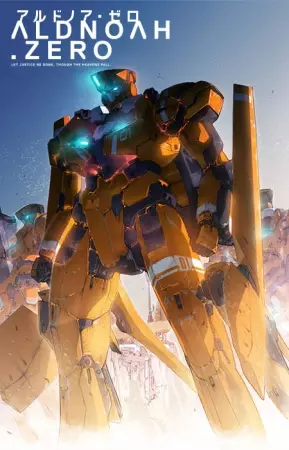
Aldnoah.Zero
アルドノア・ゼロ
7.38(293K votes)
Ranked #2652Popularity #465
episodes
12
Type
TV
Status
Finished Airing
Aired
Jul 6, 2014 to Sep 21, 2014
Studios:A-1 Pictures, TROYCA
Sci-Fi
Synopsis
The discovery of a hypergate on the Moon once allowed the human race to teleport to Mars. Those who chose to settle there unearthed a technology far more advanced than that of their home planet, which they named "Aldnoah." This discovery led to the founding of the Vers Empire of Mars and a declaration of war against the "Terrans," those who stayed behind on Earth. However, a battle on the moon—later called "Heaven's Fall"—caused the hypergate to explode, destroying the moon and leading the two planets to establish an uneasy ceasefire.
Their peace was a fragile one, however. Fifteen years later, high school student Inaho Kaizuka witnesses the plotted assassination of the Vers Empire's Princess Asseylum Vers Allusia, who had come to Earth in hopes of repairing the relationship between the empire and its homeland. The ceasefire is shattered, and the Martians declare war on the Terrans once again. In the face of this insurmountable enemy, Inaho and his friends must now fight against the Vers Empire to settle the war once and for all.
[Written by MAL Rewrite]
537,136 Members
Worth Watching? — Global Verdict
5.7/10
Average Review Score
40%
Recommend It
20
Reviews Worldwide
International Reviews
AnimeAddicts
Mixed Feelings
5
Graphics/animation The overall art design is beautiful, very atmospheric. The only „criticism” this show usually gets is the use of CGI, but after re-watching those scenes Ill call it good. Apart from a few scenes where the Terran mechs looked really clunky most of the time they were using various tricks to make the robots blend into the background which included the clever use of camera angles, lighting, colors, smoke, snow etc... The show is easy to follow and visually appealing. Music As many have stated already – it’s great. Hiroyuki Sawano showed us again what a talented composer he is. But since this is a review aboutthe anime and not the OST I want to talk about how they USED the music in the anime.
Usually the music’s role in a movie or a TV show is to enhance the experience during certain scenes. Problem is when you overuse it you will achieve the exact opposite and take away from the intensity of the scenes. Instead of letting your audiences make the interpretations for themselves about how they should feel (based on the visuals and the sounds) you force feed them with the information by using music.
The only time when the director showed real restraints were the final scenes in episode 12. This added more depth and emotion to the final showdown which is admirable. Wish the rest of the directing was on par with that (in terms of using the music I mean).
Worldbuilding/war/politics
This is probably the worst part of Aldnoah Zero. Since the anime is focusing on both sides I was hoping for a show where at least the basics (history, motivations) are done right, but nope. It’s pretty obvious that they wanted to tell us a „cool” invasion story, but put minimal effort into the worldbuilding. I would say if your knowledge about history, politics, economy, social behavior (etc...) is limited to Hollywood movies you can come up with a BS like that, but what we see on screen is disappointing at best (or causes brain aneurysm at worst).
Story/action
After the first two episodes it’s quickly established that the Martians are „super-duper” powerful and the Terran military is pretty much helpless against them on a worldwide scale. This could have been a nice approach if the show was about the desperate fight for survival of the Terrans, but since it’s about them kicking some Martian assess you know that won’t be the case. This time we get a Japanese high school student called Inaho, a genius, who singlehandedly comes up with amazing battle plans to defeat the invaders.
I have to admit it that compared to the „the-main-character-gets-an-overpowered-robot-for-no-reason-and-beats-everyone” cliché this is sort of refreshing, but gets boring really fast. Especially because the more you think about it the more you realize that while his plans look good on paper, based on his observations he could have came up with different conclusions/interpretations. Meaning he is making somewhat logical wild guesses and he turns out to be right every single time.
And naturally he is also able to flawlessly execute these plans, because he is an ace pilot who mastered the art of sidestepping instead of standing still and waiting for the fatal blow while screaming like an idiot.
Characters
Overall bland and boring. Only four of them are worth mentioning.
Inaho (protagonist) – The new "industry standard" empty shell with some desirable traits (genius, chick magnet etc...) so the average viewer can project his own personality at him and say "oh hey look he is just your everyday normal person. Just like ME".
Slaine (protagonist) – The best written character in the show (most likely unintentionally). Led by hormones and emotions, tossed left and right, naive and easily manipulated. Exactly how most teenagers would react in his situation.
Saazbaum (antagonist) – The only bad guy in the show who has a reasonable motivation which puts him way above the rest of the cartoony villains. Sadly his reasoning and actions often contradict each other, but considering the overall bad writing he gets a pass.
Marito – The alcoholic, traumatized war veteran. Since Inaho solves everything his potential gets wasted and remains at the sideline.
Overall
Aldnoah zero is basically the anime version of a Hollywood action movie. Just like the majority of the overhyped stuff this one also fits the "the-more-you-think-about-it-the-more-you-hate-it" category.
It has a really catchy premise, some nice action scenes, but on the other hand its full of plot holes, one dimensional characters, plot conveniences, clichés, etc..
Overall it’s a very "effective" anime that knows its targeted audience, but won't be remembered 10 years from now.
Episodes (12)
Filler Recap
Click an episode to read its synopsis.
Community Discussion
568 found helpfulSep 21, 2014
Arsene_Lucifer
Not Recommended
3
Spoiler Warning: This review will spoil specific plot points in certain episodes in order to provide examples of why Aldnoah.Zero writing fails for a number of reasons. While I attempted to keep spoilers to a minimum, it’s best recommended to avoid reading this for those who have an interest in checking out Aldnoah.Zero and don’t want anything to be spoiled. In a nutshell, Aldnoah.Zero has the aesthetic for a great series, but no substance to support it not offering anything in between all the eye candy. If you plan to continue reading past this point you have been warned. “Fiat justitia ruat caelum” isa Latin phrase that means justice must be achieved no matter the consequences. Its usage varies depending on who uses the phrase, especially those among writers in any media, but it has significant value in history prevalent in important court cases where a judge reflects on the duty of the Court. Why do I bring this quote up? This is Aldnoah.Zero tagline that is shown alongside the anime logo in the opening animation. Except it’s translated to "Let justice be done, though the heavens fall" in English. Not only is it a misuse of the quote because of A.) Politics don’t exist in Aldnoah.Zero, B.) Heroes aren’t in any danger because of it’s lead character, C.) villains don’t face the consequences despite going against direct orders from their superiors, and finally it’s a one sided conflict that’s black and white with no significant meaning tied to it. Aldnaoh.Zero is a plain and simple a mecha anime about good versus evil. Yet even with that much simplicity no amount of eye candy is able to disguise the poor writing of the anime.
Unredeemable: Nonsensical Story
Aldnoah.Zero takes place in the futuristic year of 2014. Basically last year at the time of posting this review. I double checked around the internet and some local newspapers just to make sure this anime wasn’t based around any true events. If they were based on true events than this anime would have played out differently with some level of logic. The anime follows main character Inaho who is thrust into a world of conflict when a peace mission goes disastrously wrong. Everything about it first episode is a mess in writing. It’s bad in establishing the setting, introducing characters, and creating a central conflict that have a sense of weight to it. What exactly it was trying to achieve in its first episode is unfathomable.
Within this first episode characters provide a quick summarization of a war that occurred in the past in some unnatural exposition. Apparently Vers and Terrans aren’t really all that different since both race when boil down are basically humans. It is also explained that Princess Asseylum is attempting to ease the tension between Vers and the Terrans who I’ll refer to as Earthicans. As soon as something bad happened to Princess Asseylum the Vers Empire immediately launches a military invasion on Earth. A race of species that is more technologically advance than Earthicans apparently doesn’t know how politics function. This one moment becomes further questionable when shown a sick emperor in bed and told he has authority over the Orbital Knights (basically Vers military). The Vers Emperor didn’t issue an attack on Earth to start a war, yet he does nothing to punish those who killed possibly millions. He even goes as far as calling a ceasefire with Earthicans to negotiate peace which goes nowhere near a brain cell in the story. Orbital Knights can do whatever they want without repercussions. In episode 8, Saazbaum, a high ranking Orbital Knight kills another high ranking Orbital Knight and this is never brought up again, nor is the fact he kidnapped a prisoner who was being tortured for information mentioned to him.
For the central characters, they are never in any danger because of leading character Inaho is the solution for any battle. The other characters don’t get the opportunity to contribute in a battle lessening the group dynamic and eliminating the purpose of teamwork. Inaho plans always work out due to luck or plot conveniences. Usually his plans have smart setup to them. Like in episode 3, Inaho uses a toy plane in order to determine what kind of camera a specific Vers mech is using and how it functions in recording its surrounding. Then the actual plan itself throws away logic in order to write a scenario that best suited to make an action scene around. Opting for escapism over intensity which fails due to how it was set up only to be ruined by good luck in execution.
Still on episode 3, it’s established that a mech uses drones in order for its pilot to see the area around him. In a later episode it shows the Vers empire have developed some sort of teleportation device for communication. So by this anime logic; something difficult like teleportation is achievable for this race, but apparently not allowing it’s own pilot to control its own camera drones from within their own robot is not. No matter how often the anime claims the Vers Empire has the superior technology oversights like these show up regularly which can’t be forgiven. Escapism itself is broken when down the line another plot point will either break that immersion by what it reveals or create more nonsense. The thought of how these Martians who have superior technology, yet act so stupid never leaves the mind.
One major problem as a whole in the anime is the lack of weight that comes from a worldwide invasion. It never gets across that this war between the Earthicans and Vers Empire is a global issue. Only focusing on a single group never bringing up how other parts of the world are holding up. With a self-contained mindset this central conflict feels less like a major catastrophe by the way it chose to depict it. A small scale approached backfires when the central characters are static when introduced all the way to the end. Supporting characters do change somewhat, but they aren’t the focus feeling free to just leave their storylines dangling in the finale.
Episode 1 shows a Vers mech using lasers, but other robots Inaho and his group fights against use practical weapon like swords or projectile arms. Despite in several battles Inaho proves with limited training he’s able to overcome any opponent that uses a practical weapons. Vers never change up their tactics, even when it has a success rate of zero percent. Vers strategy comes down to only sending down a single one of their mech pilot to fight against large numbers of Earthicans mech pilots. Not once in this season do the Vers Orbital Knights ever mention perhaps sending two experienced pilots to fight against Inaho since he poses a major obstacle for them. Another issue regarding the weaponry are the soldiers of Vers do have guns, but for unexplained reasons gun type weapons aren’t made for their mechs and if they are not implemented in battles.
The anime also explains what kind of power source the Vers Empire uses for their technology. Once this plot point gets explained it further questions the villain's motive. Basically, if the only two people who are able to provide power die Vers is as good as dead. Now from the villain's perspective it makes no sense to eliminate the only source of power for your own species. The villain claims he wants to help the masses, but still goes with his plan to kill the royal family, even though they are the key to supplying their planet with energy.
The final episode of Aldnoah.Zero first season is awful and unfulfilling in every sense. At this point, none of the central cast are developed to care about and the one supporting character who has potential is pushed to the sideline in the finale. Like in previous episodes, there is no sense of suspense on the character's livelihood as they already have victory in their hands by plot convenience and enemy pilot stupidity. Inaho doesn’t struggle much to fight against a pilot whose mech is a combination of mechs that he already fought. With that alone, it guarantees his victory because at this point it proves Vers aren’t intelligent despite the writing claims that they are. How it ends is weak and purely for shock value. Narratively it’s a horrible ending because it forgets to inform the viewer status of Earth, which is at war with Vers. Only offering a narration of what happened to the characters it focused on. Leaving the fate of its central characters ambiguous isn’t bad, but in this case when the characters are one dimensional who really cares what happens to them.
Unredeemable: Shallow, inconsistent characters, and miss opportunities
Inaho Kaizuka is a young teenager of average height, short tousled black hair, and our lead character. He’s stoic and despite what his sister claims about him being human in episode 10, Inaho never actually shows human emotion. When he does show emotion it’s out of character; in episode 1 Inaho expresses his interest in buying eggs that are on sale. Within the same episode, a couple minutes later Inaho sees Princess Asseylum of Mars killed in front him, remaining stoic at the sight of it. Showing no concern despite the clear consequences of the assassination he has just witnessed. Later on in the series the anime attempts to ship Inaho with Princess Asseylum which simply does not work because of this one moment. So any affection Inaho shows to his “love interest” is as artificial as the robot he uses. Expecting you to believe he developed emotion for his “love interest” when he showed no reaction when he saw her presumably die in the first episode.
As a leading character events magically have a way working out for Inaho even though it’s establish in episode one he’s a trainee of the military. Somehow, with minimal training, he surpasses Martian pilots who have had more experience under their belt in actual combat. It’s not because he smart that he wins. It’s either due to plot convenience, his enemy being stupid, or a mixture of both. Another skill Inaho has over his far more experience comrades is the ability to move out of the way of attacks. This godly power can’t be obtain by the other pilots. All of which are usually standing around in front of an enemy attack until they get killed. Granted evasion should be obligatory in basic combat training, but if allowed so Inaho wouldn’t be the overpowered self insert lead that he is.
In episode ten, Inaho claims that anyone that fights against the same enemy on his side he considers an ally. A statement that is completely proven false in episode seven when he shoots the plane of a Vers pilot that helped him fight for an entire episode. These inconsistencies further weaken the anime when Inaho has no consistent traits let alone a consistent philosophy to believe in. Inaho becomes as much of a plot device as everyone else he interacts with. Finally, Inaho is the character that delivers a speech about how war is used to gain something and ends until the objective is met or the cost outweighs the gain. Not a bad position to take when voicing your thoughts on war, except this character has never shown sympathy when killing his enemy nor ever mentally coped with taking someone's life. He says within the same speech here cares for no such emotion to gain anything in war. So this whole war speech in the final episodes coming from a lead who said he himself “I care for no emotions” is forced to sound deep and makes Inaho full of himself.
Another major character is Princess Asseylum (who I refer to as Princess Ass since she doesn’t give a shit) is the embodiment of Aldnoah.Zero problems. Easy on the eyes and pleasing, but shallow with no identity of her own. The anime only gives her positive traits like acting like a child when she’s learning about Earth with Inaho and desiring doing the right thing. She looks nice on the surface, but that’s all. In actuality she’s a terrible character. Asseylum has been friends with another major character, Slaine Troyard, for five years showing no concern for him throughout her near death experiences. When reversed, Inaho proved in about a week's time showing no emotion he’s able to capture Princess Asseylum's heart. In context, the anime wanting to ship Inaho and Asseylum makes no sense given how little time they’ve known each other. It’s also brought up in a episode she knew someone was trying to kill her, and doesn’t bother to take extra security just to be cautious in case anything happens. Then again, the Earthicans don’t bother giving her protection when they attempt to keep her safe so I shouldn’t be surprised.
Slaine Troyard (not the only pointless reference to Greek mythology) is another poorly written character. His conflict of wanting to be accepted by the Vers Empire is worth investing on paper. Having to overcome the racist mindset of his superior officers and being treated like scum. In execution it’s the opposite, creating scenarios forced to make the viewer care for him. There’s an entire episode dedicated to Slaine being tortured, which doesn’t since in the same episode, it shows Princess Asseylum without care enjoying the day. This episode's impact is lessened when the entire Vers race is one dimensional and not given any redeeming values to perceive them as actual people.
Supporting characters, just like the main three, that receive tons of screen time are merely plot devices. There was potential with the character Marito to create a satisfying subplot. His back story is compelling, has likable traits by being himself, and has a strong personal turmoil that he can’t immediately overcome. Seeing Marito struggle and trying his best to improve himself provides the best moments in the anime. Unfortunately, by the finale his subplot is left unresolved.
Another wasted opportunity is with character Yuki Kaizuka (Inaho’s sister). Like Marito, Yuki carries a permanent scar from war with her. Unlike Marito conflict, Yuki war scar is resolved quickly and has no important use afterwards. The thought of her brother being an expressionless killing machine never bothers her either. When one of Inaho friends asks Yuki why Inaho is expressionless. She answers by saying yes, he does. A wasted opportunity to develop Inaho beyond a stoic lead, and a miss opportunity to explore what kind of life, Yuki had with Inaho since the status of their parents' livelihood is never brought up. Other minor supporting characters serve a single purpose. There’s one created to simply die, there’s one that created to be simply racist against Earthicans, there’s one simply created to be sick so the Vers can have power, and so on.
Rayet Areash the worst of the supporting cast being given a position in the anime similar to that of Gavrilo Princip. The anime attempts to paint her in a sympathetic light, except for the fact that it was her fault as well that millions of people got killed. Forgetting this fact, it dedicates an entire scene in episode 10 where she blames Princess Asseylum for something out of her control. Somehow she’s able to make Princess Asseylum feel guilty. This is the equivalent of making Archduke Franz Ferdinand the villain and making him apologize for being assassinated. It doesn’t work that way, even in fictional context when the entire starting point for the story's existence is because she helped in the assassination. For unexplained reasons, she’s also allowed to do whatever she wants on a military base.
Then there’s the villain Saazbaum who is about as well thought out as the writing in the anime. This character personifies how nonsensical the writing is in physical form. For starter, his motive contradicts his goal. He hates the royal family for manipulating the masses, but the first episode the emperor sends his daughter to Earth for a peace mission. He also initiates an attack on Earth without consulting the emperor. Despite his intentions to help the masses, he fully should grasp the consequences of his own action by attempting to eliminate the only source of power for the Vers Empire. These two points don’t add up; just like the Vers technology and their actual intelligence. The writing never treats the characters it creates as actual characters. They’re a means as story devices and nothing more.
Good: Production side of the anime is generally good
The animation is a joint effort between A-1 Pictures and Troyca. Together they create an anime that all around looks great. It clearly has a high budget incorporating both 2D animation with nice looking 3D robot models that aren’t distracting. Environments in general tend to come across as being large and empty. Since our heroes are on the move battles, mostly take place in environments where nothing much is happening in the background. In some cases, it is put into good use to keep an action scene moving in an large environment as well as showing some environmental destruction. In one action scene, the size of an environment is use to its advantage when Inaho has to stop an attack from a Vers mech on an ship he’s on.
However, the biggest drawback is there’s no visual scale growth in the battles. One of the few memorable scenes in Aldnoah.Zero is in the first episode where an explosion has a similar impact to that of an atomic bomb hitting Earth. Buildings crumbles, cars are blown away by a gust of wind, onlooker to the site are in shock, and it’s large scale destruction implants what a serious threat the Vers Empire is. Everything else, past this moment feels smaller in comparison. There isn’t another scene that visually comes close to matching the mass destruction in episode one. All the characters have appealing looking design no matter the situation. Especially Slaine, who even when being tortured looks good! Particle effects are in no short supply to adding more visual flair to the battles.
One questionable decision in the animation would be the mechs even when stationary are still in 3D. It makes sense in a action scene to use 3D since the thirdimension offer more maneuverability than a 2D plane, but it comes across lazy when mechs are stationed and simply there to show off its high budget. The downside to the animation is the awful staging of the action scenes. Going more for visuals splendor than actual staging. So in most battles there will be multiple mech stationed in one position accepting their death or shooting to hold off an enemy attack. Without a single creative battle that avoid doing these things action scenes are a one time deal for entertainment.
Voice acting is serviceable. The writing didn’t offer much in anything so the voice cast are stuck with what they are given. Natsuki Hanae plays protagonist Inaho and he’s stoic throughout the series. His vocals, mostly stay in emotionless delivery range sounding uninterested in anything. It’s not a compelling performance because there’s no range, but he does portray how the character was written properly. Then there’s Kensho Ono, who plays Slaine, who has a slightly more open role. He gets to scream in pain when his character is tortured, sound serious, concerned, and in the finale near hysterical when he goes insane. Ono role is similar to Hanae where in both performance they have to repeat themselves. Sora Amamiya plays princess Asseylum. It’s passable in general. When Amamiya portrays the more innocent and childlike side of Asseylum she’s convincing as Asseylum, but when in a dramatically heavy scene she falls short. She’s sounds like she’s on autopilot delivering most of her dramatic material with little variation no matter the context of a scene.
The supporting cast in general suffer from the same handicap that Natsuki Hanae is given in which they mostly portrayed a single character trait. This is especially true for voice actors that get casted as Vers Martians. Show Hayami who plays Cruhte only yells for his time on screen. Only having one tone voice in the series. Inori Minase plays Edderlrittuo and sounds like a little girl. It’s an appropriate performance getting across Eddelrittuo sisterly love towards Princess Asseylum.
Tooru Ookawa plays Saazbaum and unlike Hayami who’s allowed a single scene to change up his act Ookawa isn’t as fortunate. His performance isn’t bad, but it’s a single note role where one line delivery is no different from line another delivery. Takahiro Sakurai plays Trillram and thanks to his more expressive character taking delight in killing people. He’s the most enjoyable screen presence out of all the pilots that Inaho fight against. Yuki Kaida plays Femieanne, Hiroki Yasumoto plays Vlad, and Mamiko Noto, who plays Orlane aren’t as lucky in playing interesting villains. They lack the proper screen time to make something out of their role being forgettable once off screen. Sachika Misawa plays Rayet Areash. While the character is full of herself Misawa performance is fine since she does her best to make her character sympathetic despite what she did. There is a scene in episode 10 where she’s allowed to express her dislike for the Vers empire and it’s a highlight for her performance.
Any Japanese voice actor playing an Earthican gets sideline eventually into the background. Unlike the voice actors that play a Vers. Earthicans voice actors don’t have a single episode where they’re given a highlight moment to show off their acting chops. They get stuck in a single note sometime delivering the same lines of dialogue word for word in different episodes. Ai Kayano who plays Darzana Magbaredge and Yuu Shimamura who plays Kaoru Mizusaki have this problem. Whenever they share a scene together, it plays out the same getting repetitive over time.
The best voice actor in the cast regardless of what race he portrays is Kazuya Nakai and that’s because he plays Kouichirou Marito. His character suffers mental turmoil while on the outside, he shows a free caring personality. Nakai is allowed the freedom to vocalize different sides of a single character more so than anyone in the cast. When he mentally breaks down it’s believable through his delivery. His performance is the most interesting because he’s funny, likable, and a compelling actor in the role. It’s a shame that his character isn’t fully use to his full potential in order to create a good character.
The soundtrack is composed by Hiroyuki Sawano mixing ambient and techno music with aggressive synthesizers, beats, even some 8-bit and a few thunderous orchestral compositions thrown in with Japanese singers singing German lyrics. The music is all around a great fit for the anime and when used correctly in its placement creates some stellar scenes. In episode 1, the musical piece “aLIEz” sung by mizuki is played during a scene of mass destruction is instantly memorable. It’s not as demoralizing seeing an atomic bomb like explosion at the sight of a more technically advance race, wiping out humans with ease, but it’s a cool scene none the less. As great as the music might be there tracks that get reused frequently. In particular the track “BRE@THLESS” sung by mizuki is used in a number of action scenes. Preferably when there’s a chase scene this track will likely play. Losing what made them exciting musical pieces in the first place.
The anime has a single theme song that’s also used as the ending theme in episode 1 is titled “Heavenly Blue” by Kalafina. Despite the less than stellar opening animation “Heavenly Blue” manages to create a strong atmosphere with orchestral composition along with a catchy chorus. It does feel slightly phoned in since there’s not an extra push or power to the track that really demands your attention. The following tracks are sung by mizuki are “aLIEz” used as an ending theme in episode 4, 7-8, 10-11 and “A/Z” in 2-3, 5-6, 9. “aLIEz” loses some of its impact since it’s used frequently in the series failing to rekindle the same feeling when hearing it for the first time. While the usage in the anime distracts from its impact over time the track is a great listen. “A/Z” is more of a techno side with 8-bit beats that’s more optimistic in general. In both tracks mizuki vocals add to the songs; in “aLIEz” her vocals are on a level of opera singing those high notes beautifully sounding as epic as the interustmentals. In “A/Z” she sounds almost robotic like which is fitting for the track. Sawano score is fantastic, but how it’s used in the anime tends to undermine it.
Personal Enjoyment: It killed some brain cells
Usually the first time I ever see an anime I don’t go in them with a critical mindset. Although, fleshed out characters and a story that have working elements is part of the requirement for an anime to be enjoyable for me. However, the first episode did so many things poorly that I couldn’t simply see it without critical thinking. What flipped the switch in my brain was the scene where Inaho showed more emotion for a sale for eggs more so than he does the princess of another planet trying to bring peace to both race when killed in front of him. From then on it’s been nothing, but an infuriating experience how little of the anime was fully thought out. I was so infuriated by Aldnoah.Zero I didn’t bother waiting for any news regarding an English dub. I went into writing out a review for it. Not even the action scenes for as pretty as they look were awfully staged and required very little to no strategy on the characters part. Aside from hearing Hiroyuki Sawano score there wasn’t any other good reason the anime provided to keep me watching. If it ain’t evident with a review consisting of over 4000 words that I think very poorly of Aldnoah.Zero first season I don’t know what will convince you.
Story: 0/3
Character: 0/3
Technical: 3/3
Personal Enjoyment: 0/1
Final Thoughts:
Aldnoah.Zero is nothing more than eye candy and takes pride in that. It’ll excuse logic and good characters if it means it’ll get to show off nice looking action scenes. Understanding what type audience, it wants to appeal to, but mere action spectacles aren’t enough to make an anime worth viewing. It takes itself too seriously unable to be dumb fun, it’s too idiotic to touch on the topic of war maturely, and paints each side in black and white dumbing down the premise to be approachable sacrificing depths along with it. Its central lead wins through a series of plot convenience and luck that remove the suspense of battles. It’s all aesthetics and without substance, it guarantee its own expiration date in a short amount of time. Once you’ve seen the explosions and action there’s nothing left to Aldnoah.Zero.
230 found helpfulMar 21, 2015
ZephSilver
Mixed Feelings
5
They say imitation is the sincerest form of flattery, but at what point do we cross the line between paying homage to other works and being a complete ripoff? Many titles have been labeled as copycats or cheap knockoffs before, usually riding the coattails of tentpole entries to gain recognition. Every storytelling medium has this occurrence, and with anime, it's no different. But every once in awhile we get a title that doesn't just copy a well-known property but takes it a step further by copying the definitive title in its respective genre. A public display of pillaging so unforgivable, that in the court ofpublic opinion, it's usually met with disgust and pitchforks in the form of verbal diatribes. Aldnoah.Zero is such a title, a show so full of itself that it didn't just have the audacity to steal the entire Mobile Suit Gundam setup, but it does so without even batting an eye, xeroxing it down to the minute details.
At times, the changes made were so minuscule that the only thing done was name substitution. The circumstantial evidence of which was so apparent, that by merely reciting the setup of its premise, the tumor-like symbiosis that it shares with the patriarch it draws blood from could still be seen desperately clinging to the surface; bite marks still fresh from where the ideas were directly leeched off from, stopping just short of wholesaling arcs and iconography in its entirety.
Mankind is broken into two separate governing factions, with the ones residing in space, the Vers Empire of Mars, treating the inhabitants of earth as inferior relics of their past. With bad blood still looming over both nations, the people of the Vers Empire finally declares war on their former "Terren" brethren once again, after the temporary truce of a fifteen-year period of civil unrest was finally brought to an end. With these two nations plunged back into battle, a ragged-tagged group of teens and public servants find themselves swallowed up in the chaos, leading to their boarding of a military vessel, as they pilot mechs and fend off the endless wave of enemy invaders. Poorly trained and doing everything in their power to survive, the only hope left for this motley crew is to seek out the assistance of the Earth's united front, as the fight for dominion over the planet marches forward.
Sound familiar?
The idea of "paying homage" quickly topples like a house of cards when the piracy on display is this blatant.
The fresh coat of "Vers Empire of Mars" paint still wet, as it barely covers up the stolen "Principality of Zeon" ornament positioned underneath. But try not to wince too much, you need to save your composure for the rebranding of "newtypes" as "Aldnoah users" and all the subsequent "borrowing" yet to come, as the story drags itself down an inevitable path. The impression of reverse engineering can't be ignored, with plot points charted out from lifted passages of other works, the bold outlines of which already taking shape before the actual arc does due to little to no effort placed towards diversifying the formula.
And if that wasn't apparent enough, this is a show that deploys shock value moments and plot twists, but the obviousness of it being there all long prevents any of it from truly being "shocking" in any sense of the word. Like whenever you watch a horror movie and everything cuts to silence while the character's hands grip the side of the bathroom sink, the medicine cabinet left ajar, and—you guessed it—a jumpscare occurring right after they close it and the mirror reveals something standing behind them; an act that's usually highlighted by a loud audible stinger. You may have involuntarily been spooked at those scenes in movies before, but at no point were you surprised by the placement of the jumpscare itself. That's the feeling that Aldnoah has with its content. When you do nothing but take ideas from other works, it's hard not to see things coming from a mile away. It could still keep your interest because of it, but any sense of validity it may have been desperately holding onto can only be taken seriously from those still new to the experience or less-demanding of their consumer goods.
This is also true for the main character, Inaho, a default bodysuit made with the sole purpose of giving the viewer a shell to occupy as they walk around the scenery. His expression marked off with a thousand-yard-stare, with an interest in eggs being the only discernable desire shown (no, I'm not even joking). The thin veneer of a "personality" is barely there. I've seen dozens of self-insert male protagonists in my lifetime, and yet even I am taken aback by the sheer lack of effort on display here. Being emptied of any personality also seems to be the secret ingredient to becoming a genius tactician as well, as Inaho defeats numerous military personnel using what little school-combat training he acquired before the war broke out.
But Inaho, lover of eggs and master of combat, isn't alone. Joining him on the main lead podium is his antithesis, Slaine, a person with perhaps too much emotion to spare. Fighting for the Empire of Vers, Slaine is our proxy to see things from the other side. Although, it's more of a surprise that anyone would even grant him a chance to fight any battle instead of placing him in a mental asylum. For every instance of Inaho acting like the human embodiment of a brick wall, Slaine is channeling his inner Saturday morning cartoon villain. It's honestly pretty entertaining, if only for all the wrong reasons. Like if all the implied subtextual autism of the newtype breed in Gundam was balled into a singular entity then condensed into a neutron star. That "star" being this highly volatile character, ready to "go off" at a moment's notice—and boy, does he ever "go off."
As if making meta-commentary about the show being a bootleg version of the Gundam franchise, the mecha suits themselves are these jagged clumps of computer-generated apathy. Horrendously processed things that act as constant reminders that you're watching an anime and not truly experiencing it. Thankfully, some of the people staffed with bringing this anime to life seemed to have cared about the finished product, as the post-production work helped aided in masking the issue as much as possible. Fights would often take place at dusk or dawn, with dust and debris kicked up to camouflage the inherent ugliness of the suits in motion. Pilots divebombing as they're surrounded by snow, the cast shadow of a winter storm draped behind them. Busy locations with buildings and landmarks to keep from fixating too much on the CGI combatants. It was all very commendable. Didn't stop the rest of the staff from not giving a fuck, but hey, at least someone tried. Also, Yuki Kajiura did Yuki Kajiura, so there's that.
When watching Aldnoah.Zero, it's hard to get upset at it. Sure, you could raise your pitchforks high for what's a blatant ripoff, but really, who cares? It's not going to stop Gundam from existing. There's a 65-foot replica of a Mobile Suit overlooking Tokyo bay after all, while the most adoration Aldnoah is getting is a few action figure purchases off of Amazon's website.
With lots of violence, cartoonish villainy, and silly narrative twists to go around, Aldnoah.Zero was an entertaining off-brand. The kind of thing you pop in for cheap thrills and occasional blips of entertainment, only to forget it 15 minutes later when you do decide to watch an actual show instead. With all things considered, Aldnoah just ended up demonstrating just how much of a seminal piece of work its parental inspiration is, and if only for that bit of indirect self-reinforcement, I accept this dimestore bootleg into the fold.
235 found helpfulFeb 17, 2015
jdbe
Mixed Feelings
6
Aldnoah.Zero not only flashed the name Urobuchi before it aired, but it was supposedly seen as the love child between Legend of the galactic heroes and gundam wing. I'm glad they used a condom because Aldnoah.Zero would tarnish their names through association. Aldnoah.Zero follows the strained relationship between humans (commonly referred to as Terrans) and Martians (from mars). After an assassination attempt on the princess of mars, war breaks out with the Martians, whom wielding their sacred Aldnoah technology fight against the earthlings. The show depicts the war from both sides. Aldnoah.Zero follows the mecha genre in more of a 'super robot' format than the 'real robot'format due to the mysticism of Aldnoah technology. As for the themes of the show, it attempts to highlight how the hate and obsession of what others have, as well as prejudice, can lead to the loss of many human and martian lives. The show also dabbles into the characters feelings of what the war personally means to them, as well as if there will be anything gained from it. As for the fighting, it's based more on tactics than on brute strength, as the Martians overwhelming technology would mean outright victory if it wasn't fought on tactics. As for the pacing, the shows first three episodes are paced well with very good plot development and suspense in each episode, after that the shows pace shows down, usually ending on a cliffhanger each episode.
Unfortunately, the show is ruined by the large amounts of 'anime logic', in which events favor the main characters too much rather than being slightly more realistic. For example, although the Martians have almost invincible mecha robots due to their power, the glaring and awful design of them leads to them being defeated with only the slightest bit of common sense. As this happens each week, none of the fights contain any suspense due to the high amounts of predictability. Furthermore, after episode 3 (low and behold, the end of Urobuchi's involvement in the show entirely), the episodes lose their valor, pondering on pointless dialog, with slight hints of character development and slow plot development.
As for the animation, a large budget would have been needed for this show, as the fights with the mecha are done to a very high standard. Although the transitions and movement of the mecha are not super smooth, it didn't have a negative effect on fighting scenes.
Leading onto the cast, this is where the show really disappoints. The main protagonists are Inaho (terran), Slaine (a terran who works for the Martians), Princess Asseylum vers Allusia of mars and Rayet (a martian). As for character development, it's night and day between the protagonists. Slaine it's the most developed in the show, he is constantly striving and struggling to do what's right for the princess and although he may get things wrong, he fights his hardest to work to the goal of saving the princess. It's very similar to Rayet, whom acts more towards the end of the show as someone who moves the plot along, this comes from the peril she has come across during the war affecting her greatly, which leads her to take action.
On the other hand, the princess and Inaho face little or no development. The princess is too pampered for most of the series, and only starts truly knowing the extent in which the war has had on everyone's life. But it's Inaho which divides most opinion. Inaho has received virtually no character development at all. For a character that shows no emotion when his friend dies in front of him, it's difficult to look at him as being a relatable character, and therefore is difficult to like. His lack of emotions may make him look cool under pressure, but in the end he comes truly across as cold. Not to mention his brilliant tactics, as he is the only person who can defeat the Martians, he becomes so overpowered he virtually takes control of the army ship whilst others stand by and watch, which ends up being very boring.
As for the opening song, it starts off slightly classical before turning into a slight heavy jpop song, which I didn't really sit well with. The original OST was very good, making each battle distinct and entertaining. The show contained no ending song.
To conclude, Aldnoah.Zero is a prime example of how name dropping and high expectation can ruin a series, and it did in this case. Although it was the most talked about anime this season, I wouldn't recommend it due to the poor writing of the show.
156 found helpfulSep 21, 2014
Manumento
Not Recommended
4
"Let Justice be done, though the trainwreck rolls." Aldnoah.Zero is an original sci-fi mecha anime about an intergalactic war between Terrans and Martians. It was highly anticipated because of the superstar names under the ones who made the show, A-1 Pictures, Gen Urobuchi as the original story creator and script writer and Hiroyuki Sawano making the soundtrack. However, the creators and hype don't guarantee a good anime, and we witnessed that in full bloom here. Plot: After a Martian princess Asseylum Vers Allusia comes to Earth in attempt to form a friendly bond between Terrans (Earth habitants) and Martians (Mars habitants), she is assasinated during a parade. OutragedMartians launch a massive attack from Mars to Earth in attempt to annihilate all Terrans. The story follows a group of students with a military unit as they try to survive the war against the superior Martian mechas, Aldnoahs.
The war plot is fine for the most part, but there supposedly was another war 15 years before the events of the show which ended with massive consequences. The Earth is already in an apocalyptic setting, but there's no exploration of it at all. The anime starts destroying the setting in the very first episode without any establishment at all. The results? You don't care about what's going on!
The story is extremely predictable. It was sure as hell that the princess survived, and that Martians themselves participated in the assasination. The show attempts to have tension, in the early episodes following a "villain of the week" format. The problem is in the extreme differences in mecha power, with Aldnoahs basically wiping the floor, so it takes a lot of plot armor for our protagonists to overcome the enemies. So much that you barely care what's going on, because no matter what the odds are, our heroes always win.
Characters:
I've mentioned "you don't care what's going on" a few times in this review already. Well, this is the section where everything starts going downhill, with the characters. Billions of people die, but our heroes don't care at all. They witness a genocide right infront of their eyes, but the level of apathy shown was so high I didn't think it was even possible. The worst care scenario is Inaho Kaizuka, the main protagonist. I really thought his lack of emotions or personality was a plot point and there would be an explanation as to why he doesn't give a shit when his friends die infront of his face, but there wasn't. He is a silent super smart guy that wins battles using anime's insanely stupid logic and flawed physics, and forms a sub-harem with chicks he travels with, because girls must be interested in the main character at all times for no reasons given.
Moving forward, we have Inko, Calm and Nina, completing the student group, once again having surprising level of lack of emotion, but not so much as Inaho. Yuki Kaizuka is the overprotective nee-san of Inaho, who also acts as a bridge of connections for the group to get into the military unit. Rayet is another girl that joins the fleet later on, and she was part of the group that was told to assasinate the princess, but her father is slaughtered infront of her eyes and all she does is blink. Lieutenant Marito was the most laughable attempt of character development through PTSD I've seen in this show and anime in general for a long time, the potential he had from episode 1 was huge but he ends up being completely irrelevant. Ending the 0 to 1 dimensional characters is Magbaredge, the unit's leader.
Things are more interesting in the Martian side, where we have a deuteragonist Slaine acting as the protagonist there. He formed a bond with the princess being her teacher about Earth, but even he is a one dimensional character whose sole purpose seems to be saving the princess, and having a one to two personality traits. Saazbaum is a plot device, has some sort of reason behind his actions but they're not explored. Princess Asseylum was the best character of the show, as she is the only one who gives a shit about people dying everywhere and has some sort of personality. The villains of the week of the Martian sides are just 0 dimensional dolls that have insanely high amount of pride and disgust for weaklings and they all lose because of that. So much potential wasted!
The problem with the characters is that you just don't care about them. Most of them are just emotionless puppets or plot devices that are there to just be there or just to move the story forward. Marito, Saazbaum and Asseylum were the only ones who had some sort of internal conflicts and were the only ones who were affected by this tragedy and that had influence on their actions (and not that they had lots of time to get decent amount of exploration considering everything that was going on), but the rest of the cast? Genocide is an everyday thing, guys! It doesn't even help the characters that they get Urobutchered in the end, it was just a sad attempt to create drama and tragedy.
Writing:
And here we get to the most awful part of the show. The writing is just ludicrous. There are millions of instances of plot inconsistencies and defying logic of physics and common sense, so much that you cannot take it seriously. Plot holes were just glaring throughout the entire anime, and even if the anime does get a second season in attempt to gloss them over, they just destroy any sort of fluid continuity or attempts to care about the situation when they just flip it over 360 degrees with introducing a new plot device or solving the issue with deus-ex-machina. The characters don't help either, there is no global perspective of humanity and what do they do in this situation, or how was their life inbetween the wars. Everything that we know comes from the characters that the story follows, and they are just awfully apathic, effectively making everything useless. If the characters don't care, neither does the audience care.
All of the battles between the Terran fleet and the Aldnoahs consist of the Martian Knights being overconfident, playing a "cat and mouse" game and getting Jerry'ed. One moment they destroy entire cities just upon landing, and in another moment they get shot from a pistol and explode. It is extremely hard to take fights seriously with such huge power disparity between sides, with the weaker side winning all the time because of defying logic of physics or just because of plot convieniences. Not to mention, the Aldnoah concepts of power are extremely stupid with such advanced technology of theirs that they just can't crush a piece of metal can that is a normal mecha the Terrans use. The audience is led to believe that the Aldnoahs are supremely powerful, but that never happens in the fights for some reason. At this point, I just wanted the writing crew to try and save the fights by introducing a super-powerful mecha equal to Aldnoahs to give to the main protagonist and try to have cliched, but atleast logically reasonable battles.
However, the anime does stay away from unneccesary fanservice and doesn't try to have comedy out of place. They do have a pseudo-comic relief character in Calm, but the themes are not butchered because of it: it is trying to be a mature story without any distractions, and they do a good job at telling a story without the need to throw boobs at you every 5 seconds to keep you interested.
Animation and sound:
I have to give credit where credit is due, though. Animation looks really solid in this one. The character designs are okay, the mecha designs are okay. Even the CGI looks fluid, to be honest. However, sometimes (and especially the last episode) the action is just so quick you barely know what the hell is going on, what was damaged and what was not. It should have toned down the tempo during fights so you can clearly see what happened or what is about to happen, because considering the power inequality between sides you may reach to wrong conclusions after an attack happens.
Hiroyuki Sawano is often found guilty for overusing the same tracks over and over again in the soundtrack. He did it with Shingeki, he did it with Kill La Kill, and Aldnoah is no exception. However, if it ain't broke, don't fix it. The grandiose scale style of Sawano's music fits perfectly with the action, and it was one of the main reasons I still followed this show after so many shortcomings. And yes, he uses a lot of German lyrics in this one too.
The opening sequence is pretty basic, it has nice visuals but a really generic and lackluster music to go with, it gives a big Fate/Zero vibe. The ED to the show, "aLIEz", is Sawano's one of the best tracks created, and it especially fit in the demolition part of episode 1. The other ED, A/Z, is pretty basic and unmemorable.
Summary:
Aldnoah.Zero is a rather failed attempt at creating an exciting mecha battle show with tragedy, as it is lackluster in both of the categories. It ends in Urobutcher's style, on a cliffhanger, and barely resolves anything. As with all Urobutcher shows, a proper characterization of the cast is non-existant. The second season is scheduled to air in January 2015, so atleast that has going for it, which is nice, but in all honesty, after this first season there shouldn't be lots of expectations going forward. It is just an another anime with overblown hype, with medium thinking that famous names grant a well made work. They don't. And I only enjoyed the soundtrack, and which is the only good thing this anime can provide.
Final Verdict: 4.2/10