Links go to search results. Availability varies by region.
輪るピングドラム
24
TV
Finished Airing
Jul 8, 2011 to Dec 23, 2011
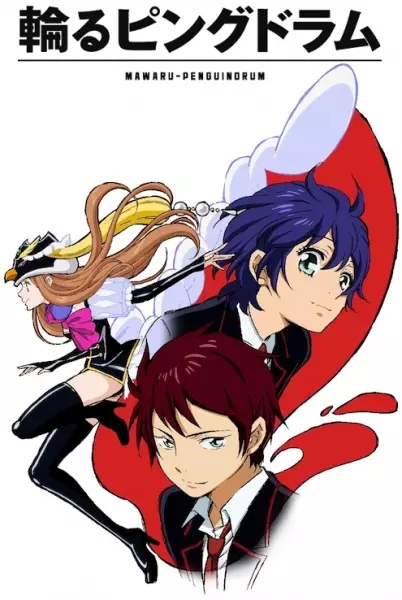
For the Takakura family, destiny is an ever-spinning wheel, pointing passionately in their direction with equal tides of joy and sorrow before ticking on to the next wishmaker. With their parents gone, twin brothers Kanba and Shouma live alone with their beloved little sister Himari, whose poor health cannot decline any further. On the day Himari is given permission to temporarily leave the hospital, her brothers take her out to the aquarium to celebrate, where the family's supposed fate is brought forth with her sudden collapse. However, when Himari is inexplicably revived by a penguin hat from the aquarium's souvenir shop, the hand of fate continues to tick faithfully forward. With her miraculous recovery, though, comes a cost: there is a new entity within her body, whose condition for keeping her fate at bay sends the boys on a wild goose chase for the mysterious "Penguin Drum." In their search, the boys will have to follow the threads of fate leading from their own shocking past and into the lives of other wishmakers vying for the Penguin Drum, all hoping to land upon their chosen destiny. [Written by MAL Rewrite]
7.4/10
Average Review Score
60%
Recommend It
20
Reviews Worldwide
I love the word "fate". You know how everyone talks about this anime called Mawaru Penguindrum? Just one single show can completely change your landscape. Such a thought-provoking series is not made by mere coincidence. It's definitely... fate. Of course, it's not for everyone. There are many mysterious, seemingly pointless story developments. It's hard to accept abstract ideas that start with nothing but confusion. But I think... Every line of dialogue, every object drawn in the show exist for a reason. Nothing in this show is pointless.What if I asked viewers what anime was like before they have seen Mawaru Penguindrum? They've forgotten what it was like when they didn't? You could say anime today isn't hopeless thanks to this show. The feeling of noticing perplexing symbolism. Hearing the sound that you'll never forget. Plot twists at startling rate. This show can change your perspective of anime in a heartbeat. Apples, diaries, penguins, and even the color of trash cans... seemed like treasures filled with possibilities when I saw them with an open mind. But... I can't go back now. I can still watch generic anime. Although, I can't recall what I liked about them. Sometimes I wonder why there aren't more deep, meaningful anime like this. The next season's lineup appear awfully uncertain to me right now. Like Poyopoyo Kansatsu Nikki's cat. A half-cute, half-round, manly cat. On the other hand, if there has to be shallow series to make deep ones more enjoyable... then everything must have a meaning. That's what I would like to think. Mawaru Penguindrum starts with mystery. Storytelling here is like a true Japanese movie: Subtle. Main heroine here is Oginome Ringo. The stalker of main characters' teacher. She builds an observation post below the teacher's house from scratch. A charismatic yandere in modern Tokyo. It's a penguin eat dog world. The "real", heroine in the second half is useless in the first half. Girls like her should just get netorare! Gosh, you must watch this series to the end. Mawaru Penguindrum will keep you thinking. Abstract ideas here are like puzzles: Thought-provoking. Main heroine here is Takakura Himari. The sister of main characters. She's sick from a terminal disease. A tragic princess in the border between life and death. It's a world of duality. The brothers stop searching for an unknown object called "Penguindrum" and try to keep her alive from scratch. Journeys like that should be more important than destination! Gosh, I must watch this series again. Do you like beautiful imagery in anime? Do you like allegory and careful attention paid to every detail on the screen? Of course you do! I feel the same way. Or rather, I can only love beautiful artwork. After all, I am an anime enthusiast. There are so much detail in every single frame that will make more and more sense by the episode. That's why you must not only watch this series, you have to watch it again. Viewers who don't do this are ugly and stupid. They can't appreciate the art in Mawaru Penguindrum. Listen well. No one loves mindless viewers. They don't have the right to be loved. It's a pretentious anime, after all. Artwork in 'Mawawru Penguindrum' removed the impurity in the background, such that only beauty remains. Just as the great Ikuhara produced the magnificent 'Shoujo Kakumei Utena' from storyboards. So, I have a favor to ask of you. Give yourself the opportunity to see this masterpiece. Let yourself see the beauty in this series. It's Fabulous Max! Action, comedy, suspense, joy and sorrow, calmness and anger. If BGM didn't reflect the mood on screen, then why do they even exist? Because, ever since that very first episode, music in the background matched perfectly with the story. The only thing we heard were true theme songs and BGM... Music to our ears. Isn't it electrifying? Listen, you lowlifes who will never amount to anything. Obtain the TL notes from my blog. Let's initiate the Survival Strategy. Why are people born? If people are born only to suffer through shallow anime, is it meant as some kind of a punishment? Or a cynical joke? If that's the case, viewers who adhere to their innate curiosity programmed in their DNA... are far more elegant and simple. If there really is a 2011 anime worthy of watching, then, it must be called Mawaru Penguindrum. I love anime that deal with "fate". You know how everyone talks about this anime called Mawaru Penguindrum? If you were able to read through this wall of text, you probably have what it takes to enjoy this series. I didn't write the review in this format by mere coincidence. It's definitely... fate. Of course, it's not for everyone. There are many unpredictable twists and unexplained mysteries. It's hard to fully understand the meaning of all the allegories and symbolisms in this series. But I think... Every line of dialogue, every object drawn in this series exist for a reason. Nothing in this show is pointless. *Stamps* Destiny.
Click an episode to read its synopsis.
Remember during an English/Literature class and your teacher would recommend you a book to read for an important exam/lesson? Some of the contexts contain what you may think as a simple room painted in "red" actually hides a message of violence and anger. Another example is the book "The Little Prince by Antoine de Saint-Exupéry" shares many symbols such as the rose being a symbol of vanity. Mawaru Penguindrum is definitely like a classic book. A classic book that uses objects as symbols. Practically, the whole anime in itself is a pure symbol of what you may think is a child's play is actually much morethan that. The thing that made me drawn into the anime was pretty simple, the cute little blue penguins. I barely took the anime that seriously because I don't really check out the summary of an anime just for an element of surprise and the picture cover of the anime made it look like a children's show. The first few episodes did turn out to be a joke and I had a great time laughing and admiring the fun atmosphere the anime was giving. But once the anime started to take the story in a different direction the anime turns into an anime worth raising an eyebrow for. Story: 9 During the start of the anime, more likely the word "fate/destiny" does keep on repeating a dozen of times and mainly that is the general story line. Likely avoiding the destined future a person takes is not plausible -- and so that's when the penguindrum comes. Symbolism can never die down in this anime and it is unavoidable. What is unique about how the anime's flow of story goes is the endless amount of flashbacks you will receive in every episode. It surely is annoying and confusing because they do show you flashbacks in random but then it isn't much likely a bother if you are serious about getting to know this anime better. Another word you'll be hearing a lot of times in this anime is "punishment" and in life happiness doesn't come along the way you like it. There will always be hard times and consequences no matter how painful it is. The way I see with this anime a reward has to be equal to its punishment -- but I think that's just me. The greatest part of the anime for me was the ending. I think it was a pure masterpiece. I was overflowing with tears and anger but if you look at it in the story line itself and the meaning of destiny that ending did not fail to surprise me. An ending worth crying and worth inspiring. Art: 10 Practically the reason is that once we see a colorful piece of artwork the logical meaning is "fun & happy" but that picturesque is just a cover up and so that's when the "Psychological" genre clearly explains it. The bright colors was well-spot on with the anime. I always loved the transformation part of Himari. The splashing of colors, the angle shots and the well-detailed animation are all worth praising for. The opening and ending animations are both done beautifully. If I may, the Opening Animation or even the title screen of Mawaru in itself holds a lot of clues. They sure took their time planting these clues very well and hiding it from the viewers and with these colorful images it is a very bright idea that the director was hiding the "main" plot. Sound: 10 One of the best soundtracks out there. I fell in love more with the OSTs rather than the Opening and Ending songs. What is so great about these OSTs is that the music is so perfect with the scene it was trying to match. My favorite OSTs would be "The Children of Fruit and Destiny" or "Unmei no Ko Tachi" -- listen to it and let the music feel you. I still cry to this OST and it still holds a deep meaning to me. Character: 9 Excellent character development. The characters made this anime possible. Let me remind you, this has a psychological genre so more likely you'll see a lot of out-of-the-box characters. The anime didn't just focus on the four main characters but also all those characters around them had a big role in the anime and what can be more realistic than that. Today, we live our lives thinking that the people around us are just individuals who will be nothing more than just strangers not knowing that these people can change our life or more likely our destiny and that's how Mawaru Penguindrum explains it so well. The beautiful way of how the director connects all these minor/major characters makes you ask at how much more can this anime get more realistic as it is. Enjoyment: 10 One of the most rare animes that truly uses my brain to unfold the story. As I go beyond the episodes it becomes more intriguing and exciting. So much were happening in this show that I actually grabbed a pen and paper (literally) to try to unfold the life of all of these characters -- and it was a bliss. For a show to be called as an "anime" that kept me pre-occupied with questions was something I haven't really experience in my time being of watching animes and that's what makes this show so special. Penguindrum also holds my most favorite anime quotes. This is so far the only anime that truly made me experience happiness, sadness, anger, suspense and even madness. It practically is the only anime that moved me to think over my life (I know, what the hell) and the great deal of Penguindrum being able to touch me so much is a much better work than any masterpiece. Over-all: 10 Mawaru Penguindrum is not like any normal anime. It's a work of art that is in need of 100% of your attention and fairly "a lot" of brain power. Like any great literary piece, not all would understand the point of view of the creator but then if you are able to, most especially in Penguindrum, you'll feel how beautiful this creation is.
When someone on the Internet describes a work of fiction as 'visionary', it's usually meant as a form of praise, referring to a willingness to defy convention in favor of something more thought-provoking and enticing. As defined by a dictionary, 'visionary' refers to embracing fanciful and often impractical ideas. Mawaru Penguindrum falls under both definitions. What Kunihiko Ikuhara of Utena-fame has created here is a show that takes philosophical musings on themes such as fate, love and death; and combines them with slapstick antics involving ghost penguins and ping-pong balls that erase people's memories. If that sounds difficult to take seriously to you, don't bother watching this show.It's going to get a lot weirder. The overall product is audacious, if nothing else; presenting the story 2 brothers, Kanba and Shoma, who promise to help a mysterious entity track down an object called the Penguindrum in a desperate attempt to ward off the death of their sister, Himari. Their quest has them run into a slew of messed up characters and situations, and before long the narrative turns into a complete mess. There are several reasons for this. A big problem is that the series has absolutely no regard for logic and consistency, even within its own narrative. At the start of the series, Himari is brought back to life after succumbing to an incurable disease. Her death and subsequent revival are treated as tragic and miraculous, respectively. Makes sense. What doesn't is that this is repeated several times over the course of the series, treated with the same impact every time. Viewers, however, might be puzzled or annoyed by this repetition seeing as it raises the question as to how severely this series treats the concept of death. This is exacerbated once another character reveals that he's been dead for over a decade, after which the story moves on, completely unaffected by the revelation. Character development also tends to be very inconsistent. Motivations, personalities and even backstories can change from one scene to the next just to suit the needs of the plot. The aforementioned memory-erasing ping-pong balls are liberally used to retool previously established plot-points to the narrative's convenience. Other, basic issues also plague the storytelling: many of the back stories feel interchangeable (crappy childhoods galore), some characters who get a lot of screen time end up being completely insignificant while others are introduced seeming important only to be forgotten about before anything could even be done with them. The latter goings-on of the story also feature hackneyed developments involving terrorism, delusions (it's all in your head!) and cliffhangers (someone was stabbed! but who?) that end up not mattering in the slightest. Most damning of all, however, is the clumsy way the overall product comes together. The shifts in tone – from whacky to dark and vice versa – are as frequent as they are jarring, and it all too often feels that the subjects about which characters are philosophizing have very little to do with the story of two brothers who are attempting to ward off that which should be inevitable. *WARNING! The following paragraph contains spoilers about the general tone of the ending! WARNING* Speaking of which, the ending cops out on that in a major way. The series spends a lot of time emphasizing how ordinary people are powerless in the face of fate and that struggling against the inevitable will often result in greater tragedy. One would expect such a story to end on a tragic note as is befit for a something that fancies itself an exploration of fate, but the actual ending turns out rather bittersweet; mostly leaning towards the sweet considering the dark events preceding it. *END SPOILERS* All that said, the series must certainly be praised yet again for its unique style. This show isn't just different for the hell of it. Ikuhara combines audio and imagery in striking ways, constantly delivering scenes that will shock and surprise. Even if you end up disliking the series, there's a definite guarantee that you'll remember it. Which is more than can be said for a lot of other stuff. In closing, I'd like to say that while many others would opine that the Mawaru Penguindrum's unique style, impeccable direction and interesting themes make for a wonderful anime, I think that there are too many issues with the overall product to really consider it great. Many of which, I feel, can't be chalked up to mere artistic idiosyncrasy.
Mawaru Penguindrum is a beautiful piece of art. It can inspire either much love or hate, and new details are discovered with each viewing. Intelligent symbolism and heavy themes span all of Penguindrum's 24 episodes. Despite its surreal delivery, Penguindrum remains very real. The story of Mawaru Penguindrum is completely absurd. Not absurd because of the surreal elements, but how it makes something so imaginative and implausible seem real. We start off with a dying sister, her revival, and eventual search for a mysterious object, called the "penguin drum". Yet, somewhere along the way, the story becomes a situation of life, death, and existence itself. Theplot takes a while to reach its climax. Half of the show is spent on character development, craziness, humor, and seemingly random events. The first half is exciting, and the absolute insanity never stops. However, this slow-developing plot is crucial; the characters grow on you. And if you have any siblings, it'll hit close to home. The second half, on the other hand, takes a dark turn, and the plot moves much quicker here. The development and random elements from the first half are pieced together, and nothing ends up being random or useless. Nevertheless, the show's thematic elements are certainly strange. There's comedy, terrorism/cult politics, moral ambiguity, philosophy, all tied together by the overarching theme of family and friendship. The story isn't just unique; it's relevant without being pretentious and forceful. As stated before, its absurd, but the themes, feelings, and other elements that Penguindrum invokes is very real. Brain's Base put quite some effort here. As the makers of Natsume Yuujinchou, the art quality is outstanding. The story isn't the only thing that's surreal; the art is too. From the strange angles and fantasy-esque scenes, the art has a Shaft feel. How a studio is able to go from a calm slice-of-life, realistic style to flamboyant, Bakemonogatari-like flair is beyond me. The art truly complements the story. Sound is just as great as the art. The music is simply stunning. The opening themes are performed very well, and their compositions are genius. The ending themes are mostly covers of ARB (old Japanese rock band) with a cool twist. Dear Future (first ending theme) is exceptional--extensive use of hemiola, polyrhythms, layering, and the most angry/painful sounding minor chords. In other words, the music was made for musicians while being very accessible. This isn't you regular J-Pop or J-Rock fair. The rest of the soundtrack is appropriate, but not exactly memorable. Sound effects are also well-done. Again, character development is crucial to Penguindrum. Kanba: You'll hate some of his decisions, but you'll always have sympathy for the Takakura siblings. He's a cool guy, and he will do anything to save his family, no matter the consequences. He does some immoral things. Shouma: He's innocent but brave. He will only do what is right, but just like Kanba, he tries to protect his family whenever he can. Himari: She's the little sister of the Takakuras'. She's rather intelligent and insightful, and unlike the majority of sisters in anime (or in media in general), she's not filled with moe/kawaii or tsundere-ness. The Takakuras are very likable, and each have their own quirky personalities. Ringo: She'll creep you out for most of the show, but you'll eventually love her too. Confused but wholehearted. Penguins: THEY ARE THE CUTEST THINGS IN THE UNIVERSE. They provide most of the comedic relief in the show, and each penguin takes its personality quirks from their respective owners. The remaining cast are interesting, and they all add quite a bit to the story. I loved Mawaru Penguindrum. It has its own peculiar charm through its humor and its tragedy. I thoroughly enjoyed Penguindrum's use of literary themes (foreshadowing, allusions, etc.) and overall artistic approach to everything. In addition, it made me feel a wide-range of emotions, from joy and confusion to sadness and anger, and by the end of it, I was left crying with tears of sadness and joy. But that's not to say that you'll love it too. As with any work of art, it will inspire love or hate. In any case, if you happen to enjoy this show, it will open your eyes quite a bit--if you're not used to opening them. Otherwise, you'll be very amused. So, give Mawaru Penguindrum a shot. It will take the whole show to truly appreciate it, although I question your humanity if it doesn't make you interested.
Mawaru Penguindrum is one of those rare anime that doesn't have some form of source material. It was created by Brain's Base, the same studio behind Durarara & Baccano. The co-writer and director was Ikuhara Kunihiko. You may not know his name but you probably recognise his other works. He created and directed Revolutionary Girl Utena and served as the director for large segments of the Sailor Moon anime. I have to say, this sounds promising. So far, the two anime I've seen from Brain's Base have been at least decent and Ikuhara does amazing work. If they screw this up I'm going to besorely disappointed. So, let's proceed with cautious optimism. Story: Our tale opens with three siblings, Shouma, Kanba and Himari. The three are living on their own since their parents went missing and things aren't going very well. Himari is dying of an incurable disease and her brothers have been told that she doesn't have long. They decide to do everything they can to make her final days happy and take her to an Aquarium that they all used to love going to. It's there that Himari collapses. She's rushed to the hospital where she dies only to quickly come back to life and start adopting odd mannerisms whenever she wears a penguin hat. She brings her brothers to a strange psychedelic space that even Lewis Carroll would find excessive, calls them worthless low lives and tells them that they'll have to find something called the “Penguindrum” to save their sister's life and things only become crazier and crazier from that point on. As usual, let's begin by looking at the series' faults. The biggest one is that it's fond of bringing up really serious issues for dramatic moments that don't tie into the plot in any substantial way and are never brought up again after they happen. The primary examples being scenes where someone will very nearly be raped and the next episode they'll interact with the person who made the attempt as though nothing happened and it will just go completely unaddressed for the rest of the series. Which just begs the question of why something as serious as rape is being brought up at all if they aren't going to bother doing anything with it. Really, any source of drama should have some plot relevance instead of just being there for a cheap shock moment but there's something particularly terrible about using such a grotesque crime, and the number one cause of PTSD, in such a tawdry fashion. There are also quite a few humorous moments that fall short, mainly because they'll try to pull off humour at parts of their cheap shock scenes or really close to them which results in a tonal clash. The romance elements in this are absolutely atrocious. Most of it involves incestuous undertones, stalking and/or some other factor that makes it really skeevy. The problem being that a lot of it is played as uplifting or otherwise positive instead of having some self awareness of how messed up the situation is. Although, in all fairness, they do always show rape as being a terrible thing, even if they never bring the attempts up again after they're done with. Let's move on to the positive aspects. I will give the series credit on three points. The first is that the premise is very creative and had a lot of potential, even if that potential was largely squandered by meanderings into the realms of pointless irrelevance and general stupidity. I'll also give credit for having some legitimately good dramatic scenes, when it's actually doing plot relevant stuff and can refrain from trying to inject humour into it. The series also does have some funny scenes, when it's putting them in at light-hearted bits instead of trying to cram them into really serious moments. So, the series does manage some good bits during the rare stretches when the writers were on their Ritalin. Characters: The characters are, largely, not bad. Every single one does suffer from the writing's general lack of focus, but in terms of characterisation and development they aren't bad characters. They are, however, pretty standard with little, if anything, unique to define them. There are some really good familial scenes with Shouma, Kanba and Himari. They still aren't very complex characters, though and there are times when the series takes those bonds into creepy territory which does weaken that aspect. Then we have the penguins. Those of you who have seen Utena might remember the little purple monkey that existed solely for comic relief but was bearable because he largely stayed in the background and did, in all fairness, have some funny moments. Now, imagine that same basic character with a more prominent role and with four slight variations running around. So, now you have four largely pointless comic sidekicks taking up screen time and being highly obtrusive. I would like to tell you that at least none of them makes any attempt at sexually assaulting anyone, but one of them does, albeit in a much more mild form than most of the similar scenes in the series. Because tying someone up and forcing kisses on them without consent is still a type of sexual assault. Art: The art is good. Ikuhara's fondness for symbolism that's extravagant and kind of bizarre is fully on display. The visuals are highly engrossing and appealing to look at. The character designs are very reminiscent of Utena. For example, Natsume Masako looks similar to Arisugawa Juri in terms of hairstyle, facial structure and even expressions. Sound: The actors in this really put a great deal of effort into their performances. They do deliver their lines as over the top or seriously as the current scene demands. I appreciate the effort they're clearly putting into it and I won't say that any of them were bad, but I really can't call them good performances either. Due to the tonal issues, A lot of scenes require them to fluctuate from serious to exaggeration in the space of a few sentences and it just sounds awkward. There aren't many scenes that let them show any subtle emotional range. Most just have them fluctuating between extremes. Honestly, the music is the one thing I didn't notice tonal problems with. Maybe it does fluctuate during those horribly executed scenes and I was too overwhelmed by everything else to notice but, as far as I can recall, the music was really good. Ho-yay: There's certainly some. One of the attempted rape scenes is between two characters of the same sex. There's also a case of two female characters being portrayed as having had sex, consensual too as rare as that is for this anime and there are some scenes that definitely come across as homo-erotic, usually between girls. That being said, it isn't a huge part of the anime since a lot of the focus is on Shouma and Kanba. As such, the ho-yay factor is going to be a 5/10. Final Thoughts: This anime is a classic example of style being valued over substance. It has some amazing visuals and it has some good scenes both dramatic and comedic and it does portray familial bonds pretty well. But taken as a whole, it doesn't hold up. The narrative is an unfocused mess with tonal problems and lots of dramatic moments that serve no purpose to the plot and come across as pretty offensive and demeaning towards serious issues. Because it's one thing to address serious issues and quite another to bring them up and then do bugger all with them. This series chose poorly and took the latter route. In the end, every good scene is over-shadowed by two or three bad ones and my final rating is going to be a 3/10. Next week, we'll ignore the requests for a moment because it's time to take another look at that franchise, in the name of the moon.